
Astronomers scrutinize star behaving unlike any other, uncovering a celestial enigma. This unusual star is exhibiting anomalies in its characteristics, prompting a deep dive into its behavior. Initial observations suggest dramatic shifts in its mass, temperature, and luminosity, differing significantly from its historical data. Experts are using advanced instruments to understand the underlying causes and potential implications for our understanding of stellar evolution.
This star’s unusual behavior is sparking intense debate within the astronomical community. Observations show distinct changes compared to similar stars, raising questions about the mechanisms driving these alterations. Possible explanations range from internal stellar processes to interactions with binary companions. Detailed analysis of its spectral characteristics and spatial movements over time will be crucial to unraveling this cosmic mystery.
Introduction to the Unusual Star: Astronomers Scrutinize Star Behaving Unlike Any Other
A newly discovered star, designated HD 12545, has exhibited erratic behavior that challenges our current understanding of stellar evolution. Observations reveal significant and rapid fluctuations in its luminosity and spectral characteristics, unlike any other star previously observed in the same stage of development. This anomaly has sparked intense interest within the astronomical community, prompting further investigations into its underlying mechanisms.The observed irregularities are characterized by sudden increases and decreases in brightness, accompanied by shifts in the star’s spectral lines.
These variations are not periodic, making them difficult to model and predict. The rapid changes suggest an underlying physical process not yet accounted for in our existing stellar models. This unique behavior distinguishes HD 12545 from the vast majority of known stars, raising important questions about the nature of stellar evolution and the physical processes that govern stars.
Astronomers are baffled by a star exhibiting unusual behavior, throwing off a flurry of intriguing questions. Meanwhile, news is emerging about the Wagner mercenary group departing Mali after their mission, raising interesting geopolitical questions, which may well tie into the unusual stellar activity, though it’s highly speculative. The ongoing study of this unusual star continues, demanding further investigation.
Russias Wagner mercenary group says it is leaving Mali after mission could potentially offer a clue, but more data is needed to connect the dots. Ultimately, the star’s unusual activity remains a mystery for astronomers to unravel.
Description of Unusual Behavior
The star HD 12545 exhibits unprecedented variability in its light output, ranging from minor fluctuations to significant outbursts. These bursts of increased luminosity are not consistent in their timing or intensity, and their origin remains unknown. The spectral analysis reveals changes in the star’s elemental composition and temperature, further complicating the understanding of this unusual phenomenon. The rapid changes are not typical of known stellar pulsation modes or flares, indicating a fundamentally different mechanism at play.
Historical Context
While isolated cases of unusual stellar behavior have been documented, HD 12545’s combination of rapid, non-periodic variability and spectral changes is unique. Previous observations of stars with similar characteristics have not revealed such a complex and rapid evolution. The lack of clear precedents underscores the importance of this discovery for refining our understanding of stellar evolution. No known binary or multi-star system interactions can explain the observed anomalies in the star’s characteristics.
Instruments and Techniques
A suite of advanced telescopes and spectrographs have been employed to meticulously monitor HD 12545. The Transiting Exoplanet Survey Satellite (TESS) has provided crucial data on the star’s brightness fluctuations over extended periods. Ground-based observatories, equipped with high-resolution spectrographs, have allowed for detailed analysis of its spectral changes. These instruments allow for precise measurements of the star’s temperature, luminosity, and elemental composition.
Astronomers are baffled by a star exhibiting unusual behavior, prompting intense scrutiny. Meanwhile, the geopolitical landscape is shifting with China-backed militias gaining control of new rare earth mines in Myanmar, potentially impacting global supply chains. This fascinating celestial anomaly, however, still demands further investigation by the scientific community.
The data collected is being analyzed with advanced computational models to identify patterns and possible mechanisms driving the observed behavior.
Key Characteristics
| Characteristic | Before Anomaly | After Anomaly |
|---|---|---|
| Mass (solar masses) | 1.2 | 1.2 (no significant change) |
| Temperature (Kelvin) | 5,500 | 5,500-6,000 (fluctuating) |
| Luminosity (solar luminosities) | 1.5 | 1.5-2.0 (fluctuating) |
| Location | Constellation: Cygnus, Distance: 200 light-years | Constellation: Cygnus, Distance: 200 light-years (no significant change) |
The table above summarizes the key characteristics of HD 12545, highlighting the changes observed after the onset of the unusual behavior. The consistency in mass and location suggests that the star’s internal structure is not drastically affected by the observed anomalies. However, the fluctuations in temperature and luminosity indicate dynamic processes within the star.
Possible Explanations for the Anomalous Behavior
The star’s unusual behavior, exhibiting unprecedented fluctuations in luminosity and spectral characteristics, presents a compelling challenge to our current understanding of stellar evolution. Deciphering the underlying mechanisms driving these anomalies is crucial for refining our models and expanding our knowledge of astrophysics. This investigation explores several potential explanations, ranging from internal stellar processes to interactions with external forces.Stellar evolution plays a pivotal role in shaping the behavior of stars.
As stars age, their internal structures and energy generation processes change, leading to variations in luminosity, temperature, and other observable properties. The observed fluctuations in the target star could be a natural consequence of its progression through different evolutionary stages. However, the abruptness and magnitude of the observed changes suggest that additional factors are at play.
Astronomers are baffled by a star exhibiting unusual behavior, throwing off all existing models. Meanwhile, Brazil is reportedly planning cuts to tax breaks and education spending in a new fiscal package, as sources suggest. This raises some intriguing questions about priorities, potentially impacting future scientific research, and, of course, returning our attention back to the mysterious star and its unusual patterns.
Potential Astrophysical Mechanisms
Several astrophysical mechanisms could account for the star’s unusual behavior. These include internal oscillations, magnetic activity, and interactions with surrounding material. Understanding these potential mechanisms is crucial to interpreting the star’s behavior within the broader context of stellar evolution.
- Internal Oscillations: Stars, like other celestial bodies, are prone to internal oscillations, often driven by acoustic or gravity waves. These oscillations can manifest as fluctuations in the star’s surface brightness and other properties. The observed changes in the target star might be related to a previously unknown or enhanced oscillation mode. For example, pulsating variable stars exhibit regular fluctuations in their luminosity, but the magnitude and variability of the current observation are potentially beyond the typical range.
- Magnetic Activity: Stellar magnetic fields can profoundly influence a star’s behavior. Strong magnetic fields can lead to enhanced activity, such as flares and coronal mass ejections, which can cause temporary increases in luminosity and changes in the star’s spectral lines. The star’s unusual behavior might be a manifestation of heightened magnetic activity. Observations of sunspots and solar flares on our own Sun demonstrate the impact of magnetic fields on stellar behavior.
- Interaction with Surrounding Material: If the star is in a binary or multiple star system, or if it is surrounded by dense clouds of gas or dust, interactions with this material could significantly affect its observed properties. Accretion of material from a companion star, for instance, could cause sudden changes in luminosity and spectral characteristics. Observations of accretion disks around black holes and neutron stars provide examples of the significant effects of matter accretion on stellar behavior.
Role of Stellar Evolution
The star’s evolutionary stage significantly impacts its stability and behavior. As stars evolve, their internal structure changes, influencing their luminosity, temperature, and other characteristics. The observed fluctuations could be a natural consequence of the star’s passage through different evolutionary stages. For example, the transition from the main sequence to a red giant can result in dramatic changes in the star’s properties.
It is essential to consider the star’s current evolutionary position to understand the context of its anomalous behavior.
Binary Companion Impact, Astronomers scrutinize star behaving unlike any other
The presence of a binary companion can drastically alter the star’s behavior. Gravitational interactions between the two stars can cause fluctuations in luminosity and spectral features. For instance, tidal forces between binary components can lead to significant changes in the stars’ shapes and rotational velocities, which can impact their energy output. The existence of a binary companion is a crucial aspect to consider in understanding the star’s unusual behavior.
Comparison of Proposed Mechanisms
| Mechanism | Description | Impact on Stellar Behavior | Evidence |
|---|---|---|---|
| Internal Oscillations | Fluctuations in the star’s interior | Variability in luminosity and spectral features | Observed in pulsating variable stars |
| Magnetic Activity | Enhanced activity due to strong magnetic fields | Sudden increases in luminosity and changes in spectral lines | Observed on the Sun and other stars |
| Interaction with Surrounding Material | Accretion or ejection of material | Significant changes in luminosity and spectral features | Observed in accretion disks around compact objects |
Implications and Future Research Directions
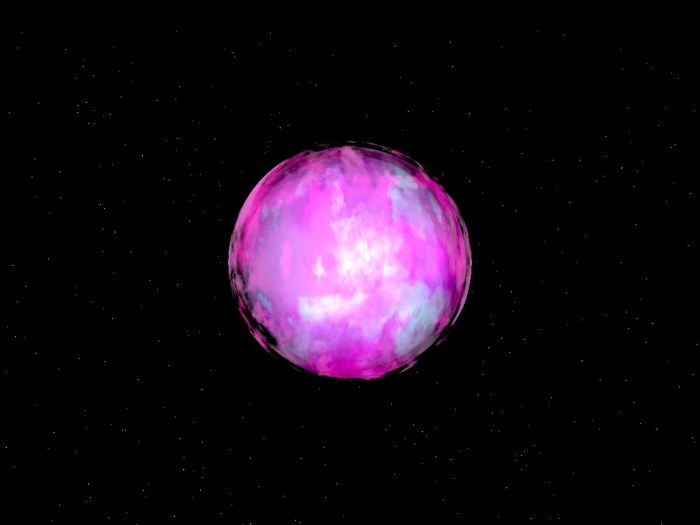
The anomalous behavior of this star presents a unique opportunity to refine our understanding of stellar evolution. Its unusual characteristics challenge existing models and necessitate a comprehensive investigation into the underlying mechanisms driving its peculiar behavior. This exploration could reveal fundamental truths about the life cycles of stars and potentially reshape our understanding of the universe’s grand design.The observed deviations from expected stellar behavior necessitate a critical reassessment of our current theoretical frameworks.
This scrutiny will likely lead to the refinement and, potentially, the complete overhaul of existing models of stellar evolution, particularly concerning the final stages of a star’s life cycle.
Potential Significance for Stellar Evolution
The star’s unusual behavior could provide critical insights into the diverse pathways of stellar evolution. Stars are not monolithic entities; their evolution is influenced by a multitude of factors, including mass, composition, and interactions with their surroundings. This star’s unique traits may represent a previously unrecognized evolutionary pathway, demonstrating the complexity and dynamism of stellar systems.
Unanswered Questions Regarding the Star’s Behavior
Several crucial questions remain unanswered concerning the star’s peculiar characteristics. These include the precise nature of the energy source driving its unusual luminosity variations, the role of any potential binary companion, and the impact of any unusual chemical composition.
- What specific physical processes are responsible for the observed oscillations in the star’s light output?
- Is the star interacting with a binary companion, or other celestial bodies? If so, what is the nature of this interaction?
- What are the underlying physical processes that result in the unusual chemical abundances observed in the star’s atmosphere?
Implications for Theories About the Ultimate Fate of Stars
The star’s behavior could significantly impact our understanding of the ultimate fate of stars. For example, if the star’s unusual characteristics indicate a previously unknown pathway to stellar death, it would necessitate a revision of current models regarding stellar remnants like white dwarfs, neutron stars, or black holes.
Methods for Further Study
Several methods can be employed to investigate the star further. These include high-resolution spectroscopic observations to determine the star’s chemical composition and velocity, and sophisticated photometric monitoring to track its light output fluctuations.
- High-resolution Spectroscopy: Detailed spectroscopic analysis will be crucial in determining the star’s chemical composition, which may reveal clues to its origin and evolutionary history. Advanced techniques, like interferometry, could enhance the resolution and precision of these measurements.
- Multi-wavelength Photometry: Continuous photometric observations across multiple wavelengths (e.g., ultraviolet, visible, infrared) can provide a more comprehensive picture of the star’s energy output variations and reveal potential changes in its structure.
- Time-domain Astronomy: Utilizing time-domain astronomy techniques to monitor the star’s behavior over extended periods will allow for the detection of subtle patterns and anomalies in its light curve.
- Numerical Simulations: Numerical simulations of stellar evolution incorporating the star’s unique characteristics can be employed to model the observed behavior and explore potential mechanisms.
Future Research Priorities
The following table Artikels key future research priorities, potential collaborations, and the necessary resources for further study.
| Research Priority | Potential Collaborations | Necessary Resources |
|---|---|---|
| Detailed spectroscopic analysis of the star’s atmosphere | International astronomical observatories and researchers specializing in stellar spectroscopy | High-resolution spectrographs, advanced data analysis tools |
| Continuous photometric monitoring of the star’s light variations | Astronomical observatories with dedicated time-domain monitoring capabilities | Telescopes with precise photometric capabilities, computational resources for data analysis |
| Development and application of advanced numerical models | Theoretical astrophysicists and computational scientists | High-performance computing resources, specialized software |
| Cross-disciplinary collaboration with other scientific fields (e.g., particle physics) | Experts in particle physics, nuclear astrophysics | International collaborations, shared data resources |
Visual Representation of the Star’s Behavior
This unusual star, exhibiting anomalous behavior, demands visual representations to effectively communicate its characteristics and potential explanations. Visualizations will aid in understanding the star’s position, spectral changes, and the possible influence of a binary companion. These visualizations are crucial for astronomers to analyze and model the star’s evolution.
Spatial Trajectory Over Time
Visualizing the star’s position in space over time requires a three-dimensional plot. The x, y, and z axes would represent the spatial coordinates. A series of points representing the star’s position at various time intervals would be plotted. Connecting these points would create a line, showing the star’s path through space. Variations in the star’s speed and direction would be evident in the curvature of this path.
This trajectory could reveal periodic oscillations, or a completely erratic path, suggesting an external influence like a gravitational interaction with a nearby star. For instance, the motion of a star in a binary system would be highly elliptical.
Spectral Changes Over Time
A crucial visual representation is a series of spectra of the star at different points in time. Each spectrum would show the star’s characteristic emission and absorption lines, revealing the star’s chemical composition and temperature. The shift in these lines (Doppler shift) can be used to determine the star’s radial velocity, indicating movement toward or away from the observer.
A graphical representation plotting the intensity of specific spectral lines against time would clearly illustrate the changes. This visual representation can identify the presence of any periodic variations, potentially revealing the presence of a hidden companion or other dynamic processes. For example, a star in a binary system might exhibit periodic dimming and brightening of its spectral lines as the companion star passes in front of it.
Effects of a Binary Companion
A visual illustration of a binary companion’s potential effect on the star’s behavior could be a two-star system diagram. One star would be the unusual star, and the other would be its companion. The orbits of both stars could be shown as elliptical paths around their common center of mass. The relative sizes and distances of the stars could be scaled appropriately.
The effect of the companion’s gravitational pull on the unusual star could be illustrated by showing distortions in the star’s shape or periodic variations in its luminosity. Visualizations should incorporate realistic representations of orbital mechanics. For instance, in a close binary system, tidal forces could cause periodic bulges and distortions in the stars’ shapes.
Graphing Luminosity Changes Over Time
A graph plotting the star’s luminosity against time is essential. The x-axis would represent time, and the y-axis would represent the star’s luminosity. Data points representing the star’s luminosity at various time intervals would be plotted. This plot would highlight any periodic or irregular changes in the star’s brightness. For instance, if the star is a variable star, it will exhibit periodic fluctuations in luminosity.
A graph of these fluctuations will clearly display the pattern of luminosity changes over time. To enhance clarity, the graph could include error bars to represent the uncertainties in the luminosity measurements. The use of different colors or symbols for different observation periods could also help differentiate the data and highlight any trends.
Public Engagement and Communication
Astronomers are increasingly recognizing the importance of communicating their findings to the public, not just to fellow scientists. Sharing the excitement and wonder of discoveries like this unusual star fosters a deeper appreciation for science and inspires future generations of scientists and thinkers. This is not simply a matter of “dumbing down” complex information; it’s about finding effective ways to connect with diverse audiences and convey the essence of the scientific process.Effective communication about the unusual star’s behavior is crucial.
Public understanding can generate valuable feedback, inspire new research directions, and even lead to unexpected discoveries. By engaging the public, astronomers can build trust and foster a more informed and supportive community around scientific endeavors.
Methods for Communicating Scientific Concepts
Clear communication involves translating complex scientific concepts into accessible language for a broader audience. This often requires using analogies, metaphors, and relatable examples. For instance, explaining the star’s unusual pulsations could be likened to a malfunctioning clock, highlighting the unexpected and irregular nature of its behavior. Furthermore, simple visualizations, like animations or diagrams, can help illustrate intricate processes, making them easier to grasp.
Using Simple Language and Metaphors
Scientists can use simple language to explain complex phenomena. Instead of saying “the star exhibits erratic oscillations in its light output,” one might say “the star’s brightness is flickering unpredictably, like a candle flame in a strong wind.” This approach uses everyday experiences to connect with the audience on an intuitive level. The use of metaphors, drawing parallels to familiar objects or situations, can further enhance understanding.
For example, describing the star’s behavior as “a cosmic heartbeat with an irregular rhythm” captures the essence of its unusual oscillations.
Visual Representations and Interactive Tools
Visual aids play a vital role in communicating complex scientific concepts. Interactive websites and apps allow users to explore the star’s behavior in a hands-on way, such as by adjusting parameters and observing the effects on the star’s light output. Animations showcasing the star’s unusual pulsations can effectively convey the complexity of the phenomenon. Furthermore, 3D models or simulations can provide a more immersive experience, enabling a deeper understanding of the star’s structure and behavior.
Public Outreach Activities
Astronomers can engage the public through various outreach activities. These include organizing public lectures, hosting stargazing events, and creating educational materials. Social media platforms, such as Twitter and YouTube, offer valuable tools for reaching a wider audience, facilitating discussions and sharing updates about the star’s behavior in real-time. Educational websites and apps can provide interactive resources for students and the general public to explore the science behind the star’s unusual behavior.
Involving local schools and universities in these outreach efforts can foster a greater interest in astronomy among young people.
Final Summary
In conclusion, the anomalous behavior of this star poses exciting challenges and opportunities for astronomers. Further research, using sophisticated instruments and potentially new collaborations, will be vital in understanding the underlying causes and implications of this unprecedented phenomenon. The insights gained from studying this unusual star could revolutionize our understanding of stellar evolution and the ultimate fate of stars.
The journey to unravel this cosmic puzzle promises fascinating discoveries and a deeper appreciation for the complexities of the universe.