Vibrant Oases of Chemosynthetic Life Discovered at the Deepest Extremes of the Mariana Trench

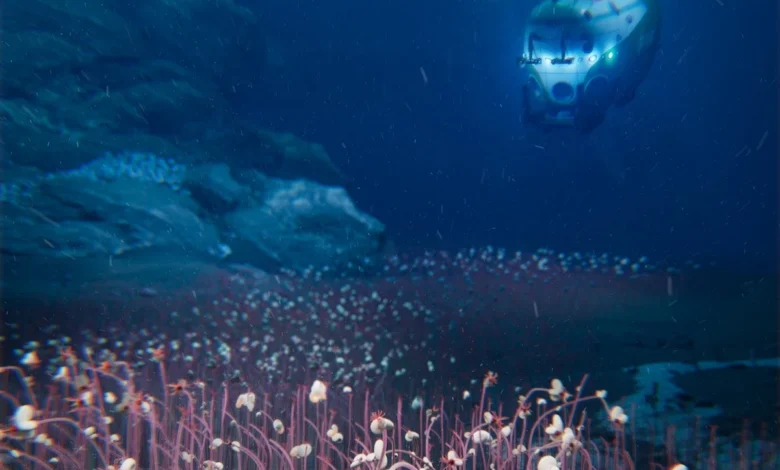
In an unprecedented revelation that challenges long-standing biological models, researchers from the Chinese Academy of Sciences’ Institute of Deep-sea Science and Engineering have identified the deepest and most extensive chemosynthesis-based animal colonies ever observed on Earth. Utilizing the manned submersible Fendouzhe, the expedition team documented thousands of mollusks, tubeworms, and crustaceans thriving in the crushing darkness of the Mariana Trench, nearly six miles below the ocean’s surface. This discovery fundamentally alters our understanding of how life persists in the most hostile, nutrient-poor environments on the planet, suggesting that "hadal" zones—the deepest trenches in the world’s oceans—may harbor far more biological activity than previously hypothesized.
A Journey into the Hadal Zone
The expedition, which spanned multiple dives throughout the previous year, focused on the western Pacific’s Mariana Trench, a geological feature that descends deeper than the height of Mount Everest. While the hadal zone has been the subject of sporadic exploration since the first manned descent by Jacques Piccard and Don Walsh in 1960, these earlier missions were brief, providing only fleeting glimpses of an environment often described as a "desolate desert."
The Fendouzhe submersible performed 23 successful dives into the trench, systematically surveying geological faults and sediment layers. The team discovered that these life forms were not isolated or incidental; rather, they were part of a sprawling, interconnected ecosystem. The findings, published in the journal Nature, confirm that these colonies span a distance of approximately 1,553 miles, existing at depths ranging from 3.6 to nearly 6 miles. This scale of distribution suggests that the geological conditions required to support such life—namely, the presence of specific chemical fluids—are far more widespread across the ocean floor than oceanographers had previously estimated.
The Mechanism of Deep-Sea Survival
At depths where sunlight is entirely absent, photosynthesis is an impossible energy source. Instead, the biological community documented by the research team relies on chemosynthesis. This process allows organisms to convert chemical energy into biomass, effectively bypassing the need for solar radiation.
The study highlights that these creatures are sustained by hydrogen sulfide-rich and methane-rich fluids. These fluids are transported along deep-seated tectonic faults that traverse the sediment layers of the trenches. Isotopic analysis performed by the researchers indicates that the methane fueling these "oases" is produced microbially from organic matter deposited on the seafloor. Tubeworms, some of which were observed growing up to one foot in length, were found clustering around "snow-like" microbial mats, indicating a direct symbiotic or commensal relationship between these complex invertebrates and the methane-consuming microbes.
In addition to the dense populations of siboglinid Polychaeta (tubeworms) and Bivalvia (clams and mussels), the submersible’s high-definition cameras captured footage of sea lilies, sea cucumbers, spiky crustaceans, and various free-floating invertebrates. This diversity confirms that the hadal zone is not merely a graveyard for detritus falling from the surface, but a thriving, self-sustaining habitat.
Chronology of Hadal Exploration
To understand the significance of this discovery, it is necessary to place it within the timeline of deep-sea exploration:
- 1960: The Trieste bathyscaphe completes the first manned descent to the bottom of the Challenger Deep, providing the first human visual confirmation of life (a flatfish) at extreme depths.
- 2012: Filmmaker James Cameron completes a solo dive to the bottom of the Mariana Trench, reporting a "desolate" landscape, which reinforced the scientific consensus at the time that deep-trench life was sparse.
- 2020: The Fendouzhe (Striver) submersible is commissioned by China, capable of reaching depths exceeding 10,000 meters, marking a new era in systematic deep-sea research.
- 2024-2025: The expedition team conducts 23 dives into the Mariana, Kuril-Kamchatka, and western Aleutian Trenches, resulting in the identification of the expansive chemosynthetic colonies.
- 2025 (July): The findings are published in Nature, officially announcing the discovery of the deepest known animal communities.
Scientific Implications and Carbon Cycling
The discovery of these communities forces a re-evaluation of deep-ocean carbon cycling. Current models largely assume that the deep sea is a carbon-sink, where organic matter is sequestered. However, the presence of active, methane-consuming communities implies that the carbon cycle in the deep ocean is far more dynamic. The biological processing of methane at these depths suggests a complex interaction between the Earth’s lithosphere and the biosphere that was previously underestimated.

Lead author Xiatong Peng and co-author Mengran Du emphasized that the discovery challenges the "desolate desert" archetype. By documenting a "vibrant oasis" at such immense pressure and cold, the researchers have provided a new baseline for what constitutes a habitable environment. If these geological and biological conditions are as common as the study suggests, it is highly probable that similar communities exist in other, as-yet-unexplored hadal trenches across the globe.
Environmental Context and Deep-Sea Mining
The timing of this discovery is critical, as it coincides with a period of intense international debate regarding the future of deep-sea mining. As nations and corporations look toward the ocean floor for critical minerals—such as cobalt, nickel, and manganese—to fuel the global energy transition, environmentalists have raised alarms about the potential destruction of fragile, slow-growing ecosystems.
The International Seabed Authority (ISA) is currently tasked with drafting regulations to govern deep-sea mining. However, the discovery of such complex, high-density ecosystems in the deep trenches suggests that the "last wild zones" of the planet may be more biologically significant than proponents of mining have suggested. Scientific organizations have warned that sediment plumes, noise pollution, and direct physical extraction could irreparably damage these ecosystems, many of which may take centuries to recover due to the slow metabolic rates of deep-sea life.
Perspectives from the Scientific Community
The international scientific community has largely hailed the Fendouzhe findings as a landmark achievement. By combining advanced robotics with high-resolution, in-situ observation, the researchers have provided more than just a list of species; they have provided a context for how these animals survive in extreme conditions.
Mengran Du noted in her post-expedition reflections that the experience of operating the submersible felt like "traveling through time." This sentiment underscores the disconnect between human perception of the deep sea—often viewed as static or dead—and the reality of a complex, functioning biosphere. The "compelling evidence" of microbial methane production provided by the team serves as a cornerstone for future studies, which will likely focus on mapping these faults to identify other potential "hotspots" of life.
Looking Toward the Future
As technology continues to improve, the barriers to entry for hadal exploration are lowering. The success of the Fendouzhe missions demonstrates that sustained, repeated visits are essential for accurate scientific data collection. Isolated, "one-off" dives are no longer sufficient for understanding the breadth of the ocean’s mysteries.
The findings also pose new questions: What are the metabolic limits of these organisms? How do they adapt to the extreme pressure, which can reach 1,000 times that of sea level? And what other, perhaps more exotic, forms of life might be waiting to be discovered in the vast, unmapped ridges of the ocean floor?
For now, the discovery of the Mariana Trench communities stands as a testament to the resilience of life and the limitations of human knowledge. As we continue to push into the abyss, the lesson from these chemosynthetic oases is clear: the deep sea is not merely a void, but a complex, living system that is far more interconnected with the surface world than we once dared to imagine. Protecting these ecosystems will remain a primary focus for marine biologists and environmental policymakers as the pressure to exploit the seafloor mounts in the coming decade. The "hidden world" that Du described is, at last, beginning to emerge from the darkness, though much of it remains, for now, safely beyond the reach of human industry.