Ana Urushadze Returns with Supporting Role: A Nocturnal Odyssey Through Tbilisi and the Evolving Landscape of Post-Soviet Cinema

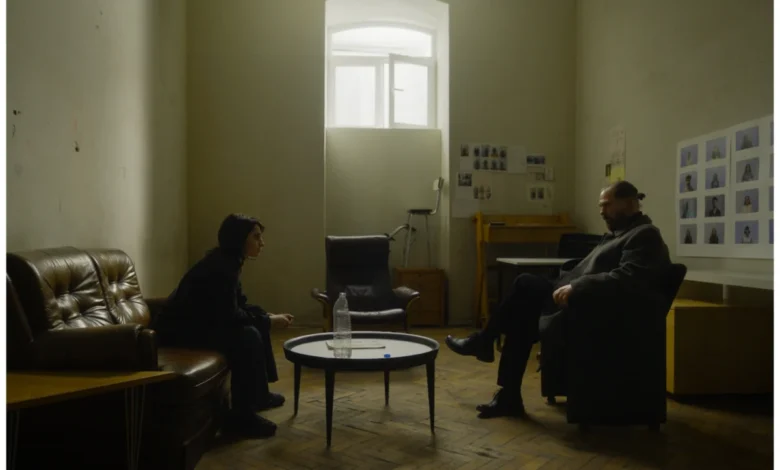
Georgian writer-director Ana Urushadze has captured international critical acclaim with her sophomore feature film, Supporting Role. Following its successful festival run earlier in the year—where it secured both a Special Jury Award and the FIPRESCI prize at the prestigious International Film Festival Rotterdam in January—the film has transitioned into the main competition at the Sarajevo Film Festival.
Blending existential wandering reminiscent of classic Jim Jarmusch cinema with a distinctly post-Soviet gallows humor, the film immerses audiences in a spectral, nocturnal tour of Tbilisi, Georgia. Anchored by a heavy, world-weary performance from veteran Georgian actor Dato Bakhtadze, the movie explores the friction between faded masculine bravado and a rapidly modernizing cultural landscape.
Main Facts and Narrative Premise
Supporting Role tracks Niaz (played by Dato Bakhtadze), a lumbering, once-celebrated Georgian movie star whose glory days are firmly in the past. Disheveled, brutish, and frequently met with wariness or thinly veiled exhaustion by his peers, Niaz navigates the depopulated streets and forgotten haunts of Tbilisi like a dizzied mastiff.
The narrative catalyst occurs during an unexpected casting call for an independent film spearheaded by Aza (Elene Mausuradze). Aza is an androgynous, strikingly pale director who bears the aesthetic resemblance of a Tim Burton extra. Bakhtadze, whose real-world career includes notable Hollywood stints in action blockbusters such as Wanted and Extraction 2, is accustomed to portraying brawny leading men under the command of traditional male auteurs. Consequently, he is left silent and slack-jawed when Aza confidently pitches him a tragic, one-scene role without a traditional script. Instead, she presents only a hand-drawn storyboard, lending him her sole copy when he requests three days to consider the part.
What follows is a sprawling, 139-minute nocturnal odyssey. Niaz drifts through the city, encountering an eclectic array of figures from his past, opportunistic fans, and random eccentrics who pull him into their homes and vehicles before he slips back into the shadows. Among these encounters are an Armenian duo who accompany him to a local spa, former lovers including a statuesque makeup artist and a veiled actress, and a gathering of industry colleagues attending the wake of a veteran film critic whose final, unpublished manuscript is an exhaustive academic study of Niaz’s career.
Chronology of Production and Festival Recognition
The trajectory of Supporting Role highlights Ana Urushadze’s rising status within European and international art-house cinema. Urushadze first broke onto the global stage with her 2017 debut feature, Scary Mother, which earned critical acclaim and captured the Best First Feature award at the Locarno Film Festival.
Drawing from her own experiences during the production of Scary Mother, Urushadze constructed the character of Aza as a subtle artistic avatar. Aza’s unapologetic defense of visual storytelling over conventional scriptwriting—justifying her sparse preparation by claiming that images carry the ultimate weight—mirrors Urushadze’s own directorial philosophy.
Following its completion, Supporting Role made its international premiere in January at the International Film Festival Rotterdam. The film immediately resonated with juries and critics alike, earning the prestigious FIPRESCI prize (awarded by the International Federation of Film Critics) alongside a Special Jury Award. Building on this momentum, the film secured a coveted spot in the main competition at the Sarajevo Film Festival, positioning it as one of the standout European releases of the festival circuit.
Supporting Data and Stylistic Execution
With a substantial runtime of 139 minutes, Supporting Role deliberately challenges the viewer, cultivating a trancelike, dreamworld immersion rather than a passive viewing experience. Despite its length, the film avoids sinking entirely into traditional cinematic sorrow through its judicious application of a trippy, surrealist aesthetic and a measured, jazzy, bass-heavy score composed by Sten Sheripov, which anchors the narrative’s wry romanticism.
Urushadze demonstrates restraint in her use of surrealism. Motifs introduced early in the film—such as a specialized herb Niaz picks from a roadside, which later resurfaces from his pockets during a tender encounter with a former partner, or a fleeting finger doodle traced on a fogged-up window—return with the disorienting weight of déjà vu.
Visually, Urushadze contrasts the shadowy, desolate nightscapes of Tbilisi with sharp, vibrant bursts of jewel tones. A turquoise bird, a room bathed in intense purple light, and a bone-white human form resting against midnight-blue sheets punctuate the visual palette, creating an atmospheric tension between realism and psychological projection.
Industry Implications and the Evolution of Male Stardom
At its core, Supporting Role serves as a biting yet empathetic character study on aging, irrelevance, and cultural transformation. Niaz’s faded star status is heavily implied to be the result of his own past behavior and missteps. The sudden prospect of Aza’s film forces him to confront not only the death of his career—which is inextricably bound to his younger, more arrogant self—but also the necessity of reinvention in a contemporary world that is rapidly losing its tolerance for the tropes of the self-indulgent male genius.
As Niaz becomes increasingly obsessed with securing and understanding the supporting role, he undergoes physical transformations, such as shaving off one eyebrow before being whisked away mid-process. This meticulous, desperate search for a way into the character demands a level of emotional softness and vulnerability that Niaz has systematically denied himself both on and off the screen.
A deeply sensitive, pivotal meeting between Niaz and his estranged son crystallizes the film’s broader philosophical inquiries: the porous and often hazardous boundary between performance and reality. The narrative posits that individuals are fundamentally shaped by the roles they inhabit, whether in cinema or in life.
Broader Impact and Critical Reception
Industry analysts note that Supporting Role arrives at a culturally significant juncture for Eastern European cinema. As post-Soviet nations continue to reevaluate their historical narratives, artistic infrastructure, and social norms, films like Urushadze’s offer a critical lens through which to examine institutional and personal obsolescence.
By subverting traditional power dynamics—pairing a towering, hyper-masculine action veteran with an enigmatic, uncompromising female director—Supporting Role challenges audiences to reconsider how cinema constructs heroism and vulnerability. The film’s ability to balance bleak existential introspection with whimsical gallows humor has earned it praise from critics across Western Europe and the Balkans alike.
Ultimately, Supporting Role delivers more than a nostalgic look back at a fading career; it offers a hopeful, albeit melancholic, blueprint for adaptation. Through Urushadze’s distinct directorial vision and Bakhtadze’s grounded, heavy-set performance, the film asserts that even the most worn-out narratives can be rewritten, provided the protagonist is willing to surrender his ego and embrace the unscripted uncertainties of real life.
Related posts: