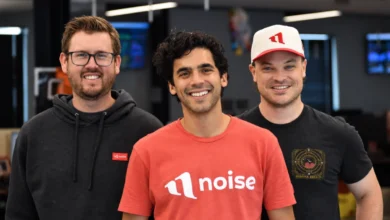
Prentis, an emerging artificial intelligence research laboratory dedicated to advancing computer use models, is reportedly engaged in discussions to secure a substantial funding round of $100 million, which would catapult its valuation to $1 billion. This significant financial maneuver, confirmed by two individuals privy to the negotiations, underscores the intense investor interest in companies poised to redefine enterprise productivity through AI. The startup, which formally launched in April, boasts a formidable founding trio: serial entrepreneur Ritankar Das, alongside technology titans Reid Hoffman and Marc Pincus, signaling a powerful convergence of visionary leadership and industry experience.
At its core, Prentis is developing sophisticated AI models designed to meticulously learn how office professionals navigate their daily workflows across a myriad of documents, applications, and digital systems. The ultimate ambition is to engineer autonomous AI agents capable of controlling computers to seamlessly automate these routine, yet often time-consuming, tasks. This strategic focus positions Prentis at the forefront of a burgeoning segment within the AI landscape, aiming to transcend traditional automation methods by endowing AI with the ability to interact with digital environments much like a human user.
The Vision: Automating the Modern Office Landscape
Prentis envisions a future where complex, multi-step office tasks that currently demand human intervention can be executed autonomously by AI. The company is poised to develop specialized agents tailored to specific customer needs, offering solutions for intricate processes such as handling insurance claims from initiation to resolution, or streamlining the often-tedious process of automating customs duty refund exceptions. These agents are designed to eliminate the need for human employees to manually search for, collate, and process paperwork, thereby unlocking significant efficiencies and reducing operational overheads.
The potential market for such automation is vast and largely untapped by existing technologies. Traditional Robotic Process Automation (RPA) often relies on rule-based systems that struggle with variability and unstructured data. Prentis’s approach, rooted in advanced AI agents that learn and adapt, promises a more flexible and robust solution. Industry analyses project the global business process automation market to reach hundreds of billions of dollars in the coming years, with AI-driven solutions forming an increasingly dominant share. By tackling the "last mile" of office automation – the intuitive interaction with complex software interfaces – Prentis aims to capture a significant portion of this growth.
Early indicators suggest strong market validation for Prentis’s offering. The startup has already secured contracts valued at up to $50 million with a diverse clientele, including a prominent healthcare management service organization, a manufacturing firm, and several goods and clothing manufacturers. These early commitments, as revealed by sources familiar with the discussions and corroborated by investor materials obtained by TechCrunch, project an impressive estimated annualized run rate of $75 million by the third quarter of this year. It is important to note, however, that Prentis’s pitch deck clarifies these figures represent an estimated annualized value based on a contracted fee equivalent to 20% of realized savings, not recognized revenue, and are explicitly stated as "performance-dependent and subject to final execution." This performance-based model aligns incentives with customer success, reflecting confidence in the agents’ ability to deliver tangible cost savings.
A Star-Studded Founding Team and Their Strategic Significance
The executive leadership behind Prentis brings an unparalleled depth of experience and a track record of success that undoubtedly contributes to its high valuation and investor appeal.
Ritankar Das and the Titan Model:
At the helm as CEO is Ritankar Das, a figure whose career trajectory is marked by precocious achievement and a unique entrepreneurial philosophy. Now 31, Das holds the distinction of being UC Berkeley’s youngest University Medalist in over a century, having graduated at the remarkable age of 18 with a double major in bioengineering and chemical biology. His academic prowess continued at Oxford, where he earned a master’s in biomedical engineering. Das subsequently embarked on an AI PhD program at Cambridge as a Gates Cambridge Scholar, which he ultimately left in 2014 to found Titan.
Titan is not a typical startup incubator or venture capital firm. Das intentionally fashioned it as an "old-fashioned holding company model," drawing inspiration from industrial conglomerates like Berkshire Hathaway. This structure emphasizes building and operating AI companies for the long term, funded predominantly by the exits of its own portfolio companies rather than relying heavily on external limited partners. This self-sustaining, long-term approach stands in contrast to the often rapid-fire, exit-driven mandates of traditional venture capital. Prentis, therefore, can be seen as a strategic cornerstone within Das’s broader vision for Titan.
Titan’s portfolio already showcases a history of successful ventures. Tala Health, an AI-powered virtual care provider, secured a $100 million seed round last year (2025), demonstrating significant investor confidence. Forta Health, an autism care startup, raised $55 million in a Series A round in 2024, led by Insight Partners. Furthermore, Dascena, a Titan-founded company focused on disease prediction, was acquired by CirrusDx in 2022, providing a clear example of the holding company’s self-funding mechanism. Das’s ability to identify critical societal needs and build robust AI solutions to address them, coupled with his distinctive business model, positions Prentis on a strong foundation.
Hoffman and Pincus: Serial Innovators and Investors:
The involvement of Reid Hoffman and Marc Pincus as co-founders lends immense credibility and strategic advantage to Prentis. For both, Prentis represents a dedicated, albeit perhaps alongside other ventures, dive back into "founder mode."
Reid Hoffman, renowned as the co-founder of LinkedIn and a prominent partner at Greylock, recently made headlines by stepping down from Microsoft’s board in June (2026) after nearly a decade. His stated reason was to dedicate more focus to "founder mode" with Manas AI, an AI drug-discovery startup he is also backing. Hoffman’s extensive history in the AI space includes being an early investor in OpenAI and co-founding Inflection AI with Mustafa Suleyman before Microsoft absorbed much of that team in 2024. His deep understanding of the AI ecosystem, coupled with his unparalleled network and experience in scaling transformative technology companies, is invaluable to Prentis. His decision to actively co-found Prentis, rather than merely investing, underscores the perceived potential of the venture.
Marc Pincus, the visionary founder of gaming giant Zynga, also brings a wealth of experience in building consumer-facing platforms and understanding user behavior at scale. He currently co-manages the investment firm Reinvent Capital with Hoffman as a senior adviser, further cementing their collaborative history. Pincus recently published his memoir, "Life at the Speed of Play," in June (2026), reflecting on his journey through the tech industry. His entrepreneurial acumen, particularly in developing intuitive and engaging digital experiences, could prove crucial in designing AI agents that seamlessly integrate into human workflows. The combined strategic insight and operational experience of Hoffman and Pincus offer Prentis a unique advantage in a highly competitive field.
Technological Edge and Unverified Performance Claims
Prentis asserts a significant technological advantage in its AI models. By its own account, its proprietary Hive-32B model reportedly surpasses rivals, including OpenAI’s GPT-5.4 and Anthropic’s Claude Opus 4.6, on two critical computer-use benchmarks. These benchmarks are specifically designed to evaluate the practical efficacy of AI agents in real-world digital environments.
- WindowsAgentArena: This benchmark measures the end-to-end task completion capabilities of AI agents on actual Windows applications, simulating the diverse software landscape of a typical office environment.
- ScreenSpot-v2: This benchmark tests a model’s precision and agility in locating the correct on-screen controls, a fundamental requirement for any AI agent tasked with navigating graphical user interfaces.
The company’s pitch deck further highlights a strategic differentiation: its ability to operate a much smaller and therefore more cost-efficient model. Prentis claims its technology achieves approximately 10 times lower cost per task compared to frontier APIs offered by leading AI developers. This efficiency, if independently verified, would represent a substantial competitive edge, making its deployment across everyday workflows significantly more economical for enterprises. Such cost-effectiveness could accelerate adoption, particularly for organizations seeking to scale automation initiatives without incurring prohibitive expenses.
It is crucial to acknowledge that TechCrunch has not independently verified these benchmark results. In the rapidly evolving AI landscape, performance claims are frequent, and independent validation is essential for substantiating technological superiority. Nevertheless, the focus on specific, actionable benchmarks like WindowsAgentArena and ScreenSpot-v2 indicates a pragmatic approach to demonstrating real-world utility, rather than relying solely on abstract linguistic or reasoning capabilities.
Navigating a Crowded but Lucrative Market
Prentis is entering a market that, while ripe with opportunity, is undeniably competitive. The startup is betting that the automation of everyday office tasks will soon eclipse coding as the most significant application for AI. This prediction aligns with broader industry trends indicating a shift from purely generative AI to more autonomous, agentic systems.
Major players are actively developing their own AI agents for computer use. Anthropic, a prominent AI research company, and OpenAI, the creator of ChatGPT, are both heavily invested in this domain. Additionally, Mira Murati’s Thinking Machines, a relatively newer entrant, is also reportedly working on similar agent technologies. The intensity of this competition is underscored by strategic acquisitions, such as Anthropic’s purchase of the Seattle-based computer-use startup Vercept earlier this year (2026). This acquisition saw Vercept’s founders integrated into Anthropic’s team and its product subsequently shut down, illustrating a strategy of talent acquisition and market consolidation.
The race to develop effective AI agents is driven by the immense potential for productivity gains across industries. From customer service to back-office operations, the ability for AI to autonomously interact with software, process information, and make decisions could unlock unprecedented levels of efficiency. However, challenges remain, including ensuring the reliability, safety, and explainability of these agents, especially when deployed in critical business functions. Prentis’s focus on a "smaller, cheaper model" could provide a strategic entry point, allowing for more widespread and economical deployment in scenarios where larger, more resource-intensive models might be overkill.
The Funding Landscape and Valuation Dynamics
The reported $1 billion valuation for Prentis, a company launched just months ago in April, is a testament to the current fervor surrounding AI startups, particularly those with strong founding teams and a clear vision for enterprise application. In an era often characterized as an "AI hype cycle," investors are demonstrating a willingness to assign premium valuations to companies perceived to be at the forefront of transformative AI technologies.
This valuation reflects several key factors: the caliber of the co-founders, whose previous successes and deep industry connections provide a significant de-risking factor; the vast market opportunity for office automation, which represents a clear and immediate path to revenue generation; and the early traction evidenced by the $50 million in contracted business. While performance-dependent contracts require careful consideration, they signal genuine customer interest and a belief in the product’s ability to deliver value.
The current AI funding environment is robust, with significant capital flowing into companies demonstrating innovative approaches and scalable solutions. High valuations, while sometimes a subject of debate, also attract top talent, allowing startups like Prentis to build world-class teams. Indeed, Prentis has already assembled a team of over 25 employees, including researchers with prior experience at leading AI and technology firms such as OpenAI, Google DeepMind, Meta, Tencent, and Alibaba, according to its website. This concentration of talent is crucial for developing and refining cutting-edge AI models in a competitive landscape.
Implications and Future Outlook
The emergence of companies like Prentis signifies a pivotal shift in the application of artificial intelligence. Beyond generating text or images, the next frontier for AI lies in its ability to act autonomously within complex digital environments. The widespread adoption of AI agents capable of controlling computers to automate routine office tasks carries profound implications for enterprise efficiency, human capital allocation, and the very nature of work.
For businesses, the promise is clear: reduced operational costs, increased accuracy, and the freeing up of human employees to focus on more strategic, creative, and interpersonal tasks. This could lead to a significant boost in productivity and competitiveness. However, the ethical considerations and societal impact of such widespread automation also warrant careful consideration. The potential for job displacement, the need for workforce reskilling, and the imperative to design AI agents that are fair, transparent, and controllable will be critical challenges to navigate.
Prentis’s strategic focus on a smaller, cheaper, yet highly performant model suggests an approach aimed at democratizing advanced AI automation, making it accessible to a broader range of enterprises. If successful, this could accelerate the digital transformation of countless organizations, driving efficiencies that were previously unattainable.
Chronology of Key Developments:
- 2014: Ritankar Das drops out of Cambridge AI PhD program to found Titan, an AI holding company.
- 2022: Dascena, a Titan-founded disease prediction company, is acquired by CirrusDx.
- 2024: Forta Health, an autism care startup within Titan’s portfolio, raises $55 million in a Series A round.
- 2025: Tala Health, an AI-powered virtual care provider from Titan, raises a $100 million seed round.
- February 2026 (Earlier this year): Anthropic acquires Vercept, a Seattle-based computer-use AI startup, integrating its founders and shutting down its product.
- April 2026 (Current year): Prentis officially launches, co-founded by Ritankar Das, Reid Hoffman, and Marc Pincus.
- June 2026 (Last month): Reid Hoffman steps down from Microsoft’s board to focus on "founder mode," including involvement with Prentis and Manas AI. Marc Pincus publishes his memoir, "Life at the Speed of Play."
- Ongoing: Prentis is in talks to raise $100 million at a $1 billion valuation.
- Q3 2026 (Projected): Prentis anticipates an estimated $75 million annualized run rate based on early customer contracts.
Despite the significant developments and public interest, Prentis declined to comment on the ongoing funding discussions or its strategic roadmap when contacted by TechCrunch, a common stance for companies amidst sensitive financial negotiations. As Prentis navigates its funding discussions and continues to develop its groundbreaking AI agents, the tech world will be watching closely to see if this new venture can fulfill its ambitious promise to fundamentally reshape the future of office work.