
Misleading harbour comparison photos do not prove rising sea levels are hoax – Misleading harbor comparison photos do not prove rising sea levels are a hoax. These images, often manipulated or selectively framed, can create a misleading impression of environmental change. This article delves into the techniques used to create these deceptive visuals, explores the importance of historical context, and examines the scientific consensus on sea level rise. We’ll also look at the social impact of spreading misinformation on this critical issue.
The manipulation of images can distort reality, making it crucial to critically evaluate the source and context of any visual claim about sea level rise. A detailed analysis of the techniques employed, coupled with a review of reliable data, will highlight the inaccuracies in these misleading comparisons.
Defining Misleading Comparisons
Harbour photos, often used in discussions about sea level rise, can be powerful tools for visual communication. However, these images can be manipulated or presented in ways that distort the reality of long-term coastal changes. This section will delve into the specifics of what constitutes a misleading comparison, exploring various methods of manipulation and highlighting the importance of context in interpreting such imagery.Misleading comparisons, in the context of harbour photos and sea level rise, occur when visual representations are presented in a way that obscures or misrepresents the true nature of the phenomenon.
This can take many forms, from simple cropping to sophisticated image editing, all aimed at creating a false impression. Understanding these techniques is crucial for discerning genuine scientific data from deceptive visual narratives.
Misleading Visual Comparisons
Misleading visual comparisons often rely on selective framing, manipulating the context of the image to support a preconceived notion. Examples include cropping a photo to exclude crucial details like changes in land use, or strategically positioning objects to exaggerate apparent shifts in water levels. Another common technique is the inappropriate juxtaposition of images from different time periods, creating a false sense of direct comparison.
Images from a period of exceptionally high or low tides can be presented alongside typical water levels, creating a misleading impression of consistent change.
Examples of Misleading Techniques
- Manipulated Images: Digital image manipulation can alter the appearance of water levels and shorelines. This might involve adjusting brightness, contrast, or using filters to exaggerate or minimize apparent changes. Software tools can also be used to remove or add objects in the scene, altering the visual context of the image.
- Selective Framing: Images might be cropped or framed to exclude important details. For instance, a picture of a harbour might show a significant rise in water level but omit the concurrent construction of a seawall, which would have a significant impact on the waterline. Similarly, the absence of historical context—such as aerial photos from decades earlier—can render a current image misleading.
- Inappropriate Juxtaposition: Presenting two images side-by-side, without proper context or calibration, can create a misleading comparison. For instance, comparing a harbour image from a period of unusually high tides with one from a period of low tides, without explicit labeling, can lead to erroneous conclusions.
Legitimate Scientific Data vs. Misleading Visual Representations
| Feature | Legitimate Scientific Data | Misleading Visual Representations |
|---|---|---|
| Data Source | Peer-reviewed scientific publications, tide gauge records, satellite imagery analyses | Unverified sources, social media posts, manipulated images |
| Context | Comprehensive data sets encompassing long-term trends, considering factors like land subsidence, sea level rise, and human interventions. | Isolated snapshots, lacking historical context or a broader understanding of environmental factors. |
| Analysis | Statistical analysis of data sets, employing rigorous methodologies to identify trends and correlations. | Visual interpretations based on subjective impressions, without rigorous analysis or supporting data. |
| Presentation | Clear presentation of data with error bars and uncertainties, acknowledging limitations of measurements. | Presentation that is designed to evoke emotional response rather than provide accurate information. |
Context and Perspective in Harbour Images
Interpreting harbour images related to sea level change requires careful consideration of context and perspective. Factors such as land subsidence, changes in river flow, and human interventions (e.g., construction of seawalls) can significantly influence water levels and shoreline features. A comprehensive understanding of these factors is crucial for accurate interpretation. For example, a seemingly significant rise in water level might be explained by land subsidence rather than rising sea levels.
Furthermore, the perspective from which an image is taken can influence the apparent magnitude of changes.
Common Fallacies in Visual Arguments
- Correlation vs. Causation: Simply observing a correlation between harbour changes and sea level rise does not prove causation. Other factors might be involved, like natural variability or human activities.
- Cherry-picking Data: Selecting only data points that support a specific narrative while ignoring contradictory evidence. This can be visually evident by showing only images that appear to support the narrative.
- False Dichotomies: Presenting a situation as having only two possible outcomes when more complex scenarios exist. A misleading presentation might imply that sea level rise is the sole cause of harbour changes, ignoring other contributing factors.
Analyzing Photo Manipulation Techniques
Misleading harbour comparisons often rely on sophisticated image manipulation to distort the visual record. Understanding the techniques used to fabricate these comparisons is crucial to evaluating their credibility and separating fact from fiction. This analysis will delve into common photo editing practices employed in these manipulations, illustrating how they can alter the perception of reality and how specific software tools contribute to these manipulations.
While those misleading harbour comparison photos might seem convincing, they don’t prove rising sea levels are a hoax. Recent economic shifts, like Indian companies rushing to sell short-term debt due to the RBI’s monetary boost lowering rates here , highlight complex global factors. Ultimately, these visual comparisons are insufficient evidence to challenge the scientific consensus on rising sea levels.
The ethical implications of these practices in the context of climate change discourse will also be discussed.Photo manipulation is a powerful tool, capable of subtly or drastically altering the appearance of an image. When applied to create misleading comparisons, such as those used to argue against rising sea levels, the intent is to fabricate evidence and undermine public trust in scientific findings.
The techniques range from simple adjustments to complex composites, often employed in conjunction to achieve the desired effect. Identifying and understanding these techniques is paramount for discerning the truth behind such images.
Common Photo Manipulation Techniques
Various techniques are used to manipulate images, creating a misleading impression of reality. These include adjustments to lighting, contrast, and colour saturation. Sometimes, portions of images are removed or replaced, and elements are added or moved, altering the overall scene. This manipulation can create a false sense of change over time, making the comparison seem more drastic than it actually is.
Those harbour comparison photos circulating online, showing seemingly dramatic water level changes, are often misleading. They don’t prove a hoax regarding rising sea levels, just like LIV golfers proving they can still win major championships, as highlighted by recent commentary from leishman calls out claims that LIV players can’t win majors. These visual tricks, similar to the misrepresented data, don’t hold water when you look at the bigger picture of the scientific consensus.
Ultimately, the photos alone don’t justify dismissing the undeniable evidence of rising sea levels.
Detailing Distortions in Visual Representation
Manipulation techniques can significantly distort the visual representation of reality. For example, adjusting the exposure or contrast of a historical photograph can exaggerate or diminish the perceived changes in water levels. Cropping or repositioning parts of an image can make it seem as though objects have moved or that the scale of a particular feature has changed. The combination of multiple techniques, when used in conjunction, can create an even stronger illusion.
Specific Editing Software Tools
Many readily available software programs provide tools for manipulating images. Examples include Adobe Photoshop, GIMP, and various online editing platforms. Photoshop, with its extensive range of tools, allows users to adjust colours, levels, and contrast, making it easy to alter the perceived impact of changes in water levels. GIMP, a free and open-source alternative, offers similar capabilities for adjusting image properties, albeit with a slightly different interface.
These tools provide the means to achieve subtle yet impactful changes in the appearance of the image.
Ethical Implications in Climate Change Discussions
The use of photo manipulation techniques to create misleading harbour comparisons raises significant ethical concerns, particularly in the context of climate change discussions. These manipulations can undermine public trust in scientific data and potentially delay or discourage action on climate issues. Such actions, while often disguised as “visual aids,” can actually be detrimental to public understanding of complex issues.
The deliberate distortion of images to create a false narrative has the potential to damage the integrity of scientific discourse and undermine public support for necessary environmental measures.
Table of Image Editing Software and Capabilities
| Software | Manipulation Capabilities |
|---|---|
| Adobe Photoshop | Advanced tools for adjusting colours, levels, contrast, and composition; allows complex layering and masking for composite images. |
| GIMP | Comprehensive set of tools for image manipulation, including adjustments to lighting, contrast, and colour; similar capabilities to Photoshop but often with a different interface. |
| Online Editing Platforms | Various online platforms offer tools for basic image adjustments, such as brightness, contrast, and cropping. Some platforms may have more advanced capabilities, depending on the specific platform. |
Examining Temporal Context
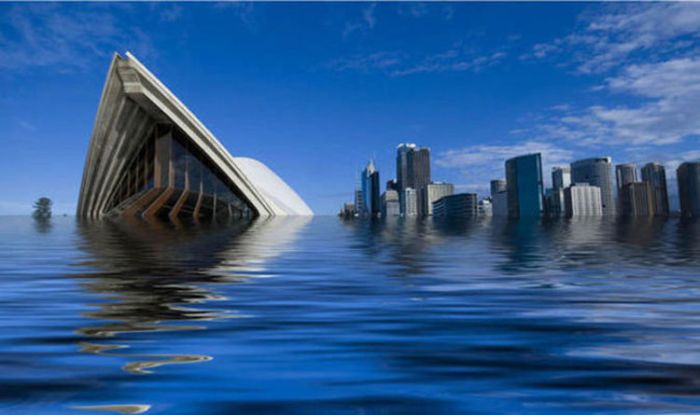
Misleading comparisons of harbor images often fail to account for crucial temporal factors. Simply juxtaposing a modern harbor photo with one from the past, without understanding the historical context, can lead to inaccurate conclusions about sea level rise. This section delves into the significance of considering the time dimension when analyzing harbor imagery, highlighting the importance of historical data and harbor development in interpreting contemporary observations.Understanding the evolution of a harbor’s infrastructure and surrounding land use is vital to interpreting changes in its appearance.
Harbors are dynamic environments, constantly modified by human intervention. These modifications, such as dredging, land reclamation, or the construction of seawalls, can create the illusion of rising sea levels when in fact, the observed changes are a result of human engineering.
Importance of Temporal Context in Sea Level Rise Analysis
Analyzing harbor images from different time periods requires careful consideration of the temporal context. Changes in infrastructure, land use, and even the accuracy of surveying techniques over time can significantly impact the perceived “level” of the harbor. Without this historical perspective, it is easy to misinterpret observed changes as direct evidence of rising sea levels.
Impact of Harbor Infrastructure Changes
Changes in harbor infrastructure, such as the construction of new docks, seawalls, or dredging operations, can alter the apparent shoreline. These modifications, often not reflected in the images themselves, can lead to the misinterpretation of a sea-level rise. A harbor with a newly constructed seawall, for example, may appear to have a lower waterline compared to historical images, but this is not indicative of a rise in sea level, rather of a change in the harbor’s defensive structure.
Historical Data and Harbor Development
Thorough research into historical data, including harbor development plans, engineering reports, and old maps, is crucial. Such documents provide valuable insights into the modifications made to the harbor over time. This allows us to disentangle human-induced changes from natural sea level fluctuations. For example, examining harbor dredging records can explain observed changes in the waterline, as dredging can create the impression of a higher water level.
Importance of Long-Term Observational Data
Reliable assessment of sea-level changes requires long-term observational data, encompassing both tide gauge measurements and satellite imagery. These data provide a broader picture, allowing for a more nuanced understanding of natural fluctuations and human-induced changes. Combining historical harbor images with these broader data sets allows for a more comprehensive understanding of the observed changes, reducing the likelihood of misinterpretation.
Correct Comparison of Harbor Images Across Time Periods
| Comparison Factor | Necessary Control | Considerations |
|---|---|---|
| Waterline Position | Check for presence of seawalls, docks, or other infrastructure changes. | Compare images taken under similar tidal conditions. |
| Shoreline Features | Assess the presence of land reclamation or erosion. | Account for potential changes in the accuracy of surveying techniques. |
| Image Resolution and Perspective | Ensure images are taken from similar vantage points and have comparable resolutions. | Analyze the scale and distortion of the images. |
| Tidal Data | Compare images during the same phase of the tide. | Account for the influence of waves and currents. |
| Historical Context | Consult harbor development plans, engineering reports, and maps. | Evaluate the impact of human interventions on the observed changes. |
Evaluating Data Sources and Reliability
Disseminating information about sea level rise requires meticulous attention to detail, especially when dealing with visual comparisons. Simply showing two photos of a harbor side-by-side doesn’t establish a trend or causation. The crucial step, often overlooked, is verifying the source and reliability of the images and any accompanying claims. This section delves into the importance of scrutinizing data sources to avoid misleading conclusions.
Verifying Image Sources
The credibility of a comparison heavily rests on the origin and history of the images. A single photograph, even one seemingly depicting a significant change, isn’t sufficient evidence for a larger trend. A crucial aspect of evaluating data is establishing the precise date and location of each photograph. Without this context, any apparent changes could be due to factors other than sea-level rise, such as variations in tides, weather, or even differing photographic techniques.
Identifying Potential Biases
Misleading harbor comparisons are often strategically crafted to support a specific narrative. Understanding the motivations behind the creation and dissemination of such comparisons is essential for critical evaluation. Individuals or groups promoting a particular viewpoint may selectively choose images or manipulate data to bolster their arguments. This bias may be intentional or unintentional, but its presence should always be considered.
Organizations with vested interests in land management, for instance, might highlight changes to shore lines in a manner that favors their perspectives.
Recognizing Unreliable Data Sources
Unreliable data sources frequently lack transparency, presenting images without context or clear attribution. Look for vague or overly general descriptions. A claim like “harbor has shrunk” is weak compared to a claim that specifies a documented 2-meter retreat between 1990 and 2023. A lack of verifiable information raises immediate skepticism. Websites with a history of spreading misinformation, or those lacking clear authorial credentials, should be approached with extreme caution.
Evaluating Credibility of Visual and Textual Claims
Claims about sea level rise, whether visual or textual, need rigorous scrutiny. The claim must be supported by multiple, independent sources, each adhering to verifiable standards. For instance, the claim “sea level rose 10cm in 2023” would require documentation from reputable scientific organizations, like NASA or NOAA, and should ideally be corroborated by multiple measurements from various locations.
A single anecdotal account or a blog post from a non-expert lacks the weight of scientific evidence.
Methods for Assessing Credibility
| Criteria | Methods |
|---|---|
| Source Transparency | Verify the author’s credentials, affiliation, and contact information. Check the publication history of the source. |
| Data Accuracy | Cross-reference data with independent, peer-reviewed studies. Check for consistency in data presentation across multiple sources. |
| Temporal Context | Verify the dates of the images and compare them to data from reliable meteorological and hydrological sources. |
| Objectivity | Assess the neutrality of the presentation. Look for potential biases in the selection of data and the way it is presented. |
| External Validation | Look for corroboration from other reputable scientific organizations or institutions. |
Illustrating the Science of Sea Level Rise: Misleading Harbour Comparison Photos Do Not Prove Rising Sea Levels Are Hoax
The scientific consensus overwhelmingly supports the reality and severity of rising sea levels. This isn’t a debate about the existence of the phenomenon, but rather about the causes, rates, and consequences. Understanding the underlying science allows us to better prepare for the challenges this presents and develop effective mitigation strategies.
The Scientific Consensus on Sea Level Rise
The scientific community overwhelmingly agrees that global sea levels are rising at an accelerating rate. This consensus is based on decades of research and data collected from various sources. The primary driver is the warming of the planet, causing thermal expansion of seawater and the melting of glaciers and ice sheets.
Causes of Rising Sea Levels
Several factors contribute to the observed increase in sea levels. The most significant driver is the warming of the Earth’s climate, primarily due to human activities like the burning of fossil fuels. This results in an increase in greenhouse gas concentrations in the atmosphere, trapping more heat and leading to a rise in global temperatures. This increased heat energy warms the ocean, causing it to expand (thermal expansion).
Additionally, the melting of glaciers and ice sheets, particularly in Greenland and Antarctica, directly adds water to the oceans.
Methods for Measuring Sea Level Changes
Accurate measurement of sea level changes relies on a combination of techniques, each with its strengths and weaknesses. Precise measurements are crucial for understanding the extent and rate of sea level rise. These methods provide critical data for climate modeling and future predictions.
- Tide Gauges: These are the oldest and most established method. Tide gauges are essentially precise measuring instruments placed at coastal locations. They record the height of the sea surface relative to a fixed benchmark. However, they are limited to a single location, and their long-term data can be affected by local factors. For example, subsidence of land or changes in the shape of the coastline can affect the accuracy of measurements.
- Satellite Altimetry: Satellite altimeters are placed on satellites that orbit the Earth. They measure the distance to the ocean surface using radar signals. This method offers global coverage and allows for more extensive measurements over time. Data from satellite altimetry is crucial for understanding global sea level trends. For instance, this technology can detect changes in sea level across vast ocean regions, revealing subtle variations that might be missed by localized tide gauge measurements.
Comparison of Measurement Methods
Tide gauges offer detailed local data, but their geographical limitations can hinder a comprehensive understanding of global trends. Satellite altimetry, in contrast, provides a global perspective on sea level changes, revealing large-scale patterns. Combining data from both methods enhances the accuracy and reliability of sea level estimations. For instance, a comparison of tide gauge and satellite data in a specific region could reveal local factors affecting sea level rise, such as land subsidence, in addition to global trends.
Data Supporting the Scientific Consensus
Numerous datasets support the scientific consensus on rising sea levels. These data points are essential to understanding the rate and extent of sea level rise, providing a foundation for mitigation and adaptation strategies.
| Data Type | Description | Source |
|---|---|---|
| Tide Gauge Data | Historical records of sea level heights at specific locations. | National Oceanic and Atmospheric Administration (NOAA), other national agencies |
| Satellite Altimetry Data | Global measurements of sea level heights from satellites. | NASA, European Space Agency (ESA) |
| Glacier and Ice Sheet Mass Balance Data | Measurements of ice loss from glaciers and ice sheets. | Various scientific research institutions and organizations |
Illustrating Misleading Visualizations
Misinformation, often disguised as compelling visuals, can significantly distort public understanding of complex issues like sea level rise. Manipulating images of harbors, for example, can create a false impression of the extent and rate of this environmental phenomenon. These manipulations, when not accompanied by comprehensive context, can lead to inaccurate conclusions and hinder effective policy responses. Careful examination of the images, understanding their limitations, and evaluating the accompanying data are essential for discerning the truth.
Examples of Image Manipulation
Misleading visualizations often rely on selective presentation of data or altering the context of an image. This can include cropping images to exclude relevant background information, altering the scale of the image, or using misleading captions. For example, an image of a harbor might be cropped to show only the waterline, omitting the surrounding land that has also been impacted by rising water levels over time.
Visualizing the Problem
Imagine two images of the same harbor. The first image, a historical photograph, depicts a pier extending into the water. The second image, a more recent photograph, shows the same pier, but the waterline has visibly risen. Taken in isolation, the comparison could lead viewers to believe that a dramatic increase in sea level has occurred. However, this conclusion would be incomplete without understanding the context.
Factors like subsidence (the sinking of land), natural variation in water levels, and changes in the harbor’s infrastructure must be considered.
Distorted Comparisons, Misleading harbour comparison photos do not prove rising sea levels are hoax
Presenting only two images without adequate context can create a misleading comparison. The crucial element missing from this isolated comparison is the baseline information. Without a detailed understanding of historical water levels, the appearance of a dramatic rise in the waterline might be exaggerated.
Those harbour pics comparing old photos to new ones? They’re often misleading, and don’t prove rising sea levels are a hoax. It’s a complex issue, and while Ukraine’s Naftogaz is buying new drilling rigs with an EBRD loan, this news doesn’t change the fact that coastal erosion and rising sea levels are very real phenomena, and are not easily debunked by a few snapshots.
So, next time you see a comparison photo, take a closer look at the actual data behind it.
Impact on Public Opinion and Policy
Misleading visualizations can significantly impact public opinion on sea level rise, often leading to skepticism or a denial of the scientific consensus. This can have serious consequences for policy decisions, potentially delaying or undermining efforts to mitigate the effects of rising sea levels. The public, confronted with a false impression of a non-existent or minor issue, might be less inclined to support policies designed to address it.
This could hinder investment in infrastructure, coastal protection measures, or adaptation strategies.
Accurate vs. Misleading Visualizations
| Feature | Accurate Representation of Sea Level Rise | Misleading Visualization |
|---|---|---|
| Data Source | Comprehensive data from tide gauges, satellite imagery, and scientific models, considering various factors. | Limited data from a single source or manipulated data. |
| Temporal Context | Clear depiction of historical data alongside current data, showcasing long-term trends. | Isolated images without historical context or using a very short timeframe. |
| Scale and Perspective | Appropriate scale and perspective to accurately depict the extent of the change. | Images manipulated to exaggerate or minimize the extent of the change. |
| Supporting Information | Includes explanations of the data and methodology used, providing transparency. | Lack of context or misleading captions. |
Analyzing the Social Impact of Misinformation
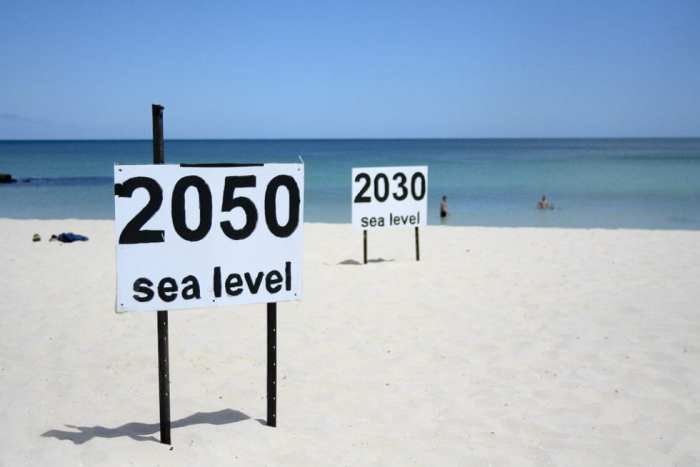
Misinformation surrounding environmental issues, particularly concerning the validity of climate change, can have far-reaching consequences. The spread of false or misleading information, especially when it targets scientific concepts like sea level rise, can erode public trust in established science and hinder collective action to address this global challenge. This section examines the potential negative impacts of such misinformation on public understanding, individual behavior, and societal responses to climate change.The deliberate or unintentional dissemination of inaccurate data, often through the use of manipulated images or selective presentation of facts, can significantly distort the public perception of sea level rise.
This can result in a decline in public concern and a decreased willingness to support policies designed to mitigate or adapt to the effects of rising sea levels. The insidious nature of this misinformation lies in its ability to sow doubt and confusion, thereby weakening the collective effort needed to tackle this urgent problem.
Potential Consequences of Spreading Misinformation
The dissemination of misleading harbour comparisons about sea level rise can have a cascade of detrimental effects. It can foster skepticism towards climate science and the scientific consensus on anthropogenic climate change. This skepticism, in turn, can lead to a decline in public support for policies designed to mitigate the effects of climate change. Consequently, individuals might become less inclined to adopt environmentally conscious behaviours.
Furthermore, the delay or inaction resulting from this misinformation can have substantial economic and social consequences in the long run, making adaptation to the inevitable impacts of rising sea levels more difficult and costly.
Impact on Public Understanding of Climate Change
Misleading comparisons, often visually compelling but factually inaccurate, can significantly alter public perception of climate change. Such misinformation can create confusion about the rate and extent of sea level rise, potentially downplaying its severity. This can lead to a diminished understanding of the urgency and scale of the problem. For example, if a comparison photo suggests that sea levels have not risen significantly over a period of time, it might lead individuals to believe that climate change is not a pressing issue.
This disengagement can have dire consequences in the form of inaction and a lack of public support for effective climate mitigation strategies.
Negative Impacts on Individual Behavior and Collective Action
Misinformation about sea level rise can directly influence individual behavior related to climate change. If people are misled into believing that the threat is exaggerated or nonexistent, they may be less likely to adopt sustainable practices, such as reducing their carbon footprint. This lack of individual action can significantly hamper collective action, making it more challenging to mobilize public support for broader climate policies.
Furthermore, the spread of misinformation can undermine the credibility of scientists and environmental organizations, creating distrust in sources of reliable information.
Role of Social Media in Amplifying Misinformation
Social media platforms have become powerful tools for disseminating information, both accurate and inaccurate. Misleading harbour comparisons, often shared with little critical evaluation, can spread rapidly across various social media networks, amplifying their reach and impact. The ease of sharing and the viral nature of content on platforms like Facebook, Twitter, and Instagram make them particularly vulnerable to the spread of misinformation.
Dissemination of Misinformation on Social Media Platforms
| Social Media Platform | Methods of Misinformation Dissemination |
|---|---|
| Shared posts, comments, groups, and paid advertisements containing misleading comparisons and manipulated images. | |
| Retweets, trending hashtags, and the rapid spread of misleading tweets using emotionally charged language. | |
| Captions of misleading photos and videos, filters and edits to exaggerate or minimize visual effects, use of influencer marketing to promote misinformation. | |
| YouTube | Videos that use selective editing and biased narratives to downplay the significance of sea level rise. Vlogs that present misleading data as conclusive evidence. |
Closing Summary
In conclusion, while visually compelling, misleading harbor comparisons do not support the claim that rising sea levels are a hoax. A thorough understanding of image manipulation techniques, historical context, and reliable data sources is essential for assessing claims about environmental change accurately. The scientific consensus on rising sea levels is well-established, supported by extensive data. Ultimately, we must rely on rigorous analysis and reliable sources to avoid being misled by misinformation and understand the critical issues of our time.