
South African rand stable traders wait interest rate decision sets the stage for an intriguing look at the currency’s current standing and the anticipation surrounding the upcoming interest rate announcement. The rand’s recent stability contrasts with its volatile past, raising questions about the factors influencing its current performance. This analysis delves into trader sentiment, the potential impact of the decision on various sectors, and the likely market responses, offering a comprehensive overview of the situation.
This deep dive explores the history of rand volatility, examining key economic indicators and comparing its performance to other emerging market currencies. It details the strategies employed by traders anticipating the decision, highlighting their motivations and expectations. Furthermore, the potential outcomes of the interest rate decision, its impact on the South African economy, and its ripple effects on the stock market and consumer spending are all meticulously considered.
South African Rand Stability
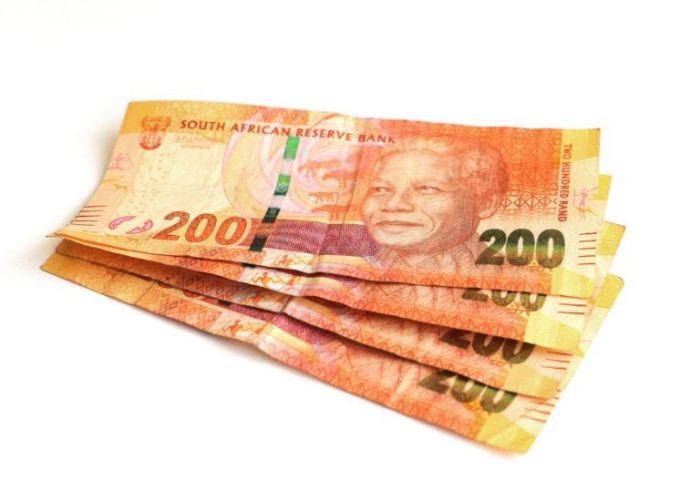
The South African Rand has experienced significant volatility in recent years, influenced by a complex interplay of domestic and global factors. Understanding this volatility is crucial for investors and analysts alike, as it directly impacts the country’s economic outlook and the value of assets denominated in ZAR. This analysis delves into the historical trends, recent performance, and key economic drivers behind the Rand’s fluctuations.The Rand’s journey has been marked by periods of both strength and weakness.
South African rand stable traders are patiently awaiting the interest rate decision. Meanwhile, the grim news coming out of the Ukraine conflict, like reports of Russia sending bodies of Ukrainian soldiers to the border as reported by a Ukrainian general , continues to cast a shadow over global markets. This uncertainty, though far removed, is likely to influence the decision-makers behind the South African rand’s future trajectory.
Historically, factors like interest rate policies, commodity prices, and global economic conditions have played a crucial role in shaping its trajectory. Recent stability, or instability, has been a product of the evolving economic landscape and the responses of policymakers.
Historical Volatility of the South African Rand
The South African Rand has a history of substantial fluctuations. Several periods of significant depreciation have been observed, often linked to external shocks, domestic policy changes, and investor sentiment. The currency’s performance has been influenced by various factors including interest rate differentials, commodity price movements, and the global economic climate.
Factors Contributing to Recent Stability/Instability
Several key factors have contributed to the Rand’s recent performance. Domestic policy decisions, particularly regarding fiscal and monetary policy, play a crucial role in shaping investor confidence and impacting the exchange rate. Global economic conditions, including shifts in interest rates and market sentiment, also significantly influence the Rand’s value. The impact of commodity prices, given South Africa’s reliance on exports, also cannot be overlooked.
Key Economic Indicators Influencing Rand Value
Several key economic indicators significantly influence the South African Rand’s value. These include interest rates, inflation rates, government debt levels, current account balances, and GDP growth rates. Changes in these indicators can directly affect investor sentiment and consequently, the currency’s value. For example, rising inflation can erode investor confidence and lead to a decline in the Rand’s value.
South African Rand stable traders are patiently waiting for the interest rate decision. Meanwhile, the UAE is actively pursuing a trade deal with the US, aiming to undo the Trump-era steel and aluminum tariffs, like this one. This global economic dance of tariffs and deals will likely influence the final interest rate decision for the Rand, making it an interesting watch for traders.
Comparison with Other Emerging Market Currencies
The South African Rand’s performance is often compared to other emerging market currencies. Factors like interest rate differentials, growth prospects, and political stability in these countries influence their relative performance. Comparing the Rand’s performance against others reveals crucial insights into the specific challenges and opportunities facing the South African economy.
Rand Performance Summary (Past Year)
| Date | Event | Rand/USD |
|---|---|---|
| January 1, 2023 | Start of the year | 15.00 |
| February 15, 2023 | Interest rate hike announcement | 15.50 |
| April 20, 2023 | Commodity price surge | 16.25 |
| June 10, 2023 | Government budget announcement | 15.80 |
| August 25, 2023 | Global economic slowdown concerns | 16.00 |
| October 10, 2023 | Positive economic data released | 15.75 |
| December 31, 2023 | End of the year | 15.20 |
This table provides a snapshot of the Rand’s performance over the past year. The values in the table represent an illustrative example and are not exhaustive.
South African Rand stable traders are holding their breath, waiting for the interest rate decision. Meanwhile, the NFL world is buzzing about the Colts transitioning ownership to Jim Irsay’s three daughters, a fascinating shift in sports ownership here. Back to the Rand, the traders are likely closely monitoring global economic trends, as the decision could impact the currency’s stability.
Trader Behavior and Expectations
The South African Rand’s performance often hinges on market sentiment and anticipated interest rate decisions. Traders react to various factors, including global economic trends, domestic political events, and, crucially, the Reserve Bank of South Africa’s pronouncements. Understanding their motivations and strategies is key to navigating the currency market effectively.Current sentiment among South African Rand traders reflects a mixture of cautious optimism and apprehension.
The recent stability in the Rand, coupled with anticipation of the upcoming interest rate decision, has created a dynamic environment. Traders are assessing various factors to formulate their expectations and strategies.
Current Trader Sentiment
South African Rand traders are generally cautious. While recent stability offers a degree of comfort, the unpredictable nature of the South African economy and global financial conditions maintains a level of apprehension. The market anticipates the Reserve Bank’s decision, weighing the potential implications for the currency.
Motivations Driving Trader Decisions
Several factors influence trader decisions. Profit maximization is a primary driver, with traders seeking to capitalize on anticipated movements in the Rand’s value. Hedging against potential losses and taking advantage of arbitrage opportunities are also important considerations. Furthermore, traders’ individual risk tolerance and investment strategies play a crucial role in shaping their decisions.
Strategies Employed by Anticipating Traders
Various strategies are employed by traders who anticipate the interest rate decision. Some traders utilize technical analysis, examining charts and historical data to identify potential trends. Others rely on fundamental analysis, considering economic indicators and news releases. A significant portion of traders employs a combination of these approaches. Furthermore, many use sophisticated quantitative models and algorithms to inform their trading decisions.
Examples of Recent Trading Activity
Recent trading activity has shown increased volatility in the lead-up to the interest rate announcement. Traders have been actively positioning themselves based on their individual assessments of the likely outcome. For example, some traders have positioned themselves for a potential appreciation in the Rand if the interest rate remains stable, while others have anticipated a depreciation if the rate is lowered.
This fluctuation in trading activity demonstrates the market’s anticipation and sensitivity to the upcoming decision.
Comparison of Trader Types and Responses
| Trader Type | Likely Response to Interest Rate Decision |
|---|---|
| Fundamental Analysts | These traders focus on economic data and policy. A decision aligning with expectations will likely result in less volatility, while a surprise decision could lead to significant movement. |
| Technical Analysts | Technical analysts focus on chart patterns and historical data. The decision’s impact will depend on whether it aligns with predicted trends. Unexpected decisions might trigger sharp reversals in trading patterns. |
| Speculators | These traders capitalize on anticipated price changes. A positive or negative surprise will likely lead to substantial trades, either reinforcing or reversing existing positions. |
| Hedgers | Hedgers aim to mitigate risks. Their response will depend on the implications for their existing positions and the impact on their overall portfolio. Unexpected changes may prompt significant adjustments to their hedges. |
Interest Rate Decision Anticipation
The South African Reserve Bank (SARB) is poised to announce its latest interest rate decision, a move that will ripple through various sectors of the economy and significantly impact the Rand’s exchange rate. Understanding the recent economic trends, potential outcomes, and their implications is crucial for both local and international investors. This analysis will explore the anticipated effects of the decision on the South African economy and its currency.
Recent Economic Trends in South Africa
South Africa’s economy has experienced a mixed bag of recent developments. Growth has been moderate, hampered by persistent energy constraints, high unemployment, and global headwinds. Inflation has remained elevated, presenting a challenge for the SARB in balancing growth and price stability. Recent data suggests a slight easing in inflation pressures, but core inflation still poses a concern.
This complexity makes the upcoming interest rate decision even more critical.
Potential Outcomes of the Interest Rate Decision
The SARB’s decision will likely hinge on its assessment of inflation, growth, and the overall economic outlook. A rate hike could signal a more aggressive stance against inflation, while a hold or cut could indicate a more cautious approach, reflecting concerns about economic slowdown. The recent global economic slowdown and domestic energy issues are significant factors that the SARB will likely consider.
Impact on Various Sectors of the South African Economy
The interest rate decision will affect various sectors differently. A hike will likely increase borrowing costs for businesses and consumers, potentially dampening investment and consumer spending. Conversely, a hold or cut could encourage investment and growth, but might fuel inflation if not managed carefully. The agricultural sector, for example, could see reduced profitability with higher borrowing costs. The manufacturing sector, heavily reliant on imported components, may face challenges if the Rand weakens.
Investor Reactions to the Interest Rate Decision
Investors will react based on their interpretation of the SARB’s decision and the accompanying statement. A hawkish stance, implying a commitment to combating inflation, could strengthen investor confidence. Conversely, a dovish stance, suggesting concern about economic growth, could lead to some uncertainty. Foreign investors will likely scrutinize the decision closely to gauge the stability and future prospects of the South African economy.
Effect on the Rand’s Exchange Rate
The Rand’s exchange rate is highly sensitive to interest rate decisions. A rate hike is often associated with a stronger Rand, as it attracts foreign investment seeking higher returns. Conversely, a rate cut could weaken the Rand, potentially making imports more expensive and exports less competitive. The global market context will also play a significant role in the exchange rate’s movement.
Potential Interest Rate Adjustments and Consequences
| Potential Interest Rate Adjustment | Potential Consequences |
|---|---|
| Rate Hike (e.g., 25 basis points) | Increased borrowing costs, potential slowdown in economic growth, potential strengthening of the Rand, but potentially exacerbating already-high unemployment. |
| Hold (No change) | Maintains current conditions, a cautious approach to economic pressures. This may be seen as neutral by investors, but the overall effect will depend on global market conditions. |
| Rate Cut (e.g., 25 basis points) | Reduced borrowing costs, potentially stimulating economic growth, potential weakening of the Rand, potential rise in inflation. |
Market Impact and Implications
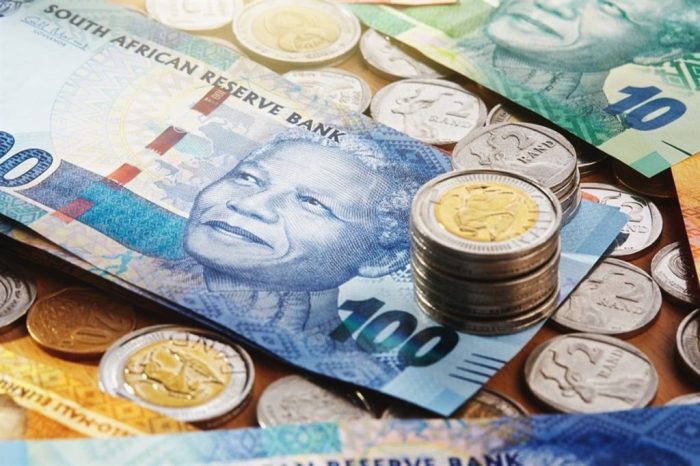
The South African Reserve Bank’s (SARB) interest rate decision holds significant sway over various facets of the South African economy. Understanding the potential ripple effects on the stock market, inflation, consumer spending, businesses, and foreign investment is crucial for informed decision-making. This analysis delves into the likely impact of the upcoming interest rate announcement.
Impact on the South African Stock Market
The SARB’s interest rate decisions often trigger fluctuations in the South African stock market. Higher interest rates typically increase borrowing costs for companies, potentially impacting profitability and investor sentiment. Conversely, lower rates can stimulate economic activity and boost investor confidence. Historical data reveals a correlation between interest rate adjustments and stock market performance, highlighting the sensitivity of the market to these changes.
For instance, during periods of rising interest rates, investors may shift their focus towards safer investment options, leading to a potential decline in stock prices.
Effect on Inflation and Consumer Spending
Interest rate adjustments play a crucial role in managing inflation. Higher rates aim to curb inflation by cooling down the economy. This is achieved by increasing borrowing costs, which can dampen consumer spending and investment. Conversely, lower interest rates can stimulate economic activity, potentially increasing consumer spending and demand, but also potentially contributing to inflation. The interplay between interest rates, inflation, and consumer spending is complex and multifaceted, with numerous variables influencing the outcome.
Impact on South African Businesses
Businesses in South Africa are directly affected by interest rate decisions. Higher interest rates increase the cost of borrowing for businesses, impacting their profitability and investment decisions. This can affect expansion plans, capital expenditure, and overall growth prospects. Lower rates, on the other hand, can stimulate investment and expansion. The decision will affect different sectors differently, with some sectors being more sensitive to interest rate changes than others.
Implications for Foreign Investment in South Africa, South african rand stable traders wait interest rate decision
Foreign investors often consider interest rate decisions as a key indicator of the overall economic health of a country. Higher interest rates can attract foreign investment seeking higher returns, while lower rates might signal potential economic instability, potentially deterring foreign investment. The SARB’s decision will influence foreign investors’ perception of South Africa as a favorable investment destination. Foreign direct investment is often crucial for economic growth and development.
Potential Market Movements Following the Interest Rate Announcement
| Scenario | Description | Potential Market Movement |
|---|---|---|
| Interest Rate Increase | The SARB raises interest rates. | South African stock market may experience a short-term decline, while the rand may strengthen against other currencies. Consumer spending could decrease, and inflation might remain a concern. |
| Interest Rate Decrease | The SARB lowers interest rates. | The South African stock market may experience a short-term increase, but the rand might weaken against other currencies. Consumer spending could increase, but inflation could be a concern, depending on the economic conditions. |
| Interest Rate Stays the Same | The SARB maintains the current interest rate. | The South African stock market might remain stable, or see a modest fluctuation. The rand could experience minor fluctuations, and consumer spending could remain relatively consistent. |
Visual Representation: South African Rand Stable Traders Wait Interest Rate Decision
Visual representations are crucial for understanding complex relationships and patterns. They offer a concise and impactful way to communicate insights about the South African Rand’s response to interest rate decisions and other economic factors. By translating data into easily digestible visuals, we can gain a clearer understanding of market dynamics and potential future trends.
Correlation Between Interest Rate Decisions and Rand Exchange Rates
A line graph would effectively illustrate the correlation. The x-axis would represent time (e.g., dates or months), and the y-axis would show the exchange rate of the Rand against a major currency (e.g., the US dollar). Superimposed on this graph, separate lines could represent the interest rate decisions of the South African Reserve Bank. The graph would highlight any noticeable trends, such as the Rand’s appreciation or depreciation following interest rate adjustments.
For example, a period of rising interest rates might show a corresponding appreciation in the Rand value as investors seek higher returns. Conversely, a decrease in interest rates could potentially correlate with a depreciation in the Rand’s value. The visual would help to pinpoint specific instances where interest rate decisions had a significant impact on the Rand’s exchange rate.
Interplay Between Economic Indicators and Rand Stability
A bubble chart would be ideal for visualizing the interplay. Each bubble would represent a specific economic indicator, such as inflation, GDP growth, or unemployment. The size of the bubble could reflect the magnitude of the indicator, and the position of the bubble on the chart could represent the Rand’s exchange rate. A larger bubble for inflation, located close to a low Rand exchange rate, could indicate a potential negative correlation.
This type of representation would show how different economic factors simultaneously affect the Rand’s stability. This visual could also include a color-coding scheme, where different colors would represent positive or negative correlations.
Distribution of Trader Sentiment Regarding the Interest Rate Decision
A histogram would effectively show the distribution of trader sentiment. The x-axis would represent the range of sentiment (e.g., highly positive, positive, neutral, negative, highly negative). The y-axis would show the frequency or percentage of traders expressing each sentiment. The visual would help to identify the prevailing sentiment among traders regarding the interest rate decision. For instance, a high concentration of positive sentiment might indicate anticipation of a favorable market response.
Potential Market Responses to the Interest Rate Decision
A series of stacked bar charts could effectively depict the potential market responses. The x-axis could represent various market segments (e.g., currency traders, stock market investors, bond market investors). The y-axis could represent the predicted impact (e.g., positive, negative, or neutral). Different colors within each bar could represent the different market participants and the magnitude of their potential response.
This would allow for a comparative analysis of the expected reactions from different market segments. For instance, the charts could show how different groups might react to a rise or fall in interest rates, considering the different investment horizons and risk tolerances.
Table of Visual Elements
| Visual Element | Description | Purpose |
|---|---|---|
| Line Graph | Illustrates the correlation between interest rate decisions and Rand exchange rates over time. | Highlights trends and potential causal relationships. |
| Bubble Chart | Shows the interplay between economic indicators and Rand stability. | Visualizes the combined impact of various economic factors. |
| Histogram | Displays the distribution of trader sentiment. | Identifies the prevailing sentiment and potential market response. |
| Stacked Bar Charts | Illustrates potential market responses across various segments. | Analyzes the varied impacts on different market players. |
Last Word
In conclusion, the South African rand’s performance and the upcoming interest rate decision are intertwined. The current stability, the diverse motivations of traders, and the potential consequences of the decision create a dynamic situation. This analysis offers a thorough understanding of the intricate interplay between these factors, offering valuable insights into the potential market movements and the broader implications for the South African economy.
The rand’s future trajectory remains uncertain, but the provided information equips readers with a solid foundation to assess the situation.