Timor-Leste Officially Certified Malaria-Free by the World Health Organization Following Historic Public Health Triumph

The World Health Organization has officially certified Timor-Leste as a malaria-free nation, marking a monumental public health victory for a young country that inherited immense infrastructural and medical challenges upon gaining independence in 2002. This prestigious certification is granted exclusively by the WHO when a country provides irrefutable proof that the continuous chain of indigenous malaria transmission has been successfully interrupted nationwide for a minimum of three consecutive years. For Timor-Leste, this milestone represents the culmination of more than two decades of rigorous public health interventions, sweeping healthcare reforms, targeted community engagement, and unwavering political commitment.
With this announcement, Timor-Leste joins an elite global cohort, becoming the 47th country and 1st territory overall to achieve malaria-free status from the WHO. Regionally, it is only the third nation within the WHO South-East Asia region to secure this distinction, following the Maldives in 2015 and Sri Lanka in 2016. Public health experts have hailed the achievement as a powerful testament to what can be accomplished when a resource-constrained nation pairs visionary domestic leadership with robust international collaboration.
The scale of this epidemiological turnaround is extraordinary. In 2006, at the peak of the public health crisis, the country recorded more than 223,000 clinically diagnosed cases of malaria among a population that was already struggling to rebuild its civil and economic foundations. By 2021, through aggressive containment, systematic treatment, and widespread vector control, those numbers plummeted to zero indigenous cases. Maintaining that zero-case threshold for consecutive years ultimately paved the way for the recent WHO validation, turning a relentless historical burden into a historic triumph for the Southeast Asian nation.
Chronology of a Public Health Crusade
The systematic eradication of malaria in Timor-Leste was neither accidental nor instantaneous; it was engineered through a meticulously planned chronological progression that began almost immediately after statehood was established.
In 2003, shortly after regaining independence, the Ministry of Health took decisive action by founding the National Malaria Programme (NMP). Operating initially with a skeletal staff of just two full-time officers, the program was tasked with establishing the foundational architecture for nationwide planning, monitoring, and execution. Despite severe logistical constraints and a decimated civil infrastructure, these early administrators laid critical groundwork characterized by strong technical leadership and micro-level attention to detail.
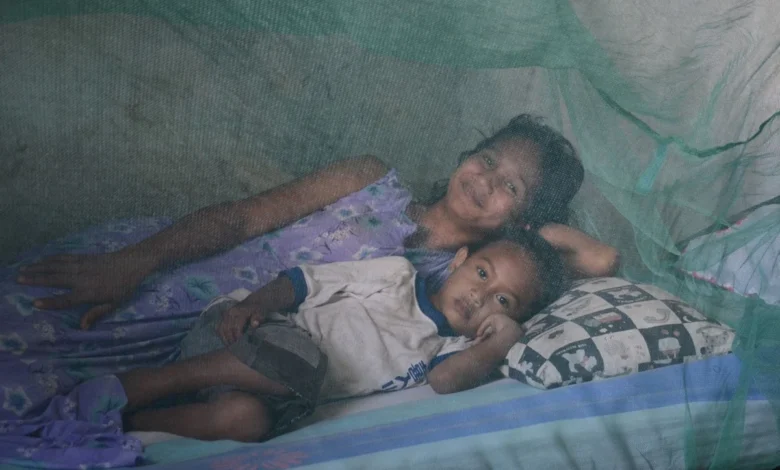
As the decade progressed, the strategy matured. By the mid-2000s, Timor-Leste integrated rapid diagnostic tests (RDTs) and artemisinin-based combination therapies (ACTs) directly into its National Malaria Treatment Guidelines. Concurrently, the government initiated broad distributions of free long-lasting insecticide-treated nets (LLINs) to vulnerable communities, significantly lowering household exposure to mosquito vectors during peak transmission seasons.
A major inflection point occurred in 2009, when Timor-Leste secured vital financial and technical backing from the Global Fund to Fight AIDS, Tuberculosis and Malaria. This infusion of resources enabled a massive escalation of vector control efforts. The country expanded nationwide distributions of LLINs and deployed indoor residual spraying (IRS) on an unprecedented scale. Furthermore, malaria diagnostics were decentralized and expanded, integrating microscopy and rapid diagnostic tests at the point of care across virtually all local health posts.
From 2010 through the late 2010s, surveillance mechanisms were steadily tightened. The introduction of real-time integrated case-based surveillance systems allowed health authorities to collect data rapidly, investigate individual cases swiftly, and deploy targeted containment responses before localized outbreaks could spread. By 2021, these integrated strategies successfully drove indigenous transmission down to zero, holding the line through stringent border screenings and active community case detection until the WHO validation team confirmed the elimination standard had been definitively met.
Strategic Pillars of the Malaria Elimination Campaign
Timor-Leste’s success was anchored in several structural pillars that transformed its fragile post-independence medical system into a resilient healthcare network. Chief among these was the deliberate expansion and structural strengthening of the country’s three-tier health system. Recognizing that severe shortages of doctors and trained medical personnel threatened public health outcomes, the government invested heavily in expanding infrastructure.
Today, the system comprises national hospitals, reference hospitals, community health centers, and localized health posts. This structure was specifically designed to ensure that the vast majority of residents can access professional medical care within a one-hour walk. Furthermore, the government instituted a national policy guaranteeing free health services at the point of care, effectively removing economic barriers that typically prevent impoverished rural populations from seeking timely diagnosis and treatment. To bridge geographic gaps, monthly mobile clinics and dedicated community outreach programs were deployed to reach remote, hard-to-access populations.
Complementing these physical expansions were rigorous operational protocols. Health workers were trained to maintain heightened vigilance, executing prompt screenings and immediate treatments. Border health screening protocols were tightened to catch imported cases before they could re-establish domestic transmission chains. Public health campaigns also empowered local communities, transforming ordinary citizens into active participants in vector management and environmental cleanup efforts.
Official Reactions and International Acclamation
The international community was swift in recognizing the magnitude of Timor-Leste’s achievement, offering high praise from global health leaders who view the island nation’s journey as a global blueprint for disease elimination.
Dr. Tedros Adhanom Ghebreyesus, Director-General of the World Health Organization, offered formal congratulations to the government and people of Timor-Leste. "Timor-Leste’s success proves that malaria can be stopped in its tracks when strong political will, smart interventions, sustained domestic and external investment, and dedicated health workers unite," Dr. Tedros stated, emphasizing the replicability of the country’s model for other endemic regions.
Locally, the emotional resonance of the milestone was profoundly felt by those who spearheaded the campaign. Dr. Élian António de Araújo dos Reis Amaral, Minister of Health for the Government of Timor-Leste, reflected on the decades-long battle with visceral candor. "We did it. Malaria has been one of our most relentless enemies – silent, persistent, and deadly. We lost too many lives to a disease that should be preventable. But our health workers never gave up, our communities held strong, and our partners, like WHO, walked beside us," she remarked. "From 223,000 cases to zero – this elimination honours every life lost and every life now saved. We must safeguard this victory with continued vigilance and community action to prevent malaria’s re-entry."
Echoing these sentiments, Dr. Arvind Mathur, WHO Representative to Timor-Leste, described the certification as a defining national triumph. "As a young nation, Timor-Leste stayed focused – testing, treating, and investigating swiftly. Ending transmission and maintaining zero deaths takes more than science; it takes grit. This victory protects generations, present and future, and shows what a determined country can achieve."
Broader Economic and Social Implications
The transition from a high-burden malaria environment to a certified malaria-free nation carries profound implications for Timor-Leste’s long-term socioeconomic development. Historically, malaria acts as a severe tax on human capital, draining national productivity through chronic absenteeism in the workforce, lost educational days for school-aged children, and catastrophic out-of-pocket medical expenditures for struggling households.
By eliminating the disease, Timor-Leste has effectively removed a major barrier to human development and labor productivity. Families are no longer forced to divert scarce financial resources toward malaria treatments, and the national health system can redirect valuable medical personnel, laboratory supplies, and budgetary allocations toward addressing other pressing public health priorities, such as maternal and child health, non-communicable diseases, and emerging health security threats.
Moreover, achieving malaria-free status enhances the nation’s international standing, bolstering confidence among foreign investors, international organizations, and the global tourism sector. A healthier workforce translates directly into a more dynamic and resilient domestic economy, laying a stable foundation for sustainable growth in the decades ahead.
Looking Ahead: The Imperative of Sustained Vigilance
While the WHO certification is a cause for national celebration, public health authorities emphasize that the cessation of indigenous transmission does not mean the permanent end of disease-related risks. Because malaria remains endemic in neighboring countries and across the broader region, Timor-Leste faces an ongoing threat of imported cases carried by travelers, migrant workers, or returning citizens.
To safeguard its hard-won victory, the Ministry of Health has outlined plans to maintain high levels of epidemiological surveillance, particularly at international ports of entry and porous border crossings. Community-level awareness programs will also be sustained to ensure that any potential imported cases are identified, reported, and treated immediately before local vector populations can transmit the parasite anew.
Ultimately, Timor-Leste’s journey from a devastated post-conflict state plagued by hundreds of thousands of annual malaria cases to an internationally certified malaria-free nation stands as an inspiring beacon of hope. It demonstrates unequivocally that with visionary leadership, sustained domestic commitment, intelligent resource allocation, and international solidarity, even the most formidable public health challenges can be decisively overcome.