George Russell searches for answers as Kimi Antonelli closes in on Formula 1 world title after dominant United States Grand Prix victory

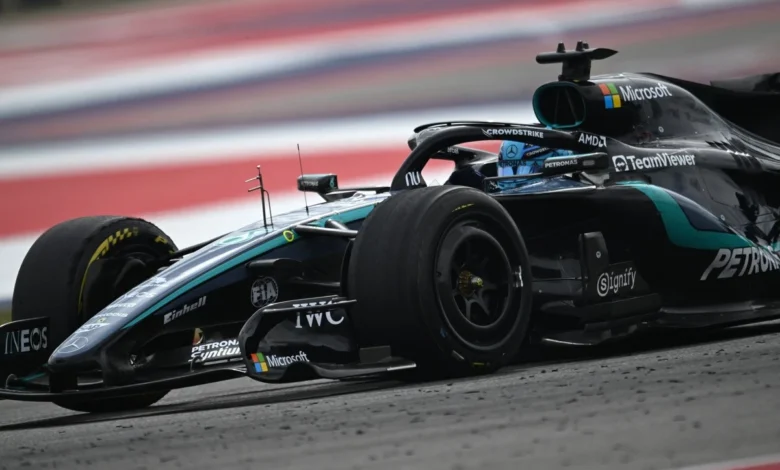
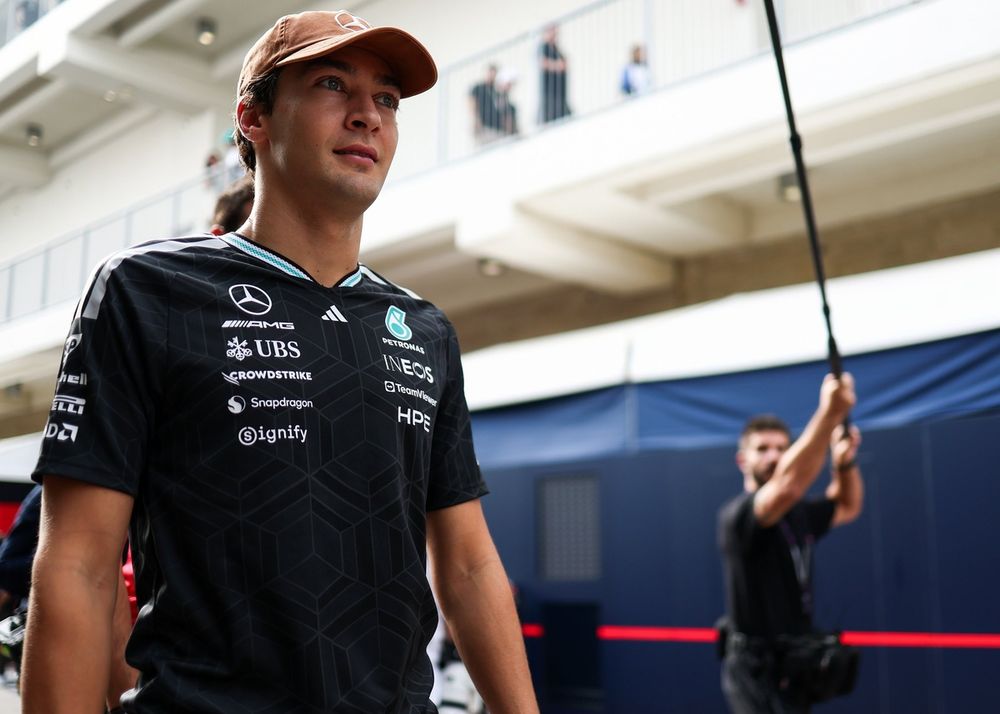
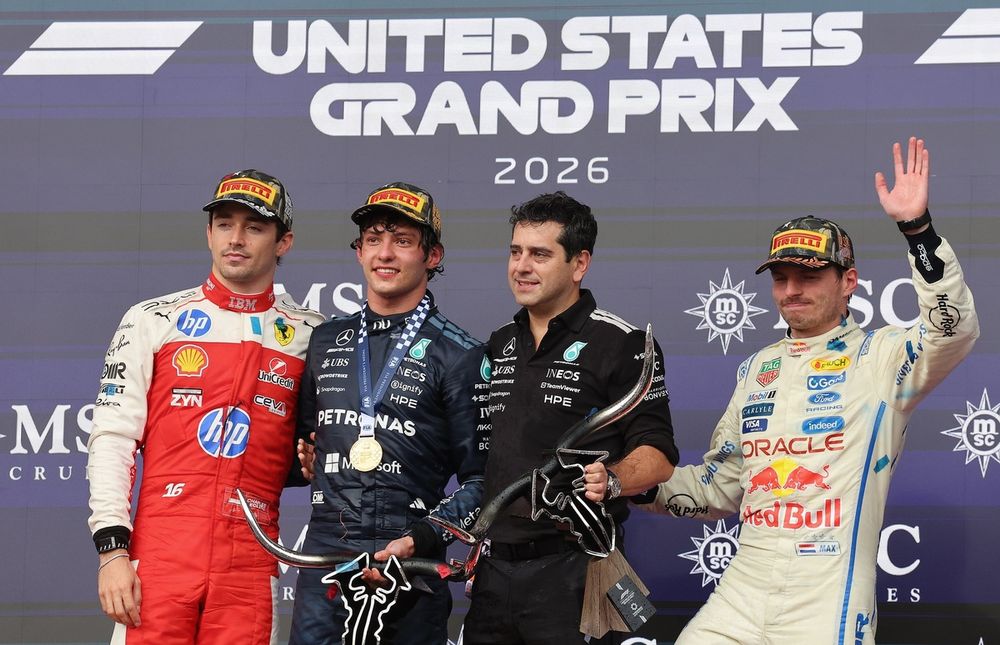
The Formula 1 landscape shifted dramatically at the Circuit of the Americas this past weekend, where the narrative of the 2026 season reached a pivotal juncture. Andrea Kimi Antonelli continued his meteoric rise, delivering a masterclass from pole position to claim victory at the United States Grand Prix. In stark contrast, his Mercedes teammate George Russell endured a grueling afternoon, finishing eighth after a series of technical and procedural setbacks that have left the British driver questioning his current form.
The disparity between the two Mercedes drivers was palpable throughout the weekend in Austin. While Antonelli showcased the true potential of the upgraded W17 chassis, Russell struggled to extract pace, citing a narrow operating window that has plagued his performance since the introduction of the new aerodynamic package at the Malaysian Grand Prix.
A Weekend of Frustration for Russell
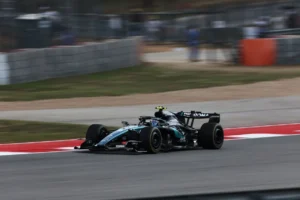
Russell’s race began on a sour note. Starting from sixth on the grid, he found himself embroiled in a tense opening-lap battle with McLaren’s Oscar Piastri. Approaching the heavy braking zone of Turn 12, Russell attempted to defend his position but was forced wide, leaving the track surface. While he rejoined ahead of the Australian, the stewards deemed the maneuver to have gained him a lasting advantage, handing the Mercedes driver a five-second time penalty.
"Just not being quick enough, to be honest," Russell admitted during his post-race interview with Sky Sports. "I need to try and understand why it is. It’s strange when you’re so far off, so hopefully there’s some answers somewhere. But, anyway, I don’t have one."

The penalty ultimately proved academic in the grand scheme of his result, as his lack of race pace meant he was unable to build the necessary gap to mitigate the five-second deduction. Even without the sanction, Russell would have likely crossed the line in seventh, a marginal improvement that does little to mask the underlying issues he is facing with the car’s balance and tire management.
Chronology of a Challenging Campaign
The 2026 season has been defined by a significant technical evolution, and for Russell, the recent developments have proven difficult to master. Following the introduction of the latest W17 upgrades in Malaysia, the team experienced a dichotomy of results. In Malaysia, Antonelli secured a strong runner-up finish behind championship leader Max Verstappen, while Russell looked poised for a podium finish until a catastrophic power unit failure forced his retirement.
The trend continued in Singapore, where, despite another victory for Verstappen and a podium finish for Antonelli, Russell faded to a lowly ninth. The result in Austin marks three consecutive Grands Prix without a podium for the Briton, a sequence that has effectively ended his realistic aspirations for the Drivers’ Championship as the season enters its final phase.
When analyzing his performance in Austin, Russell highlighted the inconsistency of his race. "The pace wasn’t good on the first stint," he noted. "But when I came out of the pits on the hard tires, I probably did six laps where I was lapping the same pace as Kimi. But then I caught up with Oscar and I just couldn’t overtake. Six good laps, 50 bad laps. I want to understand why the pace was so bad on the first stint."
The Championship Implications
With his win in Texas, Andrea Kimi Antonelli stands on the precipice of clinching the 2026 Formula 1 World Championship. He currently holds a 123-point advantage over Russell, with only 125 points remaining available across the final five rounds of the season. Given his current form and the performance gap between the two Mercedes machines, it is statistically probable that Antonelli will secure the title as early as the upcoming Mexico City Grand Prix.
The fight behind the leader remains intense, however. Russell finds himself in a precarious position, sitting just one point ahead of Lewis Hamilton in the standings. Max Verstappen, while mathematically trailing, remains within striking distance of both as he fights to maintain Red Bull’s competitiveness against the silver arrows.
Mercedes, meanwhile, is comfortably positioned to secure the Constructors’ Championship. With a 133-point lead over Ferrari, the Brackley-based squad is on track to reclaim the team title, a feat that remains the primary objective for both drivers.
"For me, as long as we win the constructors’ championship, that’s the main thing," Russell emphasized. "For the team, obviously I’d like to finish best of the rest, but P2, P3, or P5—if you’re not the champion, it doesn’t mean much."
Technical Analysis: The W17’s Narrow Window
The recurring theme in Russell’s feedback has been the "narrow set-up window" of the W17. In modern Formula 1, finding the optimal ride height and aerodynamic balance is a delicate science. When a car possesses a narrow window, even minor changes in track temperature, wind direction, or fuel load can cause the car to fall off its performance plateau.
Engineering experts suggest that the current Mercedes iteration requires a very specific driving style—one that Antonelli seems to have adapted to more naturally. Russell’s struggle to find a rhythm suggests that the current car balance may not suit his traditional high-speed cornering entry, forcing him to over-compensate and subsequently overheating his tires. This leads to the "up-and-down" form observed in recent weeks, where he can show flashes of pace only to fall back when the tires degrade beyond the ideal thermal range.
Looking Toward Mexico and Beyond
As the circus moves to Mexico City, the focus for the Mercedes engineering team will be on data reconciliation. They must determine why Russell’s car failed to perform in the first stint at Austin while showing competitiveness in the later stages. For Russell, the remaining five races represent an opportunity to reset and provide the team with the necessary feedback to finalize the development path for the 2027 season.
The championship is essentially decided, but the internal dynamic at Mercedes is evolving. With Antonelli’s ascension, the team faces the challenge of managing a burgeoning star while ensuring that a veteran like Russell does not fall into a prolonged slump. The upcoming races will serve as a litmus test for both the driver’s resilience and the team’s ability to provide a more predictable platform for their drivers.
Official Responses and Team Dynamics
While Mercedes management has publicly praised the team’s collective effort in securing a dominant lead in the Constructors’ standings, there is an acknowledgment of the work needed to support both drivers equally. The internal pressure is undoubtedly rising, yet the team maintains that their primary focus remains the team trophy.
The atmosphere in the paddock suggests that while Antonelli is the focus of the championship narrative, the technical team is under significant pressure to provide a car that doesn’t just work for one driver. As the calendar ticks down toward the season finale, the ability of Russell to diagnose his issues will be crucial for his standing within the team hierarchy for the following year.
The United States Grand Prix served as a microcosm of the 2026 season: a display of supreme dominance from one side of the garage and a period of deep introspection for the other. With the championship hunt nearing its conclusion, the focus shifts to whether Russell can reclaim his momentum or if the closing stages of the year will see him relegated to a supporting role as the team celebrates the arrival of a new champion.
Related posts: