Dave Grohl on Poaching Taylor Hawkins from Alanis Morissette and the Lifelong Bond That Defined a Generation of Rock Music

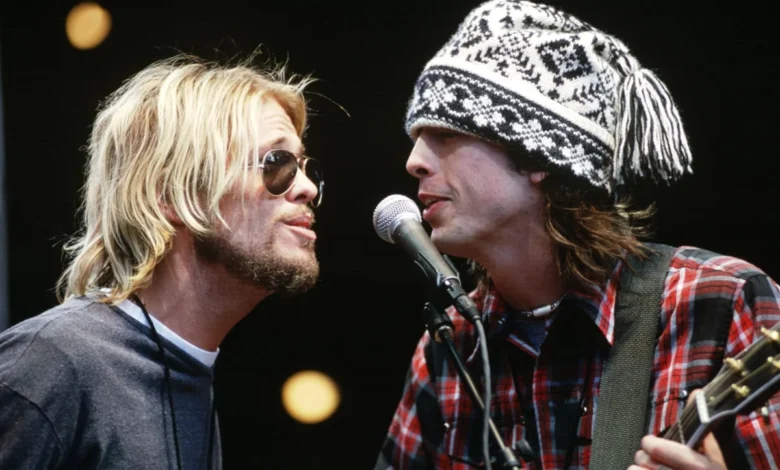
The legacy of the Foo Fighters is inextricably linked to the profound creative and personal synergy between frontman Dave Grohl and the late drummer Taylor Hawkins. In a recent appearance on Jimmy Kimmel Live!, Grohl provided a poignant look into the genesis of their partnership, detailing the moment he first encountered Hawkins while the latter was serving as the touring drummer for Alanis Morissette. This retrospective reflection underscores not merely a professional recruitment, but the start of a decades-long brotherhood that would fundamentally alter the trajectory of modern rock music.
The Genesis of a Musical Brotherhood
The initial meeting between Grohl and Hawkins took place during the mid-1990s, a period when both the Foo Fighters and Alanis Morissette were experiencing meteoric rises in global popularity. As Grohl recounted, the two bands frequently crossed paths at international music festivals and radio promotional events.
"Our first record came out around the time Alanis’ first record came out," Grohl explained during his residency on the late-night program. "So we were doing a bunch of those festivals and radio shows and things, but that was the first time I met Taylor, backstage."
The immediate magnetism between the two was palpable. Grohl recalled the interaction with a mixture of nostalgia and clarity, describing the impression Hawkins left on him: "Here comes this blond, surfer dude, like, ‘Yo, dude, I love your band. You guys are so awesome.’ I knew, right then, I was like, ‘Oh, we’re gonna be best friends for the rest of our lives.’"
This intuition proved to be accurate, serving as the cornerstone of the Foo Fighters’ rhythmic foundation for over twenty-five years. Interestingly, the transition was facilitated by Morissette herself. Grohl revealed that the "You Oughta Know" singer recognized the chemistry and potential in the pairing, even going so far as to challenge Hawkins by asking him directly what his plans were for when Grohl inevitably invited him to join the Foo Fighters.
Chronology of a Legendary Partnership
The timeline of Hawkins’ integration into the Foo Fighters is a critical chapter in rock history. Following his stint with Morissette, Hawkins officially departed her touring band in March 1997. He joined the Foo Fighters during a pivotal transition period as the group was finalizing their sophomore album, The Colour and the Shape.
While Hawkins did not play on the original recording of that seminal album, his arrival marked a stabilization for the band. His first studio contribution arrived with the 1999 release, There Is Nothing Left To Lose, which featured the hit "Learn to Fly." Over the next two decades, Hawkins became the pulse of the band, contributing to eight studio albums and cementing his status as one of the most energetic and technically proficient rock drummers of his era.
His tenure came to a tragic and abrupt end on March 25, 2022. While the band was in Bogota, Colombia, preparing for a performance at the Festival Estéreo Picnic, Hawkins passed away at the age of 50. The event sent shockwaves through the global music industry, leading to the cancellation of the remainder of the band’s tour and prompting a period of profound mourning for the music community.
Tributes and the Global Response
The passing of Taylor Hawkins prompted an unprecedented outpouring of grief from peers and fans alike. In the immediate aftermath, the Foo Fighters organized two monumental tribute concerts held in London and Los Angeles later in 2022. These events were not merely memorial services; they were high-production musical celebrations that showcased the depth of Hawkins’ influence across genres.
The London concert, held at Wembley Stadium, stood as a six-hour testament to his character and skill. The guest list featured icons such as Paul McCartney, Chrissie Hynde, Liam Gallagher, Brian May, and Roger Taylor. One of the most poignant moments of the evening occurred when Hawkins’ son, Shane, took the drum stool to perform "My Hero," a moment that became a defining image of the tribute. Grohl, speaking of the events, characterized them as "gigantic fucking nights for a gigantic fucking person," emphasizing that the scale of the production matched the magnitude of the loss felt by the band and his family.
Navigating the Post-Hawkins Era
The implications of Hawkins’ death for the Foo Fighters were existential. In subsequent interviews, Grohl admitted that the loss caused him to "question everything about life." The band’s path forward required a delicate balance of honoring the past while maintaining the momentum of their creative output.
The group released the critically acclaimed album But Here We Are in 2023, which served as a cathartic response to the grief they were navigating. The band continued to evolve, eventually bringing in veteran drummer Josh Freese to handle touring duties. Freese, known for his work with Nine Inch Nails and A Perfect Circle, provided a steady hand during a difficult transition period.
However, the band’s personnel landscape continued to shift. In May 2025, the music world noted the abrupt departure of Freese from the Foo Fighters. This was quickly followed by the announcement that Ilan Rubin—formerly of Nine Inch Nails—would take over the position. This latest transition reflects the ongoing evolution of the band as they seek to define their sound in a post-Hawkins landscape. Despite these changes, the band has remained prolific, releasing their latest album, Your Favorite Toy, in 2026.
Analysis: The Lasting Impact of a Drummer
The relationship between Dave Grohl and Taylor Hawkins transcended the typical professional dynamics of a band. In the music industry, where turnover is common and creative friction often leads to dissolution, the longevity of their partnership was an outlier.
Data from the band’s performance history shows that between 1997 and 2022, the Foo Fighters maintained a level of consistency that few rock acts achieve. This was largely attributed to the symbiotic relationship between the frontman and the drummer. Analysts of rock history note that Hawkins was more than a timekeeper; he was the primary collaborator and emotional anchor for Grohl. His ability to translate Grohl’s vision into dynamic, high-energy percussion allowed the band to fill stadiums for decades.
The recent comments by Grohl on Jimmy Kimmel Live! serve as a reminder that the human element is what anchors the commercial success of legendary bands. By sharing the origin story of their friendship—rooted in mutual respect and instant recognition—Grohl provided fans with context that humanizes the band’s professional achievements.
Looking Toward the Future
As the Foo Fighters move into their fourth decade of operation, the shadow of Taylor Hawkins remains a constant, yet constructive, presence. The band’s commitment to continued musical production, evidenced by their recent studio releases, suggests a philosophy of moving forward through creation.
The industry continues to observe how the band navigates the loss of a foundational member. With Ilan Rubin now at the helm, the band faces the challenge of integrating a new rhythmic identity while preserving the legacy that Hawkins helped build. The transition, while fraught with the emotional weight of their history, signals a resilience that has defined the Foo Fighters since their formation.
Ultimately, the story of Dave Grohl and Taylor Hawkins is a narrative of profound professional success built upon a foundation of genuine, lifelong friendship. Their collaboration remains a case study for modern musicians on the importance of interpersonal synergy in sustaining long-term creative output. While the music industry continues to evolve, the impact of their partnership—and the void left by Hawkins’ absence—remains a central theme in the contemporary rock canon. The Foo Fighters, through their tributes, their music, and their continued persistence, ensure that the "surfer dude" who walked backstage in 1997 remains an integral part of the band’s identity today.