Global humanitarian leaders, policymakers, and health experts converged in the Saudi capital for the Riyadh International Humanitarian Forum, held from February 24 to 25, 2025. The high-profile gathering marked a milestone decade of operations for the King Salman Humanitarian Aid and Relief Centre (KSRelief), serving as a crucial platform to address escalating global health emergencies, advocate for crisis-affected populations, and reinforce the safety and security of aid workers operating in volatile environments.
Against the backdrop of compounding geopolitical conflicts and climate-induced emergencies, the two-day forum yielded a series of high-impact financial pledges and multilateral agreements. Among the most notable outcomes were strategic partnerships forged between the World Health Organization (WHO), UNICEF, and KSRelief. These agreements target critical disease burdens—including malaria, cholera, and polio—while providing specialized medical care to displaced populations across the Middle East and neighboring regions.
Main Facts and Major Funding Agreements
The 2025 Riyadh forum translated high-level diplomatic discussions into tangible financial commitments designed to fortify fragile health systems. A centerpiece of the event was the formalization of several targeted grants and multi-million-dollar cooperation frameworks between KSRelief and its international agency partners.
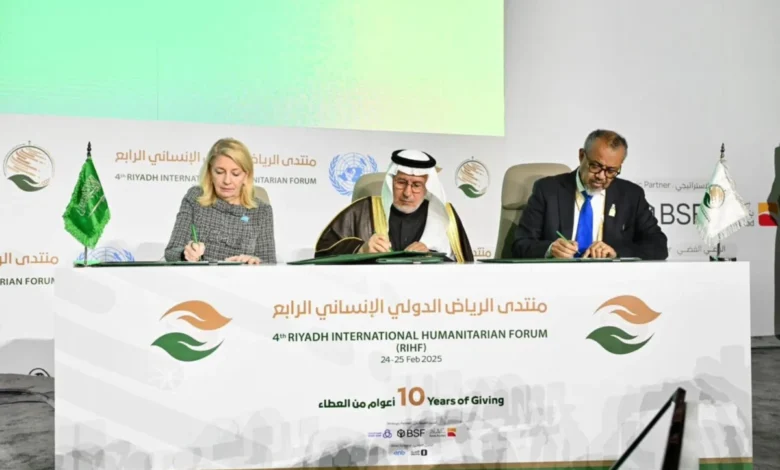
Chief among these was the formal confirmation of the Kingdom of Saudi Arabia’s monumental US$ 500 million pledge to the Global Polio Eradication Initiative (GPEI), a commitment initially announced in April 2024. This massive capital injection was officially codified through two separate funding agreements: a US$ 300 million allocation managed by the WHO and a US$ 200 million allocation directed through UNICEF.
In addition to the GPEI milestone, KSRelief and the WHO finalized targeted bilateral agreements addressing acute regional health crises. These included:
- A US$ 12 million package dedicated to comprehensive malaria prevention and control programs in Yemen.
- A US$ 2.1 million allocation aimed at expanding cholera treatment infrastructure and case management in Yemen, where health systems have been severely strained by protracted conflict.
- A US$ 3.6 million agreement established between KSRelief and the WHO Egypt Country Office to secure continuous, life-saving dialysis treatment for Sudanese refugees displaced by the ongoing civil conflict in Sudan.
Background Context of the Event
The Riyadh International Humanitarian Forum has evolved into one of the premier global summits for humanitarian discourse, bridging the gap between donors, multilateral organizations, and frontline responders. The timing of the 2025 forum was particularly poignant, coinciding with the tenth anniversary of KSRelief’s founding in May 2015 by King Salman bin Abdulaziz Al Saud. Over the past decade, KSRelief has emerged as a cornerstone of international aid, executing thousands of projects across dozens of countries in collaboration with United Nations agencies and international non-governmental organizations.

The humanitarian landscape leading into early 2025 has been characterized by unprecedented strain. Protracted conflicts in Sudan, Yemen, and Gaza, combined with climate shocks and economic instability, have triggered massive population displacements and the collapse of local medical infrastructure. These systemic vulnerabilities have fueled the resurgence of vaccine-preventable and waterborne diseases, transforming localized epidemics into regional threats. In this climate, the forum emphasized "health diplomacy"—the strategic use of health cooperation to build bridges in conflict zones, protect civilian well-being, and uphold international humanitarian law regarding the safety of aid workers.
Chronology of the Pledges and Partnerships
The trajectory leading to the landmark agreements signed in Riyadh reflects a sustained, multi-year diplomatic and operational effort between Saudi Arabia and global health institutions:
- April 2024: The Kingdom of Saudi Arabia initially announces its historic US$ 500 million pledge to the Global Polio Eradication Initiative, setting the stage for subsequent negotiations on fund distribution and accountability frameworks.
- May 2015 – February 2025: Over a ten-year operational span, KSRelief institutionalizes partnerships with the WHO, UNICEF, and other multilateral bodies, scaling up its annual humanitarian footprint across the Middle East, Africa, and parts of Asia.
- February 24, 2025: The Riyadh International Humanitarian Forum officially opens. High-level delegations—including WHO Director-General Dr. Tedros Adhanom Ghebreyesus and UNICEF Executive Director Catherine Russell—arrive in Riyadh to participate in plenaries focusing on aid worker security and crisis response.
- February 25, 2025: Formal signing ceremonies take place on the sidelines of the forum. KSRelief Supervisor-General Dr. Abdullah Al Rabeeah, alongside Dr. Tedros and Catherine Russell, executes the historic GPEI funding agreements and specific bilateral health pacts for Yemen and Egypt.
- March 2025 and Beyond: Implementation phases begin for the newly funded projects, focusing on vaccine procurement, epidemic surveillance, and the immediate deployment of medical supplies to conflict-impacted regions.
Supporting Data and Public Health Scope
The scope of the initiatives backed by the Riyadh agreements is vast, addressing some of the most stubborn public health challenges in the developing world.
Regarding the Global Polio Eradication Initiative, the US$ 500 million joint Saudi contribution is projected to directly support the annual immunization of approximately 370 million children worldwide. Despite decades of global progress, wild poliovirus transmission persists in critical remaining endemic reservoirs and has re-emerged in fragile, conflict-affected settings where routine immunization coverage has cratered. Specifically, the funding targets high-risk zones such as Afghanistan, Pakistan, and the Gaza Strip, where destruction of water and sanitation infrastructure has heightened overall disease vulnerability.
In Yemen, where years of systemic conflict have fractured health service delivery, the combination of a US$ 12 million malaria intervention and a US$ 2.1 million cholera expansion initiative targets two of the nation’s most persistent public health threats. Malaria remains a leading cause of morbidity and mortality, while seasonal cholera outbreaks continue to threaten millions due to compromised access to safe drinking water and functional healthcare facilities.
Meanwhile, the regional spillover of the Sudanese conflict has placed immense pressure on neighboring host countries. The US$ 3.6 million allocation for Egypt addresses a critical clinical gap: providing sustained, high-cost hemodialysis services to Sudanese refugees who fled their homes and can no longer access chronic disease management inside Sudan.
Official Responses and Statements
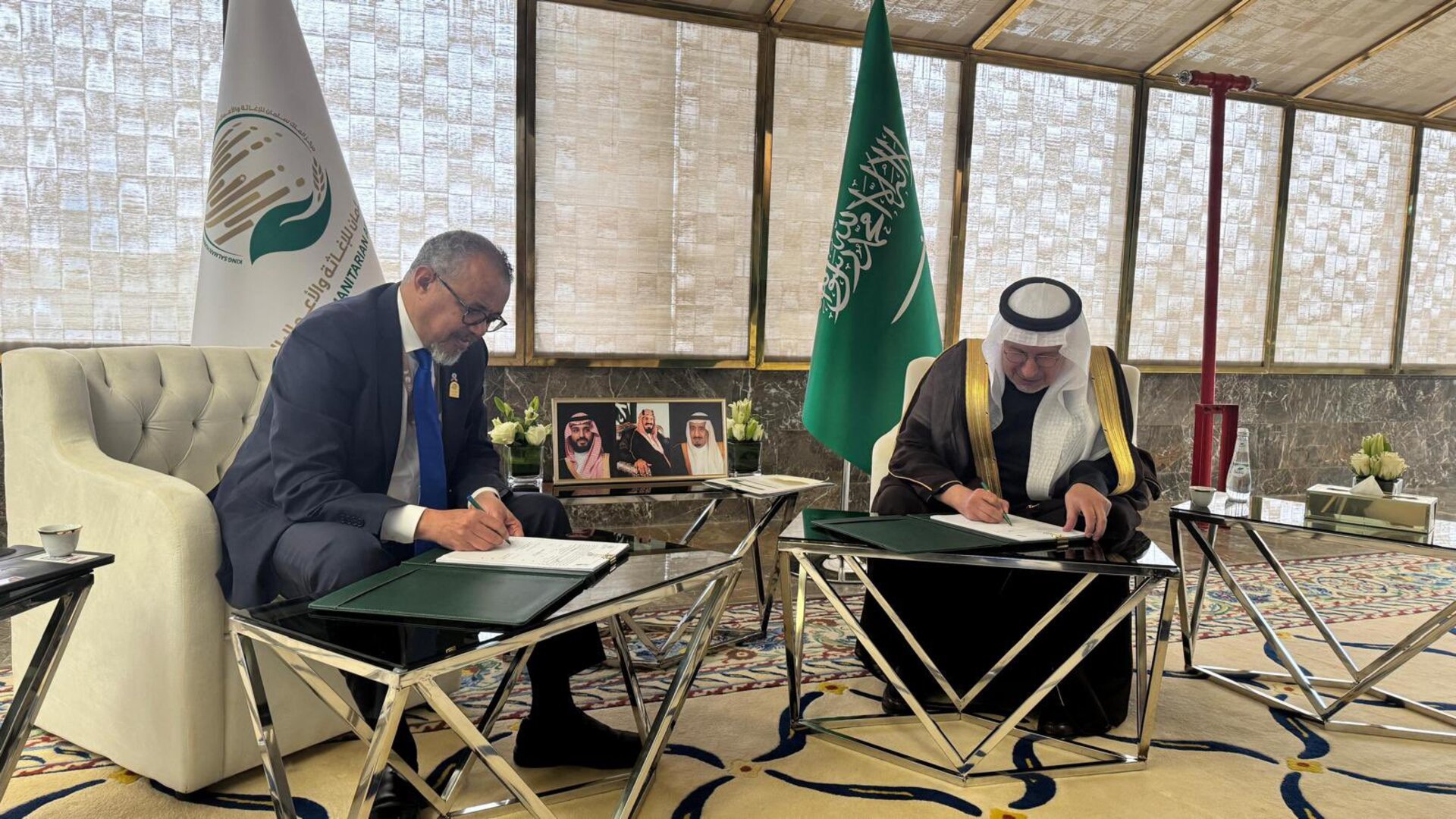
The convergence of global health leadership in Riyadh elicited strong expressions of partnership and shared commitment from the heads of the participating organizations.
Dr. Tedros Adhanom Ghebreyesus, Director-General of the WHO, utilized the platform—and subsequent public announcements via digital media—to emphasize the critical nexus between diplomacy, health, and human dignity. Highlighting the agreements on his official social channels and during forum addresses, Dr. Tedros underscored that protecting health in crisis zones is not merely a technical medical challenge, but a fundamental prerequisite for peace and stability. He commended Saudi Arabia’s sustained investment in multilateral health frameworks, noting that flexible, predictable funding is essential for mounting rapid responses to sudden-onset emergencies and chronic humanitarian crises alike.
Dr. Abdullah Al Rabeeah, Supervisor-General of KSRelief, reiterated the Kingdom’s unwavering dedication to alleviating human suffering irrespective of geography, race, or religion. During the commemorative sessions marking KSRelief’s tenth anniversary, Dr. Al Rabeeah emphasized that the center’s institutional maturity is reflected in its adherence to international humanitarian standards and its deep integration with specialized UN bodies. He noted that the partnerships formalized in Riyadh represent a strategic shift toward sustainable, long-term health interventions rather than purely short-term relief efforts.
Catherine Russell, Executive Director of UNICEF, welcomed the operationalization of the US$ 200 million GPEI allocation, stressing the immense vulnerability of children caught in conflict loops. Russell pointed out that immunization campaigns represent one of the highest-return investments in global public health, safeguarding entire generations from permanent paralysis and cementing a path toward a polio-free world.
Broader Impact and Strategic Implications
The 2025 Riyadh International Humanitarian Forum and the agreements sealed within its halls carry profound implications for the future architecture of international aid. As traditional donor funding streams face increasing fiscal pressures globally, the prominent role assumed by regional donors like Saudi Arabia marks a diversification and strengthening of the global humanitarian financing base.
By channeling substantial resources through established multilateral channels such as the WHO and UNICEF, KSRelief has reinforced the importance of institutional efficiency, transparency, and coordinated execution in high-risk environments. This approach minimizes administrative redundancy and ensures that specialized medical interventions—ranging from complex chronic care like dialysis for refugees to massive, preventative vaccination sweeps—can scale rapidly where they are needed most.
Furthermore, the emphasis placed during the forum on the security and protection of humanitarian workers addresses a growing crisis within the sector. With aid workers increasingly facing threats, access restrictions, and violence in conflict zones, the political and diplomatic advocacy generated in Riyadh serves as a vital counterpart to financial contributions.
Ultimately, the outcomes of the Riyadh International Humanitarian Forum 2025 demonstrate that robust partnerships between national relief entities and global health agencies can yield measurable, life-saving results. As the newly signed agreements transition from diplomatic text to frontline action, millions of vulnerable individuals in Yemen, Sudan, Gaza, and beyond stand to benefit from restored health services, renewed disease surveillance, and the enduring promise of global solidarity.