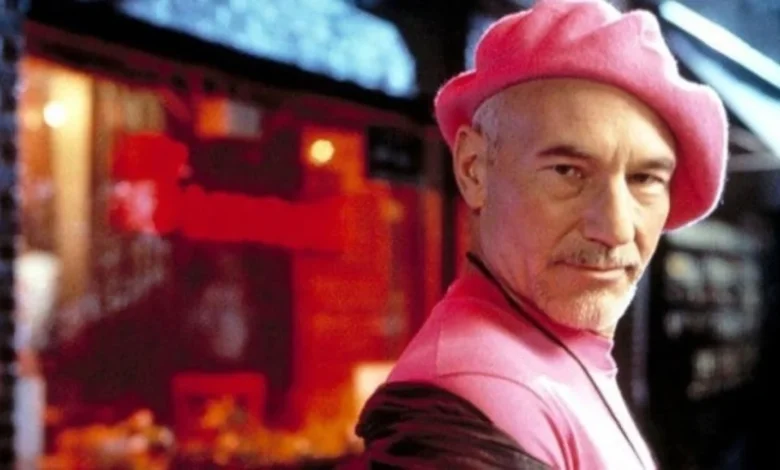
The news of his passing came as a shock to the public, as the actor had largely kept his final illness private. Beyond his contributions to film and television, Sir Patrick was a fixture of the British theatrical tradition, serving as an associate artist of the Royal Shakespeare Company for twenty years and earning a knighthood from Queen Elizabeth II in 2010 for his services to drama.
A Legacy Forged in the Theater
Born in 1940 in Mirfield, Yorkshire, Stewart’s early life was marked by the economic hardships of post-war Britain. He often cited his experiences in a working-class household as the foundation for his empathy and his eventual political leanings. Before he became a household name in the United States, Stewart spent the 1960s and 70s honing his craft in British regional theater.
His classical training was not merely a stepping stone but the cornerstone of his methodology. Even at the height of his fame in the 1990s, he frequently returned to the stage, notably performing in a modern-dress production of Hamlet in 2009. Critics often noted that Stewart’s ability to imbue science fiction characters with Shakespearean gravitas was the defining characteristic of his performance style. His transition from the stage to the bridge of the USS Enterprise in 1987 redefined the archetype of the television lead, replacing the action-oriented tropes of the era with a character driven by diplomacy, intellectual curiosity, and ethical restraint.
Chronology of an Illustrious Career
Sir Patrick’s professional trajectory offers a study in versatility. His career can be categorized into three distinct phases: his formative years in the Royal Shakespeare Company, his global ascent through science fiction, and his late-career renaissance as a versatile character actor.
- 1966–1986: Decades of theatrical work with the Royal Shakespeare Company, solidifying his reputation as a master of the Bard’s canon.
- 1984: His first major foray into genre film as Gurney Halleck in David Lynch’s adaptation of Dune.
- 1987–1994: The Star Trek: The Next Generation era, which elevated him to international superstardom.
- 2000–2017: The X-Men franchise, where he portrayed the telepathic Professor Charles Xavier, bridging the gap between cult fandom and mainstream blockbuster success.
- 2010: Invested as a Knight Bachelor by Queen Elizabeth II at Buckingham Palace.
- 2017–2026: A period of reflective, late-career performances in projects like Logan and various stage productions, characterized by a move toward more somber, character-driven roles.
Beyond the Sci-Fi Icon: A Diverse Filmography
While audiences frequently associate Stewart with the vacuum of space or the halls of Xavier’s School for Gifted Youngsters, his filmography is surprisingly eclectic. His performance in the 1995 film Jeffrey is often cited by film historians as a watershed moment for queer representation in cinema. By portraying a vibrant, unapologetic gay man during the height of the HIV/AIDS crisis, Stewart defied the era’s tendency toward tragic or villainous tropes.
Similarly, his turn as the antagonist in the 2015 thriller Green Room showcased a chilling, calculated range that proved his ability to subvert his own "wise mentor" public image. His portrayal of Scrooge in the 1999 television adaptation of A Christmas Carol remains a definitive version of the character, demonstrating his unique vocal range and his capacity for intense, character-based storytelling. These roles served as a reminder that Stewart was, above all else, a technician of the craft who viewed no material as beneath his serious attention.

Humanitarian and Political Advocacy
Sir Patrick’s influence extended far beyond the screen. He was a vocal advocate for several social causes, most notably in the fight against domestic violence. His public admission regarding his father’s abuse toward his mother provided a catalyst for his involvement with organizations such as Refuge, a UK charity that supports victims of domestic abuse.
His commitment to social justice was rooted in his socialist upbringing. He was a frequent commentator on the state of the arts in the United Kingdom, often criticizing funding cuts to regional theaters and educational programs. In the realm of LGBTQ+ advocacy, he was a long-time ally, frequently using his platform to promote acceptance and equality. His ability to bridge the gap between "high culture" and popular entertainment allowed him to bring these issues to a broader demographic than most actors of his generation.
Analysis: The Impact of a Cultural Titan
The death of Sir Patrick Stewart marks the conclusion of an era in which actors were expected to be as comfortable with the complexities of Shakespeare as they were with the demands of a green-screen blockbuster. Industry analysts suggest that his passing represents a significant loss for the "old guard" of British acting—a generation trained in repertory theater who brought a level of technical precision that has become increasingly rare in the digital age.
From a commercial perspective, Stewart’s involvement in major franchises like Star Trek and X-Men provided these properties with a sense of legitimacy that they lacked prior to his casting. By bringing a classically trained sensibility to these roles, he elevated the status of science fiction within the broader cultural landscape, paving the way for the high-budget, prestige-level genre storytelling that dominates the modern box office.
Official Responses and Public Reaction
While formal tributes from the Royal Shakespeare Company and various film institutions are forthcoming, the outpouring of grief from his peers underscores the professional respect he commanded. Colleagues have frequently described him as a mentor and a professional of the highest order, noting that despite his immense success, he maintained a self-effacing sense of humor.
His survivors include his wife and family. As of the time of this report, no public memorial service has been announced, though it is expected that the arts community will organize a celebration of his life at a future date in London.
Sir Patrick Stewart’s legacy is not merely contained in the thousands of hours of recorded performance he leaves behind. It is found in the standard he set for the profession—a combination of rigorous preparation, intellectual engagement, and a profound, lifelong belief that art should serve the public good. Whether as a king, a captain, or a mentor, his work continues to serve as a benchmark for actors seeking to balance the demands of commercial success with the requirements of an artistic life.
Related posts: