The Great Digital Disconnect: Do School Cellphone Bans Actually Improve Academic Performance

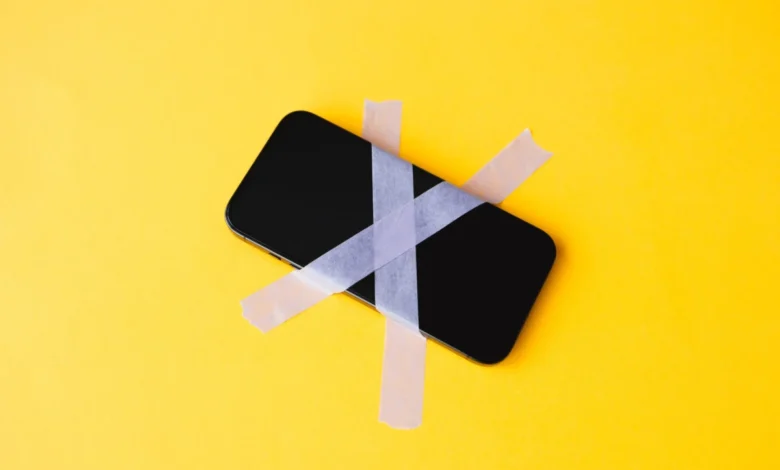
Since 2023, a tidal wave of policy changes has swept across the American educational landscape, with at least 40 states and the District of Columbia enacting legislation or district-wide mandates to ban or severely restrict cellphone use during school hours. The rationale driving these sweeping measures is consistent and intuitive: by removing the constant siren song of social media notifications, short-form video loops, and instant messaging, educators and policymakers believe students will finally be able to reclaim their attention spans and focus on the rigor of their curricula. However, as these policies mature from experimental pilot programs to entrenched mandates, a growing body of rigorous academic research suggests that the expected "academic windfall" remains, at best, elusive.
The latest contribution to this debate, a comprehensive report released by researchers at Harvard University in November 2026, has ignited a fierce academic firestorm. While some media outlets framed the study’s findings as evidence of a significant turning point in student achievement, the underlying data paints a much more complicated and nuanced picture.
A Statistical Deep Dive into Minimal Gains
At the heart of the controversy is the Harvard study’s measurement of success. The researchers identified a positive shift in student performance—specifically in combined math and reading scores measured by MAP assessments—but the magnitude of this improvement was a mere 0.0087 of a standard deviation. In the lexicon of educational statistics, this figure is statistically negligible.
To put this into perspective, academic researchers generally consider an effect size of 0.1 to be small. The observed gain of 0.0087 is more than ten times smaller than that threshold. Yet, the Harvard team interpreted these figures through a more optimistic lens, projecting that such a shift could equate to one to two weeks of additional learning per year. They argued that if maintained, these modest gains could theoretically help students recover from the substantial learning losses incurred between 2013 and the depths of the pandemic in 2020.
Tom Kane, a Harvard economist and the lead author of the report, defended the findings by emphasizing the cost-benefit ratio of the intervention. He noted that magnetic locking pouches, which typically cost around $25 per student, represent a highly efficient use of resources compared to intensive, high-cost tutoring programs that, while more impactful, are significantly more expensive and difficult to scale across entire school districts.
The Chronology of Research: A Mixed Bag of Results
The Harvard study is the third major inquiry into the efficacy of phone bans, and the discrepancy between these reports highlights the volatility of educational data.
- October 2025 – The Florida Study: Conducted by researchers from the University of Rochester and RAND, this study analyzed a large Florida school district. It found that schools with higher pre-ban cellphone usage saw test scores rise by 0.6 of a percentile point following the implementation of restrictions. While David Figlio, an economist at the University of Rochester, hailed this as evidence that "data back up the hunches," critics noted that moving a student from the 50th to the 51st percentile is a change so slight that it may be indistinguishable from noise.
- April 2026 (Revised September 2026) – The National Study: A collaborative effort involving researchers from Stanford, Duke, the University of Pennsylvania, and the University of Michigan arrived at a more sobering conclusion. By comparing schools that utilized locking pouches against those that did not, the team found "near zero" academic improvement. Unlike the Harvard team, this group relied on school-level average scores rather than individual student data, yet their findings contributed to a growing skepticism regarding the panacea-like nature of phone bans.
- November 2026 – The Harvard/NWEA Study: As discussed, this study found a gain of 0.0087 standard deviations. Crucially, the researchers acknowledged that when using their original methodology, the results were not statistically significant—meaning there is a mathematical possibility that the actual academic impact is zero.
The "Ivory Tower" Debate: Critics Speak Out
The interpretation of these small numbers has led to a public confrontation among experts. Brendan Bartanen, an associate professor of education and public policy at the University of Virginia, took to social media to characterize the effect sizes as "basically zero." His critique centers on the danger of over-interpreting minor fluctuations in data to support popular policy agendas. "We need to stop doing this as researchers," Bartanen noted, arguing that claiming a "massive victory" based on such thin evidence is a "pernicious problem" that undermines the integrity of education policy research.

Candice Odgers, a professor of psychology at the University of California, Irvine, echoed these concerns, describing the framing of the Harvard results as "strange." She expressed a deeper anxiety that policymakers might "declare victory without actually getting a win for kids." The fear is that by focusing exclusively on the presence of a phone in a pocket, the educational system may be neglecting more systemic issues contributing to learning loss, such as curriculum quality, teacher retention, and the socioeconomic factors that exacerbated the post-2020 decline.
Behavioral Changes vs. Academic Outcomes
One point of consensus among the studies is that the bans do, in fact, change behavior. In schools that adopted locking pouches, teachers reported a marked decline in classroom phone usage. There was also a consistent, if temporary, trend of increased disciplinary actions. Suspensions spiked in the immediate wake of implementation—likely as students tested the new rules—but these incidents generally subsided after the first year as the new "phone-free" culture became the status quo.
However, researchers note that reducing the physical presence of a phone does not equate to removing all digital distractions. As Tom Dee, a Stanford economist and author of the national study, pointed out, schools remain saturated with technology. Students often have access to personal laptops, tablets, and school-issued devices that allow for non-academic communication, social media browsing, and gaming, even if a smartphone is locked in a pouch. The "digital" in "digital distraction" is far broader than the hardware of a cellphone.
Implications for Future Policy and Data Access
The ongoing debate underscores a critical gap in our understanding of digital life: the lack of access to raw data from social media giants. Both Kane and Dee have publicly called upon companies like Meta, ByteDance, and Google to provide researchers with granular data regarding how students engage with these platforms during school hours versus their own time.
Without this data, researchers are essentially guessing about the mechanisms of harm. Is the academic erosion caused by distracted learning during the school day, or is it the cumulative effect of sleep deprivation, reduced physical activity, and diminished focus caused by hours of nocturnal social media scrolling? Understanding this distinction is vital for determining whether a "phone-free school" is the right solution or if the focus should shift to digital literacy and after-school usage patterns.
The Path Forward
Despite the lack of robust evidence linking cellphone bans to significant academic gains, the consensus among many researchers is not to abandon the policies, but to manage expectations. The hypothesis that constant digital connectivity harms cognitive development and attention span remains highly compelling to educators.
However, there is a fundamental difference between a policy that is "worth trying" and one that is "evidence-based." As school districts move forward with these bans, the challenge will be to avoid the "victory lap" trap. If the ultimate goal is to improve student achievement, policymakers must look beyond the simple removal of devices. They must consider the entire technological ecosystem of the modern classroom and accept that while a locking pouch might quiet a classroom, it is not a substitute for comprehensive pedagogical reform.
The data suggests that we are currently in an era of experimentation. As more longitudinal data becomes available over the next five to ten years, we will gain a clearer picture of whether these bans constitute a meaningful educational intervention or simply a temporary, and perhaps superficial, adjustment to a digital world that has already fundamentally reshaped the student experience. For now, the "thousandths of a standard deviation" battle serves as a reminder that in public policy, as in education, the most straightforward solutions often yield the most complex—and sometimes disappointing—results.
Related posts: