For decades, the American higher education system has operated on a foundational promise: public universities, subsidized by taxpayer dollars, exist to provide an accessible, high-quality path toward social mobility for state residents. The prevailing advice given to high school students—particularly those from families with limited financial resources—has been to prioritize in-state institutions to avoid the crushing weight of student debt. However, new data suggests that for a significant portion of the population, the public university system is failing to live up to this mandate of affordability.
In 34 states, attending a flagship public university remains a daunting financial hurdle for low-income households. Students from these families are frequently expected to cover costs—tuition, fees, room, board, and supplies—that consume at least one-third of their total household income. This financial burden, often exceeding $10,000 annually after all grants and scholarships are applied, effectively creates a barrier to entry that persists even after federal aid is exhausted.
The Geography of Financial Exclusion
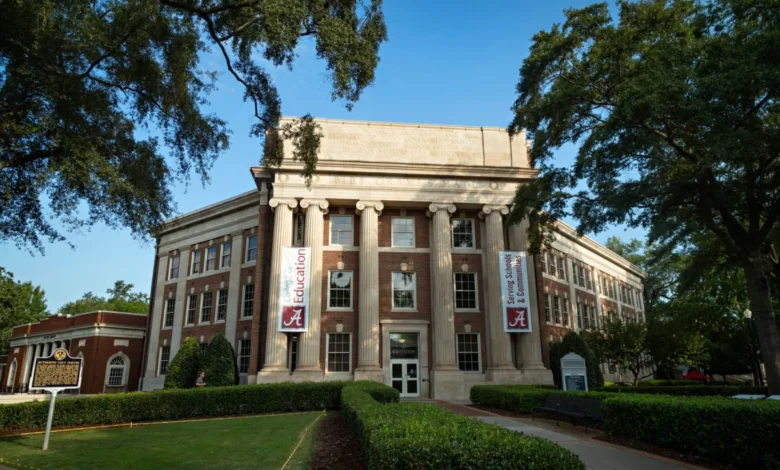
The disparity in affordability across state lines is stark. Recent data from the 2024 academic year reveals that the "net price" of attendance varies wildly depending on the state legislature’s approach to higher education funding. Alabama serves as a primary example of this disparity. At the University of Alabama, the state’s flagship institution, a student hailing from a family earning less than $30,000 per year was expected to pay upwards of $19,000 annually. This figure places Alabama among the most expensive states for low-income students, a trend that extends to other prominent institutions like Pennsylvania State University.
Conversely, some states have successfully mitigated these costs. Florida consistently ranks as one of the most affordable states for four-year public education. By maintaining robust legislative support for higher education and implementing long-term caps on tuition hikes, Florida has managed to keep the net price significantly lower for its residents compared to their peers in neighboring states. This divergence highlights a critical reality: the financial accessibility of a degree is often determined more by one’s zip code than by academic merit or institutional quality.
A Growing Gap: The Impact of Stagnant Wages
While the nominal net price of public colleges has seen a slight decline over the last few years when adjusted for overall inflation, the reality for low-income families remains grim. The cost of living—specifically in the categories of housing, food, and healthcare—has risen at a rate that far outpaces wage growth. For a family earning less than $30,000 annually, the math of college attendance is rarely favorable.
Even when students maximize their federal student loan eligibility—which is capped at $5,500 for first-year dependent students—they are still left with a significant funding gap. At nearly 300 public four-year colleges across the country, low-income students face an annual shortfall of at least $4,500. This calculation excludes the "opportunity cost" of the student being unable to work full-time, as well as the long-term interest accrued on the debt taken on to bridge the gap.
The Financial Burden on Middle-Income Families
The affordability crisis is not strictly confined to the lowest income bracket. Families earning between $30,000 and $48,000 per year are also feeling the squeeze. After accounting for all available scholarships and federal loans, these households must still identify roughly $5,000 annually to cover the net price at nearly 300 four-year public institutions.
With approximately one in six American households earning less than $30,000 annually, and more than one in four earning less than $50,000, the scope of this issue is national in scale. These families are the primary demographic that public universities were intended to serve, yet they are increasingly finding themselves priced out of the very institutions designed to foster their upward mobility.

Institutional Responses and Defensive Postures
University administrators often point to institutional aid and internal scholarship programs as evidence of their commitment to access. A spokesperson for the University of Alabama recently stated that the average net price for families earning less than $30,000 decreased by approximately 6 percent in the 2024-25 academic year, bringing the average cost to roughly $18,000. While this represents progress, critics argue that an $18,000 annual bill remains fundamentally unattainable for a family earning less than $30,000, as it requires the family to dedicate more than half of their gross income to education costs before even accounting for survival expenses.
The University of North Alabama, which maintains a lower cost structure than the state’s flagship, still presents a net price of nearly $10,000 for the lowest income bracket. Across the state, half of all public colleges demand a payment of over $14,000 for these families. These figures underscore the systemic nature of the problem, which extends beyond the elite flagship campuses into the broader network of regional public institutions.
Implications for Social Mobility
Flagship universities are frequently cited as the engines of the American dream, boasting the highest graduation rates and the strongest alumni networks. When these institutions become effectively closed to students from low-income backgrounds, the path to a secure middle-class life becomes significantly narrower.
If low-income students are forced to attend lower-tier institutions with fewer resources and lower graduation rates, the cycle of poverty is reinforced rather than broken. Furthermore, the reliance on debt to finance these gaps has long-term economic implications. Graduates entering the workforce with tens of thousands of dollars in debt are less likely to buy homes, start businesses, or participate in the economy at the same level as their peers who graduated with little to no debt.
Potential Paths Forward
Solutions to this crisis are complex and require a multi-faceted approach. Some policymakers have advocated for "free college" initiatives, similar to those found in parts of New York City, where low-income students can access education with minimal out-of-pocket costs. In New York, the prevalence of commuter-based public colleges helps reduce the net price by removing the expensive requirements for room and board.
However, replicating this model in rural states or at large residential universities presents logistical and financial challenges. Another potential path is the expansion of state-level grants that are specifically indexed to the cost of living and the median income of the state’s population, rather than relying on generic federal formulas that may not account for regional economic realities.
Methodology and Data Context
The analysis provided herein relies on the federal government’s Integrated Post-Secondary Data System (IPEDS). The "net price" metric is used to capture the true cost of attendance, including tuition, fees, books, and living expenses, minus all grant and scholarship aid.
To ensure a fair comparison, this analysis focuses exclusively on four-year public colleges where the majority of students are pursuing a bachelor’s degree. By excluding institutions where the majority of students are in two-year programs, the data avoids the artificial lowering of costs that occurs at community colleges. While this approach provides a clearer picture of the cost of a bachelor’s degree, it also reveals that the "college experience" at public four-year institutions is becoming a luxury good.
As the nation looks toward the future of the workforce, the disconnect between the stated mission of public higher education and the financial reality facing millions of families remains a critical challenge. Without significant policy interventions at the state and federal levels, the promise of affordable education for all may continue to drift further out of reach for the very students who need it most.