Erewhon’s Expansion Poses a Delicious Dilemma as the Status-Symbol Grocery Chain Nears Federal Calorie-Labeling Thresholds

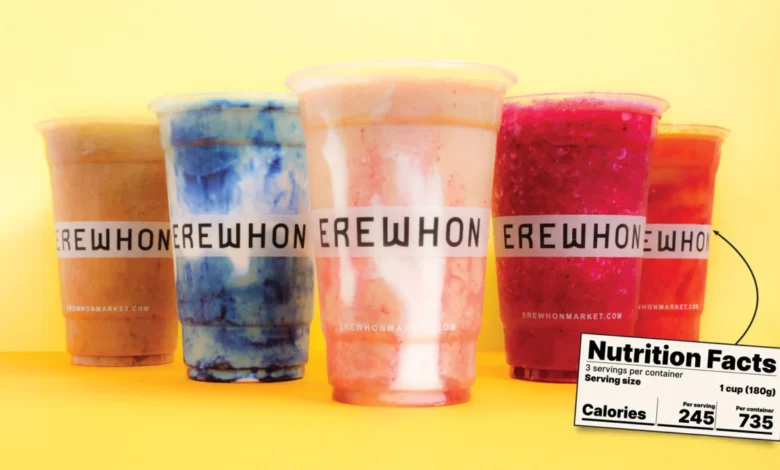
The recent opening of a new Erewhon market in Thousand Oaks marks a significant milestone for Ventura County residents, who can now purchase the brand’s signature $21 artisanal smoothies without crossing county lines. However, behind the buzz of the grand opening lies a unique retail milestone that could alter the psychological appeal of Los Angeles’s most fashionable grocery store. With this latest location, the Southern California chain’s footprint has expanded to 16 stores. Coupled with two additional locations slated for 2027 in downtown Los Angeles and Costa Mesa, alongside reports of another store in an undisclosed location, Erewhon is swiftly approaching a total of 19 operating units.
This rapid growth places the luxury grocer perilously close to a federally mandated threshold. Under United States federal statutes, food-service establishments operating 20 or more locations are required to publicly display calorie counts for prepared "restaurant-type" foods on their menus and display cases. For a brand whose primary currency is unquantified wellness, effortless chic, and unburdened indulgence disguised as health, crossing the 20-store mark introduces a jarring reality check: the cold, hard mathematics of daily nutritional intake.
The Impending Transparency Mandate
Federal regulations implemented under the Affordable Care Act require chain restaurants and similar retail food establishments with 20 or more locations nationwide to disclose calorie information for standard menu items. While traditional supermarkets have historically enjoyed exemptions for self-serve deli counters, Erewhon operates much more like a high-end hybrid of a grocer and a fast-casual dining establishment. Its extensive hot bars, made-to-order smoothie bars, and packaged grab-and-go prepared meals fall squarely under the regulatory definitions that trigger mandatory labeling.
For a consumer base accustomed to prioritizing organic sourcing, non-GMO ingredients, and functional superfoods over strict caloric accounting, the introduction of bold calorie counts could fundamentally alter the shopping experience. Erewhon has successfully cultivated an atmosphere where price tags are secondary to lifestyle signaling. The realization that a daily ritual comes with a specific, publicly posted energy cost may prompt a psychological shift among its loyal clientele.
A Nutritional Breakdown of the Menu
A close examination of Erewhon’s most popular prepared items reveals why mandatory labeling could surprise unsuspecting shoppers. While marketed as health-conscious and nutrient-dense, many of the chain’s signature offerings are calorie-dense due to their generous use of healthy fats, nut milks, organic oils, and natural sweeteners.
Take, for instance, the luxury steak-and-eggs breakfast burrito, which features chipotle mayo and premium proteins. Culinary evaluations estimate this popular morning staple sits comfortably in the 800- to 900-calorie range. Similarly, the organic coconut turmeric chicken tenders—prepared with coconut cream, brown rice flour, and non-GMO avocado oil—clock in at upwards of 700 calories for a standard portion.
The beverage bar, which serves as a major social hub and status symbol within the stores, presents similar figures. The viral $21 Hailey Bieber Strawberry Glaze Skin Smoothie, which includes maple syrup, avocado, and marine collagen among its ingredients, contains approximately 600 calories per serving. Even snack items require careful consideration; a standard bag of specialized kale chips can easily account for 400 calories while carrying a retail price tag of $16.
Corporate Silence and Public Inquiries
As speculation grows regarding how the company will handle the impending federal threshold, corporate representatives for Erewhon have declined to comment on their long-term expansion timeline or compliance strategies. Requests for clarification regarding whether the company plans to halt expansion just shy of the 20-store mark, restructure its prepared food offerings, or embrace transparency have gone unanswered.
This reticence aligns with the brand’s historically curated image, which relies heavily on exclusivity, organic mystique, and minimal corporate public relations. Unlike publicly traded supermarket conglomerates that frequently issue detailed growth projections and regulatory updates, Erewhon operates as a privately held entity that guards its operational metrics closely.
A Chronology of Growth and Luxury Branding
Founded as a small macrobiotic shop in Boston in 1966 before moving to Los Angeles and eventually being acquired by current owners Tony and Katie Antoci in 2011, Erewhon transformed from a modest health food store into a cultural phenomenon. The modern iteration of the brand leveraged influencer culture, high-profile celebrity collaborations, and meticulously designed interior spaces to redefine grocery shopping as an immersive lifestyle experience.
Over the past decade, the chain has accelerated its rollout across affluent neighborhoods in the Greater Los Angeles area, including Pacific Palisades, Santa Monica, Silver Lake, and Beverly Hills. Each new opening is treated as a major cultural event, drawing lines down the sidewalk and generating extensive social media coverage. The expansion into Thousand Oaks represents a push into suburban family markets, proving that the brand’s appeal extends beyond urban epicenters. However, each successive ribbon-cutting brings the enterprise one step closer to the regulatory threshold.
Broader Industry Implications
The situation facing Erewhon highlights a broader tension within the retail food sector as upscale, boutique operators scale up to meet investor expectations and consumer demand. While federal labeling laws were originally designed to bring transparency to national fast-food chains, their application to high-end grocers creates a novel marketing challenge.
For decades, restaurants and food brands have understood that clear nutritional disclosures can alter consumer behavior. Studies surrounding menu labeling laws have shown mixed long-term effects on overall purchasing habits, but initial implementations frequently cause temporary dips in the sales of high-calorie items. For a brand like Erewhon, where indulgence is often masked by the halo of health consciousness, the explicit display of calorie counts could strip away some of the psychological comfort associated with its menu.
As construction moves forward on the slated 2027 locations in downtown Los Angeles and Costa Mesa, industry analysts will be watching closely to see how the company navigates its 20th store opening. Whether Erewhon chooses to strategically pause its expansion, absorb the regulatory requirements as a badge of honor, or adapt its recipes to feature lighter profiles, the coming years will test whether the brand’s devoted following can withstand a direct encounter with nutritional reality.