
Trump says pakistani representatives coming us next week trade talks – Trump says Pakistani representatives are coming to the US next week for trade talks. This signals a potential shift in the often-tumultuous relationship between the two nations. What are the underlying motivations, and what are the potential outcomes for both countries’ economies and geopolitical standing? Will this visit mark a turning point, or just another chapter in a complex diplomatic dance?
This upcoming meeting promises to be an interesting one, as it’s occurring against a backdrop of significant geopolitical shifts and economic uncertainties. We’ll delve into the historical context of US-Pakistan trade relations, analyze potential challenges and areas of contention, and speculate on possible outcomes. The potential impact on regional stability and the implications for both countries’ populations will also be examined.
Let’s dive in!
Background on the Announcement: Trump Says Pakistani Representatives Coming Us Next Week Trade Talks
President Trump’s announcement regarding upcoming trade talks with Pakistani representatives next week signals a renewed focus on economic relations between the US and Pakistan. This visit, following a period of somewhat strained ties, suggests a potential shift in the bilateral dynamic, aiming to address existing trade imbalances and explore avenues for increased cooperation. The talks represent a crucial opportunity for both nations to redefine their economic partnership and navigate potential geopolitical challenges.
History of US-Pakistan Trade Relations
US-Pakistan trade relations have historically been complex, marked by periods of cooperation and tension. Early engagements focused on security and defense partnerships, often overshadowing the economic dimension. The relationship has seen fluctuations, influenced by regional political developments and shifting global priorities. Significant events such as the Soviet-Afghan War and the rise of terrorism impacted the nature of this relationship, affecting the flow of trade and investment.
Recent Trajectory of Relations
The recent trajectory of US-Pakistan relations has been characterized by a mix of challenges and opportunities. Recent political events and shifting global priorities have impacted the bilateral relationship, leading to periods of strained relations. Despite these challenges, there have been attempts to re-establish dialogue and address economic concerns, including trade imbalances. The upcoming talks represent a key moment to assess the current state of play and chart a path forward.
Context Surrounding the Upcoming Trade Talks
The upcoming trade talks are taking place against a backdrop of complex geopolitical dynamics in the region. Regional security concerns, and the evolving global economic landscape, are factors that may shape the negotiations. The talks will likely involve discussions on addressing trade imbalances, exploring new trade agreements, and potentially addressing security-related concerns impacting trade flows.
Anticipated Outcomes from a Pakistani Perspective
Pakistan’s anticipated outcomes from these talks likely include securing preferential trade terms, attracting increased US investment, and gaining access to advanced technologies. Pakistan might seek to address its trade deficit with the US and foster a more robust economic partnership. They might also aim to strengthen diplomatic ties by establishing new agreements that promote trade, addressing issues like security and regional stability.
Comparison of Past Trade Agreements
| Date | Agreement Type | Key Provisions | Outcome |
|---|---|---|---|
| 1950s-1960s | Early bilateral agreements | Limited trade agreements focused primarily on security-related items | Limited economic impact, largely overshadowed by security cooperation |
| 1970s-1980s | Growing security and military assistance | Significant US aid and military support to Pakistan | Increased security ties but limited economic impact on trade |
| 1990s | Limited trade deals | Small-scale trade agreements with focused sectors | Trade volume remained modest |
| 2000s-present | Fluctuating trade relations | Increased bilateral trade in some sectors but uneven progress | Trade volumes fluctuate, influenced by geopolitical tensions and global economic conditions |
Potential Issues and Challenges
Trade talks between the US and Pakistan, announced by President Trump, are likely to face numerous obstacles. The complexity of the global economic landscape, coupled with historical trade tensions and differing priorities, will undoubtedly impact the negotiations. Understanding these potential challenges is crucial to assessing the likelihood of a successful outcome.These negotiations present a delicate balance between economic interests and geopolitical considerations.
The US and Pakistan, while seeking mutual benefits, may find themselves at odds on specific issues, potentially hindering progress. Identifying and addressing these challenges proactively could pave the way for a productive dialogue and mutually beneficial agreements.
Potential Obstacles to Successful Negotiations
The US and Pakistan have differing economic priorities, with the US focused on its own domestic industries and Pakistan seeking to expand its export markets. This fundamental difference can create friction in areas such as tariffs and trade practices. For example, Pakistan might seek concessions on tariffs for its exports, while the US might prioritize safeguarding its domestic industries.
Trump’s announcement about Pakistani representatives visiting next week for trade talks is certainly interesting, but it’s worth considering the broader economic context. The Federal Reserve’s recent statement, with feds kugler says monitoring markets amid big policy shifts , highlights the sensitivity of the current financial climate. Will these trade talks be impacted by these policy shifts?
It’s all quite fascinating, and I’m keen to see how the situation develops regarding the Pakistani visit.
Potential Disagreements or Points of Contention
Several areas of potential contention exist between the US and Pakistan. These include differing perspectives on intellectual property rights, the protection of American companies in Pakistan, and the level of access for US agricultural products in the Pakistani market. These are complex issues, and any disagreement on these points could stall the talks.
Existing Trade Disputes or Grievances
Past trade disputes and historical grievances between the two countries can cast a shadow over current negotiations. For example, the US may have concerns about Pakistan’s trade practices that violate international agreements, while Pakistan might perceive the US as imposing unfair trade barriers. Addressing these historical issues could be crucial for building trust and establishing a foundation for future agreements.
Impact of External Factors
External factors, such as global economic conditions and political relations between other countries, could significantly influence the outcome of the trade talks. A global recession, for example, could reduce demand for Pakistani exports, potentially creating pressure on the Pakistani negotiators to compromise on their demands. Likewise, regional political instability could divert resources and attention from the trade talks.
Strategies for Resolving Potential Conflicts
Effective strategies for resolving potential conflicts during the talks include open communication, a willingness to compromise, and a focus on mutual gains. Employing mediation from neutral parties could also be beneficial in helping bridge the gap between the two sides’ positions.
Potential Areas of Disagreement
| Issue | US Position | Pakistan Position | Potential Resolution |
|---|---|---|---|
| Tariffs on Pakistani Textiles | Maintain current tariffs to protect US textile industry | Reduce tariffs to boost textile exports | Negotiate a phased reduction in tariffs, with reciprocal concessions in other sectors. |
| Intellectual Property Rights | Stricter enforcement of intellectual property rights to protect US companies | Balancing IP protection with the need for local industries to thrive | Establish a joint working group to develop a framework for IP protection that considers both countries’ needs. |
| Market Access for US Agricultural Products | Expand market access for US agricultural products | Protect local agricultural producers | Negotiate quotas or tariffs that allow access for US products while supporting local farmers. |
| Trade Practices and Subsidies | Address concerns regarding Pakistan’s trade practices that may violate international agreements | Maintain policies that support local industries | Explore options for technical assistance and capacity building to help Pakistan meet international standards. |
Possible Outcomes and Implications
The upcoming trade talks between the US and Pakistan, announced by President Trump, hold significant implications for both nations and the broader geopolitical landscape. These negotiations, following a period of tense relations, promise to be crucial in shaping future economic and diplomatic ties. Understanding the potential outcomes, their impacts, and the geopolitical ramifications is vital for assessing the prospects for stability and prosperity in the region.
Potential Outcomes of the Trade Talks
The outcome of the trade talks hinges on several factors, including the specific concessions each side is willing to make. Positive outcomes might include mutually beneficial trade agreements, potentially boosting exports for both countries and creating new economic opportunities. Conversely, failure to reach an agreement could lead to further economic instability and strain relations between the US and Pakistan.
Past trade negotiations offer a range of precedents, from successful collaborations to protracted disputes. A careful analysis of past successes and failures can offer valuable insights.
Trump says Pakistani representatives are coming to the US next week for trade talks, which is certainly interesting. Meanwhile, Italy is pushing for the EU to allow more leeway on deficit spending for defense over the next 20-30 years, a move that could have significant implications for the global economy, as detailed in this article italy calls eu allow deficit leeway defence spend over 20 30 years.
Hopefully, these talks will lead to positive outcomes for both sides, especially regarding trade relations.
Impact on US and Pakistani Economies
The economic impact of the trade talks will depend heavily on the specifics of any agreement. A successful agreement could lead to increased trade volumes, potentially boosting US exports and creating new job opportunities. Similarly, Pakistan could benefit from increased access to US markets, stimulating economic growth. However, the absence of a mutually beneficial agreement could negatively affect both economies.
This could result in reduced trade, loss of export revenue, and a potential downturn in economic activity. The impact on each economy’s industries will also be substantial, with some sectors potentially benefiting and others facing challenges.
Geopolitical Ramifications of the Talks, Trump says pakistani representatives coming us next week trade talks
The geopolitical implications of the trade talks extend beyond bilateral relations. Success could foster greater trust and cooperation between the US and Pakistan, potentially strengthening regional stability. Conversely, a failure to reach an agreement could exacerbate existing tensions, potentially impacting regional security. The talks will undoubtedly be observed by other countries in the region and globally, impacting perceptions of the US’s approach to international trade and diplomacy.
Trump’s announcement about Pakistani representatives coming to the US next week for trade talks is certainly interesting, but it’s worth considering the broader economic context. For instance, the recent Italian court decision rejecting Banco BPM’s appeal against Unicredit’s bid suspension here highlights the complex financial dynamics at play globally. This could potentially influence the outcome of the upcoming trade talks, especially considering the interconnected nature of international markets.
So, while the trade talks are certainly important, the ripple effects of decisions like this could impact the entire negotiation process.
Implications for Regional Stability and Security
The success or failure of the trade talks could have significant ramifications for regional stability and security. A successful outcome could pave the way for improved relations between the US and Pakistan, contributing to a more secure and stable environment. Conversely, a breakdown in negotiations could lead to heightened tensions and potentially destabilizing effects in the region. This outcome could create opportunities for other actors to exploit the situation.
Potential Consequences of Trade Agreements on Populations
Trade agreements can have profound impacts on the populations of both countries. A successful agreement might lead to increased employment opportunities, particularly in export-oriented industries. Conversely, a negative outcome could result in job losses, economic hardship, and social unrest. The impact will likely vary across different segments of society, with some benefiting and others facing challenges.
Possible Scenarios for the Trade Talks
| Scenario | Key Outcomes | Economic Impact | Geopolitical Implications |
|---|---|---|---|
| Optimistic | Mutually beneficial trade agreements, increased trade volumes, and strengthened diplomatic ties. | Increased economic growth in both countries, potential job creation in export sectors. | Improved regional stability, increased US-Pakistan cooperation. |
| Neutral | Agreements on specific areas but no major breakthroughs. | Limited economic impact, no significant job creation or loss. | Maintenance of the status quo, no major shift in regional dynamics. |
| Pessimistic | Failure to reach an agreement, escalation of tensions. | Reduced trade, potential economic hardship, job losses. | Heightened tensions, possible regional instability, and negative impact on US-Pakistan relations. |
Analysis of Trump’s Stance
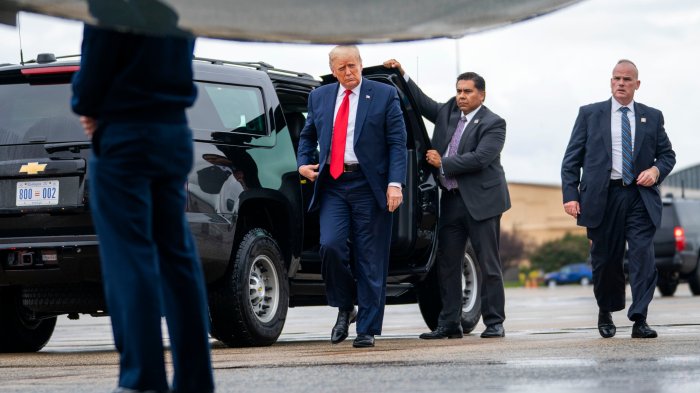
President Trump’s announcement of upcoming trade talks with Pakistani representatives signals a continuation of his characteristically assertive approach to international trade negotiations. This approach, often marked by a focus on bilateral deals and a willingness to challenge existing agreements, is a key element in understanding the potential trajectory of these talks.Trump’s approach to international trade is often characterized by a nationalist perspective, emphasizing the need for favorable outcomes for the United States.
This stance is frequently contrasted with the more multilateral and collaborative approaches favored by previous administrations. The specifics of his negotiating strategy, however, can vary depending on the specific country and industry involved.
Trump’s General Approach to Trade Negotiations
Trump’s general approach to international trade negotiations is characterized by a focus on bilateral agreements and a willingness to impose tariffs and sanctions to pressure trading partners into concessions. He frequently challenges existing international trade agreements, often arguing that they are unfair to the United States. His tactics often involve aggressive rhetoric and a perceived disregard for traditional diplomatic norms.
Trump’s Past Trade Policies and Actions
Trump’s presidency saw significant trade policy changes. He initiated trade disputes with China, imposing tariffs on various goods, and renegotiated the North American Free Trade Agreement (NAFTA), ultimately resulting in the United States-Mexico-Canada Agreement (USMCA). These actions reflected a broader strategy of seeking to reduce the trade deficit and protect American industries. The outcomes of these actions, however, have been debated, with some arguing that they harmed American consumers and businesses while others contend they strengthened American bargaining power.
Trump’s Potential Motivations for Initiating These Talks
The motivations behind initiating these trade talks could be multifaceted. Potential reasons include securing favorable trade terms for the United States, addressing perceived trade imbalances, or potentially fostering improved relations with Pakistan on other fronts, although this is not explicitly stated. The desire to garner positive public perception through successful trade agreements also likely plays a role.
Comparison of Trump’s Approach to Previous Administrations
Compared to previous administrations, Trump’s approach to trade negotiations stands out for its aggressive and unilateral nature. Prior administrations generally favored multilateral agreements and a more collaborative approach, aiming to build consensus and cooperation among trading partners. Trump’s policies frequently disrupted these established norms, leading to trade wars and challenges to the global trading system.
Potential Impact of Trump’s Personality on the Negotiations
Trump’s personality, known for its assertive and often unpredictable nature, could significantly impact the negotiations. His tendency to engage in public pronouncements and potentially shift positions mid-negotiation could create an environment of uncertainty and unpredictability. This could lead to difficulties in reaching a mutually agreeable outcome.
Key Statement on Trade Policy
“We will no longer tolerate unfair trade practices. We will fight to ensure that our companies and workers are treated fairly by every country in the world.”
Potential for Public Perception and Media Coverage
Trump’s announcement of upcoming trade talks with Pakistani representatives promises to be a significant event, generating considerable public and media attention. The potential for varying interpretations and reactions, both positive and negative, across the US and Pakistani populations is substantial. Understanding these potential dynamics is crucial for assessing the potential impact of the talks.
Anticipated Public Reaction in the US
The US public’s response to the trade talks will likely be multifaceted, influenced by pre-existing views on Pakistan and Trump’s own political standing. Supporters of the President might view the talks as a sign of his commitment to economic strength and strategic partnerships. Conversely, critics may perceive the talks as a political manoeuvre or a concession to Pakistan, potentially fueling existing anxieties about US foreign policy.
Public reaction will also depend on how the talks are framed by the media.
Anticipated Public Reaction in Pakistan
In Pakistan, the announcement is likely to be met with a mix of optimism and apprehension. Many Pakistanis may view the talks as a potential opportunity for economic growth and improved relations with a major global power. However, a history of US policies toward Pakistan, and the complexities of the region, might also lead to cautious optimism or skepticism.
Public perception will hinge on perceived benefits and perceived risks associated with the talks.
Likely Media Coverage of the Upcoming Trade Talks
Media coverage of the talks will likely focus on several key themes. The economic implications for both countries will be prominent, along with the political context surrounding the talks. News outlets will likely scrutinize the specific terms of any agreements and analyze the potential impacts on the Pakistani and American economies. Specific attention will be given to Trump’s negotiating style and how he handles the Pakistani representatives.
Potential Narratives and Interpretations of the Talks
Various narratives and interpretations of the talks will likely emerge in the media and among the public. Some might portray the talks as a successful effort to boost trade and foster stronger relations. Conversely, others might depict the talks as a sign of weakness or a concession to Pakistan. These differing perspectives will significantly shape public perception.
Key Individuals and Groups Influencing Public Opinion
Key individuals and groups likely to influence public opinion include politicians, commentators, and influential figures on social media. For instance, statements from prominent figures within the US government or political parties could sway public opinion. In Pakistan, similarly, statements from Pakistani political leaders and commentators will have a substantial impact on the public’s reaction.
Social Media Discussions Surrounding the Announcement
Social media will undoubtedly be a significant platform for discussion surrounding the trade talks. Public opinions, both positive and negative, will likely be expressed through various online channels. Hashtags related to the announcement and the talks will likely trend, with a wide range of views and perspectives. The discussions will be highly polarized, depending on pre-existing views and political affiliations.
Potential Public Reaction Scenarios
| Scenario | US Public Opinion | Pakistani Public Opinion | Media Tone |
|---|---|---|---|
| Positive Outcomes | Positive, optimistic, supportive of Trump | Positive, optimistic, hopeful for economic benefits | Positive, emphasizing potential benefits and cooperation |
| Mixed Outcomes | Mixed, some support, some criticism | Mixed, some optimism, some concern | Neutral, balanced reporting of both perspectives |
| Negative Outcomes | Negative, critical of Trump’s approach | Negative, pessimistic about long-term implications | Negative, focusing on potential drawbacks and risks |
Illustrative Examples of Trade Negotiations
Trade negotiations are complex endeavors, often fraught with challenges and requiring careful strategy. Understanding past successes and failures provides valuable insight into navigating the intricacies of international commerce. This exploration delves into historical trade agreements, focusing on strategies employed and outcomes achieved. Analyzing these precedents can illuminate potential paths forward in the upcoming US-Pakistan talks.Analyzing successful trade negotiations reveals patterns and strategies that can be applied to future endeavors.
Successful negotiations often involve a blend of diplomacy, compromise, and a deep understanding of each party’s interests and priorities. Moreover, they hinge on a realistic assessment of potential obstacles and the willingness to adapt strategies as the process unfolds.
Historical Examples of Successful Trade Negotiations
Understanding past successful trade negotiations is crucial for assessing potential outcomes in the current US-Pakistan scenario. These negotiations showcase the diverse approaches and challenges involved in achieving mutually beneficial agreements. Examining historical examples can provide valuable insights into the nuances of international trade.
- The North American Free Trade Agreement (NAFTA): NAFTA, a landmark agreement between the US, Canada, and Mexico, exemplifies a comprehensive trade deal focused on reducing tariffs and streamlining trade processes. It fostered significant economic growth in the region, demonstrating the potential of well-structured trade pacts to enhance economic activity. However, NAFTA also faced criticisms regarding job displacement and its impact on specific industries.
- The Trans-Pacific Partnership (TPP): While not fully implemented, the TPP aimed to establish a comprehensive trade agreement across the Pacific Rim. Its ambition to address a wide range of trade issues, including intellectual property rights and environmental regulations, showcased the complexity of such endeavors. The TPP ultimately highlights the intricacies of international cooperation and the challenges in achieving consensus among diverse stakeholders.
Case Study: US-South Korea Free Trade Agreement
The US-South Korea Free Trade Agreement (KORUS FTA) offers a detailed example of a bilateral trade agreement. Negotiated in 2007, KORUS FTA focused on reducing tariffs and increasing market access for goods and services between the two nations. The agreement aimed to increase trade volumes, investment, and economic growth for both countries.
- Negotiation Strategies: The US and South Korea employed various strategies, including identifying areas of mutual benefit and leveraging their respective strengths in specific sectors. This approach highlighted the importance of recognizing areas where each party could gain significant advantages.
- Outcomes: The agreement led to increased trade and investment flows between the two countries. However, it also faced challenges and criticisms, particularly regarding its impact on specific industries and concerns about potential job losses. This demonstrates that even successful agreements can encounter unforeseen challenges and that ongoing monitoring and adjustments are essential.
Analysis of a Past Trade Negotiation Involving Pakistan
Pakistan has engaged in numerous trade negotiations throughout its history, with varying degrees of success. A detailed analysis of past trade agreements with various countries, focusing on the strategies employed and the resulting outcomes, would be necessary to assess Pakistan’s current negotiating position. However, a general understanding of the context of Pakistan’s trade relations is essential.
Comparison of Current Situation with Historical Precedents
Comparing the current US-Pakistan trade talks with historical examples allows for a deeper understanding of the potential outcomes. Analyzing the strategies employed in past negotiations, along with the context of the current political landscape, helps in evaluating the possible challenges and opportunities. Comparing these historical precedents with the current situation can offer crucial insights.
Illustrative Image: A Successful Trade Agreement
An image depicting two stylized national flags intertwined, with stylized representations of various goods and services flowing between them. The flags symbolize the two nations, while the goods and services flowing between them illustrate the exchange and mutual benefit of the trade agreement. The colors of the flags and goods/services represent a vibrant and dynamic exchange, implying the success and progress of the trade agreement.
The overall image conveys a sense of cooperation, mutual gain, and a strong economic relationship between the two nations.
Closing Summary
The upcoming trade talks between the US and Pakistan hold significant implications for both countries and the broader region. Trump’s unique approach to international trade will undoubtedly play a crucial role in the negotiations. While the specifics remain to be seen, the potential for both success and failure is substantial. The outcome will shape not only the economic landscapes of the US and Pakistan but also the geopolitical dynamics of the region.