Airwallex Founder Jack Zhang’s Unwavering Vision: The $1.2 Billion Acquisition He Refused to Build a Global Fintech Empire

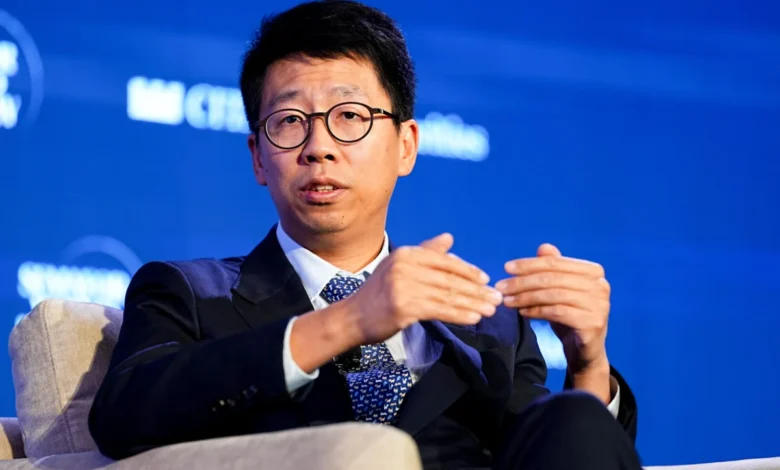
At just 34 years old, Jack Zhang, co-founder of the nascent fintech firm Airwallex, found himself in a position many entrepreneurs only dream of: sitting in the opulent San Francisco home of Michael Moritz, a titan of Silicon Valley venture capital from Sequoia. The offer on the table was a staggering $1.2 billion for his Melbourne-based startup, extended by the formidable payments giant Stripe. This pivotal encounter, occurring a mere three and a half years into Airwallex’s journey, represented a crossroads, a moment where the future of his company hung in the balance. The allure was undeniable; Airwallex, then generating a modest $2 million in annualized revenue, was being offered a revenue multiple nearing an almost unheard-of 600 times. Moritz, a seasoned investor known for his foresight, passionately advocated for the deal, painting a picture of synergy with Stripe’s generational founder, Patrick Collison, and the exponential growth such a union would "compound" into something truly extraordinary. Zhang listened intently, grappling with the weight of the decision. For two weeks, he walked the streets of San Francisco, restless and unable to find clarity. In a moment of intense pressure and consideration, he verbally agreed to the acquisition.
However, the journey back home, an almost 8,000-mile flight across continents, provided Zhang with the crucial space for introspection. Speaking later from overseas, Zhang recounted this period of profound self-reflection. "I really went deep on what motivates me to build Airwallex," he explained. "I was three and a half years into the business. The business was growing 100 times in 2018. And I only just sort of tasted what it [was like] to be an entrepreneur. And that’s what I’d been dreaming about." This burgeoning taste of entrepreneurial fulfillment, combined with a clear, unwavering vision for Airwallex’s future, ultimately led him to reverse his initial agreement. Two of his three co-founders also voted against the deal, providing critical reinforcement, but Zhang asserts the most potent signal came from his own office whiteboard. The core vision remained starkly clear and unfinished: to construct a comprehensive financial infrastructure enabling any business to operate globally as seamlessly as a local entity. This audacious decision, made in defiance of a massive payday, has since proven remarkably prescient.
The Genesis of a Global Vision: From Coffee Beans to Cross-Border Payments
Jack Zhang’s path to founding Airwallex is a testament to resilience, a deep-seated entrepreneurial spirit, and an intimate understanding of the pain points in global commerce. His journey began far from the hallowed halls of Silicon Valley, in Qingdao, a bustling port city in northeastern China. At the tender age of 15, he moved to Melbourne, Australia, unaccompanied by his parents, facing the daunting challenge of a new culture and a significant language barrier. When his family’s finances faltered, Zhang took on multiple jobs to fund his computer science degree at the University of Melbourne, as reported by the Australian Financial Review. His early work experience spanned bartending, dishwashing, graveyard shifts at a petrol station, and the grueling task of picking lemons on a farm during school holidays—a job he labels as the hardest he ever had. This period forged in him an unshakeable work ethic and a practical understanding of economic realities. After graduating, he spent years writing trading code for an Australian investment bank, a lucrative but ultimately unfulfilling role. This dissatisfaction spurred him to chase his entrepreneurial dreams, which had manifested much earlier in life, starting with a magazine at 14 and progressing through roughly ten ventures before Airwallex, including real estate development, import-export operations (wine and olive oil from Australia to Asia, textiles in reverse), and even a burger chain.
The idea for Airwallex crystallized while Zhang was running a Melbourne coffee shop. His co-founder, Max Li, frequently encountered frustrating delays and outright losses when attempting to pay coffee bean suppliers in countries like Brazil, Indonesia, and Guatemala. Payments would vanish into the opaque correspondent banking system, often flagged and frozen by American intermediary banks enforcing OFAC sanctions, sometimes bouncing back weeks later. "That pushed me to really look at how correspondent banking works, how SWIFT works, and how we could build our own global money movement network," Zhang recalls. This fundamental challenge—the friction, cost, and lack of transparency in international payments—became the cornerstone of Airwallex’s mission.
The Path of Maximum Resistance: Building Proprietary Global Infrastructure
Airwallex’s strategy has been characterized by what Zhang terms the "path of maximum resistance." This involves painstakingly building out proprietary infrastructure rather than relying on existing third-party systems. A critical component of this strategy has been the arduous acquisition of financial licenses. The company now boasts close to 90 financial licenses across 50 markets, a stark contrast to competitors like Stripe, which Zhang estimates holds roughly half that number at best. The licensing process is notoriously complex and time-consuming; in Japan, for example, it took seven years. In some emerging markets, Airwallex had to acquire defunct shell companies whose licenses were no longer being issued by central banks, then rebuild the underlying technology from scratch.
This dedication to regulatory compliance and direct integration is not mere window dressing. Zhang emphasizes the technical and security demands: "You can’t really vibe-code an integration with Mexico’s central bank. We have to have a secure room – you have to do a biometric scan just to walk in to access the central bank integration." Owning these licenses confers a significant competitive advantage. In Japan, for instance, while Stripe and Square can process payments, they are mandated to immediately transfer funds to the merchant’s bank account. Airwallex, armed with its fund transfer operator license, can hold these funds within its own ecosystem. This enables customers to issue bank accounts, issue cards, and spend money without the funds ever leaving the Airwallex platform.
The economic implications of this approach are substantial. A U.S. merchant settling transactions in Australian dollars, for example, can avoid the typical 2% to 3% conversion fees charged by processors like Stripe when moving money back into U.S. dollars. Instead, they can utilize those local balances to pay local vendors, run payroll, and cover digital marketing expenses, all at interbank rates. This empowers businesses to operate globally as if they have local entities, even without the physical setup. "You don’t really operate like a U.S. company anymore," Zhang explains. "You operate like a company with entities around the world, but without needing to physically set up those entities."
This slow, deliberate build has paid dividends. Zhang notes that it took Airwallex six and a half years to reach $100 million in annual recurring revenue (ARR). However, after establishing this robust foundation, it took just over three years to surge to a billion dollars in ARR. This accelerated growth demonstrates the power of compounding advantages once critical infrastructure is in place. The competitive logic, according to Zhang, is fundamental: owning the end-to-end payment workflow provides unparalleled control and data access. When issues arise, Airwallex can delve into the underlying data to provide clear explanations to customers. Furthermore, building new products cleanly on top of one’s own stack is inherently more scalable than relying on third-party infrastructure.
A Growing Challenger in the Global Fintech Arena
Airwallex’s growth trajectory since that pivotal decision in San Francisco has been nothing short of meteoric. The company now claims over $1.3 billion in annualized revenue, growing at a robust 85% year-over-year. It processes an astounding volume, approaching $300 billion in annualized transactions. This puts Airwallex in an elite tier of global fintech companies, validating Zhang’s conviction that the "path of maximum resistance" was indeed the right one.
Historically, Airwallex and Stripe have largely operated in distinct geographical markets and targeted different customer segments. Airwallex initially focused on the CFO’s office in Australia and Southeast Asia—finance directors, treasury teams—adopting a sales motion centered on solving complex cross-border financial challenges. In contrast, Stripe’s customer acquisition was heavily driven by U.S. developers seeking a default, easy-to-integrate payment solution for new companies. Over 90% of Airwallex’s customers first engage with their business account product, subsequently adopting payments and spend management tools. More than half of their customer base utilizes multiple products, indicating strong platform stickiness and value proposition.
However, the competitive landscape is rapidly evolving. As Stripe expands deeper into international markets and Airwallex makes its first serious foray into the United States, the overlap between these two fintech titans is increasing. This intensifying competition brings both opportunities and challenges for Airwallex.
Navigating Challenges: Brand Recognition and Valuation Disparity
Zhang acknowledges that significant challenges lie ahead. The most prominent among them is Stripe’s status as Silicon Valley’s "golden child," a company whose privately held shares have created numerous millionaires across the tech industry. This perception translates into a substantial brand gap. Airwallex needs to embed itself in the minds of engineers and developers, not just finance teams, so that founders instinctively reach for its solutions. "Our brand is just not there yet," Zhang admits. "That’s a harder competition to win." Building a powerful developer-centric brand requires sustained marketing efforts, robust API documentation, and community engagement, areas where Stripe has historically excelled.
The competitive dynamics are being closely watched by major investors. Notably, Sequoia, through its former China arm (now Hongshan), was an early backer of Airwallex and remains one of its largest shareholders. The investment firm Greenoaks Capital holds stakes in both Airwallex and Stripe, creating an intriguing overlap in their cap tables. Zhang downplays any potential awkwardness, noting that investors typically bet on large, growing markets where multiple successful players can coexist.
However, the valuation question remains a key point of comparison. In a February tender offer, Stripe was valued at an astonishing $159 billion, marking a 74% increase from the previous year, after processing $1.9 trillion in total payment volume in 2025. Airwallex, valued at $8 billion in December, stands at roughly one-twentieth of Stripe’s valuation. Zhang points out a crucial disparity: Stripe’s payment volume is approximately six times Airwallex’s, not 20 times. With its 85% annual growth rate and projections of reaching $2 billion in revenue within the next year, Airwallex is closing the revenue gap at a faster pace than the valuation gap suggests. Whether the market eventually recognizes and corrects this disparity is a different question, one that an eventual initial public offering (IPO), which Zhang anticipates three to five years away, would bring into sharp focus.
The Future: AI, Autonomous Finance, and a Million Customers by 2030
Looking beyond the immediate competitive landscape, Zhang is focused on ambitious, longer-horizon targets. By 2030, Airwallex aims to serve a million customers and achieve an impressive $20 billion in annual revenue, significantly increasing its average revenue per customer from the current $12,000-$13,000 to approximately $20,000.
A key part of this future vision involves the rollout of a suite of AI-powered autonomous finance products. These are not merely tools for data surfacing but intelligent agents capable of executing transactions. Zhang posits that Airwallex’s decade-long accumulation of financial data across the entire corporate finance stack—from revenue collection and treasury management to vendor payments and expenses—has created a unique and irreplaceable training set for these AI models. This proprietary data advantage, he suggests, cannot be replicated by competitors overnight.
The relationship between Zhang and Collison, once friendly during the merger talks, has cooled, reflecting the growing rivalry. Last year, both founders attended Greenoaks Capital’s annual gathering but did not speak. This silent acknowledgment underscores the evolving dynamics of the global fintech market. Airwallex’s journey, from a bold refusal of a billion-dollar offer to its current standing as a formidable player, is a compelling narrative of conviction, strategic infrastructure building, and the relentless pursuit of a global vision. The ultimate test will be whether this foundation of "maximum resistance" is robust enough to not only coexist with but also meaningfully challenge and capture market share from the established giants of Silicon Valley.