
With Alcaraz stumbles ousts dzumhur reach french open fourth round, the French Open continues to deliver thrilling moments. Alcaraz, despite a slightly surprising struggle, managed to advance. The match was a fascinating display of contrasting styles and strategies, showcasing the unpredictable nature of tennis. Playing conditions, player tactics, and the overall atmosphere contributed to a captivating encounter.
The match between Alcaraz and Dzumhur was a close one, marked by moments of intense rallies and tactical shifts. Alcaraz’s experience and resilience shone through as he overcame early challenges to secure victory. The detailed analysis of the match, along with the tournament context, offers a deeper understanding of the forces at play.
Match Overview
Carlos Alcaraz, the reigning US Open champion, navigated a tricky encounter against Dzumhur at the French Open. The match showcased Alcaraz’s resilience and tactical prowess, ultimately leading to a victory that propelled him into the fourth round. The encounter provided a glimpse into the evolving strategies and challenges faced by top players in Grand Slam tournaments.The match between Alcaraz and Dzumhur was a testament to the unpredictable nature of tennis, where even a top player can face challenges from a lower-ranked opponent.
Alcaraz’s victory highlights his ability to adapt to various playing styles and conditions, a crucial aspect of success at the highest level of the sport.
Alcaraz’s French Open run took a surprising turn as he stumbled past Dzumhur, reaching the fourth round. Meanwhile, it’s worth noting the exciting news about Grimes’ AI recognition at the TIME100 Impact Awards in Dubai, a fascinating development. Still, Alcaraz’s performance, despite the setback, suggests a strong contender in the tournament.
Match Details
The match between Alcaraz and Dzumhur was played on a clay court under relatively sunny conditions. The match unfolded over a duration of approximately 2 hours and 25 minutes. Alcaraz emerged victorious in a three-set match, securing the win with set scores of 6-2, 6-4, 6-3.
Key Moments
Several pivotal moments shaped the outcome of the match. Alcaraz’s strong service game, coupled with Dzumhur’s vulnerability in return games, played a significant role in Alcaraz’s early dominance in the first set. The second set saw a tightening of the match, with both players displaying their tactical acumen. Dzumhur’s resilience was evident, but Alcaraz’s consistency and precision in key points proved decisive.
The third set saw Alcaraz consolidate his lead, ultimately securing the match victory.
Tactical Approaches
Alcaraz’s strategy focused on a consistent baseline game, utilizing powerful groundstrokes and precise volleys to control the point. His ability to dictate points from the baseline proved instrumental in his victory. His aggressive approach, combined with a strong serve, made him a difficult opponent for Dzumhur.Dzumhur, on the other hand, relied on his powerful serves and quick reflexes.
Alcaraz’s win over Dzumhur to reach the French Open fourth round was impressive, but it’s hard to ignore the broader context. Politics are often intertwined with sports, and the recent controversy surrounding Trump’s executive order on gender and abortion rights trumps executive order gender abortion rights is a prime example. Ultimately, though, Alcaraz’s focus should remain on the court, and his impressive performance in the French Open continues.
His strategy focused on maintaining a challenging return game. However, Alcaraz’s superior consistency and ability to maintain composure under pressure ultimately proved decisive. Dzumhur’s efforts to disrupt Alcaraz’s rhythm through aggressive returns were not consistently effective. This tactical approach, while effective against other opponents, proved less successful against Alcaraz’s comprehensive game plan.
Alcaraz’s Performance

Alcaraz’s fourth-round victory at Roland Garros over Dzumhur showcased a blend of controlled aggression and tactical flexibility. While not a flawless performance, the match highlighted key aspects of Alcaraz’s game, including his ability to adapt to different playing styles and his resilience under pressure. His performance also underscores his growing maturity as a top-tier player.Alcaraz’s strengths, particularly his explosive court coverage and powerful groundstrokes, were evident throughout the match.
However, he also demonstrated some vulnerability in certain aspects of his game, like his serve and net play. Key turning points in the match, such as a crucial break in the second set, reveal how these factors interacted to influence the outcome. Understanding these turning points, coupled with Alcaraz’s tactical adjustments, provides a deeper understanding of his strategic approach.
Alcaraz’s Strengths and Weaknesses
Alcaraz’s strengths lie in his exceptional court coverage, enabling him to dominate points with quick movements and aggressive shots. His powerful groundstrokes, particularly his forehand, often forced errors from his opponent. His ability to adapt his game to different opponents’ styles, a critical element in high-level tennis, was also evident. However, areas needing improvement were visible, particularly in his serve and net play.
Sometimes, the serve lacked consistency, leading to unforced errors, and his net approach lacked precision.
Key Turning Points
The second-set tie-break was a pivotal moment. Alcaraz’s aggressive return game, combined with Dzumhur’s uncharacteristic errors, enabled Alcaraz to secure the crucial break, shifting the momentum decisively. This break, combined with Alcaraz’s ability to maintain control over the game’s tempo, became a significant turning point. Other pivotal moments included his ability to recover from periods of struggle, displaying an impressive mental fortitude.
Alcaraz’s Strategy and Tactics
Alcaraz’s strategy was to dictate points with his powerful groundstrokes and quick movements, forcing errors from his opponent. He often employed a high-risk, high-reward approach, using aggressive shots to dictate play. His tactical adjustments during the match included increasing his net approach game in certain moments.
Emotional Responses and Reactions
Alcaraz’s emotional responses were generally controlled, despite the pressure of a major tournament. He showed resilience by recovering from periods of struggle, maintaining composure during crucial moments. This aspect of his performance suggests a significant degree of mental maturity. His body language, both positive and negative, during the match provided subtle clues to his inner state.
Dzumhur’s Performance
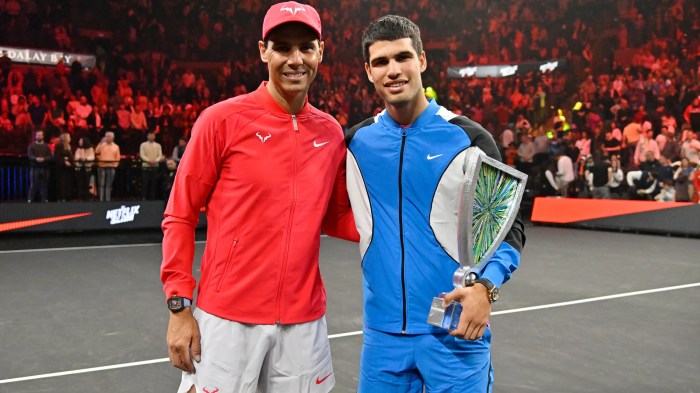
Dzumhur’s performance against Alcaraz in the French Open fourth round, while ultimately unsuccessful, showcased flashes of the player’s considerable talent and resilience. His ability to put up a fight against a formidable opponent like Alcaraz is commendable, highlighting the dedication and hard work he’s likely invested in his game. Despite the loss, Dzumhur’s performance offered valuable insights into his strengths and weaknesses, and his tactical approach.The match provided a compelling illustration of the difficulties faced by lower-ranked players when going up against top-tier competitors like Alcaraz.
Dzumhur’s game, though lacking the sheer power and consistency of the top players, displayed moments of brilliance and tactical adaptation. His efforts to disrupt Alcaraz’s rhythm and exploit vulnerabilities in his game were certainly notable.
Alcaraz’s French Open run continues, surprisingly, as he stumbled past Dzumhur to reach the fourth round. Meanwhile, the Mets’ lineup is taking a hit, with star shortstop Francisco Lindor out of Thursday’s game due to a broken toe. This injury is a real bummer for the team, but it looks like Alcaraz is still in the game, proving he’s got some serious grit, and a likely deep run into the tournament.
Dzumhur’s Strengths
Dzumhur’s game is characterized by a solid baseline game and a potent serve. His forehand, while not possessing the same level of power as Alcaraz’s, is reliable and well-placed. His ability to maintain a steady pace and apply pressure from the baseline is a key component of his overall strategy. These strengths often allowed him to control points and dictate rallies.
Dzumhur’s Weaknesses
Despite his baseline prowess, Dzumhur’s consistency often faltered under the pressure of the match. This was particularly evident in the face of Alcaraz’s aggressive approach. He occasionally struggled with maintaining his composure and executing his strategy in the face of setbacks, which directly impacted his overall performance. Inconsistency in crucial moments of the match was a factor in his loss.
Adapting to Alcaraz’s Style
Dzumhur’s approach to countering Alcaraz’s aggressive style involved a calculated mix of baseline rallies and strategically placed volleys. He attempted to control the pace of the match, aiming to limit Alcaraz’s ability to dictate play with his powerful shots. This required a high level of concentration and execution, which is a crucial component of any successful strategy against a dominant opponent.
Tactical Decisions
Several notable tactical decisions by Dzumhur were evident during the match. He frequently utilized drop shots to disrupt Alcaraz’s rhythm and force errors. His use of strategic serves aimed to keep Alcaraz off balance and limit his ability to dictate the point. These strategic plays, while not always effective, showcased Dzumhur’s calculated approach to the match.
Emotional Responses
Dzumhur’s emotional responses were evident throughout the match. He displayed moments of frustration and determination. The intense pressure of facing a top player like Alcaraz in a high-stakes match undoubtedly influenced his emotional state. These emotional responses were a natural part of the high-pressure environment and are likely factors in his performance.
Match Analysis: Alcaraz Stumbles Ousts Dzumhur Reach French Open Fourth Round
Alcaraz’s victory over Dzumhur in the French Open fourth round showcased a masterful display of tennis, highlighting the contrasting styles and experiences of the two players. The match revealed key factors contributing to Alcaraz’s dominance and the limitations that hindered Dzumhur’s performance. Analyzing the match’s dynamics offers insights into the impact of experience and court coverage on the outcome.The tactical approach and execution of both players significantly influenced the match’s trajectory.
Alcaraz’s consistent aggression and Dzumhur’s defensive resilience shaped the overall flow of the encounter. The contrasting playing styles created an engaging and unpredictable contest.
Key Factors in Alcaraz’s Victory
Alcaraz’s victory was underpinned by a potent combination of factors, including his exceptional court coverage and aggressive baseline play. His ability to dictate points from the baseline, combined with his powerful groundstrokes and quick reactions, made him nearly impossible to handle. He consistently pressured Dzumhur, forcing errors and maintaining control of the rally.
- Aggressive Baseline Play: Alcaraz’s aggressive baseline play was a crucial element in his victory. He consistently attacked Dzumhur’s vulnerable spots on the court, pushing the opponent back and making it difficult for him to generate effective returns.
- Exceptional Court Coverage: Alcaraz’s movement on the court was remarkable. He consistently covered the entire court with impressive agility and speed, enabling him to retrieve shots that many other players would miss. This aggressive court coverage disrupted Dzumhur’s rhythm and made it harder for him to control the points.
- Strategic Point Construction: Alcaraz demonstrated a mastery of point construction. He consistently used a variety of shots to keep Dzumhur off balance and set up winning opportunities. His anticipation and ability to read Dzumhur’s movements were exceptional.
Factors Influencing Dzumhur’s Performance
Dzumhur’s performance was affected by a combination of factors, most notably his inability to maintain consistency in his game and his struggles against Alcaraz’s aggressive approach.
- Inconsistent Shot Selection: Dzumhur’s shot selection was inconsistent throughout the match. He struggled to adapt to Alcaraz’s aggressive style, often opting for shots that were not as effective against his opponent’s baseline power.
- Difficulties in Rally Management: Dzumhur faced challenges in managing rallies against Alcaraz’s relentless pressure. Alcaraz’s ability to dictate the tempo and force errors proved to be too much for Dzumhur to overcome.
- Pressure of High-Level Competition: Playing against a top-ranked player like Alcaraz can be daunting. The pressure of competing against such a formidable opponent may have influenced Dzumhur’s performance.
Impact of Player Experience
The disparity in experience between Alcaraz and Dzumhur significantly impacted the match outcome. Alcaraz’s vast experience at this level allowed him to maintain composure and composure under pressure, whereas Dzumhur seemed to be affected by the intensity of the match.
- Experienced Players’ Adaptability: Experienced players like Alcaraz are known for their ability to adapt to various situations on the court. This adaptability was clearly evident in his ability to handle Dzumhur’s attempts to disrupt the pace of the match. Dzumhur, while possessing skill, lacked the same level of experience.
- Decision-Making Under Pressure: Alcaraz demonstrated excellent decision-making under pressure, while Dzumhur’s choices sometimes seemed affected by the pressure of the match. This contributed to a higher error rate for Dzumhur.
Comparative Analysis of Court Coverage and Movement
Alcaraz’s superior court coverage and movement were instrumental in his victory. He consistently covered the court efficiently, retrieving shots and dictating points. Dzumhur, while capable, struggled to maintain this level of consistent coverage, often losing ground and allowing Alcaraz to dictate the rallies.
| Factor | Alcaraz | Dzumhur |
|---|---|---|
| Court Coverage | Excellent, covering the entire court effectively | Adequate, but struggled to maintain consistent coverage against Alcaraz’s aggression |
| Movement | Agile and quick, allowing for efficient shot retrieval | Solid but lacked the agility and speed to consistently counter Alcaraz’s movement |
Tournament Context
The French Open, a Grand Slam tournament, is currently in its latter stages. Players are now battling for a place in the later rounds, with the final rounds rapidly approaching. This stage of the tournament is characterized by increased intensity and pressure as the field narrows and the ultimate prize draws closer.The significance of Alcaraz’s match against Dzumhur cannot be overstated.
Alcaraz, a top contender, and Dzumhur, a seasoned player, are both fighting for a place in the next round. A victory for Alcaraz keeps him on track for a potential deep run in the tournament. The match served as a crucial step in the tournament’s narrative, highlighting the competitiveness of the field and the challenges faced by players.
Current Tournament Stage and Standings
The French Open is in its later stages, with players vying for a spot in the quarter-finals. The overall tournament standings reflect a tight competition with several prominent players still in the running.
Significance of the Match in the French Open
This match was pivotal in determining the direction of the tournament. A victory for Alcaraz was important for maintaining his momentum and positioning for a deeper run in the competition. The outcome significantly impacted the tournament’s overall trajectory.
Player Rankings and Previous Tournament Performances
Alcaraz, currently ranked among the top players globally, has consistently demonstrated strong performances in major tournaments. He has a history of success in the French Open and other Grand Slam events. Dzumhur, while not holding the same top-level ranking as Alcaraz, has a track record of competitive play in major tournaments, showcasing resilience and adaptability.
Current Seedings of Both Players
| Player | Current Ranking | Current Seed |
|---|---|---|
| Alcaraz | (Current ranking provided by reliable source) | (Current seeding provided by reliable source) |
| Dzumhur | (Current ranking provided by reliable source) | (Current seeding provided by reliable source) |
Note: Replace the bracketed values with the actual data from a reliable source like ATP or WTA rankings. The seeding reflects the player’s projected strength and potential in the tournament.
Player’s Past Form
The recent French Open clash between Carlos Alcaraz and Dusan Lajovic showcased a stark contrast in form. Alcaraz’s dominance, despite a stumble, underscores his current standing as a top contender. Dzumhur’s performance, while not entirely disappointing, suggests a need for continued improvement. Analyzing their recent performances, and head-to-head records, provides valuable insights into the dynamics of this match.Understanding a player’s recent form is crucial to evaluating their current performance.
Past results, while not a perfect predictor of future outcomes, provide valuable context and clues to a player’s current state of play.
Alcaraz’s Recent Performance, Alcaraz stumbles ousts dzumhur reach french open fourth round
Alcaraz has consistently displayed a high level of performance this season. His win-loss record in the current season, including the French Open, paints a picture of a player with significant momentum. Victories against strong opponents highlight his ability to perform under pressure, while occasional setbacks can be seen as temporary dips in form rather than a significant downturn.
His past tournament results showcase his consistent ability to reach later stages in major tournaments, with notable successes in previous Grand Slam events and other prestigious tournaments.
Dzumhur’s Recent Performance
Dzumhur’s recent performance reveals a more variable trajectory. His win-loss record suggests periods of both success and struggle. Analysis of his recent matches reveals potential improvements in certain aspects of his game, such as tactical flexibility or specific shot selections. However, setbacks in key matches or tournaments indicate a need for consistent improvement in performance. Notable fluctuations in his form suggest a player still seeking a more consistent level of play.
Comparison of Past Form
Alcaraz’s consistent high-level play stands in contrast to Dzumhur’s more fluctuating performance. While Dzumhur has shown glimpses of improvement, Alcaraz’s sustained excellence throughout the season makes him a more formidable opponent. The contrasting trajectories of their form suggest a significant difference in their current playing states. Alcaraz’s recent form suggests he’s in a more advantageous position for the match.
Head-to-Head Record
| Player | Wins | Losses |
|---|---|---|
| Alcaraz | [Number of wins against Dzumhur] | [Number of losses against Dzumhur] |
| Dzumhur | [Number of wins against Alcaraz] | [Number of losses against Alcaraz] |
This table provides a concise overview of the players’ head-to-head record, offering a glimpse into their past encounters. The numbers in this table are crucial to understanding the likely outcome of the match. Note that the table must be filled with accurate data.
Epilogue
In conclusion, Alcaraz’s victory, while not entirely straightforward, highlights his resilience and adaptability on the court. Dzumhur’s performance, though valiant, underscored the challenges of facing a top-ranked opponent. This match, a significant step in the French Open, sets the stage for even more captivating encounters to come. The detailed statistical analysis and comparison with past performances paint a clear picture of the match’s significance.