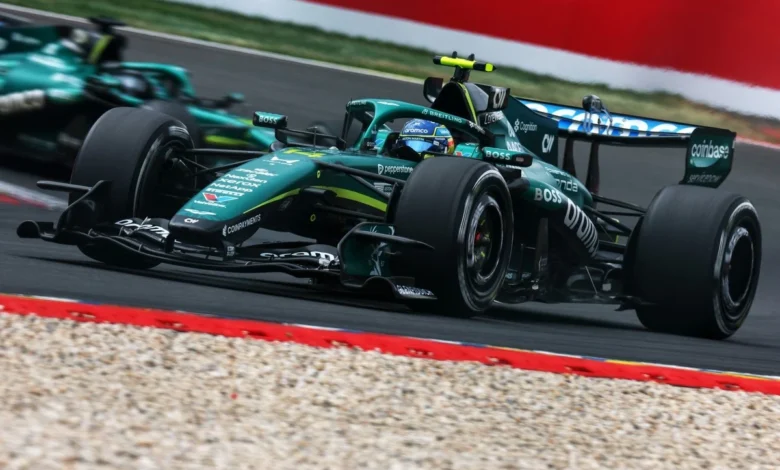
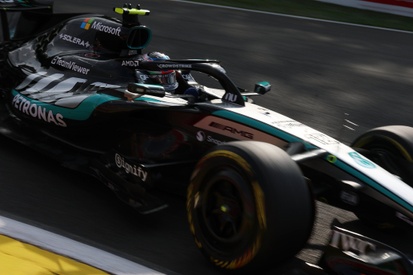
The Belgian Grand Prix served as another stark reminder of Aston Martin’s struggles in a Formula 1 season that has been mired in disappointment. Lance Stroll was forced to retire from the race due to a clutch failure, while two-time world champion Fernando Alonso endured a demoralizing finish, languishing at the back of the field and being lapped twice. His performance was so diminished that he couldn’t even mount a challenge against Valtteri Bottas, a driver competing with Cadillac’s newly established works team, highlighting the significant performance deficit Aston Martin is currently facing.
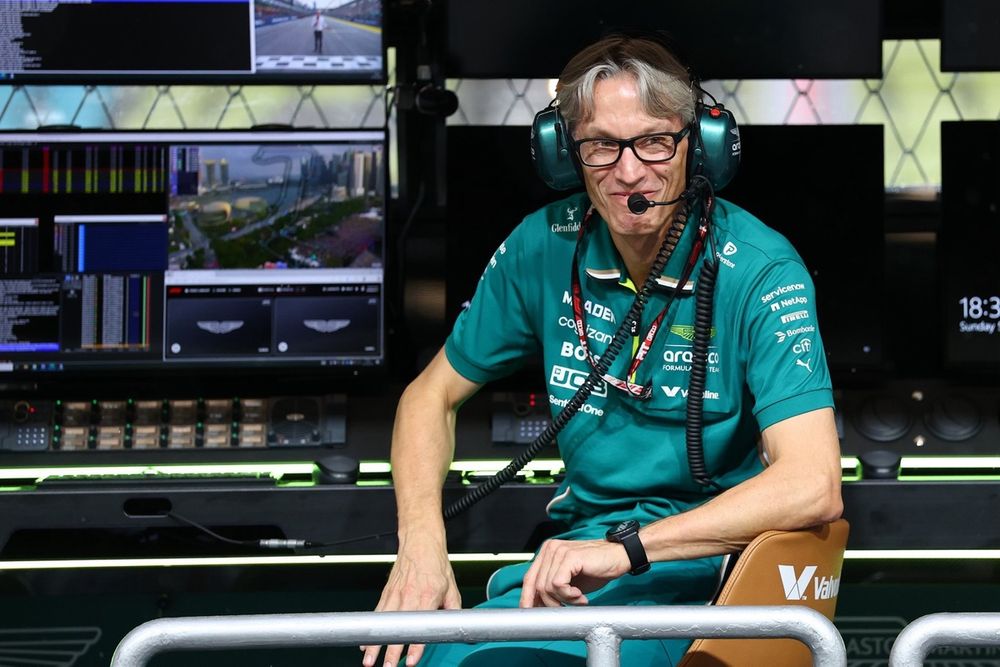
The somber atmosphere was palpable during the customary post-race media debrief with Aston Martin trackside chief Mike Krack on Sunday evening. This subdued mood has become an unfortunate hallmark of the team’s season. However, beneath the disappointment, a flicker of optimism persists. Aston Martin is on the cusp of introducing its most significant upgrade package of the year, a substantial B-spec car designed to overhaul the aerodynamics and chassis. This comprehensive update is scheduled to debut at the upcoming Hungarian Grand Prix, with further enhancements to the Honda power unit anticipated after Formula 1’s summer break.
A Season of Struggle and the Quest for Competitiveness
The current Formula 1 season has been exceptionally challenging for Aston Martin. Lance Stroll has yet to score a single point, a stark contrast to his capabilities and past performances. Fernando Alonso, despite his legendary status and immense skill, has managed to secure only a single point, achieved in Monaco after a series of penalties were applied to other drivers. This lack of competitive performance has left the team languishing in the Constructors’ Championship, far from its early-season promise.

"We have not been racing over the last few events," Mike Krack acknowledged, reflecting the team’s inability to genuinely compete with their rivals. "It was very difficult to keep up with the midfield. And whatever it’s going to bring, I think going racing is the most important for everyone." This sentiment underscores the team’s primary objective: to regain a competitive footing and allow their drivers to engage in meaningful on-track battles.
The B-Spec Car: A Potential Turning Point
The anticipated B-spec car, developed under the guidance of technical luminary Adrian Newey, represents a significant departure from the team’s current philosophy. Paddock whispers suggest that the cumulative effect of these upgrades could yield a performance improvement of as much as two seconds per lap. While this figure is speculative, even a portion of that gain could fundamentally alter Aston Martin’s season trajectory.
To underscore the magnitude of the planned changes, Aston Martin was required to submit a revised chassis for an additional FIA crash test. This necessity arose due to the extensive nature of the aerodynamic and chassis overhaul, indicating that the team is not merely implementing minor tweaks but rather undertaking a fundamental redesign.
"Yeah, I think it’s quite extensive," Krack confirmed when questioned about the extent of the chassis modifications. "As he was saying, the main things are obviously aerodynamic and weight. And to achieve that, you have to do a lot of things. And everything has been achieved that we wanted." The successful completion of these rigorous safety tests signifies that the team has met its developmental objectives for this critical upgrade.

The introduction of the B-spec car is not just a technical endeavor; it carries immense significance for several key stakeholders. For team owner Lawrence Stroll, it is a crucial test of his ambitious vision to build a championship-contending team, especially after investing heavily in bringing Adrian Newey into the fold. For Newey himself, this package represents a significant challenge to his legendary reputation, with its performance set to be a defining factor in how this chapter of his career is perceived.
A New Dawn for the Honda Partnership?
The relationship between Aston Martin and its engine partner, Honda, has also undergone a notable evolution. Following a difficult start to the season, Aston Martin had openly expressed its frustrations regarding the team’s lack of competitiveness, with some criticism implicitly or explicitly directed at the new engine supplier. However, recent weeks have seen a shift in perspective, with a growing acknowledgment that Honda cannot solely bear the burden of the team’s struggles.
Furthermore, the strategic wisdom of publicly airing grievances with a partner has been questioned. Honda’s illustrious history in Formula 1 demonstrates a pattern of initial development challenges followed by eventual triumph. This track record suggests that patience and collaborative effort are more likely to yield long-term success than public recriminations. The current détente suggests a more unified approach as both parties look to extract maximum performance from the upcoming developments.
The Hungarian Grand Prix: A High-Stakes Debut
The Hungarian Grand Prix weekend looms as a critical juncture for Aston Martin. It represents the first opportunity to evaluate the efficacy of the B-spec car in a competitive race environment. The team’s engineers will be meticulously analyzing performance data, seeking confirmation that their extensive development work has translated into tangible on-track gains.
Even with the predicted performance boost, the current deficit remains substantial. If the two-second per lap improvement estimate proves accurate, Fernando Alonso would still have qualified second-to-last at Spa-Francorchamps, a position mirroring his eventual starting grid slot with the outgoing car. This highlights the immense task ahead and the necessity for the upgrades to deliver beyond initial expectations.
Looking Towards the Future
The period of stagnation for Aston Martin is now officially over, with the team eager to put its latest innovations to the test. "The period that we had now with no upgrades for very long is now over," Krack stated. "So, it looks good for the future. And we are just all looking forward to Budapest and see what we have." This sentiment encapsulates the collective anticipation within the team as they prepare for a crucial phase of their season.
For Fernando Alonso, the Hungarian Grand Prix and the subsequent races will also be significant. Approaching his 45th birthday, the legendary Spaniard faces an inevitable decision regarding the duration of his Formula 1 career. Each race presents an opportunity to assess his own performance and satisfaction within the sport, and the competitiveness of the Aston Martin package will undoubtedly play a role in his future considerations.
The team’s technical director, Dan Fallows, has been instrumental in the development of this ambitious upgrade. His leadership and the dedication of the design office have been paramount in bringing the B-spec car to fruition. The focus now shifts to the track, where the true measure of their efforts will be taken.

The introduction of a significantly revised car is not merely an incremental step; it is a strategic gamble. Aston Martin has invested heavily in its infrastructure, personnel, and development programs. The success of the B-spec package is therefore critical not only for the remainder of the current season but also for the team’s long-term aspirations of challenging for race wins and championships.
The Belgian Grand Prix, with its challenging Spa circuit, provided a fitting backdrop for Aston Martin’s current predicament. The historical significance of the venue, steeped in motorsport lore, contrasted sharply with the team’s present-day struggles. The focus now shifts to the Hungaroring, a circuit known for its technical demands and limited overtaking opportunities, which will put the aerodynamic efficiency and mechanical grip of the new Aston Martin package to the ultimate test.
The team’s simulation data and wind tunnel results will be put to the ultimate scrutiny. The engineers will be closely monitoring tire degradation, aerodynamic balance, and overall lap time compared to their rivals. Any signs of unexpected behavior or underperformance will necessitate rapid adjustments and further development in the subsequent races.
The arrival of Adrian Newey’s influence, even if indirect through the team’s development, is expected to bring a new dimension to Aston Martin’s car design. Newey’s unparalleled track record in creating championship-winning machinery for Williams, McLaren, and Red Bull Racing suggests that the B-spec car should possess inherent aerodynamic sophistication and a robust mechanical platform.
The team’s strategic approach to development has been a point of discussion throughout the season. While initially strong, the car’s performance plateaued, leading to the significant mid-season overhaul. This decision reflects a willingness to admit shortcomings and take bold steps to rectify them, a characteristic often found in successful Formula 1 operations.
The upcoming races will be a period of intense scrutiny for Aston Martin. The performance of the B-spec car will dictate not only their immediate competitive standing but also their long-term strategy and potential to retain and attract top-tier talent. Fernando Alonso’s continued presence, a testament to his belief in the team’s project, will be further validated if the upgrades deliver the anticipated improvements.
The narrative surrounding Aston Martin is one of high expectations meeting harsh reality, with a glimmer of hope on the horizon. The Hungarian Grand Prix will be the stage for this crucial chapter, where the team aims to transition from a season of disappointment to one of renewed ambition and tangible progress. The coming weeks will reveal whether the extensive efforts invested in the B-spec car will indeed be the catalyst for Aston Martin’s resurgence.