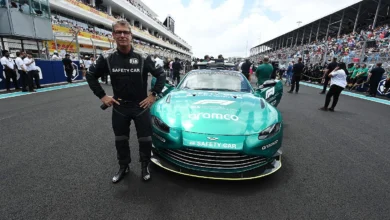
Sky Sports Formula 1 lead commentator David Croft has voiced significant criticism regarding the current generation of Formula 1 power units, arguing that their energy-sensitive nature has detracted from the racing spectacle at iconic circuits such as Spa-Francorchamps and Silverstone. Croft’s remarks, made during an appearance on the Sky Sports F1 Show, highlight a growing concern within the motorsport community about the impact of these complex hybrid powertrains on the quality of on-track battles, particularly at tracks renowned for their demanding layouts and historical significance.
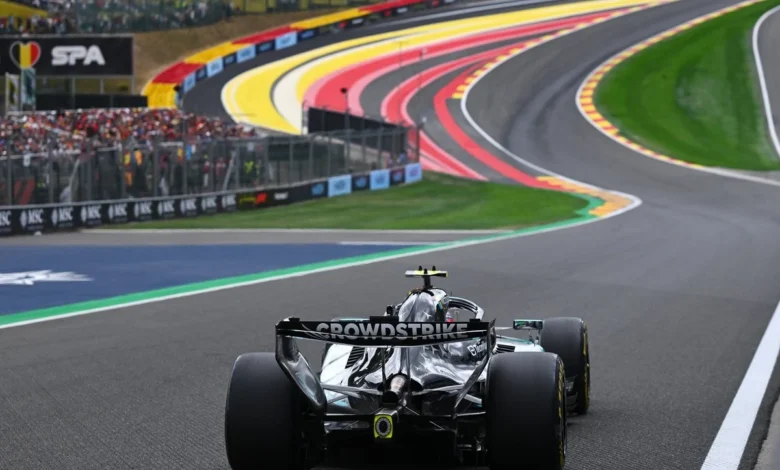
The recent Belgian Grand Prix served as a stark illustration of Croft’s points. While the race itself concluded with a dominant victory for Mercedes’ Kimi Antonelli, followed by Ferrari’s Charles Leclerc and Red Bull’s Max Verstappen, the underlying narrative was one of a power unit system dictating the flow of the race. The energy recovery and deployment strategies became a primary focus, overshadowing the traditional strengths of the cars and the drivers’ abilities to push the limits. This scenario is not isolated to Spa; Croft specifically cited Silverstone, another legendary circuit, as a venue where the power unit’s characteristics significantly influenced the race outcome.
"In all seriousness, there’s a lot about these new regulations that I really love. I think we’ve gone in the right direction," Croft stated, acknowledging the positive aspects of the broader aerodynamic changes introduced this season. However, he drew a clear line when discussing the powertrain technology. "The power units, I’m not so sure. Championships are won and lost over a variety of circuits and you design your car, build your car, and drive your car as best you can to suit the demands of those circuits. But we seem to have a power unit package that doesn’t suit every single circuit in the championship."
This sentiment underscores a fundamental principle of motorsport: the need for a balanced performance across a diverse range of circuits. Formula 1’s calendar is meticulously curated to test different engineering and driving philosophies, from high-speed straights to technical, twisty sections. Croft’s frustration stems from the perception that the current power units, with their heavy reliance on battery regeneration and deployment, create a situation where a car’s performance is unduly influenced by its ability to manage energy, rather than its inherent aerodynamic efficiency or mechanical grip on a given day.
The Dominance of Energy Management
Croft elaborated on this point, emphasizing how the limitations imposed by the energy systems prevented drivers from engaging in the kind of wheel-to-wheel racing that fans expect at these classic venues. "But what we saw at Silverstone and Spa, classic tracks, where the power unit once again dominated but not for the right reasons, is not what we need," he asserted. The commentary suggests that instead of allowing drivers to attack and defend based on outright pace and driver skill, the need to conserve and deploy energy strategically led to predictable race patterns. This could manifest as drivers being unable to make overtakes due to insufficient battery charge on straights or being forced to manage their power output defensively, thereby reducing the intensity of the competition.
The technical regulations for the current power units, introduced in recent years, aim to promote sustainability and technological innovation. These sophisticated hybrid systems combine a V6 turbocharged internal combustion engine with powerful electric motor generator units (MGUs) and a battery. The MGU-K captures energy under braking, while the MGU-H recovers energy from the exhaust gases. This harvested energy can then be deployed to provide a significant power boost, offering drivers a strategic advantage. However, the effectiveness of this deployment is heavily dependent on the track layout, with circuits featuring longer straights and more frequent braking zones offering greater opportunities for regeneration and subsequent deployment.
Spa and Silverstone: Case Studies in Power Unit Influence
Spa-Francorchamps, with its lengthy straights like the Kemmel Straight and its demanding elevation changes, is a prime example of a circuit where the power unit’s characteristics can be amplified. Similarly, Silverstone, a high-speed track with a rich heritage, presents challenges and opportunities for energy management. When these tracks become arenas where the power unit’s energy management capabilities are the primary determinant of performance, it can lead to situations where cars are either too powerful or too energy-depleted to mount a serious challenge, thereby stifling close racing.

Croft’s critique is not a rejection of hybrid technology itself, but rather a call for a more balanced approach to its implementation within the racing context. He expressed hope that future adjustments to the regulations would address these shortcomings. "As Formula 1 fans watching our sport, I hope it’s better next year. I really do, and I hope the tweaks we make make a difference. But there was too much leanness going on with the energy, and I don’t think we got the racing that we deserved as a result of it." The phrase "too much leanness going on with the energy" likely refers to a scenario where cars are running too low on available battery power for extended periods, forcing drivers into conservative strategies and limiting their ability to attack or defend dynamically.
Looking Ahead: The 2027 Power Unit Shift
The future direction of Formula 1’s power unit regulations offers a potential solution to Croft’s concerns. In 2027, the sport is slated to introduce a significant tweak to the power unit regulations, shifting the energy balance to a 60:40 split between internal combustion and electric power. This represents a notable increase in the proportion of electric power, potentially leading to more consistent and powerful electric assistance throughout a lap, regardless of the track’s characteristics. Such a change could reduce the extreme reliance on strategic energy harvesting and deployment that Croft has identified as detrimental to racing quality.
This upcoming regulation change is part of Formula 1’s broader commitment to sustainability and its pursuit of a more exciting and unpredictable racing product. The move towards a higher electric power ratio could empower drivers to push harder for longer periods, enabling more sustained wheel-to-wheel battles and diminishing the influence of intricate energy management strategies on the overall race outcome. The intention is to ensure that while the technology remains at the forefront, it serves to enhance, rather than dictate, the racing spectacle.
The Broader Impact on Formula 1
The implications of Croft’s commentary extend beyond mere driver or commentator preferences. The quality of racing is a critical factor in the sport’s appeal to fans, sponsors, and manufacturers alike. When iconic circuits, which have historically delivered some of the most memorable contests, are perceived as being compromised by technological limitations, it raises questions about the long-term health and excitement of Formula 1.
The current power unit regulations, while technologically advanced, have evidently created a performance dichotomy that is more pronounced on certain types of tracks. This can lead to predictable outcomes and a reduction in the element of surprise, which are vital for maintaining fan engagement. The Belgian Grand Prix and the Silverstone Grand Prix, as highlighted by Croft, are not merely races; they are events steeped in motorsport history, and their ability to deliver thrilling competition is paramount.
The challenge for Formula 1’s governing bodies and the engine manufacturers is to strike a delicate balance. They must continue to innovate and push the boundaries of automotive technology, aligning with global trends towards electrification and sustainability. However, this innovation must be channeled in a way that enhances the core of the sport: the competition on track. The 2027 power unit regulations appear to be a step in this direction, aiming to create a more robust and exciting racing experience across the entire calendar.
As the sport moves forward, the feedback from experienced observers like David Croft will undoubtedly play a role in shaping future technical discussions. The desire for racing that is determined by driver skill, car setup, and strategic acumen, rather than the intricate management of energy reserves, remains a central tenet of Formula 1’s enduring appeal. The coming years will be crucial in observing how the sport navigates these technological advancements to ensure that the racing spectacle at legendary venues continues to meet, and exceed, the expectations of its passionate global fanbase. The hope is that the upcoming regulatory adjustments will indeed pave the way for more deserving races at these hallowed grounds.