Navigating the Myths and Mandates of the German Autobahn A Comprehensive Guide to High Speed Safety and Legal Compliance

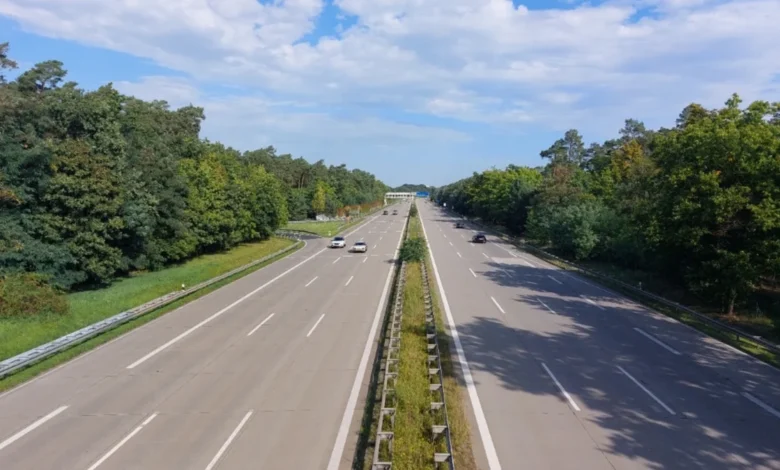
The German Autobahn remains one of the most misunderstood pieces of infrastructure in the modern world, often romanticized by international driving enthusiasts as a lawless sanctuary for high-velocity travel. To the uninitiated, it represents a "promised land" where the limitations of the internal combustion engine are tested without the oversight of law enforcement. However, the reality of the Bundesautobahn—the federal controlled-access highway system in Germany—is far more complex. It is not a chaotic speedway but a precision-engineered ecosystem governed by some of the strictest traffic laws and social codes in the world. For the thousands of tourists who arrive in Frankfurt or Munich each year intending to push a rental vehicle to its limits, a lack of understanding regarding these regulations can lead to staggering fines, the revocation of driving privileges, or catastrophic accidents.
The Engineering and Regulatory Framework of the Autobahn
Spanning over 13,000 kilometers, the Autobahn is the third-largest superhighway system in the world, trailing only the United States’ Interstate System and China’s National Trunk Highway System. Unlike many international highways, the Autobahn was designed specifically to handle sustained high speeds. This is achieved through thicker pavement—often reaching 30 inches in depth—gentle curves designed for visibility, and rigorous maintenance schedules.
However, the "unrestricted" nature of the road is frequently overstated. According to data from the Federal Ministry for Digital and Transport, approximately 30 percent of the Autobahn network has a permanent or temporary speed limit. These limits are strictly enforced in urban areas, near construction zones, and in sections with high accident frequency or noise-pollution concerns. Furthermore, nearly all sections are subject to dynamic speed limits controlled by overhead electronic gantries. these systems can instantly lower the speed limit to 80 km/h (50 mph) or 60 km/h (37 mph) in response to congestion, adverse weather, or roadwork.
The Myth of the Lawless Speed Limit
The most critical visual cue for any driver on the Autobahn is Sign 282: a white circular sign with five thin, diagonal black lines. This signifies the "end of all previous restrictions," including speed limits. Once a driver passes this marker, they enter the unrestricted zone. However, even here, the law is not absent. The German government maintains a "recommended speed" (Richtgeschwindigkeit) of 130 km/h (81 mph).
While it is not a crime to exceed 130 km/h in these zones, doing so carries significant civil implications. Under German case law, if a driver exceeds the recommended speed and is involved in an accident, they may be held partially liable for the damages regardless of who "caused" the initial incident. Insurance companies often use the violation of the Richtgeschwindigkeit as grounds to reduce payouts, arguing that the driver accepted an increased risk by traveling at extreme velocities.
Rechtsfahrgebot: The Legal Mandate of Lane Discipline
In many Western nations, lane discipline is viewed as a matter of etiquette; in Germany, it is a non-negotiable legal requirement known as Rechtsfahrgebot. This rule dictates that all drivers must stay in the rightmost available lane unless they are actively overtaking another vehicle.
The left lane is reserved exclusively for passing. Once the maneuver is complete, the driver is legally obligated to return to the right. Failure to do so is not merely an annoyance to other drivers; it is a traffic violation that can result in significant fines. Cruising in the left lane—often referred to as "left-lane camping"—is viewed by the Autobahnpolizei (highway police) as a dangerous disruption of traffic flow.
Equally important is the prohibition of "undertaking," or passing a vehicle on the right. This is strictly forbidden on the Autobahn. If a driver in the left lane is moving slower than the traffic behind them, the following driver must wait for them to move over. Flashing high beams (Lichthupe) is a common, though sometimes aggressive, way of signaling a desire to pass, though German law requires that this be done from a safe distance without tailgating, which is itself a serious offense known as Drängeln.
The Legal Consequences of Preventable Stoppages
One of the most surprising laws for foreign visitors is the classification of running out of fuel as a punishable offense. On the Autobahn, stopping for any reason other than a mechanical breakdown or an emergency is illegal. Because the fuel level of a vehicle is entirely within the driver’s control, running out of gas is viewed as "preventable negligence."
The logic behind this strictness is rooted in safety. With vehicles traveling at speeds in excess of 200 km/h (124 mph), a stationary car on the shoulder represents a massive kinetic hazard. The turbulence created by passing trucks and high-speed cars can easily destabilize a person standing near the shoulder. Consequently, the Autobahnpolizei will issue fines to any driver who stalls due to an empty tank. Drivers are expected to monitor their gauges and utilize the frequent "Tank & Rast" service stations located approximately every 30 to 50 kilometers.
Rettungsgasse: The Life-Saving Corridor
In the event of a traffic jam or a sudden halt in flow, German law requires the immediate formation of a Rettungsgasse, or emergency corridor. This must be established as soon as traffic begins to crawl, well before emergency sirens are audible.
The procedure is standardized across the country: drivers in the far-left lane must pull as far to the left as possible, while drivers in all other lanes to the right must pull as far to the right as their lane allows. This creates a clear path down the center-left of the highway for emergency vehicles. In recent years, the German government has increased the penalties for failing to form a Rettungsgasse or for unauthorized use of the corridor by civilian vehicles. Fines now range from €200 to €320, often accompanied by a one-month driving ban.
The Physics of High-Speed Closing Gaps
The most dangerous element of the Autobahn for the uninitiated is the "closing speed" phenomenon. A driver cruising at 130 km/h (81 mph) may check their mirror and see a car a several hundred meters behind them. To a driver used to American or British highway speeds, that car appears safely distant. However, if that approaching vehicle is a high-performance machine traveling at 250 km/h (155 mph), the gap closes at a rate of 33 meters per second.
This speed differential means that a car that was a "speck" in the mirror can be on your rear bumper in less than ten seconds. German driver’s education—which costs between €2,000 and €3,500 and requires dozens of hours of professional instruction—emphasizes the "double-check" method. Drivers are trained to look once to identify a vehicle and a second time to calculate its closing speed before committing to a lane change.
The Role of the Autobahnpolizei and Surveillance
The Autobahnpolizei are among the most specialized police units in Europe. They utilize high-performance, unmarked vehicles equipped with sophisticated video surveillance systems known as ProViDa (Proof Video Data). These units do not just monitor speed; they look for tailgating, illegal passing, and improper lane usage.
Germany also employs an extensive network of automated enforcement. "Blitzers" (speed cameras) are often hidden behind bridge pillars or integrated into overhead gantries. Unlike in some jurisdictions where speed cameras are marked with warning signs, German cameras are often intentionally obscured. Fines are processed through a centralized system, and for those driving rental cars, the rental agency will typically pass the fine—along with an administrative fee—directly to the driver’s credit card.
Societal Impact and the Future of the Autobahn
The Autobahn is more than a road; it is a symbol of German engineering prowess and a cornerstone of the national identity. The "no speed limit" policy has historically been defended by the powerful German automotive lobby, arguing that it serves as a real-world laboratory for developing the safety and performance features found in brands like Porsche, BMW, and Mercedes-Benz.
However, the future of the unrestricted Autobahn is a subject of intense political debate. Environmental groups and the Green Party frequently advocate for a universal speed limit of 130 km/h to reduce CO2 emissions and noise pollution. Additionally, as the world moves toward autonomous driving, the high-speed differentials of the Autobahn present unique challenges for AI sensors and algorithms.
For now, the Autobahn remains a unique bastion of driver freedom, but it is a freedom predicated on discipline. The system only functions because the vast majority of participants adhere to the rules with mechanical precision. For the international visitor, the key to enjoying the "Mecca of driving" is to abandon the idea of the road as a playground and instead respect it as a highly regulated, high-stakes professional environment. Failure to do so doesn’t just result in a ticket; in the world of the Autobahn, it can result in a total forfeiture of safety.
Related posts: