Tom Morello reflects on his storied career through the lens of pop culture trivia and historical milestones

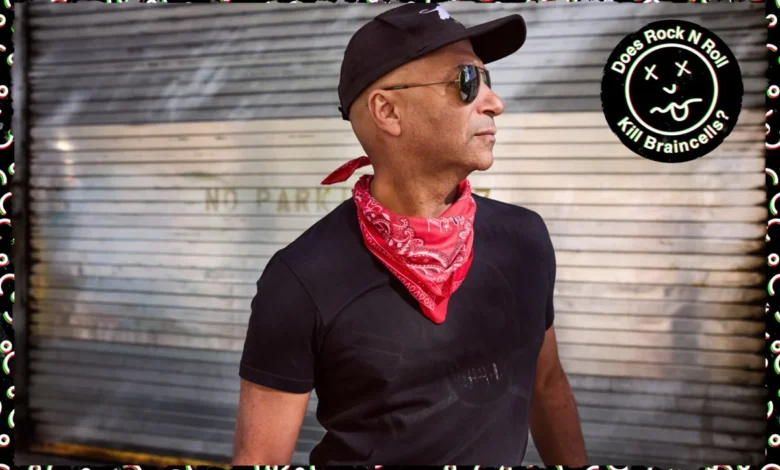
The trajectory of Tom Morello’s career—from his early days in the Los Angeles underground to his status as a legendary guitarist for Rage Against The Machine, Audioslave, and Prophets of Rage—is a tapestry of political activism, genre-bending music, and unexpected pop-culture cameos. Recently, in a candid assessment of his own history, Morello engaged in a retrospective deep dive that revealed the intersection of his high-profile activism and his lesser-known cinematic and collaborative endeavors.
A Legacy of Unconventional Appearances
Morello’s career is punctuated by moments that defy the standard expectations of a rock musician. Beyond the stage, he has made several notable appearances in the Star Trek universe, an experience he describes as a formative highlight of his life. In 1996, he appeared as a So’na alien in Star Trek: Insurrection, an endurance test involving five hours of daily prosthetic application. Years later, he appeared as crewman Mitchell in Star Trek: Voyager. These roles were not mere PR stunts; they were genuine expressions of his fandom. Morello recalls the bemusement of film set extras who were unaware of his status as a multi-platinum recording artist, noting that the professional boundary often dissolved once his musical identity was revealed, leading to the peculiar reality of fellow extras presenting him with their band’s demo tapes between takes.
The Evolution of Protest and Performance
The history of Rage Against The Machine is intrinsically linked to the band’s willingness to utilize their public platform for radical political messaging. A defining moment occurred at the 1993 Lollapalooza festival in Philadelphia. In a direct challenge to the Parents Music Resource Center (PMRC) and their campaign for mandatory parental advisory stickers on albums, the band took to the stage completely nude, with duct tape covering their mouths and the letters P-M-R-C painted on their chests.
The protest was a calculated act of silence that lasted for 15 minutes, during which the band stood motionless while their instruments emitted feedback. The reaction from the audience was volatile, shifting from initial confusion and excitement to hostility as the realization dawned that no music would be played. This event remains a case study in the tension between mainstream concert culture and political performance art. Morello notes that the logistics were perilous, with band members having to flee the venue immediately afterward to avoid legal repercussions, an endeavor that found Morello, then naked, seeking refuge on the tour bus of the band Fishbone.
Chronology of Artistic Departures
Morello’s musical journey began in the 1980s with the band Lock Up, an experience he views as a critical lesson in artistic integrity. The group’s album, Something Bitchin’ This Way Comes, serves as a demarcation point in Morello’s career. Under pressure from label executives to suppress his bandmate’s sexual orientation to secure radio airplay, the experience left Morello disillusioned. The dissolution of Lock Up marked a vow to never again compromise his creative vision. This period of professional isolation in a Los Angeles squat directly preceded the formation of Rage Against The Machine, a band whose foundational sound was crafted from the very riffs Morello had been told were not radio-friendly.
The trajectory continued into the early 2000s with the formation of Audioslave, which debuted on the Late Show with David Letterman in 2002. The debut was a high-pressure environment, occurring against the backdrop of frontman Chris Cornell’s well-documented struggles with substance abuse. The performance, held on a rooftop, became an iconic moment in modern rock history, symbolizing the union of Rage Against The Machine’s instrumental prowess with the vocal legacy of Soundgarden.

Collaborative Influence and Cultural Resonance
Throughout his career, Morello has maintained a diverse collaborative portfolio that often surprises observers. His involvement in the 2019 single Teeth by 5 Seconds of Summer, an Australian pop act, highlights his commitment to exploring diverse musical landscapes. While some purists may view the collaboration as incongruous with his hard-rock roots, Morello emphasizes the importance of professional grace and the influence of his own family, noting that the collaboration brought him into contact with a new generation of fans who viewed his participation as a bridge between genres.
Furthermore, Morello’s relationship with electronic pioneers The Prodigy highlights the global reach of his sound. The sample of Bulls on Parade in the 1997 hit Smack My Bitch Up solidified the cultural influence of Rage Against The Machine’s catalog. Morello’s reflections on the late Keith Flint underscore the mutual respect between the worlds of electronic dance music and heavy metal, two scenes that, while distinct in sound, shared a common ethos of defiance.
The Intersection of Art and Infamy
Perhaps the most enduring image of Morello’s career remains the filming of the music video for Sleep Now in the Fire, directed by Michael Moore in 2000. The shoot, which involved the band storming the New York Stock Exchange, remains a legendary instance of guerilla filmmaking. The production, which was not permitted to enter the building, resulted in the band’s disruption of financial operations and the eventual arrest of the director.
The video is also frequently cited for its predictive nature, featuring a bystander holding a sign that read Trump for President 2000. This convergence of political satire and real-world political developments has cemented the video as a significant artifact of early 21st-century cultural commentary. Morello acknowledges the irony of the situation, noting that the band’s attempts to highlight societal excess inadvertently foreshadowed a shift in the American political landscape.
Broader Impact and Industry Analysis
The implications of Morello’s career go beyond his technical prowess as a guitarist. His role as a musical director for Black Sabbath’s final performances reflects the profound impact of the heavy metal genre on his life. Morello views his career as a debt to the pioneers of heavy metal, such as Tony Iommi and the late Randy Rhoads. By serving as a bridge between the founding generation of metal and contemporary musical trends, Morello has ensured that the influence of the genre continues to evolve.
From a statistical standpoint, Morello’s projects have consistently reached high chart positions—such as the Prophets of Rage self-titled album peaking at number six on the UK album charts in 2017—but he measures his success through the longevity of his collaborations. Having worked with vocalists ranging from Chuck D and B-Real to Bruce Springsteen and Chris Cornell, Morello has demonstrated a unique ability to adapt his signature guitar style to a wide spectrum of lyrical and thematic requirements.
Conclusion: A Perspective on Longevity
When assessing his career through the framework of general knowledge and trivia, Morello’s self-deprecating response to his own history—achieving a modest score on a quiz regarding his own life—reveals a musician more focused on the act of creation than the preservation of his own legend. As he continues to release new material, such as his recent album Everyone Gets Everything They Want, Morello’s career stands as a testament to the idea that artistic evolution requires a willingness to take risks, even if those risks occasionally lead to the surreal experience of standing naked on a football field or being ejected from a stock exchange. The enduring nature of his work suggests that his influence on the industry will persist as long as the music remains tethered to the principles of integrity and social consciousness that defined his inception.