The guest list for Trump’s state dinner with Xi Jinping featured just about every notable CEO in America

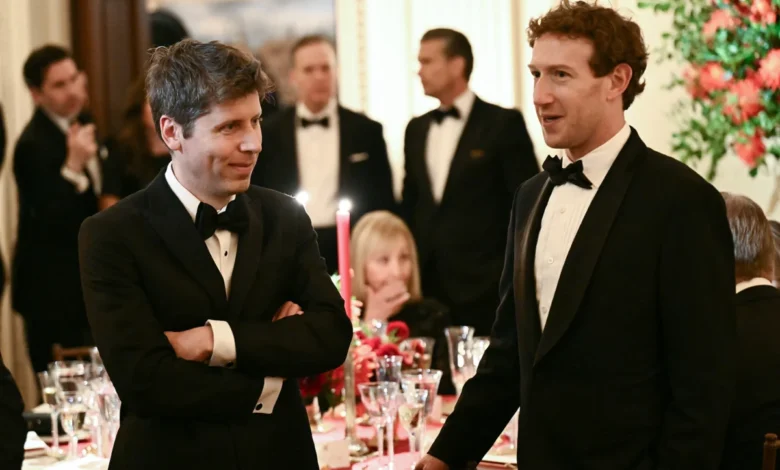
The art of diplomacy has long relied on the subtle choreography of high-level state dinners, where food, entertainment, and seating charts are leveraged to advance geopolitical objectives. During a high-stakes diplomatic engagement in Washington, D.C., President Donald Trump hosted Chinese President Xi Jinping for a lavish state dinner during his second term. Beyond the traditional pageantry associated with superpower summits, the 134-person guest list served as an extraordinary gathering of American economic, technological, and political power. Bringing together top-tier corporate executives, media moguls, conservative lawmakers, and members of the Supreme Court, the evening provided a rare window into the intersection of corporate oligarchy and statecraft in modern American governance.
Main Facts and Composition of the Guest List
The state dinner brought together 134 prominent individuals representing the upper echelons of American industry, technology, media, and conservative politics. Designed primarily to impress the visiting Chinese delegation while signaling internal alignment within the broader MAGA political movement, the event featured an unprecedented concentration of corporate leadership.
The tech sector was heavily represented, featuring figures who had traveled to the capital for a concurrent White House artificial intelligence summit. Among the attendees were Meta CEO Mark Zuckerberg, OpenAI CEO Sam Altman, Tesla and SpaceX CEO Elon Musk, Amazon founder Jeff Bezos, Google co-founder Sergey Brin, and Apple CEO Tim Cook. They were joined by prominent figures from the semiconductor boom, including Nvidia CEO Jensen Huang and Advanced Micro Devices (AMD) CEO Lisa Su.
Financial institutions and traditional industries also held a strong presence. Banking executives Jamie Dimon of JPMorgan Chase and Jane Fraser of Citigroup were in attendance, alongside representatives from major energy corporations, including ExxonMobil. Media representation included conservative television personalities such as Fox News hosts Jesse Watters, Bret Baier, and Laura Ingraham. Notably, political figures spanning multiple branches of government were present, including House Speaker Mike Johnson, Director of the Office of Science and Technology policy figures, and cabinet secretaries, alongside Supreme Court Chief Justice John Roberts and Associate Justices Brett Kavanaugh and Amy Coney Barrett.
Chronology of the Second-Term Summit
The state dinner was the culmination of a multi-day diplomatic and economic itinerary between Washington and Beijing. Relations between the United States and China during Trump’s second term have balanced on a delicate precipice defined by strategic technological competition, trade negotiations, and global security concerns.
In the days preceding the dinner, the White House hosted a high-profile artificial intelligence summit aimed at establishing regulatory frameworks and technological priorities for the United States. Many of the tech executives attending the AI summit transitioned directly to the state dinner guest list, underscoring the administration’s reliance on private-sector leadership to drive national infrastructure and innovation policy.
The evening itself followed traditional protocol for state visits, beginning with formal arrival ceremonies on the South Lawn, followed by bilateral discussions, and concluding with the gala dinner in the State Dining Room. While official readouts from the bilateral talks focused on trade imbalances, intellectual property, and regional stability in the Indo-Pacific, the social evening offered an informal environment for corporate leaders to rub shoulders with international counterparts and administration officials.
Supporting Data and Industry Representation
The inclusion of the nation’s top corporate leaders reflects the staggering economic footprint of the attendees. The combined market capitalization of the technology companies represented by executives like Musk, Bezos, Zuckerberg, Cook, Huang, and Altman totals several trillion dollars, rivaling the Gross Domestic Product of many major industrialized nations.
Furthermore, the guest list highlighted the deep financial ties sustaining contemporary political movements. Longtime donors and political supporters, such as Miriam Adelson, widow of casino magnate Sheldon Adelson, occupied prominent seats alongside industrial titans. The presence of traditional Wall Street leadership alongside Silicon Valley innovators illustrates a deliberate coalition-building effort by the administration, bridging traditional financial capital with the modern digital economy.
Official Responses and Institutional Reactions
Neither the White House nor representatives for the corporate executives released detailed transcripts of the private conversations held during the dinner. However, the optics of gathering unelected corporate leaders, judicial figures, and executive branch officials under one roof drew immediate commentary from policy analysts, ethics watchdogs, and political observers.
Critics noted the unusual presence of Supreme Court Justices John Roberts, Brett Kavanaugh, and Amy Coney Barrett at a partisan-adjacent corporate and political gala, raising fresh questions regarding the separation of powers and judicial independence. Conversely, administration defenders argued that engaging the nation’s primary industrial and technological leaders during a pivotal diplomatic summit with China is a necessary component of modern economic statecraft, ensuring that American industry remains unified on the global stage.
Broader Impact and Implications
The convergence of global superpowers and domestic corporate monopolies at a single dining table highlights the evolving nature of international relations in the twenty-first century. As economic competition increasingly supersedes traditional military rivalry—particularly in fields such as artificial intelligence, semiconductors, and green energy—the line between corporate strategy and foreign policy continues to blur.
For the American public, the event serves as a stark reminder of the forces shaping national policy. While everyday citizens navigate economic pressures, inflation, and labor markets, the nation’s preeminent executives maintain direct, unmediated access to the highest levels of global power. The decisions forged in closed-room discussions during events like the Trump-Xi state dinner ultimately trickle down, dictating the trajectory of technological innovation, labor standards, and geopolitical stability for years to come.