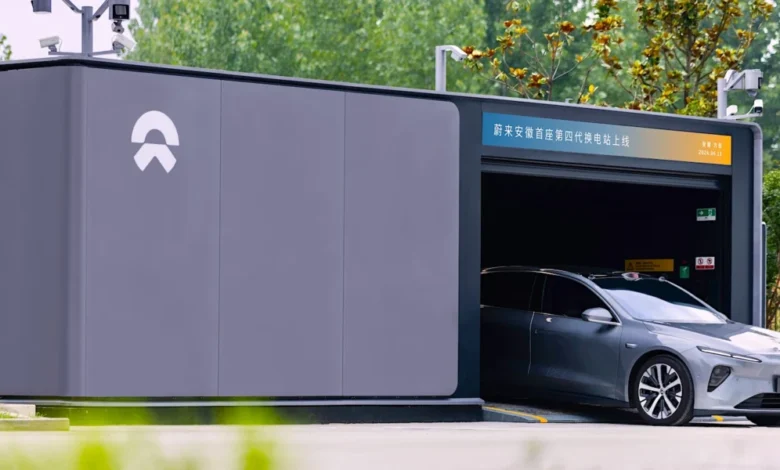
The electric vehicle landscape in China is undergoing a structural realignment as Geely Holding officially acquires a significant stake in Nio Power, the dedicated charging and battery-swapping subsidiary of Nio. Announced through definitive agreements, the transaction grants a Geely subsidiary a 30% equity stake in Nio Power at a post-money valuation of approximately RMB 16 billion, translating to roughly $2.4 billion USD. Rather than relying entirely on a straightforward capital injection, the deal involves a complex asset swap and cross-investment strategy. Geely is contributing its proprietary commercial battery-swapping business, known as Yiyi, alongside a cash payment of RMB 640 million, or about $94 million USD. In a parallel transaction, Nio China is acquiring a 10% equity stake in Zhejiang Haohan Energy Technology, Geely’s dedicated EV charging arm, by subscribing to newly issued shares. Haohan will subsequently utilize those funds to acquire a portion of Nio’s existing charging assets. Both transactions remain subject to customary regulatory approvals before final closing.
A Chronology of Collaboration and Expansion
The partnership between Nio and Geely marks the culmination of a multi-year effort by Nio to open its proprietary infrastructure to outside automakers. Nio first announced its intent to invite external automotive brands into its battery-swapping network back in July 2021, an ambitious strategy designed to offset the high capital expenditures associated with infrastructure deployment. For years, the proposition was met primarily with skepticism from industry competitors who favored their own proprietary charging standards.
A foundational milestone was reached in November 2023, when Geely and Nio signed a strategic partnership agreement focusing on battery-swapping standards for both private and commercial vehicles. However, that initial agreement functioned largely as a strategic framework without immediate asset consolidation.
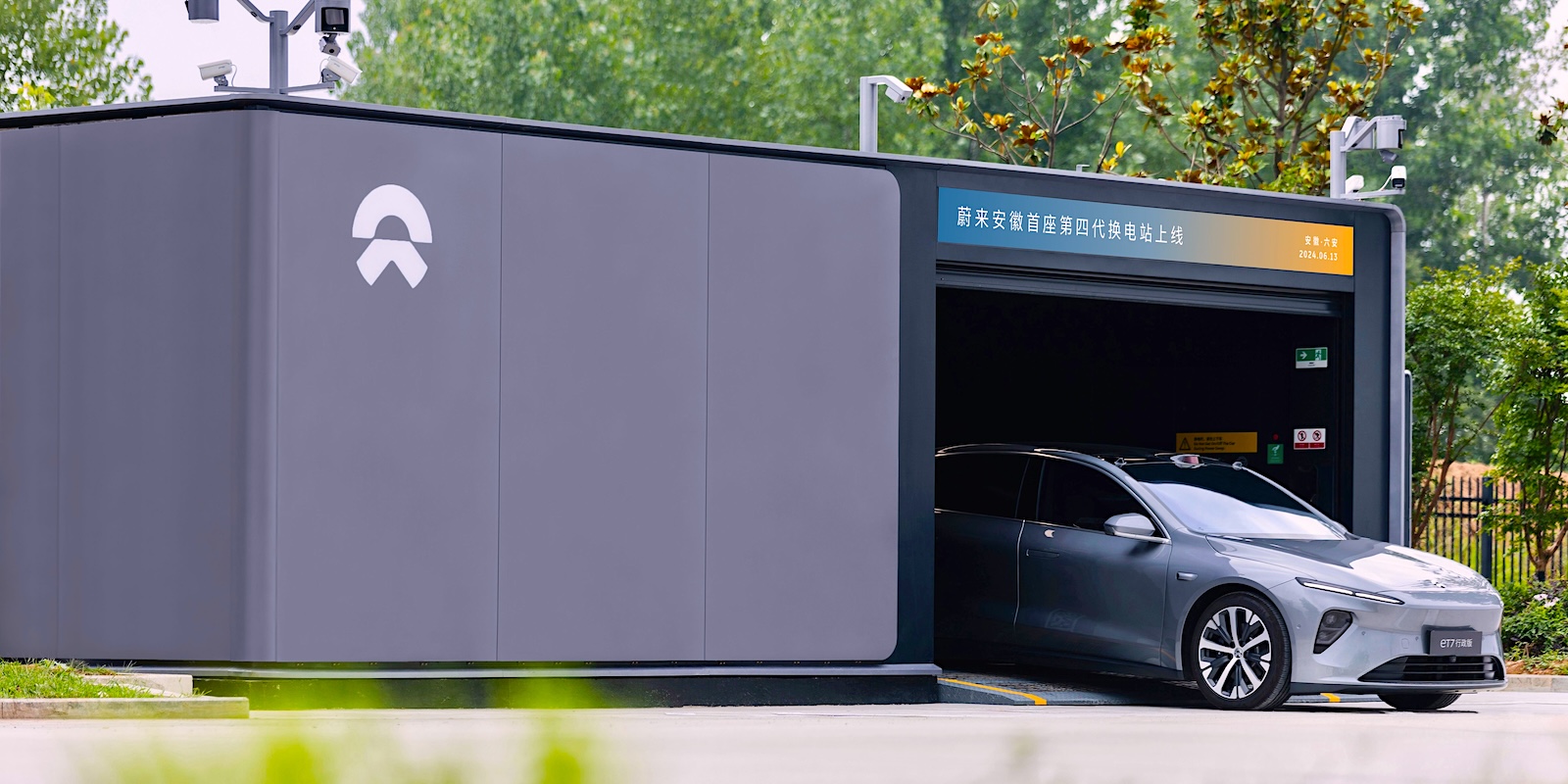
Nio’s infrastructure footprint has expanded exponentially in the interim. By February of the current year, Nio surpassed 100 million cumulative battery swaps across a network of 3,790 operational swap stations. The company maintains an aggressive deployment target to construct an additional 1,000 stations within the year. The scaling utility of this network was underscored during peak travel periods, when Nio recorded an all-time single-day milestone of 175,976 battery swaps. This infrastructure forms the backbone of Nio’s innovative Battery-as-a-Service (BaaS) commercial model, which successfully lowered the initial purchase threshold for its flagship ES9 SUV to approximately $54,000 USD.
Prior to the Geely agreement, Nio Power sought external funding to alleviate the heavy financial burden of scaling the network. In May 2024, Nio Power secured RMB 1.5 billion in funding led by the Wuhan Guangchuang fund, an entity that will maintain a 6.4% stake following the completion of the Geely transaction. Subsequent announcements in March 2025 indicated that contemporary battery giant CATL was advancing an investment capped at RMB 2.5 billion, though CATL was not listed in the immediate ownership tables released alongside the Geely announcement. Despite the massive capital requirements of infrastructure building, Nio enters this transaction from a position of relative financial stability. During the second quarter of the year, Nio reported total vehicle deliveries of 107,658 units, achieved an impressive vehicle margin of 18.5%, and recorded a modest non-GAAP net profit. While the company posted a GAAP net loss of RMB 528 million, it maintained a robust cash reserve of RMB 56.7 billion USD at the close of June, demonstrating operational resilience.
Financial Breakdown and Valuation Mechanics
Under the terms of the definitive agreements, Geely’s acquisition of a 30% equity stake in Nio Power is anchored to a RMB 16 billion post-money valuation, placing the value of the 30% block at roughly RMB 4.8 billion. Because a substantial portion of Geely’s consideration is delivered via the contribution of its Yiyi commercial battery-swapping subsidiary rather than cash, the valuation includes strict milestone performance clauses.
Excluding the RMB 640 million cash component contributed by Geely, Nio is effectively valuing the Yiyi commercial subsidiary at slightly over RMB 4.1 billion, or approximately $610 million USD. The performance milestone clauses are structured to protect Nio Power’s valuation: if Yiyi fails to meet predetermined operational and financial metrics, Geely’s ultimate equity ownership in Nio Power will be proportionally adjusted downward.

The reciprocal transaction involving Zhejiang Haohan Energy Technology follows a complementary logic. By subscribing to newly issued shares in Haohan for a 10% stake, Nio integrates itself into Geely’s domestic charging ecosystem. Haohan will channel the capital back into Nio to acquire select charging assets. While the precise monetary figures for this asset exchange were not publicly disclosed by either corporate entity, the transaction effectively functions as a cross-border asset swap of charging infrastructure for equity, streamlining the overlapping networks of both automotive groups.
Strategic Implications for Geely Holding
Geely Holding oversees a vast portfolio of established and emerging automotive brands, including Geely Auto, Zeekr, Lynk & Co, Volvo Cars, and Polestar. The integration of Yiyi—its commercial-focused swapping entity designed primarily for fleet operations—into Nio Power signals a strategic pivot toward unified infrastructure standards.
While Yiyi historically catered to commercial fleets and logistics vehicles, preliminary plans outlined by both Nio and Geely indicate a clear intent to extend battery-swapping capabilities to consumer-facing passenger vehicles across Geely’s brand portfolio. Should a major automotive conglomerate like Geely begin volume-manufacturing passenger vehicles compatible with Nio’s swapping architecture, the economic and operational gravity of China’s EV market would shift decisively.
The Chinese electric vehicle market is currently fragmenting into distinct infrastructure ecosystems. Nio’s battery-swapping network represents one dominant paradigm, contrasted by CATL’s Choco-Swap network and competitors like BYD, which continue to heavily favor ultra-fast cable-charging infrastructure. By bringing Geely onboard with tangible assets and real capital, Nio has successfully converted a friendly memorandum of understanding into an industrial-scale alliance, potentially establishing its swapping standard as an industry-wide benchmark.

Industry-Wide Impact and Market Outlook
The consolidation of charging and swapping assets between Nio and Geely highlights a broader maturation phase within the global electric vehicle sector. For years, individual automakers pursued proprietary charging networks as competitive moats, resulting in fragmented consumer experiences and immense capital expenditure burn rates. The movement toward shared infrastructure reflects a growing recognition that high-capital technologies like battery-swapping require cross-industry cooperation to achieve long-term economic viability.
For Nio, securing a major manufacturing partner with the industrial scale of Geely validates its decade-long bet on battery-swapping technology. It reduces the capital expenditure burden on Nio’s balance sheet while expanding the utilization rate of its existing stations—a crucial metric for achieving sustainable, long-term profitability in the energy services sector. For Geely, the partnership provides immediate access to a mature, highly optimized swapping network without the necessity of building a competing infrastructure from the ground up.
As the transaction awaits final regulatory clearance, industry analysts will closely monitor whether other major domestic or international automakers follow Geely’s lead. The success of this integration could well determine whether battery-swapping evolves from a niche proprietary feature into a foundational pillar of mainstream electric mobility infrastructure.