Gorilla Habitats and Pristine Forest at Risk as the Democratic Republic of the Congo Opens Half of the Country to Oil and Gas Drilling Bids

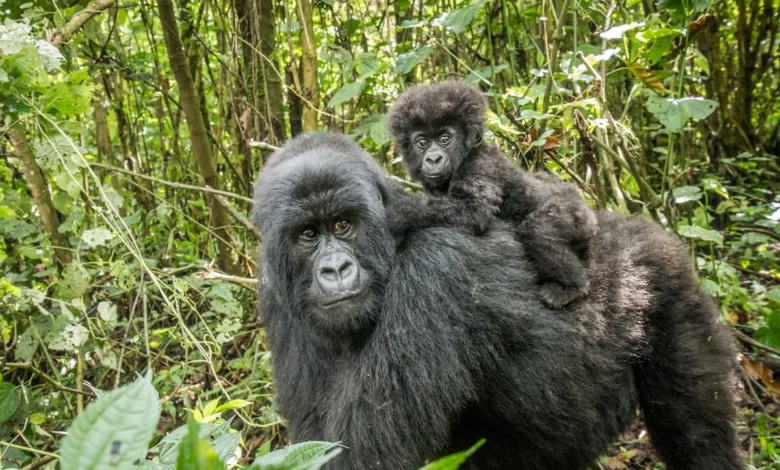
The Democratic Republic of the Congo (DRC) stands at a critical environmental crossroads as its government moves forward with a massive expansion of fossil fuel exploration. According to a recent report titled Forests to Frontlines: Oil Expansion Threats in the DRC, published by Earth Insight, the nation is preparing to auction off rights to over 50 percent of its land for oil and gas development. This initiative threatens to disrupt one of the most vital ecological zones on the planet, endangering millions of acres of intact tropical forest, critical carbon sinks, and the habitats of some of the world’s most iconic and threatened wildlife, including mountain gorillas and bonobos.
The Scope of the Auction
The government’s latest initiative involves the auctioning of 52 new oil blocks, which, when combined with three blocks previously awarded, places roughly 64 percent of the nation’s pristine forest under the threat of industrial exploitation. The scale of this proposal is unprecedented in the region. The blocks overlap with 20.5 million acres of protected areas, 21.3 million acres of Key Biodiversity Areas, and a staggering 165.1 million acres of intact tropical forest.
Perhaps most concerning is the intersection of these blocks with the Kivu-Kinshasa Green Corridor—a project recently established to promote ecological stability and sustainable development. Approximately 72 percent of this corridor now falls within the boundaries of the proposed oil concessions, effectively undermining the DRC’s stated goals of climate resilience and environmental stewardship.
A Chronology of Escalation
The current push for oil expansion is not an isolated event but rather a significant escalation of policies introduced in recent years. In 2022, the Congolese government launched a controversial auction for 30 oil and gas blocks. At the time, international conservationists and local civil society organizations raised alarms, noting that many of these blocks overlapped with the Cuvette Centrale peatlands and protected national parks.
Despite international pressure to pivot toward renewable energy and conservation-based economies, the government has doubled down. By 2025, the licensing rounds have expanded in both geographic reach and intensity. This trajectory suggests a shift in government priorities that favors short-term hydrocarbon revenue over the long-term ecological services provided by the Congo Basin. The current expansion represents a direct contradiction to the country’s commitments under the Paris Agreement and the Kunming-Montreal Global Biodiversity Framework, both of which emphasize the preservation of carbon-rich ecosystems.
Ecological Significance of the Congo Basin
The Congo Basin is often referred to as the "second lung of the planet," second only to the Amazon in its capacity to sequester carbon and regulate global weather patterns. The Cuvette Centrale, a massive tropical peatland complex within the DRC, is of particular concern to climate scientists. It is estimated to store approximately 30 gigatons of carbon—a quantity equivalent to three years of total global fossil fuel emissions.
Disturbing this delicate ecosystem through drilling infrastructure, such as road construction, pipeline laying, and clearing for oil pads, poses a dual threat. First, it risks the direct release of stored carbon into the atmosphere, which would exacerbate global warming. Second, the degradation of the peatlands threatens the survival of rare species. The region is home to an extraordinary density of biodiversity, including endemic bird species, forest elephants, and great apes. The fragmentation of these habitats could lead to irreversible population declines for species already teetering on the edge of extinction.
Human Rights and Socio-Economic Implications
The environmental impact is only half of the story; the proposed drilling directly affects the livelihoods of approximately 39 million people. Many of these individuals are members of forest-based and Indigenous communities who rely on the integrity of the rainforest and its river systems for food, medicine, and cultural identity.

Pascal Mirindi, a campaign coordinator for Notre Terre Sans Pétrole (Our Land Without Oil), has been a vocal critic of the expansion. In recent statements, Mirindi challenged the coherence of the government’s strategy, questioning how the state can promote ecological corridors while simultaneously inviting industrial destruction into the heart of those very zones. For these communities, the land is not merely a resource for extraction but a foundational element of their survival. Critics argue that the government’s failure to include meaningful participation from these stakeholders in the decision-making process violates the principle of free, prior, and informed consent.
Analysis of International and Domestic Responses
The international community has responded with a mixture of alarm and calls for a moratorium on the licensing rounds. Organizations like Earth Insight, in collaboration with local groups such as the Coalition des Organisations de la Société Civile pour le Suivi des Reformes et de Action Publique (CORAP) and the Rainforest Foundation UK, have issued a series of recommendations.
The primary demand from civil society is the total cancellation of the 2025 licensing round and a permanent cessation of hydrocarbon expansion in ecologically sensitive areas. Furthermore, these groups are calling on international donors and financing institutions to ensure that any financial support provided to the DRC is strictly aligned with the country’s climate and biodiversity commitments. There is a strong consensus among these groups that development aid should be pivoted toward sustainable alternatives, such as eco-tourism, sustainable agriculture, and the global carbon credit market, which could provide economic incentives for keeping the forest standing.
The Conflict Between Development and Conservation
The DRC government has historically justified these oil initiatives by citing the need for economic development and poverty alleviation. The country remains one of the poorest in the world, with a significant portion of its population lacking access to electricity and basic infrastructure. Proponents of the drilling argue that oil revenues could provide the necessary capital to modernize the nation and raise the standard of living for millions.
However, environmental economists argue that this "extractivist" model is flawed. The "resource curse"—a phenomenon where countries with an abundance of natural resources often experience less economic growth and worse development outcomes than countries with fewer resources—is a valid concern for the DRC. Investments in fossil fuels are increasingly seen as "stranded assets" in a global economy that is rapidly transitioning toward net-zero emissions. By tethering its economy to a declining global demand for oil, the DRC risks long-term economic instability while sacrificing the very natural assets that could offer a more sustainable path to prosperity.
The Road Ahead
As the 2025 auction process continues, the world is watching to see how the Congolese government balances its sovereign rights to natural resources with its global responsibilities. The decision to proceed with the auction has created a profound tension between the drive for industrialization and the urgent need to protect the planet’s remaining wilderness.
For the international community, the situation in the DRC highlights the necessity of supporting "climate-positive" development. Providing technical and financial assistance to help the DRC leverage its forests as a carbon-sequestering asset rather than an extraction site could be the key to preventing a humanitarian and ecological catastrophe.
Ultimately, the future of the Congo Basin depends on a transparent and inclusive dialogue that prioritizes the rights of Indigenous peoples and the long-term health of the global climate. As Anna Bebbington of Earth Insight noted, the development of oil and gas in such fragile ecosystems would have "devastating impacts" that extend far beyond the borders of the Congo. The outcome of this dispute will serve as a litmus test for whether global climate goals can be met in the face of persistent national interests in fossil fuel exploitation. Whether the Congolese government will heed the call to halt this expansion remains to be seen, but the global environmental community remains steadfast in its position: the cost of this extraction is far too high for the planet to bear.