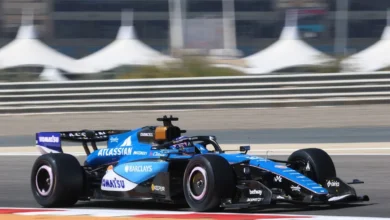
Cadillac has reduced its front brake temperature by 100C, Valtteri Bottas has revealed, curing one of the nascent Formula 1 team’s Achilles’ heels.

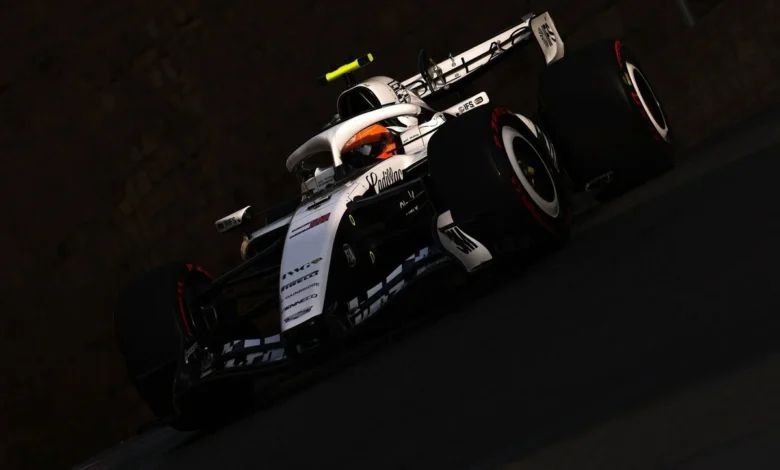
The breakthrough, which arrived following a series of cooling upgrades implemented during the Azerbaijan Grand Prix, marks a significant turning point for the Cadillac racing outfit in its debut Formula 1 season. For the better part of the 2024 campaign, thermal management—specifically regarding the braking systems of the MAC-26 chassis—has plagued the team, forcing premature retirements and limiting the competitive ceiling of both Valtteri Bottas and Sergio Perez.
A Persistent Technical Hurdle
The MAC-26, while showing flashes of raw pace, has been fundamentally hampered by a lack of efficient airflow to the front brake assemblies. In the high-stakes environment of modern Formula 1, where every degree of temperature fluctuation can alter the friction coefficient of carbon-ceramic discs, this thermal instability proved catastrophic.
The chronology of the team’s struggles is well-documented. Early-season reliability concerns reached a fever pitch in the European leg of the calendar. Bottas, a veteran of the sport with extensive experience in winning machinery, found himself sidelined by mechanical failures directly linked to overheating in Monaco, Hungary, and Austria. The intensity of these failures was such that the team was forced to adopt a conservative approach, with drivers frequently instructed to "lift and coast" or adjust brake bias to manage temperatures during the Spanish Grand Prix. This approach not only hampered lap times but also compromised the car’s overall balance, as the drivers could not attack corners with the necessary confidence.
Initial attempts to rectify the issue at the Hungaroring—which involved modifications to the inlet scoops and aperture surfaces—failed to yield the desired results. It was not until the team returned to the drawing board to redesign the cooling inlet and exit duct profiles that a tangible solution was found.
"Good, we’ve reduced about 100 degrees of brake temperature, based on numbers from the previous spec, so that gives us more margin, for sure," Bottas stated in the aftermath of the Azerbaijan round.
The Engineering Impetus: Assessing the Upgrade
The magnitude of a 100-degree reduction in operating temperature is substantial. In Formula 1, operating windows are narrow; if brakes are too cold, they fail to bite; if they are too hot, the material degrades and the hydraulic fluid risks boiling. By stabilizing these temperatures, Cadillac has effectively opened up the operating window, allowing drivers to maintain aggressive driving styles over longer race distances without the constant threat of a terminal failure.

However, the team remains cautious. The upcoming race at the Sepang International Circuit in Malaysia serves as the ultimate "litmus test." With its high ambient temperatures and heavy braking zones, Sepang is notoriously punishing on cooling systems. If the MAC-26 survives the heat of Malaysia without incident, the team will have definitively solved one of its most critical reliability issues.
The Power Unit Equation
While the chassis improvements have occupied much of the engineering focus, the team is also grappling with the power unit deficit. Sergio Perez, in particular, has been vocal about the incremental nature of the team’s development. Discussing the recent ADUO 2 power unit upgrade supplied by Ferrari, the Mexican driver noted that the performance gain was roughly "a tenth and a half."
"Not quite the step we needed, but everything counts," Perez added. This sentiment reflects the broader reality of Cadillac’s inaugural season: the team is in a state of rapid evolution, and while every upgrade provides a measurable performance boost, the gap to the established frontrunners remains significant. The ADUO 2 upgrade is a welcome addition, but it highlights that Cadillac is fighting on two fronts—chassis reliability and powertrain competitiveness.
Strengthening the Technical Hierarchy
Recognizing the need for rapid maturation, Cadillac has moved aggressively to bolster its technical department. Last weekend, the team confirmed three high-profile signings, signaling a clear intent to move beyond the "rookie" status of the current season.
The appointments include:
- Craig Skinner: Formerly the chief designer at Red Bull, now serving as Cadillac’s chief development engineer.
- Eric Blandin: The former deputy technical chief at Aston Martin, who has assumed the role of head of aerodynamics.
- Tim Lean: A veteran aerodynamicist with experience at McLaren, Red Bull, and Ferrari, now appointed as chief engineer for aerodynamics modeling and simulation.
The acquisition of these individuals is a clear signal to the paddock that Cadillac is not merely here to participate, but to compete for honors in the long term. For Perez, who has worked closely with Skinner in the past, these hires provide a much-needed sense of direction.
"The team is showing how serious they are and how committed they are to Formula 1," Perez remarked. "These are people who are really going to push our team forward. Don’t forget that it’s just our first season, so this car is very basic. I have high hopes that for next year, we will definitely be moving forward."

Perez specifically highlighted the influence of Craig Skinner on his personal performance, noting how the engineer’s intervention in Baku—specifically a custom packer for the floor—transformed the car’s balance. The subsequent loss of that floor during the collision with Carlos Sainz served as a reminder of how delicate development gains can be in the midfield pack.
Looking Ahead: The Challenges of the Mid-Season
Despite the progress, the team remains realistic about its short-term prospects. As the circus moves to Malaysia, the engineering staff is bracing for a difficult weekend. The track’s layout, characterized by long, sweeping corners that place immense lateral load on the tires and require precise aerodynamic balance, is expected to expose the current limitations of the MAC-26.
"I’m not looking forward to Malaysia," Perez admitted, reflecting a pragmatic view of the team’s current standing. "I think we will be back to our reality."
This "reality" is that the 2024 season is a foundational year. Every mechanical fix, such as the brake cooling upgrade, and every personnel addition, such as the trio of senior engineers, is a brick in the wall of a larger project. The team is currently balancing the immediate need for points with the long-term requirement of building a robust technical infrastructure.
Strategic Implications for the Future
The implications of these developments are clear. By addressing the brake cooling issues, Cadillac has eliminated a "known unknown"—a recurring problem that prevented the team from gathering consistent data. With more stable temperatures, the team can now focus on fine-tuning the aerodynamic platform and extracting more power from the Ferrari-supplied units.
Furthermore, the integration of talent from teams like Red Bull and Aston Martin suggests that Cadillac is moving away from a startup mentality toward a more structured, methodical development path. The influence of engineers like Skinner and Blandin will likely be felt most acutely in the design of next year’s challenger, which will be the first car developed under the new technical leadership.
In the cutthroat world of Formula 1, where the barrier to entry is immense, Cadillac’s ability to acknowledge its weaknesses, implement rapid technical solutions, and invest in high-level human capital is a testament to its long-term viability. While the podium remains a distant goal for the current campaign, the building blocks for a competitive future are being laid. Whether the cooling fix holds up under the sweltering heat of Sepang or not, the message from the factory is consistent: the team is learning, it is adapting, and it is here to stay.