Guenther Steiner dismisses potential for Christian Horner and Frederic Vasseur partnership at Ferrari

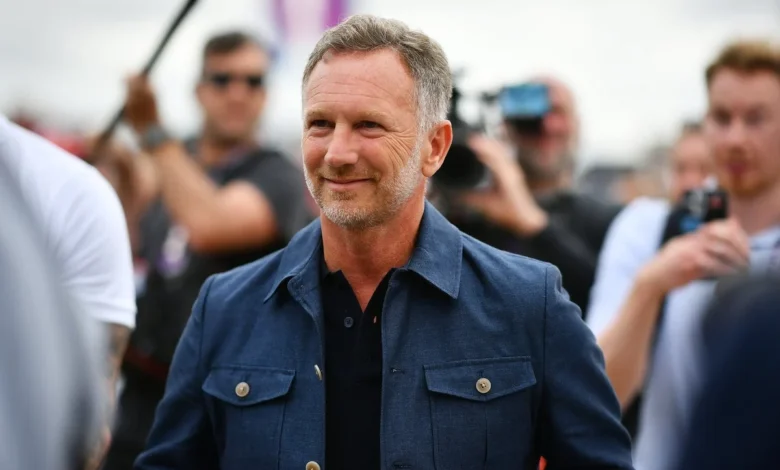
The Formula 1 paddock has been stirred by recent comments from Red Bull Racing team principal Christian Horner, who openly identified the Ferrari team principal role as the only position outside of an ownership stake that would tempt him to leave his current long-standing tenure. These remarks, initially shared with The Times, have sparked significant debate regarding the leadership hierarchy at Maranello and the future of current team principal Frederic Vasseur. Former Haas team principal Guenther Steiner has since weighed in on the speculation, categorically dismissing the possibility of a dual-leadership arrangement between the two prominent figures.
The Genesis of the Speculation
The conversation regarding Horner’s potential move to Ferrari gained traction after the Briton, who has led Red Bull Racing to multiple world championships since 2005, discussed his career trajectory. Horner, often cited as one of the most successful team principals in the sport’s history, suggested that while he is deeply committed to the Red Bull project, the allure of the Scuderia remains a unique prospect. For many in the industry, the mention of Ferrari is interpreted as a strategic acknowledgment of the team’s historical gravity. However, for industry veterans like Steiner, the timing and nature of these comments suggest a move motivated by factors beyond mere professional curiosity.
Speaking on The Red Flags Podcast, Steiner offered a pragmatic analysis of Horner’s motives. "I think Christian wants to come back to Formula 1, and he said clearly that he doesn’t want to work for anybody anymore," Steiner noted. By positioning Ferrari as a potential destination, Horner creates a narrative that underscores his standing as a premium asset in the sport. Steiner further posited that the dialogue might serve a secondary purpose, providing a PR boost amidst the promotion of Horner’s latest book.
Understanding the Ferrari Leadership Structure
Frederic Vasseur, who took the helm at Ferrari in January 2023, has been tasked with stabilizing a team that has faced significant operational challenges for over a decade. Vasseur’s tenure has been marked by a focus on structural reorganization, addressing pit-stop inconsistencies, and improving the team’s strategic decision-making process.
The prospect of bringing in a figure as high-profile as Horner would inherently clash with Vasseur’s mandate. In the rigid hierarchy of a Formula 1 team, the role of Team Principal is singular. Steiner’s analysis highlights the practical impossibility of such a partnership. "I don’t think that’s going to happen that Fred is staying there working for Christian," Steiner stated. "Fred in himself is a very successful guy. But first of all, I don’t know that Fred wants to leave or that he has to leave."
The Reality of Contracts and Tenure
The volatility of leadership in Formula 1 is a well-documented phenomenon. Historically, team principals have been removed or reassigned with little notice when performance targets are not met. However, Steiner emphasized that in the current climate, contracts are often treated as fluid instruments.
"In the end, Fred has got a contract and how much are they worth in Formula 1? Not a lot, I guess, but there is not space for the two of them. That’s my opinion on it. That is not going to happen," Steiner explained. The implication is clear: Ferrari is currently invested in Vasseur’s long-term vision, and replacing him would require a complete overhaul of the team’s current strategic trajectory, something that would be highly unlikely given the stability Vasseur has brought to the factory floor in Maranello.

Chronology of Ferrari Leadership Challenges
To understand why such rumors gain traction, one must look at the recent history of Ferrari management:
- 2019-2020: Mattia Binotto leads the team through a difficult period, characterized by engine regulation controversies and a decline in race pace.
- 2021-2022: Despite improvements, the team struggles with operational errors and reliability issues, leading to intense media scrutiny.
- January 2023: Frederic Vasseur officially assumes the role of Team Principal, bringing a reputation for efficiency and driver management from his time at Sauber/Alfa Romeo.
- 2023-2024: Vasseur focuses on internal culture shifts, recruiting key technical personnel, and fostering a more collaborative environment.
- Late 2024: Speculation regarding high-profile management changes resurfaces as Horner discusses his future, creating a ripple effect across the paddock.
Data-Driven Perspectives on Team Performance
The success of a team principal is often measured by the delta between car potential and race results. Under Vasseur, Ferrari has shown marked improvements in consistency. When comparing the first half of the 2023 season to the 2024 season, Ferrari has demonstrated better utilization of its aerodynamic upgrades and a more disciplined approach to race strategy.
For a team like Ferrari, which operates under the weight of an entire nation’s expectations, the "dream" of leading the Scuderia is often tempered by the reality of the immense pressure to deliver a championship. Data from the last three seasons indicates that Ferrari’s main challenge has not been the lack of a "star" principal, but the need for sustained technical development and the avoidance of "strategy drift" during races. Introducing a new leadership layer would likely disrupt the momentum Vasseur has cultivated over the past 18 months.
Broader Implications for Formula 1
The discussion surrounding Horner’s potential move to Ferrari also touches upon the broader consolidation of talent in Formula 1. As the sport continues to grow in commercial value, the movement of high-level personnel—principals, technical directors, and drivers—has become as competitive as the racing itself.
If a team principal of Horner’s caliber were to become available, every team on the grid would theoretically conduct an internal audit of their own leadership. However, the culture at Ferrari is distinct. It is a brand that requires a leader who understands both the technical demands of F1 and the political complexities of the Italian automotive giant.
Steiner’s dismissal of the rumor serves as a reminder that the paddock is often an echo chamber for speculation that does not always account for the corporate realities of the sport. While the media narrative of "super-teams" and "dream partnerships" makes for compelling headlines, the practical, day-to-day management of an F1 team relies on stability, trust, and clear lines of authority.
The Road Ahead for Maranello
As Ferrari continues to fight for podiums and race wins, the focus remains on the current operational structure. Vasseur’s ability to navigate the upcoming regulation changes in 2026 will be the ultimate test of his leadership. The stability of the team is paramount, and constant speculation regarding his position serves only as a distraction.
In conclusion, while Horner’s comments may have been a clever nod to his own ambitions or a strategic play for his personal brand, they do not reflect a realistic shift in the power dynamics at Ferrari. The team is firmly committed to its current path under Vasseur. For fans and analysts alike, the takeaway is clear: the leadership of the most iconic team in motorsport is not currently for sale, nor is it in a state of flux. The focus remains, as it always has been, on the pursuit of the Constructors’ and Drivers’ Championships, with the current personnel tasked to turn that dream into a reality.