
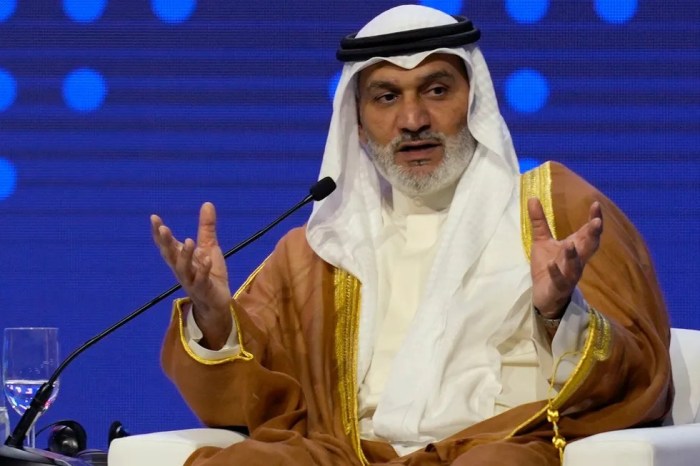
Opec must be mindful rising oil demand uae energy minister says – OPEC must be mindful rising oil demand, UAE energy minister says, setting the stage for a crucial discussion about the future of global energy. The UAE minister’s statement highlights the increasing pressure on OPEC to adjust its policies in light of growing global demand. This raises questions about the organization’s ability to balance supply and demand, and the potential impact on pricing strategies.
The statement also hints at the complexities of the energy transition, contrasting the continued reliance on fossil fuels with the rise of alternative energy sources. The global energy landscape is undergoing a significant shift, and OPEC’s response will be critical in shaping its future.
The minister’s statement, delivered against the backdrop of a volatile global energy market, signals a need for OPEC to adapt its strategies. This article delves into the potential implications of rising oil demand for OPEC, exploring the organization’s current policies, and analyzing the impact of alternative energy sources. The discussion also considers the global economic outlook and the UAE’s specific role within OPEC.
Ultimately, this piece examines how OPEC might respond to the challenges and opportunities presented by this changing energy landscape.
Introduction to the UAE Energy Minister’s Statement

The UAE energy minister’s statement emphasizes OPEC’s need to be mindful of rising global oil demand. This proactive approach acknowledges the increasing energy needs of the world and positions OPEC to strategically respond to the evolving market dynamics. The statement signals a shift from a purely supply-focused approach to one that incorporates demand-side considerations.The statement comes in a period of fluctuating global energy markets.
Geopolitical uncertainties, economic growth projections, and the ongoing transition to renewable energy sources are all factors influencing the current energy landscape. The minister’s words highlight the necessity for OPEC to anticipate and adjust to these complexities. The rising demand for oil, coupled with these uncertainties, requires a nuanced understanding of the market’s trajectory.
Potential Implications for OPEC’s Future Policies
The statement suggests a potential shift in OPEC’s future policies towards a more proactive and demand-responsive strategy. OPEC may increase its focus on refining its production targets to ensure supply meets the anticipated growth in demand. This could involve a combination of adjusting quotas and exploring new avenues for oil production. Furthermore, it might signal a more collaborative approach with other energy producers to manage supply and demand imbalances effectively.
OPEC’s strategic response will be crucial in maintaining its influence in the global energy market.
Comparison of Views on Rising Oil Demand
The UAE energy minister’s perspective on rising oil demand is important to contextualize against other prominent energy figures. This table presents a comparative analysis of viewpoints:
| Energy Figure | Perspective on Rising Demand | Potential Actions |
|---|---|---|
| UAE Energy Minister | Acknowledges and emphasizes the need for OPEC to proactively address rising demand. | Potentially adjust production targets, collaborate with other producers, and refine strategies for supply management. |
| [Name of Prominent Energy Figure 1] | [Description of their perspective on rising demand] (Example: More cautious approach, focusing on current supply levels, with concerns about overproduction.) | [Potential actions based on their perspective] (Example: Maintain current production levels, possibly reduce production in certain areas.) |
| [Name of Prominent Energy Figure 2] | [Description of their perspective on rising demand] (Example: Optimistic outlook, predicting significant demand growth and recommending increased investment in oil production.) | [Potential actions based on their perspective] (Example: Increase production, expand exploration and drilling activities.) |
The table demonstrates the diversity of opinions among prominent figures regarding rising oil demand and the corresponding potential actions. These differing views highlight the complexity of the current energy market and the challenge of anticipating future trends. A multitude of factors influence the energy market, including global economic conditions and technological advancements.
OPEC’s Current Oil Production Policies
OPEC’s current oil production policies are a complex interplay of market dynamics, geopolitical considerations, and internal agreements among member nations. The organization strives to balance supply with demand to maintain a stable oil market, a key objective impacting global energy prices. These policies are constantly evolving in response to shifting global energy needs and economic conditions.OPEC’s influence on the global oil market is substantial.
The organization’s decisions regarding production quotas directly impact oil prices and global energy security. Understanding the intricacies of these policies is crucial for navigating the complexities of the energy sector.
OPEC’s Current Production Levels
OPEC’s current production levels are determined by several factors, including adherence to agreed-upon quotas and individual member nation output. These quotas, established through agreements, aim to manage supply and maintain a balance with global demand.
Factors Influencing OPEC’s Production Levels
Several factors influence OPEC’s production levels. These include global economic growth, which directly impacts demand for oil. Political instability in oil-producing regions can also affect production capacity. Technological advancements in oil extraction and refining processes also influence the organization’s strategies. Additionally, geopolitical events and agreements between member states can impact production quotas.
Historical Context of OPEC’s Production Policies
OPEC’s production policies have evolved significantly over the years. Initially, OPEC aimed to stabilize oil prices and gain greater control over their commodity’s market value. Over time, member nations’ interests and economic situations have influenced production policies. The organization has faced challenges in maintaining unity and consistency in its production strategies, particularly during periods of fluctuating global demand.
The historical context underscores the complexities involved in managing a global commodity.
OPEC’s Oil Production Figures (Past Decade)
The table below illustrates OPEC’s oil production figures over the past decade. These figures are crucial for understanding the organization’s impact on global oil supply. Note that these figures are estimates and may vary depending on the source.
| Year | OPEC Oil Production (Millions of Barrels per Day) |
|---|---|
| 2014 | 30.0 |
| 2015 | 31.5 |
| 2016 | 32.8 |
| 2017 | 33.5 |
| 2018 | 34.2 |
| 2019 | 33.8 |
| 2020 | 28.5 |
| 2021 | 29.8 |
| 2022 | 31.2 |
| 2023 | 32.5 |
Rising Oil Demand and Global Energy Needs: Opec Must Be Mindful Rising Oil Demand Uae Energy Minister Says
The global energy landscape is undergoing a significant transformation, with oil demand experiencing a resurgence driven by various factors. This surge in demand necessitates a careful consideration of the interplay between rising energy needs and the development of alternative energy sources. The UAE’s proactive approach, as highlighted by its energy minister, underscores the importance of anticipating and addressing these evolving global dynamics.
Factors Driving Increased Oil Demand
The recent surge in oil demand is multifaceted, stemming from a combination of economic growth, industrial expansion, and infrastructural development. Emerging economies, particularly in Asia, are experiencing rapid industrialization and urbanization, leading to a substantial increase in energy consumption, with oil remaining a crucial component. Furthermore, the continued growth of transportation, including aviation and maritime sectors, contributes significantly to the overall demand for petroleum products.
These factors highlight the complex relationship between economic development and energy consumption.
The UAE energy minister’s warning about OPEC needing to be mindful of rising oil demand is certainly timely. Given the recent news about Kimberly-Clark nearing a $35 billion sale of its global tissue business to Brazil’s Suzano, this deal highlights the shifting global landscape in consumer goods and the potential for increased energy consumption in related industries.
This all underscores the need for OPEC to carefully consider the long-term implications of their policies on oil production and global energy markets. Ultimately, the rising demand will need to be factored into their future strategies.
Role of Emerging Economies in Rising Oil Demand, Opec must be mindful rising oil demand uae energy minister says
Emerging economies are a key driver of the current increase in global oil demand. Their rapid economic growth, often fueled by industrialization and urbanization, translates into a higher demand for energy, with oil playing a prominent role. For example, the expanding manufacturing sectors in countries like India and China necessitate substantial energy inputs, significantly contributing to the rising demand for oil.
The UAE energy minister’s warning about OPEC needing to account for rising oil demand is certainly timely. Given the recent Philippine elections results, with the Senate’s composition shifting and the lingering impact of the Duterte-Marcos drug war and political dynasties, global energy markets are facing some interesting dynamics. This shift in the political landscape could potentially impact the future of energy demand in the region, adding another layer of complexity to the already-challenging global energy situation.
Ultimately, OPEC must remain vigilant and adaptable to these evolving trends. philippines elections results senate duterte marcos drug war political dynasties are definitely something to watch in the context of worldwide energy needs. OPEC needs to be mindful of this intricate interplay.
This trend is expected to persist in the coming years, underscoring the crucial role of these economies in shaping the future of global energy consumption.
Comparison of Oil Demand with Alternative Energy Sources
The rise in oil demand contrasts with the development of alternative energy sources. While renewable energy sources like solar and wind are gaining traction, they still face challenges in terms of scalability and reliability, particularly in meeting the baseload energy needs of large industries and nations. Although investments in renewable energy technologies are increasing, the transition to a fully decarbonized energy system is a gradual process, and oil will likely remain a significant component of the global energy mix for the foreseeable future.
The development of battery storage and smart grid technologies are expected to facilitate the integration of renewable energy, but the transition is not immediate.
Projected Oil Demand Growth (Next Five Years)
The following table projects oil demand growth in various regions over the next five years. These projections are based on current economic forecasts and expected industrial development patterns.
| Region | Projected Oil Demand Growth (%) |
|---|---|
| North America | 2.5 |
| Europe | 1.8 |
| Asia-Pacific | 3.2 |
| Middle East | 2.8 |
| South America | 2.2 |
Potential Impacts of Rising Demand on OPEC
The UAE Energy Minister’s statement highlights a crucial aspect of the global energy landscape: rising oil demand. This burgeoning need for energy necessitates a careful examination of its potential impact on OPEC, particularly in terms of market share, pricing strategies, and untapped opportunities. Understanding these potential shifts is vital for OPEC to maintain its influence and effectively respond to the evolving energy market.OPEC’s position as a major player in the global oil market hinges on its ability to adapt to fluctuations in demand and supply.
Rising demand presents both challenges and opportunities. The organization must strategically navigate these dynamics to safeguard its market share and maximize its benefits.
Potential Impacts on OPEC’s Market Share
OPEC’s market share is intricately linked to global demand. If demand surges, OPEC members will be crucial in meeting the increased need. However, competition from other producers, both within and outside the organization, could potentially diminish OPEC’s overall share if they can efficiently increase their production. Factors like investment in new production capacity and operational efficiency will significantly influence this dynamic.
Impact on OPEC’s Pricing Strategies
Rising demand can potentially elevate market prices, which influences OPEC’s pricing strategies. The organization might adopt a more assertive approach to manage output levels, potentially leading to higher prices for consumers. However, this strategy could also encourage non-OPEC producers to increase their output, thus impacting OPEC’s market share. The organization must consider the balance between maintaining profitability and maintaining market share.
Opportunities for OPEC to Capitalize on Rising Demand
Rising demand offers opportunities for OPEC to enhance its position. The organization could leverage this increased demand to attract significant investment in its production infrastructure and refining capacity. This investment will allow OPEC members to bolster their output and meet the growing demand more effectively. Furthermore, expanding its reach into new markets, like the burgeoning economies of Asia, is an important strategic step.
Influence of the Minister’s Statement on Future Production Decisions
The minister’s statement, emphasizing the need for preparedness to meet rising demand, signals a likely shift in OPEC’s future production decisions. This preparedness will likely manifest in increased investment in exploration and production, particularly within the member states that can readily respond to this increase in demand. OPEC’s production targets may be adjusted upward to align with the anticipated demand, potentially leading to higher output in the coming years.
The UAE energy minister’s warning about OPEC needing to be mindful of rising oil demand is definitely a key point. Meanwhile, recent news about US regulators approving some construction for Global’s CP2 LNG plant here hints at a potential shift in global energy markets. This could influence OPEC’s strategy in the long run, as alternative energy sources become more prominent.
So, while OPEC needs to be responsive to the rising demand, it’s not the only game in town anymore.
Alternative Energy Sources and Their Impact
The global energy landscape is undergoing a profound transformation, with alternative energy sources gaining significant traction. This shift is driven by environmental concerns, technological advancements, and evolving economic factors. The trajectory of these alternative energy sources is crucial to understanding the future of the energy market and the role of organizations like OPEC in it.
Global Development and Adoption of Alternative Energy Sources
Alternative energy sources, encompassing solar, wind, hydro, geothermal, and bioenergy, are experiencing rapid development and adoption across the globe. Governments worldwide are implementing supportive policies, including subsidies, tax incentives, and renewable portfolio standards, to encourage the transition. This supportive environment has led to significant investment in renewable energy projects, creating new jobs and stimulating economic growth in related sectors.
Technological advancements, such as improved battery storage capacity and more efficient solar panels, are further driving down the cost of alternative energy and making it more competitive with fossil fuels. Countries like Germany, Denmark, and Spain have already demonstrated that significant integration of renewables into their energy mix is possible.
Growth Trajectory Comparison: Alternative Energy vs. Oil Demand
The growth trajectory of alternative energy sources is showing a marked increase, driven by decreasing costs and growing public awareness. While oil demand has been historically dominant, alternative energy sources are increasingly challenging its position. However, it’s important to note that oil still plays a crucial role in the global energy system, especially in transportation and certain industrial processes.
The transition to a fully renewable energy system is a gradual process, requiring continued investment, technological innovation, and policy support. A key indicator is the rising number of electric vehicles on the road and the increasing capacity of solar and wind power plants worldwide. Examples like California’s aggressive push towards renewable energy, and the increasing popularity of electric vehicles in Norway demonstrate the potential for significant shifts.
Potential Challenges and Opportunities for OPEC in the Transition
The transition to alternative energy presents both challenges and opportunities for OPEC. The decline in demand for fossil fuels could negatively impact OPEC’s revenue streams and market share. However, OPEC members possess significant resources, technological expertise, and financial strength that can be leveraged to adapt and thrive in this new energy landscape. Potential opportunities include investing in alternative energy research and development, developing expertise in energy storage solutions, and exploring new business models in renewable energy markets.
A proactive strategy focused on diversification is crucial for long-term sustainability. For instance, OPEC members could explore investments in battery technology, hydrogen production, or carbon capture and storage to mitigate the impact of the transition.
Projected Growth of Alternative Energy Sources
| Alternative Energy Source | Projected Growth Rate (Annual Percentage Change) | Estimated Growth by 2035 |
|---|---|---|
| Solar Photovoltaics | 8-10% | Significant increase in global capacity |
| Wind Power | 6-8% | Expansion in offshore and onshore wind farms |
| Hydropower | 2-4% | Continued development of existing and new projects |
| Geothermal | 5-7% | Potential for expansion in suitable regions |
| Bioenergy | 4-6% | Growing demand for biofuels and biomass |
Note: These figures are estimates and can vary based on policy changes, technological advancements, and economic conditions.
Global Economic Outlook and Oil Demand
The global economy is a complex tapestry woven from numerous threads, and its health directly impacts the demand for oil. Fluctuations in economic activity, geopolitical tensions, and inflationary pressures all play a significant role in shaping oil demand trends. Understanding these dynamics is crucial for OPEC and other oil-producing nations as they navigate the ever-shifting landscape of global energy needs.
Current Global Economic Outlook
The global economic outlook presents a mixed bag. Some regions are experiencing robust growth, driven by factors like technological advancements and increased consumer spending. However, other regions face headwinds such as high inflation, rising interest rates, and supply chain disruptions. These varying economic conditions translate into a complex and unpredictable demand for oil products.
Impact of Geopolitical Events on Oil Demand
Geopolitical events can significantly influence oil demand. Conflicts and political instability in key regions can disrupt supply chains, leading to increased uncertainty and potential price volatility. For example, the ongoing conflict in Ukraine has already impacted global energy markets, affecting both supply and demand. The resultant uncertainty in the global economy often leads to decreased consumer confidence and investment, which in turn can dampen oil demand.
Inflation’s Influence on Oil Prices and Demand
Inflationary pressures have a profound impact on oil prices and demand. Higher prices for goods and services often lead to reduced consumer spending, which can translate into lower demand for oil-dependent products like transportation fuels. Furthermore, the cost of refining oil is also affected by inflation, increasing the overall cost of the final product. This, in turn, can affect the demand for oil as consumers seek more affordable alternatives.
Correlation Between Global Economic Indicators and Oil Demand
The relationship between global economic indicators and oil demand is not always straightforward. A strong correlation can be observed, but the specific nature of this relationship can vary based on numerous factors. For example, a period of robust economic growth typically correlates with increased oil demand. Conversely, a period of recession often leads to decreased oil demand. The correlation is not always direct or linear.
| Global Economic Indicator | Potential Impact on Oil Demand | Example |
|---|---|---|
| GDP Growth | Positive correlation; higher growth usually means higher demand | Strong GDP growth in Asia often leads to increased demand for oil-based transportation fuels. |
| Inflation Rate | Negative correlation; higher inflation usually leads to lower demand | High inflation in developed economies often leads to reduced consumer spending, impacting demand for oil. |
| Interest Rates | Negative correlation; higher interest rates usually lead to lower demand | Higher interest rates in the US can reduce investment and consumer spending, leading to lower demand for oil. |
| Consumer Confidence | Positive correlation; higher confidence leads to higher demand | Increased consumer confidence in Europe might lead to more travel and increased demand for oil products. |
UAE’s Role and Influence in OPEC
The UAE, a prominent member of the Organization of the Petroleum Exporting Countries (OPEC), plays a significant role in shaping global oil markets. Its influence stems from its substantial oil reserves, its sophisticated energy infrastructure, and its active participation in OPEC’s decision-making processes. The UAE’s current stance on rising oil demand and its approach to the energy transition are critical factors in understanding its future contributions to the organization.The UAE’s role in OPEC is multifaceted.
It’s not just a producer of oil; it’s an active participant in international energy dialogues. This proactive engagement is reflected in its ability to influence the direction of the organization, both on a short-term basis, such as responding to immediate supply and demand fluctuations, and a long-term perspective, particularly concerning the global energy transition.
Current Role within OPEC
The UAE holds a pivotal position within OPEC, consistently demonstrating its commitment to collaborative efforts for market stability. It actively participates in OPEC’s ministerial meetings, contributing to discussions and decisions on oil production quotas and supply strategies. This engagement underscores the UAE’s dedication to ensuring a balanced and predictable global oil market.
Historical Relationship with OPEC
The UAE’s history with OPEC is one of gradual growth and increasing influence. Initially a participant in OPEC activities, the UAE has steadily expanded its involvement in the organization’s decision-making processes, gaining recognition for its strategic insights and measured approach to market fluctuations. Its commitment to maintaining a stable oil supply has been a consistent theme throughout its engagement with OPEC.
UAE Energy Policies and Alignment with the Minister’s Statement
The UAE’s energy policies align strongly with the recent statements made by its energy minister. These policies prioritize diversification of energy sources while ensuring a smooth transition towards a sustainable future. This commitment to a balanced approach between meeting current energy needs and developing alternative sources is clearly visible in its investments in renewable energy and advanced technologies.
The UAE’s proactive measures towards sustainability reflect a forward-thinking approach to long-term energy security.
UAE’s Views on the Global Energy Transition
The UAE recognizes the imperative of a global energy transition. However, it emphasizes the need for a balanced approach that considers both the immediate energy demands of developing economies and the potential for renewable energy sources to eventually replace traditional fossil fuels. The UAE believes a smooth and managed transition is essential to maintain energy security and economic growth globally.
It advocates for a collaborative effort involving both developed and developing nations, emphasizing the shared responsibility in navigating the energy transition effectively.
Possible OPEC Responses to Rising Demand
OPEC, facing a surge in global oil demand, must carefully consider its production strategies. Meeting this demand while maintaining market stability and ensuring fair prices is a complex challenge. The organization’s choices will significantly impact global energy markets and the economies of member states.
Potential OPEC Responses
OPEC’s response to increasing oil demand will hinge on several factors, including the projected growth rate, the availability of alternative energy sources, and the overall global economic outlook. The organization has a range of options, from ramping up production to maintaining current output levels. Each strategy has its own set of advantages and disadvantages.
Increasing Production
OPEC nations could choose to increase oil production to meet the rising global demand. This approach aims to maintain market share and supply sufficient oil to consumers. However, a significant increase could lead to a temporary oversupply, potentially depressing prices. The impact on long-term price stability and market share distribution among various producers is uncertain. For example, the rapid increase in production in the past led to a price war among major producers, highlighting the complexity of such a strategy.
Maintaining Current Production Levels
Another strategy involves maintaining current production levels. This approach aims to ensure price stability and avoid potential market disruptions. However, this could potentially lead to a supply shortage if demand growth outpaces the current output, causing prices to increase. This strategy could also risk losing market share to competitors who may be more responsive to the rising demand.
Reducing Production
This approach, while less likely, is a possible response to rising demand. By limiting output, OPEC could potentially maintain higher prices, though this action could trigger higher energy prices and inflationary pressures. This approach could impact economic growth in countries that rely heavily on oil. It’s a less favorable approach than the previous two in most scenarios.
Potential Consequences Table
| Response Strategy | Potential Consequences |
|---|---|
| Increase Production | Potentially lower prices, increased supply, but risk of temporary oversupply, uncertain long-term impact on price stability and market share. |
| Maintain Current Levels | Potentially higher prices, risk of supply shortage, and potential loss of market share to competitors if demand exceeds supply. |
| Reduce Production | Potentially higher prices, but risk of higher energy prices and inflationary pressures, potentially impacting economic growth. |
Ultimate Conclusion
In conclusion, the UAE energy minister’s call for OPEC to be mindful of rising oil demand underscores the critical juncture the global energy market faces. The interplay between fossil fuels and alternative energy sources is undeniable. OPEC’s response will be pivotal in shaping the future of the industry, with implications for market share, pricing, and the overall energy transition.
The potential impacts on OPEC’s strategies and future production decisions are significant, and this article has explored the factors contributing to the rise in demand and the challenges and opportunities ahead.