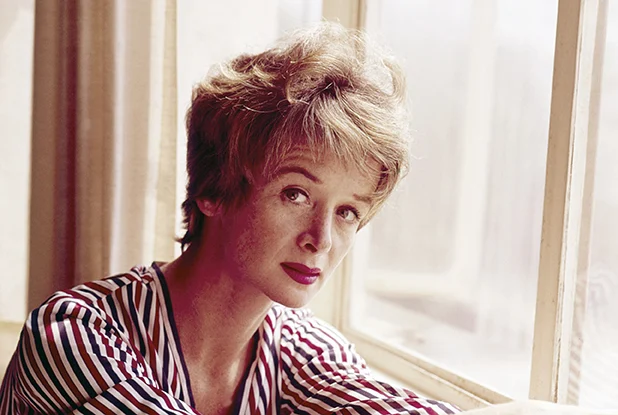
A Legacy Defined by Versatility
Barbara Barrie was widely recognized as a "character actor’s character actor"—a performer whose range allowed her to pivot seamlessly from the high-stakes emotional gravity of mid-century drama to the lighthearted, observational comedy of 1970s television. Her career began in the early 1950s, a period of transition in the American entertainment industry where the influence of the Actors Studio and the Method were beginning to reshape the expectations for dramatic performance.
Born in Chicago, Illinois, in 1931, Barrie honed her craft at the University of Texas at Austin before moving to New York City to pursue a career on the stage. Her early years were defined by the grit of off-Broadway and the burgeoning television landscape, where she quickly established herself as a reliable, nuanced presence.
The Broadway Years and Critical Acclaim
Barrie’s transition to the national stage was solidified by her work in the theater. She was a fixture of the New York stage throughout the 1960s and 1970s. Perhaps her most significant theatrical achievement came in 1970 when she was cast as Sarah in the original Broadway production of Company. Her performance earned her a Tony Award nomination for Best Featured Actress in a Musical.
The production, which revolutionized the concept of the "musical comedy" by focusing on the fragmented, complex lives of urbanites, required a level of psychological depth that Barrie possessed in abundance. Her portrayal of a woman navigating the complexities of marriage and identity resonated with audiences and critics alike, cementing her reputation as an actress capable of delivering complex emotional truths within a musical framework.
Breaking Away and the Academy Recognition
While her theater work was extensive, it was her move to film that brought her to a global audience. In 1979, Barrie appeared in Peter Yates’ coming-of-age classic Breaking Away. Playing Evelyn Stoller, the mother of the film’s protagonist, Dave Stoller (played by Dennis Christopher), Barrie brought a grounded, maternal warmth to the film that served as the emotional anchor for the story.
The film, which dealt with themes of class conflict, small-town ambition, and the transition from adolescence to adulthood, was a massive critical and commercial success. Barrie’s performance earned her an Academy Award nomination for Best Supporting Actress. The nomination served as a testament to her ability to elevate supporting roles, turning them into the essential connective tissue of a narrative. Her work in the film is often cited by film scholars as a masterclass in understated, realistic acting—a style that contrasted sharply with the more stylized performances often rewarded by the Academy during that era.
Television Stardom: The Barney Miller Era
To television audiences, however, Barrie was perhaps best known for her role as Elizabeth Miller, the long-suffering and supportive wife of Captain Barney Miller (played by Hal Linden) in the hit ABC sitcom Barney Miller. The series, which ran from 1975 to 1982, was notable for its realistic, workplace-oriented humor and its focus on the mundane, often gritty realities of a New York City police precinct.

Barrie’s role in the series was pivotal; while the precinct was dominated by the ensemble of male detectives, the scenes between Barney and Elizabeth provided a necessary domestic counterpoint. Their relationship was portrayed as a partnership of equals, characterized by mutual respect and a shared sense of humor about the absurdities of life in New York. Her presence in the show provided the series with a sense of continuity and humanity, helping to sustain its popularity through eight seasons.
Chronology of a Storied Career
- 1950s: Begins her acting career, appearing in various off-Broadway productions and live television dramas in New York.
- 1960s: Gains critical attention for her film and stage work, including roles in Giant (1956) and One Potato, Two Potato (1964), the latter of which earned her the Best Actress award at the Cannes Film Festival.
- 1970: Receives a Tony Award nomination for her performance in the original Broadway production of Company.
- 1975–1982: Stars as Elizabeth Miller in the long-running television series Barney Miller.
- 1979: Receives an Academy Award nomination for Best Supporting Actress for her role in Breaking Away.
- 1980s–2000s: Continues to work steadily in television, with guest appearances in shows such as Law & Order, Suddenly Susan, and Hercules, while also authoring several books for young adults.
The Craft and the Craftsperson
Beyond her acting, Barrie was an accomplished author, having penned several books, including the young adult novels Adam Zigzag and Lone Star. Her writing often reflected the same empathy and observational skill that she brought to her acting roles. Colleagues often described her as a professional of the highest order, someone who understood the necessity of preparation and the importance of supporting one’s fellow actors.
In the industry, she was regarded as a bridge between the traditional theater actors of the mid-20th century and the more naturalistic, television-driven actors who followed. Her ability to balance the technical demands of a script with the spontaneity required for comedy made her a highly sought-after collaborator for directors and showrunners throughout her career.
Cultural Implications and Historical Context
The passing of Barbara Barrie serves as a poignant reminder of a specific era in American entertainment—an era that prioritized character-driven storytelling over the spectacle-driven narratives that dominate the current cultural landscape. Her career tracks the evolution of the "working actor," a demographic that has become increasingly fragile in the streaming era.
Her choice to pursue medically assisted death in the face of terminal illness—as disclosed by her family—also brings a contemporary dimension to her passing. It reflects a growing public conversation regarding end-of-life autonomy, a topic that is becoming increasingly relevant as society grapples with aging, chronic illness, and the desire for dignity in the final stages of life.
Remembering a Giant
While a full obituary is forthcoming, the immediate reaction from the entertainment community has been one of deep respect and mourning. Actors and industry figures have taken to social media to reflect on her influence, noting her kindness, her razor-sharp wit, and her unwavering dedication to the craft.
Her life and career remain a testament to the idea that an actor’s legacy is not necessarily measured by the number of lead roles they play, but by the depth, consistency, and authenticity they bring to every scene. Barbara Barrie did not just inhabit roles; she gave them a heartbeat. Whether she was singing Sondheim on Broadway or navigating the stresses of life as a police captain’s wife, she remained, above all else, an artist who understood that the smallest moments are often the ones that carry the greatest weight.
As the curtains close on a life that spanned 95 years, the industry loses not just a performer, but a piece of its own history. From the stages of New York to the living rooms of millions of Americans, Barbara Barrie’s work will continue to serve as a benchmark for what it means to be a truly versatile and dedicated actor. She leaves behind a body of work that will continue to be studied, watched, and appreciated by future generations of performers who seek to understand the delicate balance of truth and entertainment.