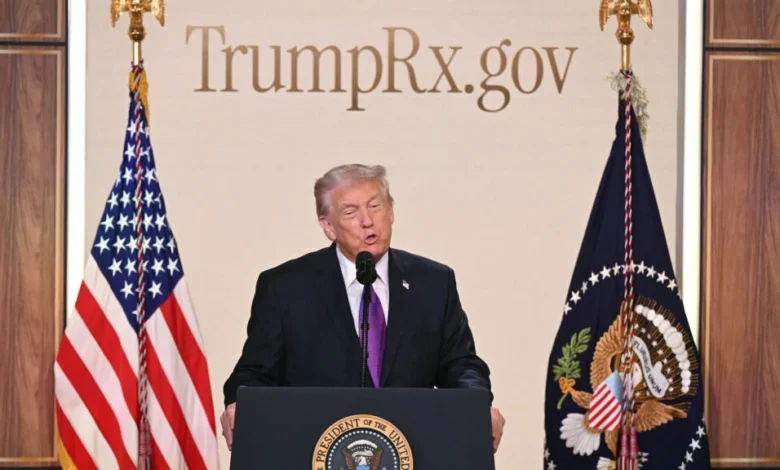
In an escalation of the ongoing debate surrounding drug pricing transparency, Representative Frank Pallone (D-N.J.), the ranking member of the House Committee on Energy and Commerce, has formally requested that the Government Accountability Office (GAO) launch an independent audit of the White House’s TrumpRx platform. The request, issued in an October 27, 2026, letter, signals a significant pushback against the administration’s claims that its digital pharmacy portal has successfully lowered costs for the American public by hundreds of millions of dollars.
The TrumpRx platform, which debuted in February 2026, was framed by the administration as a central pillar of its pharmaceutical policy. While the portal does not function as a pharmacy or a direct dispenser of medication, it acts as a centralized directory, routing consumers to pharmaceutical manufacturer coupons and discounted links. The White House has repeatedly championed the site’s efficacy, asserting in August 2026 that the platform had facilitated $700 million in total savings for patients through strategic agreements with nine additional drug manufacturers, bringing the total number of participating companies to over two dozen.
However, Representative Pallone’s inquiry suggests that these figures may lack the necessary substantiation to be accepted as a verified success. In his letter to the GAO, Pallone argued that the administration has consistently failed to provide the transparent data required to substantiate these claims, effectively preventing independent analysts, lawmakers, and the public from determining if the platform is providing genuine financial relief or merely inflating metrics through indirect savings calculations.
A Timeline of the TrumpRx Initiative
The origins of the TrumpRx platform can be traced back to the early months of 2026, when the White House prioritized the establishment of a centralized digital hub intended to streamline the chaotic landscape of drug coupons and manufacturer-led discount programs.
- February 2026: The TrumpRx portal is officially launched. The administration markets the tool as a way to "empower patients" by placing discount information in a single, accessible location.
- April 2026: Early anecdotal reports from the White House suggest growing engagement, with the administration claiming millions of unique visitors.
- August 2026: The administration announces a major expansion of its "Most-Favored Nation" agreements, claiming that agreements with nine additional pharmaceutical giants have pushed total estimated savings to $700 million.
- October 27, 2026: Representative Frank Pallone requests a formal GAO investigation, citing a "black box" approach to the platform’s underlying data and methodologies.
The Core of the Dispute: Transparency and Methodology
At the heart of the disagreement is the methodology used to calculate the $700 million savings figure. The White House has maintained that these savings are calculated based on the difference between the list price of drugs and the final price paid by consumers using the platform’s routed discounts. Critics, including those in the health policy sphere, point out that "list price" is often a misleading benchmark in the pharmaceutical industry, as few consumers pay that amount due to existing insurance negotiations, pharmacy benefit manager (PBM) rebates, and other discount programs that were already in existence prior to the creation of TrumpRx.

Representative Pallone’s letter specifically highlights the "Most-Favored Nation" (MFN) agreements. These agreements, which the White House claims are the engine behind the savings, have been shielded from public scrutiny under the guise of proprietary business information. By refusing to disclose the terms of these agreements, the administration has left regulators unable to verify whether the price reductions are truly benefiting the consumer or if they are simply shifts in market strategy that do not impact the average patient’s out-of-pocket costs at the point of sale.
"The public deserves to know if these ‘sweeping statements’ regarding $700 million in savings reflect actual, verifiable financial benefits for patients, or if they are simply marketing projections," Pallone wrote. He further emphasized that without granular data—such as average savings per prescription, the demographic breakdown of users, and the specific impact on high-cost, chronic-condition medications—the platform’s success remains a matter of administrative assertion rather than statistical fact.
Supporting Data and Industry Context
The pharmaceutical pricing environment in 2026 remains characterized by extreme volatility. While the rise of digital discount platforms has provided some relief for the uninsured and those with high-deductible health plans, experts have long warned that these tools do not address the fundamental issue of high drug list prices.
According to data from the Kaiser Family Foundation and other independent health policy analysts, the average American’s out-of-pocket spending on prescription drugs continues to rise, despite the proliferation of discount cards. Critics of the current administration’s approach argue that by focusing on coupon-based solutions, the government is treating the symptoms of high drug costs rather than the systemic causes, such as patent thickets, lack of competition in the generic market, and the complex rebate structures managed by PBMs.
If the GAO moves forward with the audit, they will likely focus on three key areas:
- Validation of Savings: Comparing the $700 million figure against historical drug expenditure trends to determine if the savings are truly incremental.
- Agreement Disclosure: Assessing whether the "Most-Favored Nation" agreements contain clauses that limit competition or maintain high price floors, which could inadvertently harm long-term market competition.
- Platform Efficiency: Evaluating whether the portal is truly the most efficient way to lower costs, or if it serves as a subsidy for manufacturer marketing budgets.
The Broader Implications for Healthcare Policy
The request for a GAO audit puts the White House in a difficult position. If they choose to comply fully, they risk revealing the limitations of their MFN agreements, which could weaken their leverage in future negotiations with the pharmaceutical industry. If they refuse to cooperate, they invite further scrutiny and accusations of operating with a lack of institutional accountability.

For the pharmaceutical industry, this investigation represents a potential turning point. Many manufacturers have been hesitant to engage with the TrumpRx platform due to concerns over anti-trust implications and the long-term impact on their ability to set independent pricing. A formal audit could force these companies to justify their participation in a public forum, potentially leading to a broader conversation about the role of government-endorsed discount platforms in the commercial market.
Moreover, the outcome of this investigation will likely influence the legislative agenda for the next session of Congress. If the GAO finds that the platform has had minimal impact on net drug expenditures, it will likely lead to calls for more aggressive legislative measures, such as direct price negotiation or international reference pricing, which have long been advocated by progressive lawmakers.
Conversely, if the GAO confirms that the platform is indeed delivering significant, verified savings to a broad base of patients, the Trump administration could use those results to pivot toward a wider adoption of digital-first health policy. This would mark a significant shift in how the federal government interacts with the pharmaceutical supply chain, moving from a role of oversight to one of direct market facilitation.
As the political tension mounts, the focus remains on the GAO’s response. The agency, known for its rigorous and non-partisan approach to federal auditing, is expected to review the request in the coming weeks. Whether this inquiry will lead to a clearer understanding of American drug pricing or further partisan entrenchment remains to be seen. However, one thing is certain: the debate over TrumpRx is no longer just about coupons and discounts—it has become a central battleground for the future of federal pharmaceutical oversight and the credibility of government-led healthcare initiatives in an era of unprecedented public concern over the cost of living.