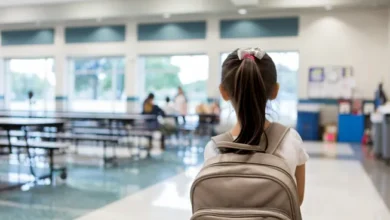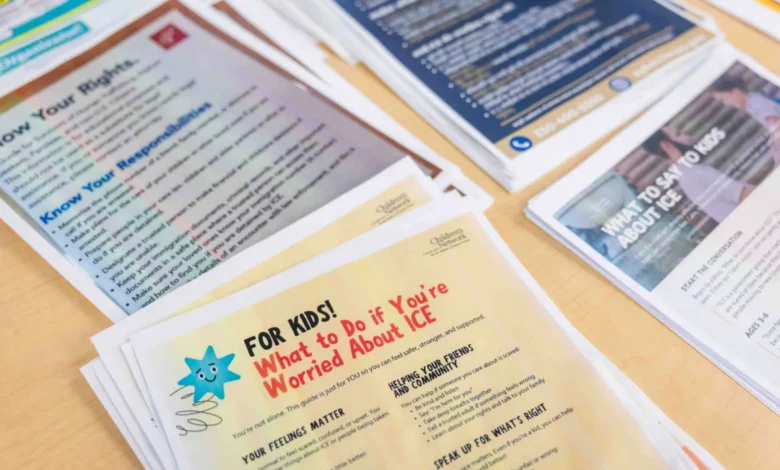
Emma, a third-grade student in a San Diego elementary school, stands on the edge of the foursquare court, her face flushed with frustration. When the ball lands outside the lines and she is told she is out, she reacts with an intensity that seems disproportionate to a playground game. To her teacher, Hannah Harshe, this is not merely a dispute over the rules of a game; it is a manifestation of a deeper, more profound sense of injustice. Emma’s family, like many others, lives under the constant, looming threat of deportation, navigating a legal landscape where the rules for residency and safety appear to shift with every political cycle. While her peers view the playground as a place of low-stakes competition, for Emma, the game is a microcosm of a world where the rules are inconsistently applied and, at times, seem designed to exclude her.
This intersection of federal immigration policy and the daily lives of children has become an increasingly volatile front in the American education system. As the debate over national sovereignty and border security intensifies, the consequences of political rhetoric and legislative action are increasingly spilling into classrooms, affecting the mental health, academic performance, and sense of belonging for millions of children.
A Legal and Historical Framework: Plyler v. Doe
The foundation of immigrant children’s access to education in the United States rests upon the 1982 Supreme Court landmark decision in Plyler v. Doe. The Court ruled 5-4 that the Equal Protection Clause of the 14th Amendment prohibits states from denying a free public education to undocumented immigrant children. The majority opinion, authored by Justice William Brennan, emphasized that imposing a "discrete class of children" a lifetime of hardship by denying them the basic tools of education was not in the national interest.
For over four decades, this ruling has shielded students from the direct consequences of their parents’ immigration status. However, this legal firewall is currently facing its most significant challenge since its inception. Several states, driven by political movements seeking to restrict immigration, have introduced legislation designed to test the limits of Plyler. Proponents of these measures often echo the sentiment expressed by various state officials, such as Oklahoma Republican Rep. Mike Ritze, who famously questioned the necessity of educating non-citizens, suggesting that schools act as conduits for federal immigration enforcement.
The Erosion of Safety: A Timeline of Policy Shifts
The contemporary climate of uncertainty is the result of years of evolving federal strategies. The trajectory of immigration enforcement has shifted from a focus on adult border crossers to a broader, more pervasive approach that impacts communities deep within the interior of the United States.
- 2017–2020: The Trump administration expanded the mandate of Immigration and Customs Enforcement (ICE), leading to increased workplace raids and heightened surveillance in immigrant-heavy neighborhoods. These actions triggered a documented decline in school enrollment in specific districts as families kept children home out of fear.
- 2018: The "zero tolerance" policy resulted in the separation of thousands of migrant families at the U.S.-Mexico border. The psychological impact of this policy—characterized by the American Academy of Pediatrics as "toxic stress"—created a ripple effect that resonated through the education system, as teachers reported increased anxiety and trauma-related behaviors in students with family ties to these regions.
- 2023–2025: The current political cycle has seen a renewed focus on the legal status of students. Several states have moved to propose laws that would mandate the verification of citizenship status for school enrollment, creating a direct legal confrontation with the precedent set by Plyler v. Doe.
The Psychological Toll on Students
The impact of this environment on children is not merely anecdotal. Educational psychologists have documented a rise in "vicarious trauma" among students who fear the deportation of their parents or family members. Research published by the American Psychological Association suggests that children living in families with mixed immigration statuses exhibit higher levels of cortisol—the primary stress hormone—which can impede cognitive function and executive control.
In the classroom, this manifests as difficulty concentrating, irritability, and social withdrawal. When children like Emma view the world as inherently unfair or unpredictable, the classroom—a place traditionally built on the reliability of rules—becomes a source of cognitive dissonance. Teachers are tasked with maintaining a sense of order and structure while acknowledging that the world outside the school gates is, for their students, anything but orderly.
Data and Educational Implications
The demographic reality of the American classroom is inextricably linked to immigration. According to data from the National Center for Education Statistics (NCES), English Language Learners (ELLs) represent approximately 10% of the total public school population, a figure that continues to grow. These students are particularly vulnerable to the rhetoric that frames them as a "drain" on public resources.
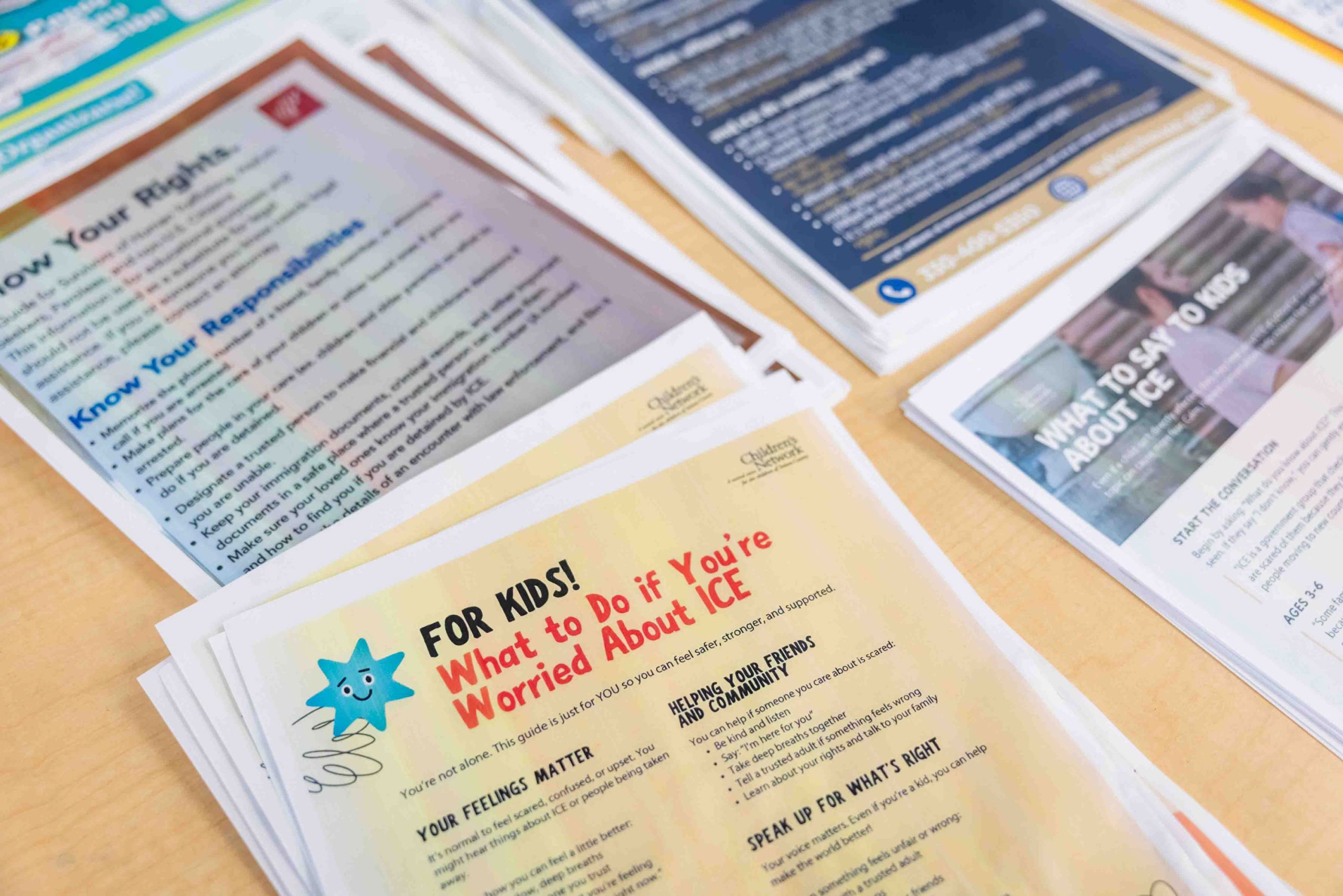
The economic argument often leveraged against immigrant students ignores the long-term fiscal benefits of an educated workforce. However, the immediate impact of anti-immigrant policies on school districts is measurable. Schools that experience high levels of fear-based absenteeism face significant challenges in meeting state-mandated academic targets. When students are not in their seats, they are not learning, and when they are in their seats but distracted by the fear of family separation, their academic outcomes suffer.
The Role of the Educator
For educators, the current climate presents a complex professional dilemma. On one hand, teachers are required to be the "reliable adult" in the room—a figure of stability and consistency. On the other, they are witnessing the systemic targeting of the very children they are charged to protect.
"As teachers, we know the importance of consistently holding kids to high expectations," notes Hannah Harshe. "In our classrooms, we need to be the steady adults that children can count on, so they have the safety to grow, play, explore, and take risks."
The educator’s role, in this context, has shifted. It is no longer limited to pedagogy; it has expanded to include emotional stewardship. Teachers are increasingly finding themselves as the primary point of contact for students navigating the stress of precarious legal situations. This requires a delicate balance: maintaining the authority and rules of the classroom to provide a sense of normalcy, while simultaneously providing a safe space for students to express their fears.
Broader Societal Implications
The attempt to overturn Plyler v. Doe is, at its core, an attempt to redefine the social contract in the United States. If the right to public education is decoupled from the status of being a child, the moral foundation of the American education system is fundamentally altered.
Policy analysts warn that if states succeed in creating barriers to education for immigrant children, the long-term societal costs will be severe. A population of uneducated or marginalized youth is more likely to face economic hardship, which in turn places a greater strain on social safety nets. Furthermore, the exclusion of these children from the educational system creates a social hierarchy that runs counter to the democratic ideal of equal opportunity.
The political framing of immigrants as scapegoats for complex issues—such as inflation, healthcare costs, and crime—has proven to be a durable political strategy. However, the human cost is being paid in classrooms across the country. By reducing children to "constitutional hypotheticals" or "demographic statistics," policymakers often overlook the reality of the 9-year-old on the playground.
Conclusion
The case of Emma serves as a sobering reminder of the stakes involved in the national immigration debate. While the rhetoric in Washington D.C. or in state capitols often centers on abstract concepts of sovereignty and law, the reality is lived in the small, daily interactions within our schools.
If the nation is to maintain its commitment to the idea that children deserve protection and access to the tools necessary for their development, then the education system must remain a neutral, protected space. As the legal challenges to Plyler v. Doe continue to wind their way toward the Supreme Court, the role of the educator as a steady, protective, and firm influence becomes more critical than ever. The resilience of these children is remarkable, but it is a resilience that should not be tested by the instability of national policy. The classroom, at its best, is the one place where every child, regardless of origin, can be just that—a child.