Federal Judge Dismisses Discrimination Lawsuit After School Staffer Called Plaintiff Karen

The intersection of workplace dynamics, cultural lexicon, and federal anti-discrimination law was brought into sharp focus by a recent ruling in the U.S. District Court for the Eastern District of New York. In a comprehensive decision handed down on October 20, Judge Joan Azrack dismissed a lawsuit filed by a former high school psychologist who alleged she faced racial and disability discrimination after being addressed as "Karen" by a colleague. The ruling underscores the stringent legal thresholds required to prove an adverse employment action under Title VII of the Civil Rights Act of 1964 and the Americans with Disabilities Act (ADA), providing a critical barometer for how federal courts evaluate modern workplace grievances involving perceived identity-based slurs.
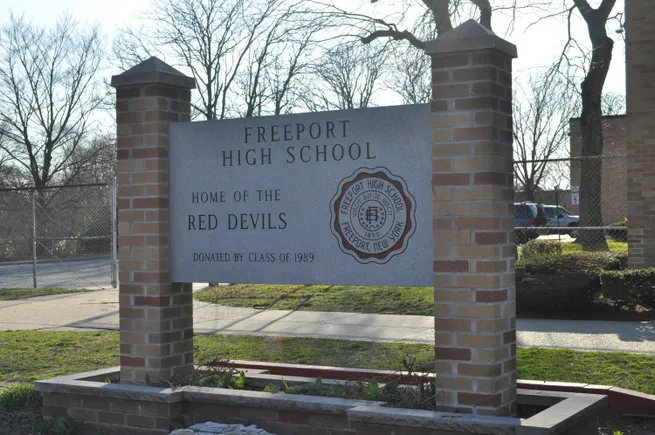
The plaintiff, a White former psychologist at Freeport High School on Long Island, New York, initiated legal action following a series of interpersonal conflicts with administrative staff. According to court records, the central flashpoint occurred in 2021 when the plaintiff and another White colleague were greeted by an assistant principal’s secretary with the phrase, "Here comes Karen 1 and Karen 2." Interpreting the moniker as a derogatory and race-based generalization targeting White women, the plaintiff escalated the matter to school district leadership, setting off a chain of events that would ultimately culminate in federal litigation.
Chronology of Events and Escalation
To fully understand the legal dimensions of the case, the chronology of interactions between the plaintiff, school staff, and district administrators reveals a gradual deterioration of workplace relations. Following the initial "Karen" remark in 2021, the plaintiff formally raised concerns with school leadership, prompting an internal meeting aimed at resolving the tension.
During this mediation session, the interpersonal conflict intensified. The plaintiff alleged that the secretary mimicked her mannerisms and speech patterns, behavior the psychologist interpreted as mocking her underlying disability. Recognizing the escalation, the plaintiff requested that the secretary cease the imitation. The secretary complied and offered an apology for the initial "Karen" remark.
However, the meeting quickly derailed when the participants began debating whether the term "Karen" constituted a bona fide racial slur. The conversation deteriorated to a point where constructive dialogue broke down entirely. Subsequently, the plaintiff filed a formal internal complaint under Title VII guidelines, asking Freeport School District officials to address the name-calling and perceived aggressive behavior. Notably, while detailing her grievances on the intake documentation, the plaintiff omitted a checkmark in the designated box indicating that race formed the basis of the complaint.
In response to the grievance, the Freeport School District initiated a formal internal investigation. Upon concluding its inquiry, the district issued a report determining that the reported conduct did not meet the legal or administrative thresholds required to constitute workplace harassment.
The professional relationship continued to erode over the next three years. In 2024, the psychologist submitted her formal resignation letter to school officials. In her correspondence, she expressed deep frustration, stating she felt systematically ignored and dismissed by district leadership. Furthermore, she reiterated allegations of ongoing mistreatment by both the secretary and the assistant principal. Prior to her resignation, she had already filed a federal lawsuit against the school district and individual defendants, alleging violations of Title VII, the ADA, and New York state human rights laws.
Legal Analysis and the Impact of Muldrow v. City of St. Louis
In her October 20 decision granting summary judgment to the defendants on all federal claims, Judge Azrack focused heavily on the legal definition of an "adverse employment action." The judge explained that the plaintiff’s Title VII claim failed as a matter of law because she could not demonstrate that any tangible, material disadvantage to her employment resulted from the alleged conduct.
To substantiate her claims of harm, the plaintiff pointed to significant emotional distress, alongside personal expenses incurred for medical treatment, medication, and leave time. However, Judge Azrack noted that under established federal jurisprudence—specifically referencing the U.S. Supreme Court’s landmark 2023 ruling in Muldrow v. City of St. Louis—such personal and psychological tolls do not automatically equate to actionable adverse employment actions.
In the Muldrow decision, the Supreme Court clarified that plaintiffs alleging discrimination must demonstrate "some harm" regarding the terms, conditions, or privileges of their employment as a result of discriminatory action. While the high court’s ruling notably eliminated the elevated standards previously utilized by federal circuits that required plaintiffs to prove "significant" or "substantial" harm, it did not eliminate the requirement that the challenged action must directly impact employment conditions.
Judge Azrack held that the "Karen" comment, alongside the related interpersonal friction and mockery cited by the plaintiff, did not materially alter the terms or conditions of her job.
"Although the remarks may have been ‘unpleasant’ to her, that alone does not constitute a materially disadvantageous change in employment sufficient to qualify as an adverse action," Azrack wrote in her opinion.
Furthermore, the court evaluated the plaintiff’s contention that the school district failed to adequately investigate her complaints. The judge ruled that the plaintiff failed to present sufficient evidence indicating that the district’s internal investigation was flawed, biased, or conducted in bad faith. Having dismissed all federal questions, the court exercised its discretion to decline supplemental jurisdiction over the remaining state-law claims.
The Broader Context: The Rise of Reverse Discrimination Claims
The ruling arrives amid a broader, evolving landscape in American employment and education law. Legal analysts and employment attorneys have increasingly noted a national shift toward a greater volume of "reverse discrimination" complaints. This trend involves White or male employees and students asserting that institutional policies, peer conduct, or administrative actions create a hostile environment or disadvantage them based on their majority status.
In the K-12 and higher education sectors, these legal challenges are expanding beyond traditional employment disputes into curricular, administrative, and student-focused policies. For instance, civil rights and education advocacy organizations have launched proactive litigation challenging diversity, equity, and inclusion initiatives, as well as student integration frameworks, arguing that such programs inadvertently create protected classes that disadvantage other demographics.
A prominent example of this legal expansion occurred when the 1776 Project Foundation, a conservative education advocacy nonprofit, filed a federal lawsuit against the Los Angeles Unified School District. The organization’s legal challenge targeted student integration policies designed to support schools with heavily non-Anglo populations. The lawsuit argued that resource allocations and mandatory administrative procedures implemented under the integration initiative constituted unlawful discrimination against White students, whom the legal filing characterized as "a new minority."
Implications for K-12 Institutions and Human Resources
For school districts and public sector employers across the United States, the ruling in D’Aiello v. Freeport High Schools provides both reassurance and a cautionary tale. On one hand, federal courts continue to maintain a firm boundary between general workplace incivility, petty slights, and actionable employment discrimination under Title VII. Name-calling, interpersonal disputes, and culturally charged vernacular—while disruptive and professionally unpleasant—do not automatically cross the threshold into federal civil rights violations unless they result in demonstrable, material changes to an employee’s working conditions.
On the other hand, the case highlights the operational vulnerabilities schools face when low-level interpersonal conflicts among staff members are allowed to fester without effective mediation. The escalation from a casual, derogatory remark by a secretary into a multi-year federal lawsuit demonstrates the critical importance of robust human resources management, timely intervention, and transparent conflict resolution at the earliest possible stage.
As federal courts continue to interpret post-Muldrow standards of employment harm, employers are advised to ensure that internal investigative procedures are meticulously documented and rigorously applied. Whether dealing with traditional discrimination claims or emerging workplace friction involving cultural slang, educational institutions must balance empathetic employee relations with strict adherence to the objective legal standards required to sustain or defend against federal litigation.