WHO and Switzerland Cement Strategic Cooperation Strategy for 2024–2028 to Advance Public Health Excellence

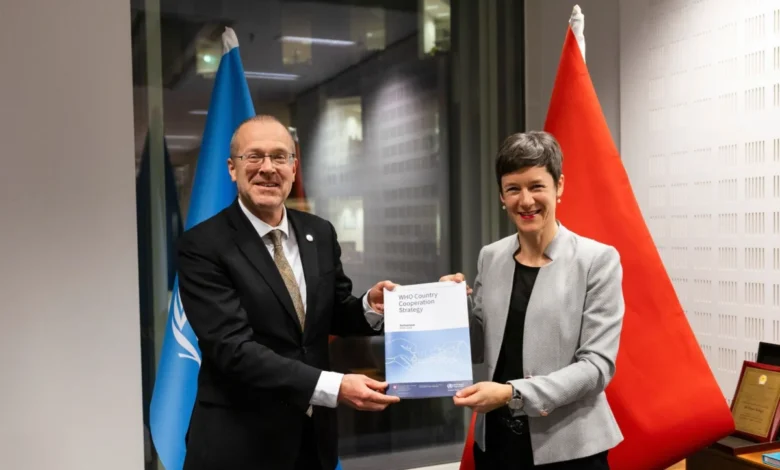
The World Health Organization (WHO) and the Government of Switzerland have officially formalized their ongoing partnership by renewing their joint cooperation strategy for the 2024–2028 period. The formalization took place during a high-level diplomatic and public health meeting held on March 4, 2025, at the WHO Regional Office for Europe in Copenhagen, Denmark. This landmark agreement represents a continuation of a pioneering model of collaboration that began over a decade ago, positioning Switzerland as a leading high-income state partner within the WHO European Region.
The renewed strategic roadmap seeks to address emerging and persistent public health challenges, harmonize health security frameworks, and optimize resource allocation across local, regional, and global levels. By reaffirming their commitments, both entities intend to leverage Switzerland’s world-renowned scientific infrastructure, pharmaceutical expertise, and diplomatic positioning to support the strategic health priorities outlined by the WHO European Region.
Chronology of the WHO-Switzerland Partnership
The formalization of the 2024–2028 strategy builds upon a well-established history of cooperation between Swiss federal authorities and global health governance bodies.
In 2013, Switzerland broke new ground by becoming the very first high-income country within the WHO European Region to pilot a structured, formal country cooperation strategy with the organization. This initial framework allowed both parties to streamline technical cooperation, share epidemiological data, and address non-communicable diseases, health system strengthening, and emergency preparedness through a synchronized lens.
Following a decade of successful execution, WHO and Swiss federal health authorities jointly initiated a comprehensive evaluation of the partnership in 2022. This review assessed the evolving landscape of European and global health—particularly in the wake of the COVID-19 pandemic—and identified critical areas requiring intensified collaboration, including digital health transformation, workforce resilience, and genomic surveillance.
The culmination of this multi-year consultative review process materialized on March 4, 2025, in Copenhagen, where the final policy text for the WHO-Switzerland Country Cooperation Strategy 2024–2028 was formally adopted and signed by key delegates.
Key Leadership and Diplomatic Engagement
The signing ceremony in Copenhagen brought together prominent figures from both organizations, highlighting the high-level political and technical commitment driving the partnership.
Dr. Hans Henri P. Kluge, WHO Regional Director for Europe, represented the global health body during the proceedings, emphasizing the critical value of Switzerland’s contributions to European and international health architecture. Representing the Swiss Confederation was Barbara Schedler, Ambassador for Global Health at the Swiss Federal Office of Public Health. Ambassador Schedler has played an instrumental role in guiding Switzerland’s foreign health policy, multilateral engagements, and technical partnerships.

In official statements surrounding the event, both leaders underscored that modern health threats—ranging from antimicrobial resistance to climate-induced health emergencies—cannot be successfully managed by individual nations operating in silos. The renewed strategy serves as a practical instrument to operationalize solidarity, scientific exchange, and multilateral cooperation.
Strategic Pillars of the 2024–2028 Cooperation Framework
The newly adopted WHO-Switzerland Country Cooperation Strategy 2024–2028 focuses on several interconnected priority areas designed to maximize public health outcomes within Switzerland and leverage Swiss expertise for international public health goods.
Strengthening Health Security and Genomic Surveillance
A primary focal point of the renewed agreement is the reinforcement of health security frameworks. Drawing lessons from recent global health crises, the strategy emphasizes the rapid detection of pathogens, cross-border data sharing, and the integration of advanced genomic surveillance technologies. This aligns closely with broader ongoing initiatives, such as the WHO-Switzerland partnership for the global BioHub system, which facilitates the rapid, safe sharing of biological materials with epidemic or pandemic potential between global laboratories.
Universal Health Coverage and Resilient Health Systems
The strategy places significant emphasis on maintaining and improving the resilience of health systems. Even in high-income settings like Switzerland, health systems face mounting pressures from aging populations, rising chronic disease burdens, and workforce shortages. The cooperation framework encourages the exchange of best practices regarding health financing, digital health integration, and patient-centered care models that can serve as benchmarks for other European nations.
Addressing Non-Communicable Diseases and Environmental Health
Non-communicable diseases (NCDs)—including cardiovascular diseases, cancer, diabetes, and mental health disorders—account for the vast majority of morbidity and mortality within the WHO European Region. The 2024–2028 strategy incorporates targeted initiatives to address common risk factors, promote mental health resilience, and tackle the intersection of climate change and public health, recognizing that environmental degradation poses an immediate threat to human well-being.
Broader Impact and Implications for Global Health
Switzerland’s unique position as a global hub for international organizations, pharmaceutical research, and humanitarian action endows its partnership with the WHO with profound international implications.
While the country cooperation strategy is formally structured around bilateral collaboration between the WHO Regional Office for Europe and Swiss federal institutions, the outcomes and innovations generated through this framework frequently ripple outward to benefit the broader global community. For instance, technical standards, regulatory frameworks, and pathogen-sharing mechanisms tested or supported within this partnership often serve as operational blueprints for low- and middle-income countries seeking to strengthen their national health systems.
Furthermore, the renewal of this strategy signals to the international community that multilateralism and sustained institutional cooperation remain vital tools for navigating an increasingly complex geopolitical and epidemiological landscape. By committing to a structured five-year roadmap through 2028, WHO and Switzerland provide a predictable, transparent environment for joint public health programming, research funding, and technical deployment.
Stakeholders, public health professionals, and interested members of the public can access the complete text of the WHO–Switzerland country cooperation strategy 2024–2028, along with accompanying news releases and documentation, through the official WHO/Europe digital portal.