Anthropic Accelerates Biomedical R&D: Dario Amodei Foresees the Eradication of Major Diseases Within a Decade Through AI Innovation

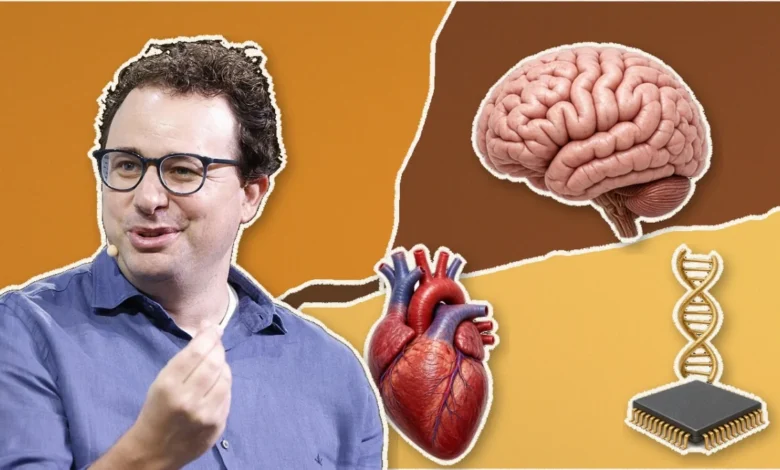
Artificial intelligence laboratory Anthropic has officially entered the biomedical research sector, signaling a transformative shift in how humanity approaches drug discovery, genetic analysis, and complex disease treatment. In a comprehensive roadmap released by CEO Dario Amodei, the company outlined an ambitious vision to compress decades of traditional pharmaceutical research into a fraction of the time, targeting breakthroughs in protein binder design, microfluidic analysis, and automated genetic sequencing. This strategic expansion builds upon Amodei’s previous essays and organizational pivots, reflecting a broader industry trend where frontier AI developers are moving beyond general-purpose software to tackle humanity’s most persistent medical challenges.
The intersection of artificial intelligence and life sciences has transitioned from theoretical speculation to practical application at an unprecedented pace. Anthropic’s recent roadmap highlights a future where computational biology and machine learning converge to accelerate drug development pipelines. Industry observers note that while traditional drug discovery is notorious for taking over a decade and costing billions of dollars, AI-driven methodologies have the potential to drastically reduce both development timelines and financial overhead. By leveraging advanced language models and specialized computational tools, researchers can now simulate molecular interactions, predict protein folding structures, and identify therapeutic candidates with remarkable precision.
Dario Amodei’s Ten-Year Forecast: Conquering Major Pathologies
Dario Amodei’s prognostications suggest that within the next ten years, several of humanity’s most formidable medical burdens will become historical relics. Historically, the pharmaceutical industry has operated under rigid, linear timelines where drug discovery, preclinical testing, clinical trials, and regulatory approval span generations. Amodei’s vision challenges this paradigm by suggesting that advanced AI systems can compress fifty to one hundred years of biological research into a mere five to ten-year window.
This acceleration is not merely a theoretical exercise. Recent milestones in computational biology—such as AlphaFold’s success in protein structure prediction and various machine learning models identifying early disease biomarkers—have demonstrated that artificial intelligence can outpace human researchers in specific scientific domains. For instance, recent advancements allow AI agents to parse vast genomic datasets, identify CRISPR-like enzyme systems, and design custom protein binders with hit rates that rival or exceed human experts. By automating these complex workflows, AI enables researchers to bypass traditional bottlenecks, test hypotheses in silico, and drastically reduce the trial-and-error phase of drug discovery.
Navigating Regulatory Hurdles and Building Societal Trust
As artificial intelligence systems take on more critical roles in biomedical research, the challenges of regulatory compliance, safety validation, and societal trust become paramount. Integrating AI into healthcare requires rigorous frameworks to ensure patient safety, data privacy, and algorithmic transparency. Healthcare institutions, regulatory bodies like the U.S. Food and Drug Administration (FDA), and tech developers must establish collaborative standards to validate AI-generated therapeutics and diagnostic tools.
The path toward widespread adoption is fraught with technical and ethical considerations. Critics and industry veterans often emphasize that computational models must be thoroughly validated through wet-lab experimentation before clinical trials can begin. Anthropic’s strategy acknowledges these realities by emphasizing rigorous safety protocols, interpretability in model outputs, and close collaboration with established biotech firms and academic researchers. Managing these risks effectively is essential for gaining public trust and securing the operational space necessary to conduct large-scale biomedical research.
The Evolution of AI in Life Sciences: A Retrospective Timeline
The groundwork for Anthropic’s recent biomedical expansion can be traced through a series of key milestones over the past several years. In October 2024, Dario Amodei published a widely read essay titled "Machines of Loving Grace," which articulated how artificial intelligence could dramatically accelerate progress in biology and medicine. The essay served as a conceptual manifesto for the tech sector, illustrating how computational power could solve complex biological problems that have resisted traditional research methods for decades.

Concurrently, other industry leaders have made significant strides in computational biology. DeepMind’s AlphaFold revolutionized structural biology by accurately predicting the 3D structures of proteins, unlocking new avenues for drug design. Similarly, recent developments by institutions like the Mayo Clinic and various biotech startups have demonstrated that AI models can detect diseases—such as pancreatic cancer—months or even years before traditional clinical diagnosis. Anthropic’s entry into this competitive landscape introduces sophisticated language and reasoning models capable of synthesizing complex scientific literature, designing experimental protocols, and analyzing multi-omics data with unprecedented accuracy.
Broader Implications for the Global Healthcare Ecosystem
The convergence of artificial intelligence and biotechnology holds profound implications for the global healthcare landscape. By lowering the cost of drug discovery and accelerating the identification of novel therapeutics, AI technologies have the potential to democratize access to advanced medical treatments. However, this transition also requires careful oversight to prevent algorithmic bias, ensure equitable access to innovations, and protect sensitive genetic data.
As companies like Anthropic continue to invest heavily in scientific AI, the traditional boundaries between computer science and molecular biology are dissolving. The ability of large language models to process vast amounts of unstructured scientific data, combined with specialized reinforcement learning techniques, creates a powerful engine for discovery. While significant challenges remain in bridging the gap between computational prediction and clinical reality, the ongoing transformation of biomedical research marks the beginning of a new era in modern medicine—one where artificial intelligence serves as an indispensable partner in the quest to conquer disease and extend human healthspan.