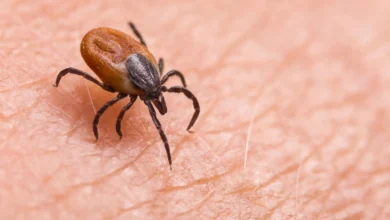
Decoding the Ecology of Lyme Disease: Thirty-Five Years of Forest Research Challenges Long-Held Assumptions


Lyme disease remains the most frequently reported vector-borne illness in the United States, with the Centers for Disease Control and Prevention (CDC) estimating that nearly 500,000 Americans are diagnosed and treated annually. The infection, caused by the bacterium Borrelia burgdorferi, is primarily transmitted to humans through the bite of the infected blacklegged tick (Ixodes scapularis). While prompt administration of antibiotics is generally effective, failure to diagnose the condition early can lead to severe, long-term complications affecting the joints, heart, and nervous system. As the incidence of this disease continues to climb, a landmark study spanning more than three and a half decades has provided a transformative look at the environmental drivers of tick-borne infection, effectively debunking several long-standing myths regarding how these pathogens propagate through the natural landscape.
The research, conducted at the Cary Institute of Ecosystem Studies in Millbrook, New York, represents one of the most comprehensive long-term ecological studies ever undertaken. Published in the Proceedings of the National Academy of Sciences, the report synthesizes 35 years of data collection. By tracking the complex, interdependent relationships between oak trees, rodent populations, predator dynamics, and weather patterns, the Cary Institute team—led by disease ecologist Richard Ostfeld and co-leader Shannon LaDeau—has mapped the hidden variables that dictate when and where humans are at the highest risk of encountering infected ticks.
A Chronology of Environmental Surveillance
The project began in the early 1990s, a period when Lyme disease was transitioning from a localized concern in the Northeast to a nationwide public health priority. In 1991, researchers at the Cary Institute established a 2,000-acre forested research site in Dutchess County, New York. The goal was to move beyond the limitations of short-term, "snapshot" studies, which often fail to account for the cyclical nature of forest ecosystems.
Over the last 35 years, the team has meticulously monitored the "masting" cycles of oak trees, the demographic shifts of white-footed mice (Peromyscus leucopus), and the population density of tick life stages. This longitudinal approach has allowed scientists to distinguish between temporary statistical noise—such as a single year of high tick counts due to a mild winter—and genuine, systemic ecological drivers. The resulting dataset provides a rare window into the biological machinery that governs tick populations, offering a stark contrast to the speculative models that dominated the conversation in the 1980s and 90s.
The Deer Fallacy: Rethinking Traditional Risk Factors
One of the most significant findings from the Cary Institute study concerns the role of white-tailed deer. During the early days of the Lyme epidemic, deer were widely blamed as the primary catalyst for rising tick numbers. The logic was seemingly sound: adult female ticks require a substantial blood meal to produce eggs, and adult deer serve as the primary host for these ticks. Consequently, policymakers and residents alike assumed that reducing deer density would directly correlate to a decrease in the number of larval and nymphal ticks in the surrounding environment.
However, the 35-year dataset paints a different picture. On the research property, scientists found no statistically significant correlation between the abundance of deer and the density of nymphal ticks. While deer remain essential for the reproductive success of adult ticks, their population size does not appear to be the "bottleneck" that limits the number of ticks that survive to the nymphal stage. This finding suggests that traditional deer-culling programs, which are often expensive and controversial, may provide little to no benefit in reducing human risk of Lyme disease.
Rodent Populations as the Primary Predictor
If deer are not the primary driver of tick surges, what is? The study identifies the white-footed mouse as the critical link in the chain of infection. Unlike deer, which cannot transmit Borrelia burgdorferi to ticks, white-footed mice are highly efficient reservoirs for the bacterium. When larval ticks take their first blood meal from an infected mouse, they frequently contract the pathogen and carry it into their next life stage as nymphs.
The data indicates that years characterized by explosive growth in mouse populations are followed, almost invariably, by a 40% surge in the number of infected nymphal ticks the following year. This relationship is so consistent that it provides a legitimate early-warning system for public health officials. By monitoring rodent population dynamics, health departments could theoretically predict high-risk seasons with significant lead time, allowing for more targeted public health messaging and preventative interventions.
The Role of Acorns and Forest Cycles
The study further uncovers a fascinating "cascade effect" that links tree reproduction to human health. Oak trees undergo a process known as "masting," where they produce massive, synchronized crops of acorns every few years. These events serve as a primary food source for forest rodents.
When a heavy acorn crop occurs, mouse survival rates skyrocket, leading to a population boom the following year. This, in turn, provides an abundance of hosts for larval ticks, leading to a predictable spike in tick populations two years after the initial acorn surge. This discovery highlights the non-obvious, multi-year connections within ecosystems: a bumper crop of acorns in a forest in 2024 can directly influence the risk of a hiker contracting Lyme disease in 2026. This finding shifts the focus from immediate environmental conditions to long-term cyclical patterns.
The Complexity of Pathogen Prevalence
Perhaps the most surprising aspect of the research is the realization that a higher number of mice does not always equate to a higher percentage of infected ticks. This phenomenon, which initially baffled the research team, is explained by the presence of other host species.
In a diverse ecosystem, larval ticks feed on a variety of animals, including squirrels, skunks, and opossums. These animals are generally much less efficient at transmitting the Lyme bacterium than white-footed mice. When these "dilution hosts" are abundant, a significant portion of the tick population feeds on them rather than on mice. As a result, even if the total number of ticks increases, the proportion of those ticks that carry Borrelia burgdorferi may decrease. This underscores the vital importance of biodiversity; a healthy, diverse forest with many different mammal species can act as a buffer, reducing the overall prevalence of infection in the tick population.
Environmental Resilience and the Climate Change Variable
The study also challenged the assumption that extreme weather would act as a natural check on tick populations. While laboratory experiments had previously suggested that extreme heat or deep freezes would kill ticks, the long-term field observations showed that ticks are remarkably resilient. They utilize the leaf litter and deep soil layers as thermal refuges, effectively insulating themselves against temperature extremes that would be lethal at the surface.
However, the interaction between climate change and disease is far from settled. While warmer winters might seem to favor ticks, the researchers noted that overall warmer conditions have not yet led to a clear, linear increase in tick density. The complexity of how moisture, temperature, and seasonality interact with the life cycles of trees, mice, and ticks remains a subject of intense ongoing study.
Implications for Public Health Policy
The findings from the Cary Institute have profound implications for how society manages the risk of tick-borne illnesses. For decades, resources have been disproportionately focused on deer management and chemical spraying, often with limited results. The evidence suggests that a more nuanced approach—one that prioritizes habitat management and perhaps even the protection of biodiversity—could prove more effective.
"On balance, these surprises have enriched our knowledge of this system, helping us to inform management of tick-borne disease risk," noted Richard Ostfeld. The transition from a simple "deer-tick-human" model to a sophisticated understanding of the entire ecological community is a paradigm shift.
As climate change continues to alter forest composition and landscape connectivity, the ability to predict disease risk will depend on the continued collection of long-term data. The Cary Institute’s project serves as a template for future research, demonstrating that in the face of complex biological threats, there are no shortcuts. By respecting the intricate web of life—from the acorn on the forest floor to the rodent in the thicket—researchers are finally beginning to peel back the layers of one of the most persistent public health challenges of the 21st century.