Mahershala Ali Opens Up About Hollywood Realities, Oscar Realities, and the Troubled Path of Marvel’s Blade

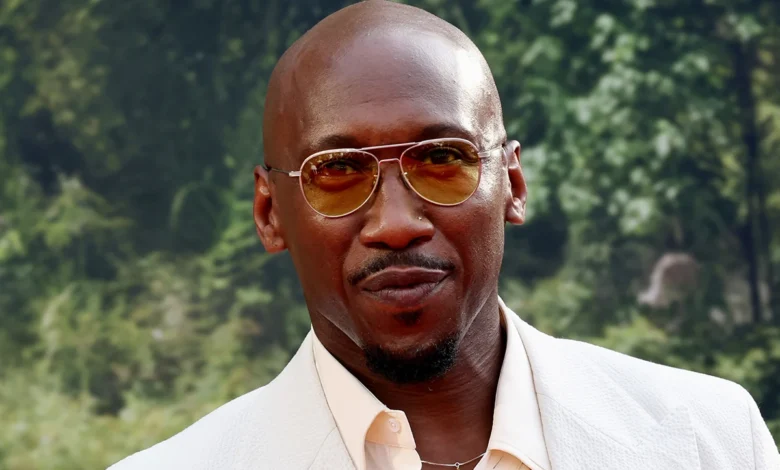
Two-time Academy Award winner Mahershala Ali recently sparked a broad industry conversation about the mechanics of Hollywood validation, the scarcity of substantive material, and the harsh realities of prestige casting. Appearing as a guest on the “7PM in Brooklyn” podcast hosted by former NBA star Carmelo Anthony and media personality Kazeem “Kaz” Famuyide, Ali delivered a remarkably candid assessment of his career post-Oscars. Far from signaling an unyielding stream of greenlit prestige projects, Ali explained that holding two golden statuettes offers little insulation against the structural limitations of the modern studio system.
The discussion quickly evolved into a broader examination of representation, artistic integrity, and the often-fraught pipeline of major intellectual property development. This dialogue intersects directly with Ali’s recent professional moves, including his starring role in Bassam Tariq’s indie drama “Your Mother Your Mother Your Mother,” and sheds new light on the protracted, ultimately stalled development of Marvel Studios’ “Blade” reboot.
The Myth of the Oscar Bump and Material Scarcity
During his appearance on the podcast, Ali addressed the common public misconception that winning major accolades automatically opens every Hollywood door. The actor secured back-to-back Academy Awards for Best Supporting Actor—first for Barry Jenkins’ groundbreaking 2016 drama “Moonlight” and subsequently for Peter Farrelly’s 2018 biographical comedy-drama “Green Book.” Despite joining an elite group of performers with multiple Academy Awards, Ali emphasized that hardware does not create roles where none exist.
“There’s more good actors than there is good material,” Ali told the hosts. “It’s not even that all these people are competing for these same spots. It’s just that out of all the material made, there’s only a handful of them that check certain boxes.”
Elaborating on the mathematical and logistical constraints of Hollywood greenlight decisions, Ali noted that the overwhelming majority of commercial studio projects simply do not feature characters written for a Black leading man of his demographic and profile. Consequently, holding accolades means very little if executives are not actively developing or financing vehicles tailored to a performer’s specific strengths.
“It doesn’t matter if I got 17 Oscars. If someone is not writing something for you or greenlighting something with you in mind, you’re like everybody else waiting and looking and searching,” he stated.
When Famuyide asked whether high-profile awards genuinely validate Black actors within the industry hierarchy, Ali dismissed the notion as superficial industry chatter. He expressed a desire to avoid being pigeonholed into tokenized or marginalized categories, explaining that artists simply want to engage with compelling material rather than feeling defined by demographic designations or weighed down by the burden of representing an entire community’s breakthrough moments.
Navigating Indie Cinema and the Shadow of Marvel’s Blade
Ali’s reflections on creative control and material scarcity are mirrored in his recent artistic choices. On September 25, the actor starred in Bassam Tariq’s feature “Your Mother Your Mother Your Mother.” The project marked another collaboration with Tariq, a filmmaker whose trajectory has recently been defined by high-profile corporate entanglements and subsequent creative liberation.
Tariq was originally attached as the director of Marvel Studios’ troubled “Blade” reboot, a project that was envisioned as a major star vehicle for Ali following his surprise audio cameo in the post-credits scene of 2021’s “Eternals.” However, the production became a cautionary tale of studio development hell, marked by multiple writer turnover cycles, shifting release dates, and creative differences. Tariq ultimately exited the director’s chair, and the film has faced continuous hurdles that have left its future indefinitely uncertain.
In a recent interview with The New Arab, Tariq reflected on the unique pressures of trying to build a tentpole comic book movie without a locked script. He detailed the ethical dilemma faced by a director forced to sell actors on a vision that corporate entities have not yet codified on the page.
“It was funny and strange to start casting and building without a proper script,” Tariq told interviewer Hanna Flint. “You’re sitting there and explaining to actors what their role will be, and they just have to believe you. That’s also very dangerous because if the text comes and it doesn’t add up to what you were saying, your credibility gets completely shot. All I have is my integrity, and I’ve been thinking about that a lot.”
Tariq emphasized that acting as an intermediary for studio mandates without having actual decision-making authority creates an untenable work environment. “If you’re the bearer of bad news to your actors, but you’re not the one making any of these decisions—and it’s actually coming from a corporate entity—that’s not a great way to be a director,” he explained. “I know some people can take that and run with it, but I learned I was losing credibility with my actors, and it wasn’t a healthy way to operate as a filmmaker. Life’s too short to make shit films, so that was my big lesson: I have to have full control over my script.”
The Aftermath of a Studio Misfire
The collapse of the “Blade” pre-production apparatus has been openly acknowledged by leadership at the highest levels of the Walt Disney Company and Marvel Studios. Kevin Feige, president of Marvel Studios, addressed the project’s protracted delays and developmental stagnation in previous press cycles, candidly describing the situation as a personal and professional failure.
Ali later echoed Feige’s sentiments during an interview with GQ, validating the studio head’s stark self-assessment. “To this day, I don’t know why it didn’t happen. I just know that it was—Kevin, he said it was the biggest failure of his career and I agree,” Ali remarked.
The juxtaposition of Ali’s comments on the “7PM in Brooklyn” podcast with the post-mortem analysis of “Blade” highlights a growing friction between elite talent and corporate intellectual property management. While studios increasingly rely on marquee Academy Award winners to lend prestige and gravity to comic book properties and franchise extensions, the rigid bureaucracy of massive conglomerate filmmaking often clashes with the organic development processes required to yield compelling art.
Industry Implications and the Path Forward
Ali’s remarks arrive at a critical inflection point for the entertainment industry. As traditional studios grapple with shrinking theatrical windows, risk-averse greenlight processes, and the post-strikes economic correction, A-list talent is finding that past commercial and critical triumphs offer diminishing returns in securing consistent, high-caliber employment.
The commentary also underscores a wider generational shift among creators of color who are increasingly vocal about the limitations of symbolic milestones. Rather than relying on the traditional studio pipeline—which Ali noted can take three to five years even when artists successfully pivot to producing their own material—actors and directors are demanding structural transparency, script stability, and substantive creative control.
Ultimately, Mahershala Ali’s observations strip away the glossy veneer of Hollywood’s awards season PR machine. By laying bare the mechanics of material acquisition, studio development, and institutional validation, Ali and collaborators like Bassam Tariq are illuminating the urgent need for a more sustainable, artist-centric industry model—one where critical acclaim translates not just into golden statues, but into the freedom to consistently execute meaningful storytelling.