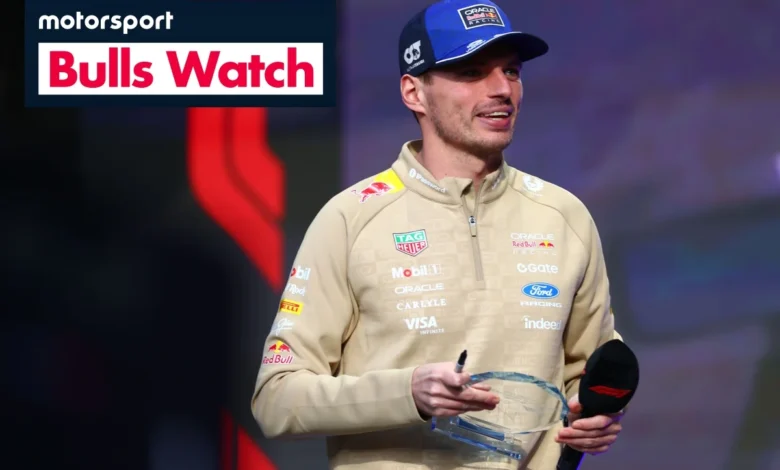
Max Verstappen compares Las Vegas Grand Prix victory to Mario Kart gameplay mechanics after securing 75th career win

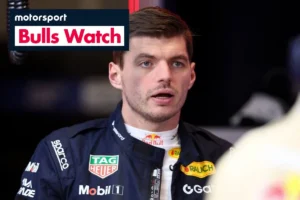
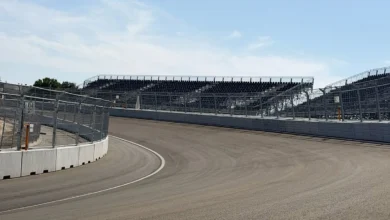
The neon-soaked streets of Las Vegas served as the backdrop for one of the most chaotic and strategically demanding races of the 2024 Formula 1 season. Max Verstappen, the four-time world champion, navigated a high-speed game of cat-and-mouse to secure his 75th career victory. The race, which saw an unprecedented 352 overtakes and 35 lead changes, tested the tactical patience of the entire grid, leaving even the most seasoned competitors searching for comparisons to describe the relentless nature of the contest.
For Verstappen, the experience felt less like a traditional test of pure pace and more like a tactical simulation. Following the checkered flag, the Dutchman drew a candid parallel to the iconic Nintendo racing franchise, Mario Kart. He noted that the constant ebb and flow of the race, driven by the intense drafting effects and battery deployment strategies inherent to the Las Vegas Strip Circuit, mirrored the "catch-up" mechanics often found in arcade racing titles.
A Tactical Masterclass in the Neon City
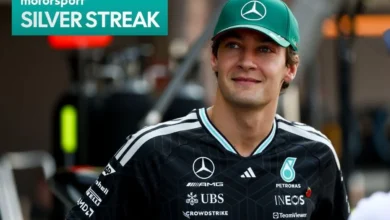
The race dynamics were dictated by the unique layout of the Las Vegas circuit, which features long, high-speed straights that favor heavy slipstreaming. Throughout the event, Verstappen found himself repeatedly locked in combat with Mercedes’ George Russell. The two drivers traded the lead multiple times, with the DRS (Drag Reduction System) zones acting as a double-edged sword.
"It was just the tow combination with the deployment," Verstappen explained during the post-race media debrief. "Of course, when you are within a second, you have the overtake mode as well, and around here that is powerful. So, yeah, you could not pull away."
The inability to break the aerodynamic tow of the trailing cars meant that the leader was constantly vulnerable to counter-attacks. While spectators were treated to a flurry of overtakes that kept the grandstands energized, for the drivers in the cockpit, the race was a exercise in energy management rather than raw qualifying-style speed. The reliance on battery deployment, known in F1 as "overtake mode," meant that any advantage gained on a straight was immediately neutralized by the car behind utilizing the same energy boost.
Chronology of a High-Stakes Duel
The race began with Verstappen starting from pole position, a tactical advantage he hoped would allow him to dictate the pace. However, the nature of the Las Vegas street track rendered that advantage largely symbolic. As the laps progressed, the field remained tightly bunched.
By the mid-point of the race, the intensity reached a fever pitch. George Russell, capitalizing on the superior top-end speed of the Mercedes W15 in the slipstream, repeatedly challenged the Red Bull driver. Each time Russell moved to the front, the tactical reset allowed Verstappen to tuck into the Mercedes’ wake, reclaiming the position on the subsequent straight. This cycle repeated for several stints, turning the race into a rhythmic, albeit exhausting, process of calculated defense and opportunistic counter-maneuvers.
Data and Performance Metrics
The sheer volume of statistics generated by the Las Vegas Grand Prix highlights the abnormal nature of the race. With 352 overtakes recorded, the circuit has solidified its reputation as one of the most action-heavy tracks on the calendar. The 35 lead changes further emphasize that the "leader" position was a temporary state of affairs rather than a position of dominance.
For Red Bull, the win provided a much-needed morale boost. Verstappen’s ability to manage his energy levels while under constant pressure demonstrates the high level of technical proficiency required in the modern era of hybrid power units. The data showed that drivers were operating within a razor-thin margin of error; one premature deployment of the battery could leave a driver defenseless in the final sector, while one late deployment could result in a lost opportunity to defend.

The Divergence: Racer’s Heart vs. Spectator’s View
A recurring theme throughout the weekend was the tension between the sport’s entertainment value and the pure racing experience. When asked if he had "enjoyed" the race, Verstappen offered a nuanced response that highlighted the disconnect between the two perspectives.
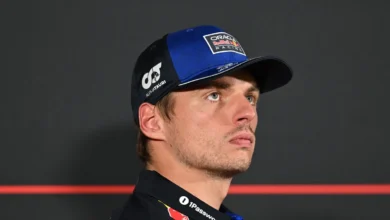
"When I look at it from my racer heart, no," he stated. "When you look at it as a show, spectacle, yes. I’ve enjoyed my repassing and everything, but I prefer to look at it with my racing heart."
This distinction is significant. For the fans, the constant overtaking and uncertainty provided a thrilling spectacle, fitting for a venue as extravagant as Las Vegas. For the driver, however, the race was an exercise in frustration. The inability to truly break away from the pack meant that the race felt like "cruising" in a controlled environment, where the outcome was determined more by the mathematical application of energy deployment than by the driver’s ability to maximize vehicle dynamics in isolation.
Verstappen noted that his physical stress levels remained surprisingly low throughout the encounter. "Even my heart rate, I was not nervous at all because, I don’t know, it just felt kind of cruising out there, just trying to press the battery whenever it was correct or defend. But for the show, when you look at it from the outside, probably yes, you like it."
Broader Implications for the 2024 Championship
While the 2024 Drivers’ Championship has been decided—with Mercedes’ Kimi Antonelli securing the title at the Mexican Grand Prix—the battle for the remaining spots in the top five remains intensely competitive. The Las Vegas result has significant ramifications for the standings as the sport heads toward the season finale in Qatar.
Verstappen currently sits second in the drivers’ standings, holding a 37-point advantage over Lewis Hamilton, who sits in third. The scrap for fourth and fifth place is even more congested, with George Russell and Lando Norris tied on 264 points apiece. Every point earned on the streets of Las Vegas serves as a critical buffer for these drivers as they look to conclude their campaigns on a high note.
The implication for the FIA and Liberty Media is clear: the Las Vegas circuit successfully delivers on its primary objective of being a "show." The layout promotes close-quarters racing, ensuring that the television product remains competitive from start to finish. However, the feedback from drivers like Verstappen suggests that there may be a growing desire for circuits that reward traditional racing craft—such as tire management over long stints and high-speed cornering performance—over the energy-management-heavy style seen in Nevada.
Future Perspectives on Street Circuit Racing
As Formula 1 continues its expansion, the success of the Las Vegas model provides a template for future street circuits. The integration of high-speed sections with heavy braking zones creates a environment where the DRS effect is magnified, ensuring that the field remains tight. However, the sport must balance this against the input of the competitors, who are increasingly wary of "artificial" racing environments.
For now, the paddock looks toward Qatar. With the championship pressure off the leaders, the focus shifts to the constructors’ battle and the final positioning of the individual drivers. Verstappen, having secured his 75th win, continues to demonstrate that even when the racing feels like a simulation, his ability to manage the variables of a complex race remains unrivaled.
The 2024 season has been defined by its technological complexity, and the Las Vegas Grand Prix stands as the ultimate case study in that theme. Whether one views it as a triumph of modern entertainment or a departure from the traditional roots of motorsport, the event succeeded in keeping the global audience engaged, providing a spectacle that will likely be debated for seasons to come. As the circus moves on, the "Mario Kart" reality of Las Vegas serves as a reminder that in the modern era of Formula 1, victory is as much about managing the data on the steering wheel as it is about the skill of the driver behind it.
Related posts: