Focker-In-Law is a legacy sequel that attempts to resurrect a dormant comedy franchise by balancing nostalgia with new star power.

The return of the Meet the Parents franchise marks a significant moment in Hollywood’s current trend of mining early 2000s intellectual property for modern audiences. Twenty-six years after the original 2000 film first introduced audiences to the high-anxiety dynamic between Greg Focker and his formidable father-in-law, Jack Byrnes, the franchise has returned with Focker-In-Law. Directed by John Hamburg—who served as a writer on the original trilogy—the film reunites Ben Stiller and Robert De Niro, attempting to capture the lightning-in-a-bottle chemistry that defined a generation of studio comedies. However, the release arrives at a time when the landscape of comedy cinema has shifted considerably, raising questions about whether the slapstick-heavy formula of the early millennium still holds cultural resonance.
A Chronological Evolution of the Focker Franchise
The history of the franchise is a study in diminishing critical returns despite consistent commercial viability. The 2000 original, Meet the Parents, was a critical and commercial triumph, grossing over $330 million worldwide against a $55 million budget. It served as a pivotal career moment for Robert De Niro, who successfully pivoted from prestige dramas to mainstream comedic roles. The success necessitated two sequels: 2004’s Meet the Fockers and 2010’s Little Fockers.
While Meet the Fockers remains one of the highest-grossing comedies of the decade, the third installment, Little Fockers, suffered a stark decline in critical reception, culminating in a 10 percent approval rating on Rotten Tomatoes. Following the release of the third film, the franchise entered a sixteen-year hiatus, during which the original cast moved toward independent projects, television, and, in some cases, semi-retirement from the genre. The announcement of Focker-In-Law represents the first formal attempt to bridge this sixteen-year gap, placing the characters in a contemporary setting where the original protagonist, Greg, must now navigate his own role as a father and future father-in-law.
Narrative Shift and Character Dynamics
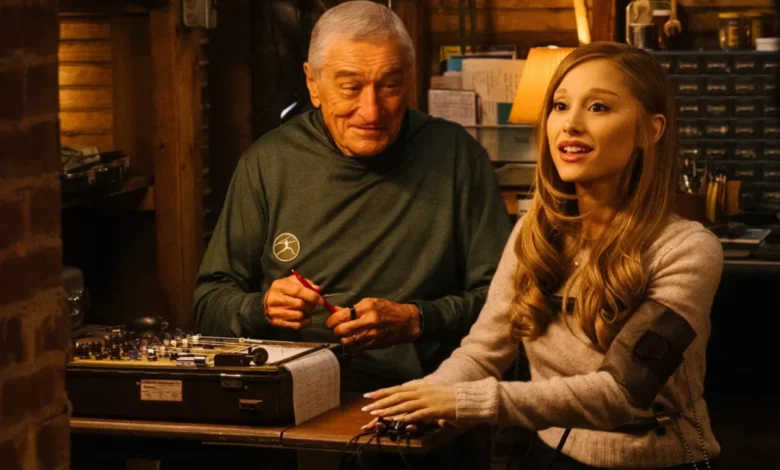
In Focker-In-Law, the narrative structure mirrors the 2000 original, albeit with a reversal of power dynamics. Greg Focker, now a doting father to two adult children, finds himself on the other side of the scrutiny he once endured. The central conflict arises when his son, Henry (played by Skyler Gisondo), brings his new girlfriend, Olivia (Ariana Grande), to meet the family for Jack Byrnes’ birthday.
Olivia is depicted as a life coach and former FBI hostage negotiator, a background that positions her as a tactical match for Jack’s legendary paranoia. Unlike the original film, where Greg was the target of Jack’s suspicion, here the tension is inverted: Greg becomes the suspicious party, attempting to derail Henry’s potential proposal. This shift was intended to provide a fresh perspective on the "meeting the parents" trope. However, the film opts to lean into the familiar slapstick mechanics that characterized the earlier entries, often prioritizing physical comedy over character evolution.
The casting of Ariana Grande, fresh off her performance in the film adaptation of Wicked, serves as the production’s primary attempt to modernize the cast. Grande’s ability to oscillate between a grounded straight-woman role and the chaotic energy required for the franchise’s signature set-pieces is noted as a highlight of the film’s execution. Her chemistry with Ben Stiller provides the core of the film’s momentum, functioning as a foil to the more static, albeit classic, performance of Robert De Niro.
Production Notes and Casting Anomalies
The production of Focker-In-Law was marked by notable absences, most significantly the exclusion of Barbra Streisand and Dustin Hoffman. The pair, who portrayed Greg’s eccentric parents in the previous two films, were instrumental to the comedic tone of the sequels. Industry reports following the 2010 release of Little Fockers suggested significant friction regarding compensation, and their absence in the new film is addressed via perfunctory dialogue in the opening act.
Furthermore, the film features a cameo from Owen Wilson, reprising his role as Kevin Rawley. This inclusion appears to be a direct appeal to the franchise’s established fanbase, though it remains a peripheral element of the broader narrative. New cast members include Beanie Feldstein, playing Greg’s daughter, and Eduardo Franco, who assumes the role of a boundary-pushing romantic interest. Their inclusion suggests an attempt to appeal to a younger demographic, though the heavy reliance on legacy characters keeps the film tethered to its 2000s roots.
Analysis of the Legacy Sequel Model
The "legacy sequel"—a film released decades later that features original cast members while introducing a new generation—has become a standard industry practice. However, the success of this model is predicated on the ability to update the central themes for a modern audience.
From a critical standpoint, Focker-In-Law highlights the risks of this model. By adhering strictly to the beats established in the original 2000 film, the production risks appearing derivative. Data suggests that audiences for legacy sequels often seek the comfort of the original tone, yet the industry standard for comedy has evolved toward more nuanced, character-driven storytelling rather than the broad, physical gags that defined the early Meet the Parents films.
The film’s performance at the box office will likely serve as a litmus test for the viability of late-period comedy revivals. While the nostalgia factor is a significant draw, the sixteen-year gap creates a disconnect between the current comedy climate and the film’s tonal identity. For viewers who grew up with the original trilogy, the film offers a sense of continuity; for younger audiences, the reliance on the original’s formula may prove less compelling.
Broader Implications and Cultural Context
The release of Focker-In-Law arrives at a time when the traditional "mid-budget studio comedy" is increasingly rare in the theatrical market. The industry has shifted toward high-concept blockbusters or streaming-exclusive content. The decision to release this film in cinemas signals a gamble by the studio that the brand equity of the Meet the Parents series remains strong enough to drive ticket sales in a crowded market.
Furthermore, the film’s focus on the intergenerational conflict between Greg and his children reflects a broader societal interest in the "parental experience" as characters age. However, critics have noted that the film avoids deeper exploration of these themes, opting instead to recycle the "assault course" of hijinks that served as the backbone of the previous films.
In terms of production standards, the film maintains the high technical quality associated with the series. The cinematography and editing are polished, reflecting the increased budgets and technological advancements in film production since 2010. Yet, the core conflict—the struggle for approval within a high-stakes family environment—remains unchanged.
As the industry moves forward, Focker-In-Law stands as a definitive example of the "nostalgia-first" approach. Whether this strategy will yield a sustainable future for the franchise or serve as a final capstone to the series remains to be determined by initial weekend returns and long-term audience engagement. For now, the film remains a testament to the enduring popularity of its leads, even as the genre itself struggles to find a new identity in the modern era.
Ultimately, the production serves as a mirror to its own history. Just as Greg Focker attempted to impress his father-in-law for years, the film itself seems to be attempting to justify its own existence to a fanbase that has evolved over two decades. Whether the effort is seen as a welcome reunion or an unnecessary extension of a finished story will be the primary metric for its success. The reliance on established formulas ensures a baseline of fan service, but the lack of significant thematic innovation suggests that the franchise is firmly rooted in the past, rather than looking toward a new, distinct future.
Related posts: