
Bullish Bets Surge Asian Currencies Us China Thaw Trade Deals Rattle Dollar
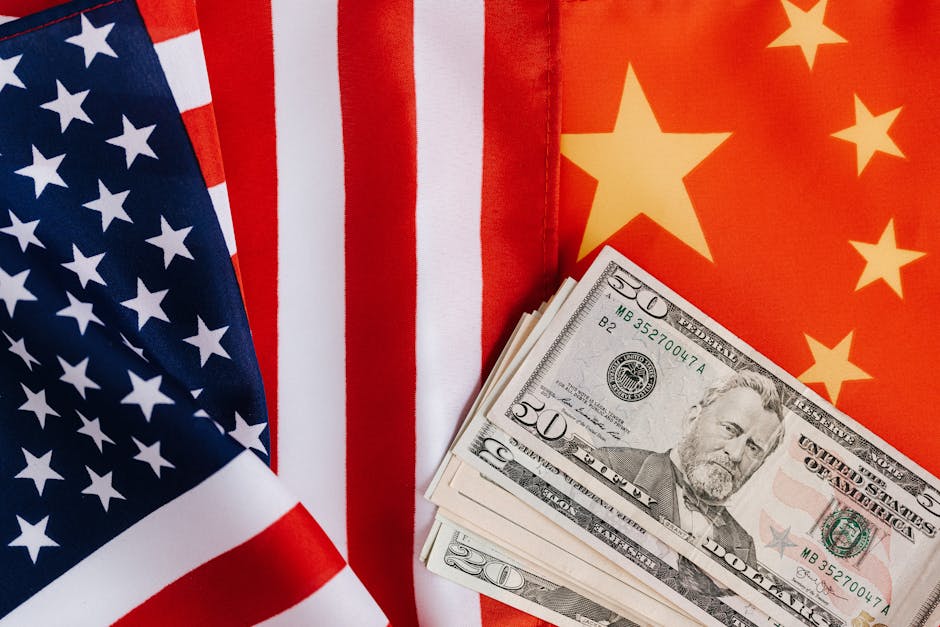
Bullish Bets Surge on Asian Currencies as US-China Thaw Ignites Trade Deal Speculation, Rattling the Dollar
The global financial landscape is witnessing a significant shift as investors increasingly flock to Asian currencies, driven by escalating optimism surrounding a potential US-China trade détente. This surge in bullish sentiment, fueled by a series of diplomatic overtures and hints of renewed trade discussions between the two economic behemoths, is actively undermining the US dollar’s dominance. Analysts point to a palpable recalibration of risk appetite, with emerging Asian markets now presenting a more attractive proposition than traditional safe-haven assets. The narrative is clear: a thawing in US-China relations promises to unlock pent-up trade flows, boost economic activity across Asia, and consequently, strengthen the currencies of countries poised to benefit from this renewed engagement. This isn’t merely a speculative blip; it represents a fundamental re-evaluation of global economic dynamics, with profound implications for currency markets, investment strategies, and geopolitical stability. The implications are multifaceted, encompassing a revitalized export sector for many Asian nations, increased foreign direct investment, and a potential rebalancing of global supply chains away from a protracted period of tension. The market is pricing in a scenario where tariffs are eased, trade barriers are lowered, and a more predictable, collaborative economic environment emerges, all of which are profoundly bullish for the Asian bloc.
The recent flurry of diplomatic activity has been the primary catalyst for this pronounced shift in investor sentiment. High-level meetings between US and Chinese officials, previously strained by escalating trade disputes and geopolitical friction, have seen a marked improvement in tone and substance. While concrete trade deal agreements are yet to be formally announced, the willingness of both sides to re-engage in substantive dialogue has been interpreted as a strong signal of a desire to de-escalate tensions. This renewed focus on diplomatic solutions, rather than confrontational stances, has injected a significant dose of optimism into the market. Previously, the pervasive uncertainty surrounding US-China trade policy had cast a long shadow over global economic prospects, prompting a flight to safety, predominantly into the US dollar. However, this latest development suggests a pivot towards a more collaborative approach, which is inherently positive for global trade and, by extension, for countries that are integral to global supply chains. The market is reacting to the promise of a thaw, even in the absence of finalized agreements, recognizing that the direction of travel is now demonstrably more constructive. This shift in perception is crucial, as markets often move in anticipation of future events, and the current sentiment strongly favors a more open and integrated global economy.
The implications for Asian economies are profound and far-reaching. A reduction in US-China trade tensions is expected to unlock significant trade flows, benefiting export-oriented economies across the region. Countries like South Korea, Taiwan, Singapore, and Vietnam, which are deeply integrated into global supply chains and have historically been significant trading partners with both the US and China, are prime beneficiaries. For instance, a decrease in tariffs on Chinese goods entering the US would not only boost Chinese exports but also stimulate demand for intermediate goods and components sourced from other Asian nations. Similarly, a more stable geopolitical environment would encourage foreign direct investment into the region, as companies seek to diversify their manufacturing bases and capitalize on growing consumer markets. The renewed predictability in trade relations is crucial for businesses that have been hesitant to make long-term investment decisions amidst the uncertainty of trade wars. This renewed confidence is likely to translate into increased industrial output, job creation, and ultimately, stronger economic growth across Asia. The potential for a more harmonious trade relationship between the world’s two largest economies is the bedrock upon which this bullish case for Asian currencies is built.
Consequently, Asian currencies are experiencing a significant uptick in investor interest. The South Korean Won (KRW), the Taiwanese Dollar (TWD), and the Singapore Dollar (SGD) have all shown robust gains against the US dollar. This appreciation reflects a confluence of factors: increased foreign capital inflows seeking higher returns, a reduction in perceived country-specific risk, and the anticipation of stronger economic performance. Investors are actively reallocating capital from perceived safe havens towards assets that offer greater growth potential. The narrative of a "decoupling" that dominated recent years is now being replaced by one of "re-coupling" and economic integration, which is inherently beneficial for emerging markets. The currencies are not just appreciating in nominal terms; they are also strengthening in real terms as inflation in these economies remains relatively subdued compared to some Western counterparts, further enhancing their attractiveness. The market is demonstrating a clear preference for dynamism and growth over the perceived stability of the greenback in this new economic paradigm. This isn’t a subtle shift; it’s a pronounced move by global capital.
The US dollar, in contrast, is facing headwinds. The perceived reduction in global economic uncertainty, coupled with the prospect of increased capital flowing out of the US towards more dynamic Asian markets, is weighing on the greenback. Historically, periods of geopolitical and economic turmoil have seen the US dollar strengthen as investors sought refuge. However, the current scenario presents a reversal of this trend. As the prospect of a trade war recedes, the appeal of the US dollar as a safe haven diminishes. Furthermore, if the Federal Reserve signals a less hawkish stance on interest rates compared to the prospect of economic expansion in Asia, this could further pressure the dollar. The narrative of dollar exceptionalism is being challenged by a more diversified and interconnected global economic outlook. Investors are no longer solely reliant on the US as the primary engine of global growth and stability. The dollar’s strength has often been a function of global weakness and uncertainty, and with a more optimistic outlook emerging, its traditional role is being re-evaluated.
The speculative bets are evident in the surge of trading volumes and options activity in Asian currencies. Hedge funds and institutional investors are actively positioning themselves for further appreciation. This includes a build-up of long positions in currencies like the KRW, TWD, and SGD, and a corresponding reduction in dollar holdings. The options market, in particular, is showing a significant increase in demand for bullish call options on these Asian currencies, indicating strong expectations of further price appreciation. This speculative surge, while often a leading indicator, also has the potential to become a self-fulfilling prophecy, further driving up demand and prices. The sheer scale of capital re-allocation suggests that this is more than just a short-term trade; it reflects a strategic repositioning of portfolios in anticipation of a sustained period of positive developments for Asian economies. The market is not just reacting; it’s actively participating in shaping this new economic reality.
Beyond the immediate trade implications, the US-China thaw also signals a potential shift in broader geopolitical dynamics. A more cooperative relationship between the two global powers could lead to a reduction in broader geopolitical risks, which have also been a significant factor supporting the US dollar. A more stable international environment would further encourage investment in emerging markets, including those in Asia. This multifaceted optimism, encompassing both economic and geopolitical factors, is creating a powerful tailwind for Asian currencies. The reduction of tensions is not confined to trade tariffs; it can also extend to areas like technology transfer, intellectual property rights, and investment restrictions, all of which can further boost economic confidence and capital flows into Asia. The interconnectedness of economic and geopolitical stability means that progress on one front often has positive spillover effects on the other.
However, it’s crucial to acknowledge that the path forward is not without potential obstacles. The success of this bullish narrative hinges on the sustained commitment of both the US and China to de-escalate tensions and implement tangible trade agreements. Any backtracking or renewed escalation in rhetoric could quickly reverse the current trend. Furthermore, internal economic challenges within specific Asian countries, such as inflation concerns or domestic political instability, could still impact their respective currencies. The global economic environment remains dynamic, and unforeseen shocks can always emerge. Nevertheless, the current momentum suggests a significant shift in investor perception and capital allocation, driven by the tangible prospect of a more cooperative and prosperous global trading environment. The market is optimistic, but prudent investors will remain vigilant for signs of any deviation from this positive trajectory.
The impact on global trade patterns is expected to be substantial. A more open trade environment between the US and China will likely lead to a recalibration of global supply chains. Companies that have been diversifying away from China due to trade tensions may now reconsider their strategies, leading to increased intra-Asian trade and a potential reduction in the "China plus one" diversification trend, at least in its most aggressive form. This could benefit countries that serve as crucial nodes in these regional supply chains. The intricate web of global manufacturing and commerce is in a constant state of flux, and the current US-China détente represents a significant force for reordering these dynamics. The benefits of reduced friction are not limited to bilateral trade; they ripple outwards, impacting numerous economies that rely on the smooth functioning of global commerce.
The implications for central banks across Asia are also noteworthy. As their currencies strengthen, central banks may face decisions about intervention. While appreciation is generally seen as positive, excessive volatility or a pace of appreciation that could hurt export competitiveness might prompt intervention. However, with a strong bullish sentiment, the focus for many central banks might be on managing potential inflationary pressures arising from increased import demand and robust economic activity, rather than directly intervening to curb currency strength. This shift in focus reflects the underlying economic health and positive outlook for the region.
In conclusion, the surge in bullish bets on Asian currencies is a direct consequence of the perceived US-China trade détente. This development has rattled the US dollar and signaled a significant recalibration of global risk appetite, with investors favoring the growth prospects and increased stability offered by Asian economies. While risks remain, the current trajectory points towards a more integrated and cooperative global trading environment, with profound implications for currency markets and the broader global economy. The narrative has definitively shifted, and capital is following suit.
