Northrop Grumman’s Robotic Servicing Vehicle Ushers in New Era of Space Operations in Geosynchronous Orbit

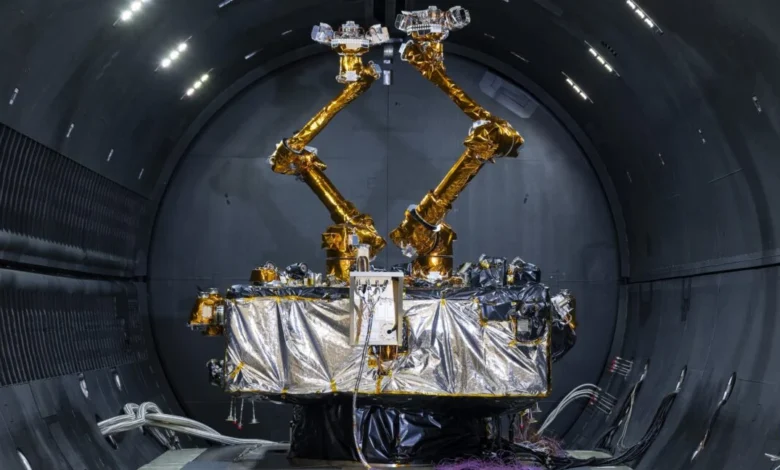
A groundbreaking spacecraft, equipped with two advanced flexible robotic arms, has successfully embarked on its journey to geosynchronous orbit following its launch earlier this week aboard a SpaceX Falcon 9 rocket. This ambitious endeavor marks the beginning of a planned decade-long mission set to redefine satellite servicing, extending the operational lives of critical orbital assets and offering unprecedented flexibility in space infrastructure management.
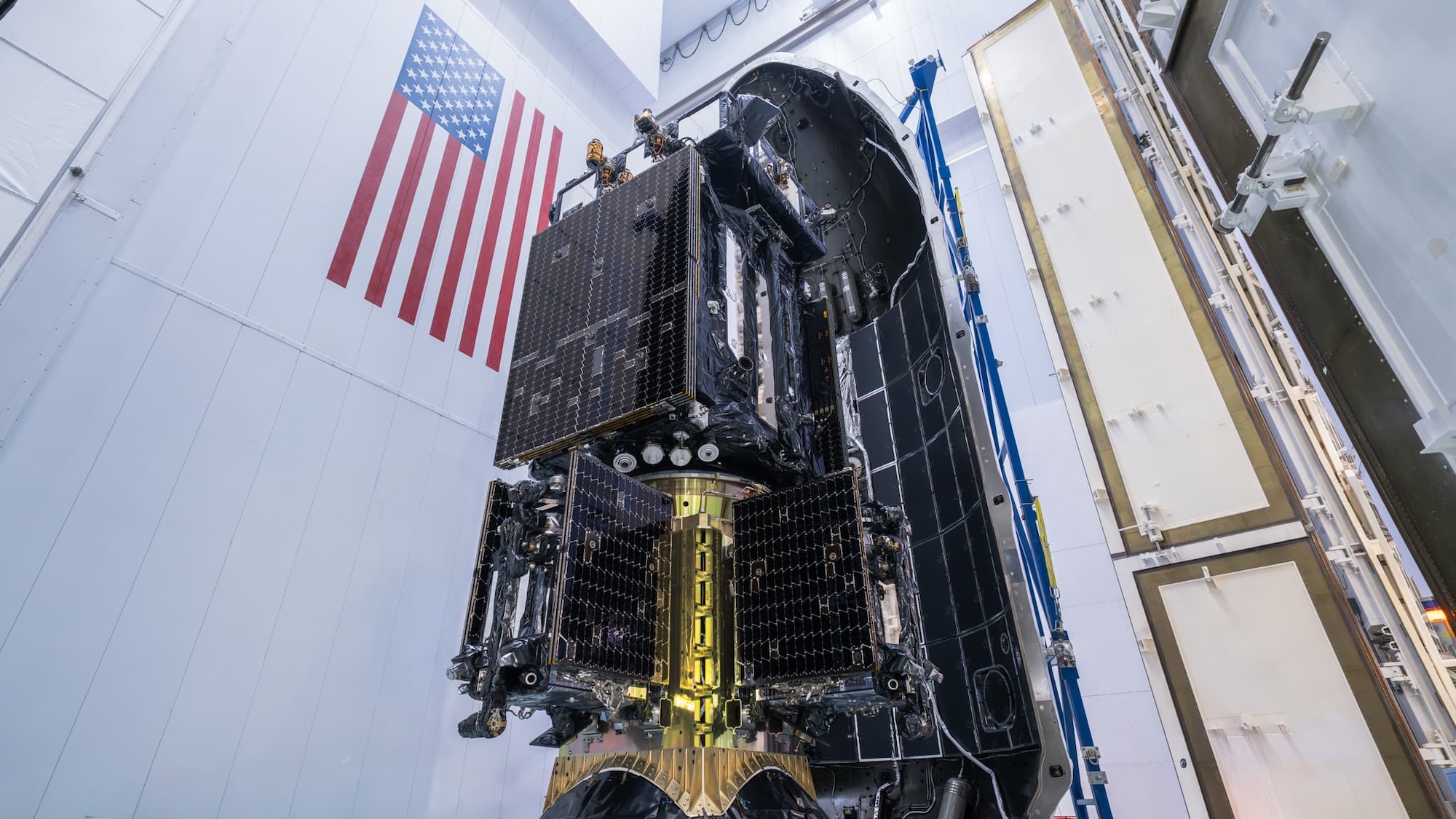
The Mission Robotic Vehicle (MRV), developed and owned by Northrop Grumman, soared into orbit from Cape Canaveral Space Force Station in Florida on Tuesday. Accompanying the MRV were three compact propulsion pods, known as Mission Extension Pods (MEPs), each designed to function as a standalone spacecraft. All four payloads were precisely deployed by the Falcon 9 within approximately an hour of liftoff. The satellites now face a roughly year-long transit from their initial elliptical drop-off orbit to their operational circular orbit, situated more than 22,000 miles (approximately 35,786 kilometers) above the Earth’s equator. At this critical altitude, the MRV and its accompanying MEPs will achieve geosynchronous orbit, matching Earth’s rotation and operating in the same domain as a vast array of civilian and military communications satellites, vital missile warning platforms, and an increasing number of reconnaissance satellites. This intricate maneuver will set the stage for the true operational phase of the mission, where the MRV’s robotic capabilities will be put to the test.
A New Frontier in On-Orbit Servicing Technology
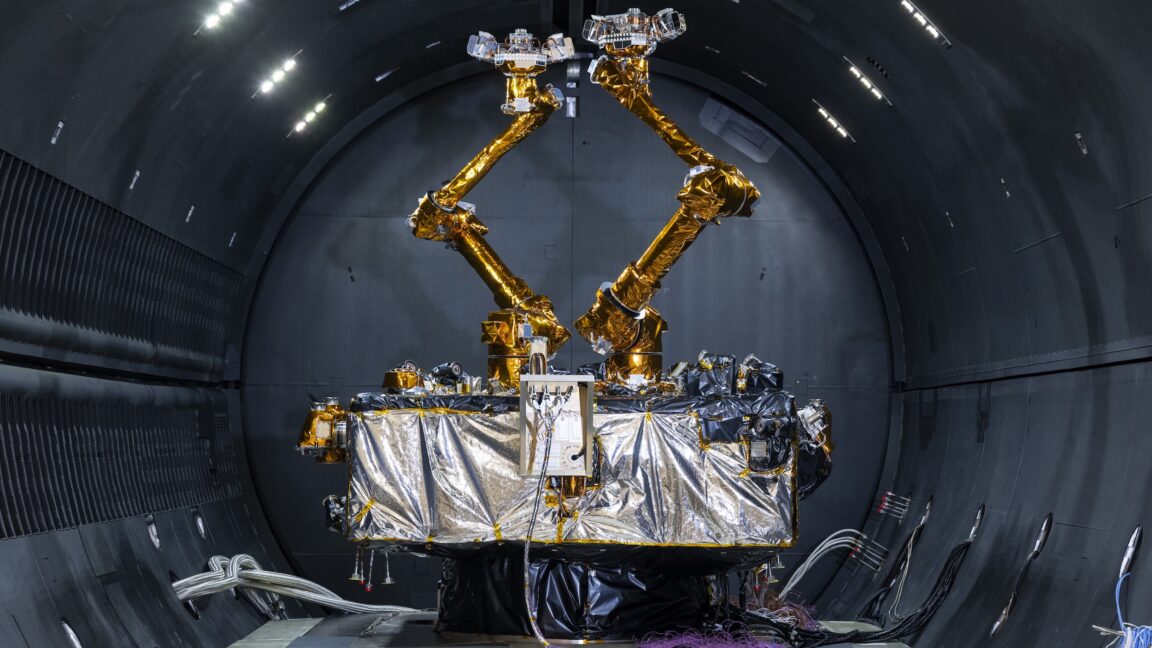
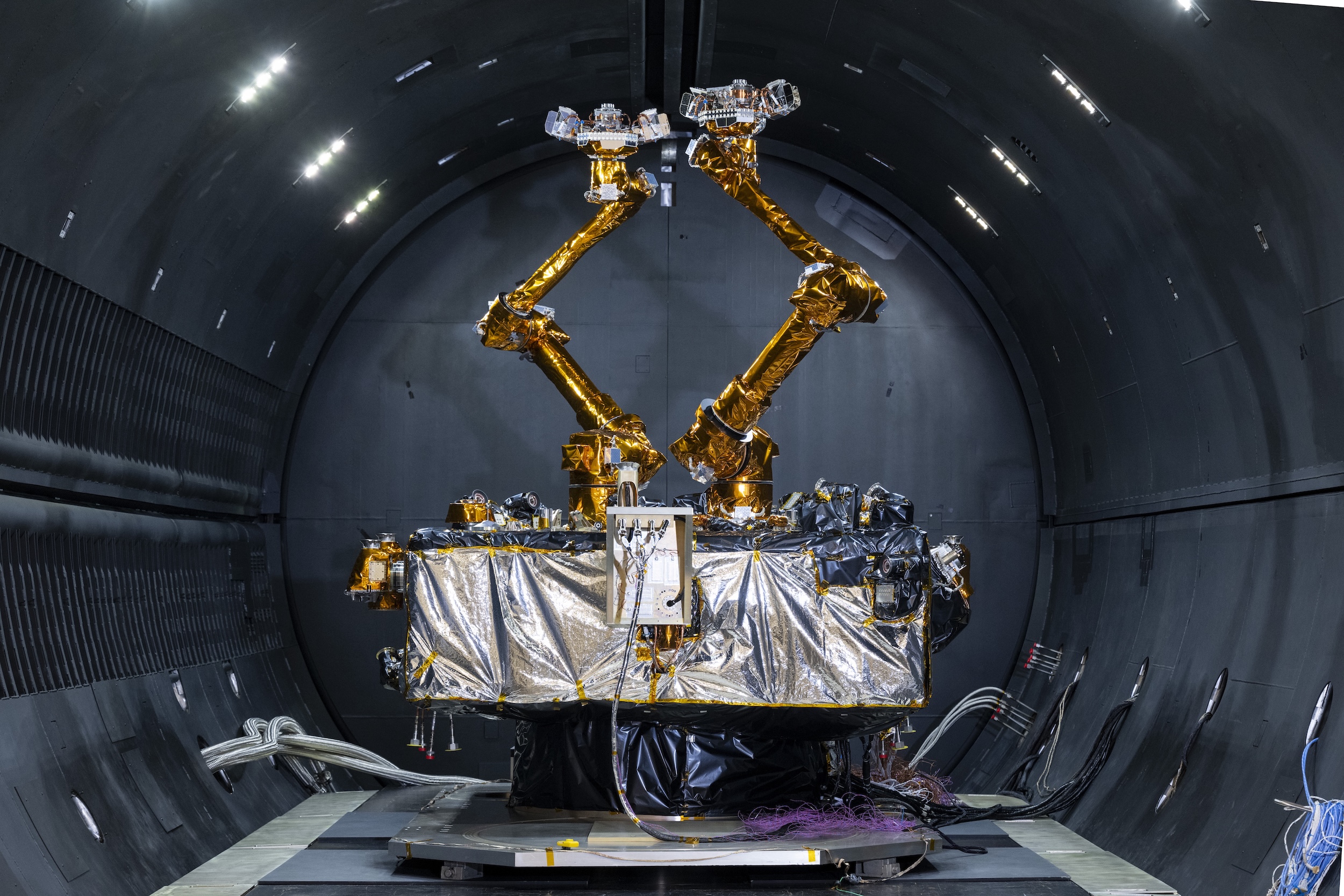
The Mission Robotic Vehicle represents a significant leap forward in satellite servicing capabilities, arguably standing as the most advanced servicing satellite ever launched into space about which detailed information is publicly available. Its sophistication is underscored by the dual robotic arms, designed for intricate maneuvers and the installation of critical components.
The lineage of on-orbit servicing, while nascent, has seen several notable predecessors. China, for instance, launched a satellite equipped with a robotic arm into geosynchronous orbit in 2016. A subsequent launch in 2021 deployed the Shijian-21 (SJ-21) spacecraft, which was described as undertaking a "space debris mitigation" mission. SJ-21 demonstrated a significant capability by linking up with a defunct Chinese navigation satellite and subsequently moving it to a higher "graveyard" orbit for disposal, before returning to the active geosynchronous belt. More recently, in January 2025, China launched the SJ-25 refueling mission, which successfully docked with SJ-21 a few months later. This marked what appears to be the first refueling demonstration conducted so far from Earth, a feat that is expected to considerably extend SJ-21’s operational life and enhance its potential to visit and reposition other satellites in geosynchronous orbit. These Chinese advancements have underscored the strategic importance of on-orbit capabilities and spurred further development in the United States and other spacefaring nations.
Northrop Grumman, through its subsidiary SpaceLogistics, shares similar aspirations for the Mission Robotic Vehicle. The company’s vision extends beyond mere life extension to encompass a full spectrum of on-orbit interventions. This capability carries clear military implications, a point not lost on U.S. defense officials. General Stephen Whiting, head of U.S. Space Command, informed Congress last year about China’s development of "on-orbit, maneuverable counterspace satellites to target our satellites using dual-use technologies." He specifically cited SJ-21 as an example of a mission that China could potentially leverage "for offensive purposes against satellites we rely on to defend the homeland and project power."
The U.S. Space Force already operates a fleet of inspector satellites in geosynchronous orbit, tasked with observing and reporting on the activities of foreign spacecraft. One such inspector satellite was notably maneuvered near the SJ-21 and SJ-25 satellites during their refueling operation last year, highlighting the close monitoring of these developments. However, until the launch of Northrop Grumman’s MRV, U.S. military officials had not publicly acknowledged any U.S.-owned satellite possessing comparable capabilities to China’s Shijian trio. This mission changes that dynamic, openly demonstrating a sophisticated U.S. on-orbit servicing asset.
A Decade in the Making: Public-Private Partnership Drives Innovation
The development of the MRV is a testament to a significant public-private partnership. The Pentagon’s Defense Advanced Research Projects Agency (DARPA) invested approximately $420 million into the development of the satellite’s advanced robotics payload, a substantial commitment complemented by hundreds of millions of dollars invested by Northrop Grumman itself. This collaborative effort merged Northrop Grumman’s existing commercial satellite servicing program with DARPA’s Robotic Servicing of Geosynchronous Satellites (RSGS) program, which had initially operated independently.
DARPA’s involvement in space robotics dates back over two decades. The agency first funded the U.S. Naval Research Laboratory (NRL) for space robotics research in 2002, beginning with a small study for a concept known as "RescueSat." The RSGS program can trace its direct lineage back to this early initiative. DARPA formally established the RSGS program in 2015, building upon the foundational robotics work already underway at NRL. Initially, Maxar (now Lanteris Space Systems) was selected as DARPA’s partner for the RSGS program. However, Maxar withdrew, and Northrop Grumman stepped in to replace them in 2020, bringing its own extensive experience in satellite operations.
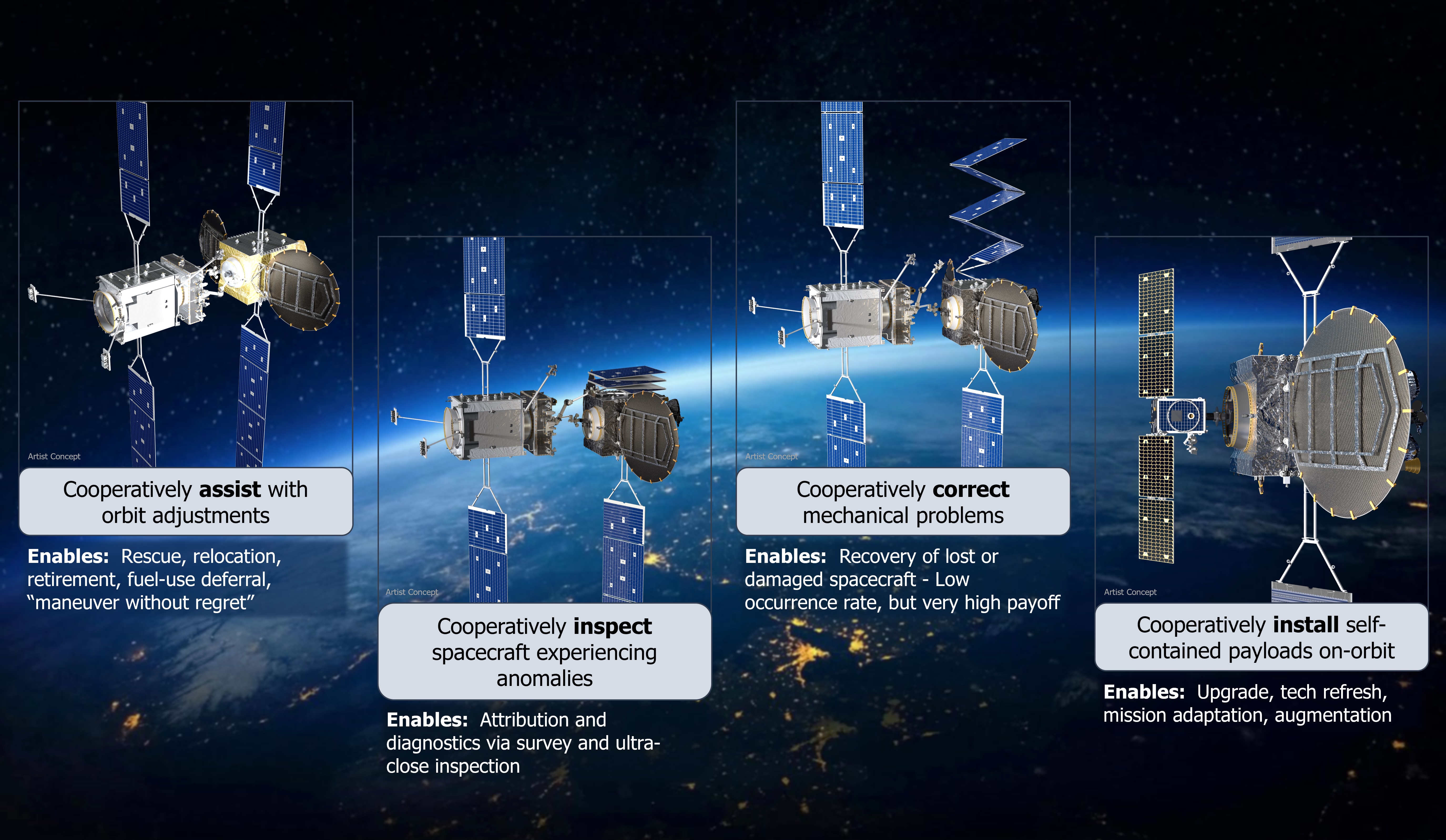
Northrop Grumman had previously developed and launched two Mission Extension Vehicles (MEVs) in 2019 and 2020. These MEVs successfully docked with aging commercial communications satellites in geosynchronous orbit, effectively taking over their pointing and orbit control functions, thereby extending their operational lives. The MRV builds upon this proven MEV concept, but with a critical enhancement: the DARPA-funded robotic arms. This innovation means the new servicer is not committed to a single client. Instead, it can utilize its robotic arms to install Northrop’s Mission Extension Pods (MEPs) on multiple geosynchronous satellites, dramatically increasing its versatility and economic efficiency.
While not a direct refueling mission, the MRV achieves a similar end by providing propulsion and extending operational life. It’s important to note that the Space Force has a separate contract with Astroscale, a company poised to demonstrate refueling in geosynchronous orbit next year, a capability not yet achieved by any U.S. entity. Beyond life extension, the MRV’s capabilities are far-reaching. It can inspect, service, upgrade, or even repair satellites that were never originally designed for such intervention, opening up a new paradigm for space asset management.
Engineering Challenges and Autonomous Operation
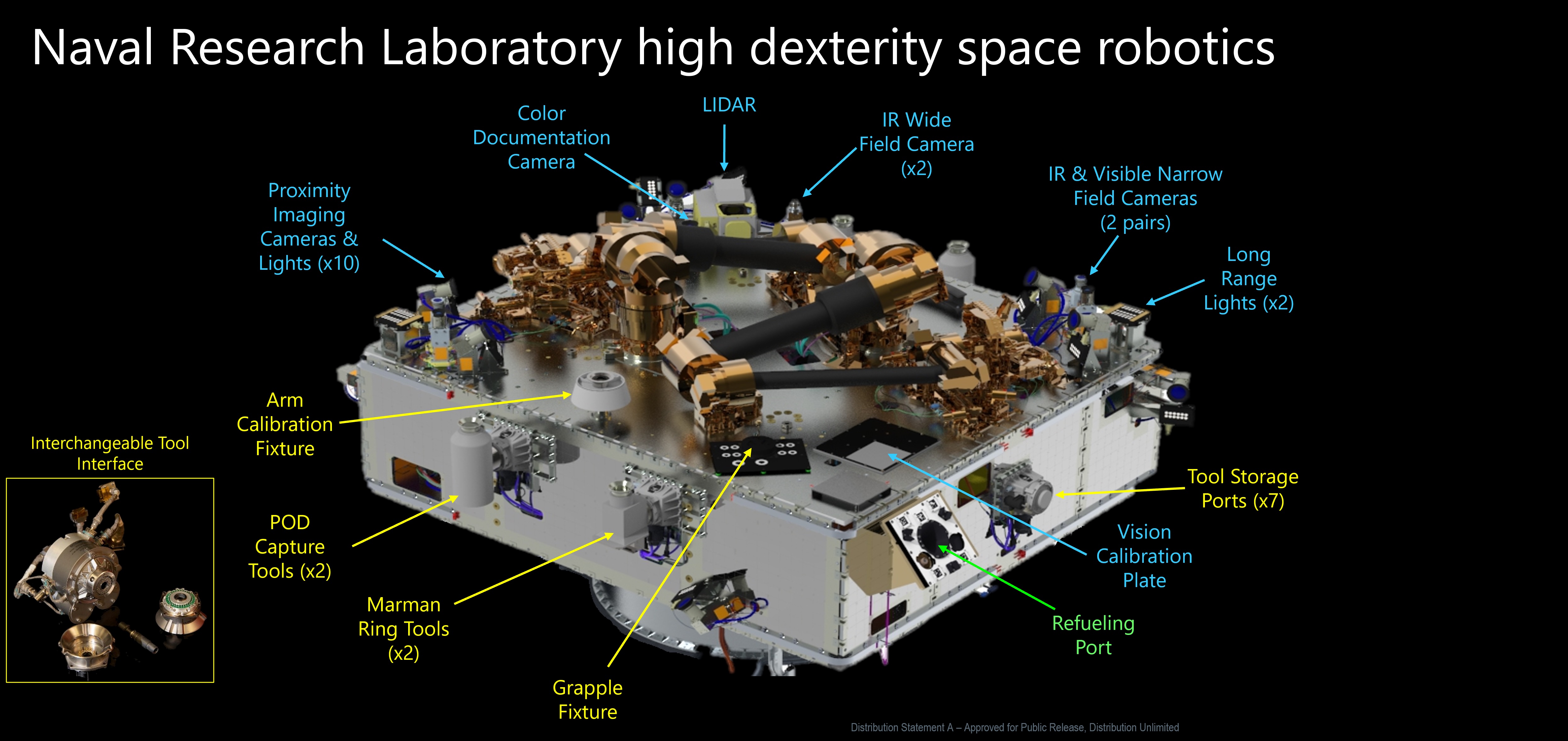
The Naval Research Laboratory (NRL), in partnership with DARPA, was instrumental in developing the RSGS robotics payload. This system, the culmination of more than two decades of development, was engineered to meet stringent Defense Department reliability standards, incorporating redundant robotic arms, advanced avionics, and robust mission control systems. Crucially, the RSGS payload features sophisticated cameras and sensors, enabling the MRV to autonomously approach, inspect, capture, and upgrade client satellites, even those not initially designed for such "visitors."
Bernard Kelm, acting director of NRL’s Naval Center for Space Technology, emphasized the monumental effort behind the mission, stating, "This journey to the launch pad represents the culmination of a multiple decades-long endeavor of vision, risk, and relentless engineering." Kelm further highlighted the mission’s transformative potential: "RSGS is designed to permanently change this ‘launch-and-abandon’ archetype. The RSGS program shifts this paradigm by enabling on-orbit interventions, including inspections, mechanical anomaly resolution, satellite relocation and upgrades."
The challenges of operating such a complex robotic system in the unforgiving environment of space are substantial. Engineers extensively tested the robotic arms on Earth, accounting for gravity. However, in microgravity, the dynamics are entirely different. Jim Shoemaker, RSGS program manager at DARPA, explained, "Inertia operates differently in space. When you move the arm one direction, the entire satellite wants to rotate the opposite direction, so every motion of the arms has to be compensated by the control system to keep the satellite in the same position, which is fairly complicated." He added, "And then, when you attach yourself to another satellite, you change the dynamics completely because you’ve doubled the mass and the dimensions, and so your control system has to be able to adapt to that new configuration. These are things that tend to be really hard."
The MRV’s robotic arms are not limited to manipulating propulsion modules. Their hands are designed to accommodate various tools. The mission launched with two "pod capture tools" for grappling MEPs or any object equipped with a grapple fixture. Additionally, the MRV carries two "Marman ring" tools, enabling the servicing spacecraft to directly grasp client satellites if necessary. This versatility is a hallmark of the system, setting it apart from previous, more specialized servicing missions. "RSGS has full seven-degree-of-freedom robotic arms, heavily instrumented. The ends of the arms can attach multiple tools as hands, and they also have a good deal of autonomous control," Shoemaker stated, underscoring the system’s "general-purpose, high-dexterity robotics."
From Demonstration to Operational Service
NASA’s Goddard Space Flight Center also contributed its significant engineering expertise to the RSGS program, particularly after NASA canceled its own multi-billion dollar robotic satellite servicing mission in 2024. NASA’s support included the development of dynamic simulation and analysis tools, rigorous software verification, and providing a team of flight robot operators to assist ground controllers during the intricate mission operations. This cross-agency collaboration highlights the national importance placed on developing these capabilities.
Northrop Grumman and SpaceLogistics have not publicly identified the first satellite slated for service by the MRV. However, commercial agreements are already in place with two major communications satellite operators, SES and Optus, for the installation of MEPs on their spacecraft. Furthermore, the U.S. Space Force is also expected to leverage the MRV to service at least one of its critical satellites, underscoring the dual-use nature of this technology for both commercial and national security applications.
Upon launch, Northrop Grumman assumed ownership of the government-funded robotics payload. However, the company is contractually obligated to provide DARPA with comprehensive information regarding the mission’s performance through its initial servicing call. "After they finish that demonstration, DARPA, the government, is sort of out of the driver’s seat because that’s when we really hand things over," Shoemaker clarified. Following this initial phase, the Space Force will transition into DARPA’s role as the government partner, contracting with Northrop Grumman for services as needed. Northrop Grumman will retain ownership of the satellite and its payload, remaining responsible for day-to-day operations for its projected 10-to-13-year lifespan. This arrangement allows the U.S. government to benefit from on-orbit servicing capabilities without incurring the long-term operational costs.
The Future of Space Logistics and Sustainability
The MRV’s adaptability is a key differentiator. Ground teams can manufacture and launch additional MEPs to rendezvous with the MRV in geosynchronous orbit after the initial three pods are deployed. Future launches could also carry new specialized tools, such as a knife, a cutter, or a robotic screwdriver, enabling more invasive servicing or complex repairs. The MRV itself is designed for in-orbit refueling, ensuring its longevity and continued utility. While Northrop Grumman does not currently plan to immediately build a second MRV, the company is committed to continuously upgrading and augmenting the capabilities of the vehicle it just launched, ensuring its relevance in a rapidly evolving space environment.

Beyond immediate servicing and life extension, the MRV could enable a transformative era in orbital logistics. The spacecraft could theoretically become an integral part of a sophisticated logistics train in geosynchronous orbit. A dedicated depot spacecraft, such as Northrop Grumman’s own ROOSTER satellite platform or Blue Origin’s Blue Ring, could be launched with a cache of prepositioned spare parts, new payloads, and advanced sensors. The MRV could then retrieve these assets and transport them to client satellites that require upgrades or repairs, creating a dynamic and responsive in-space supply chain.
The focus on geosynchronous orbit for this advanced servicing mission is strategic. GEO is home to some of the military’s most expensive and critical multi-billion-dollar satellites. These spacecraft are often unique or operate in small, irreplaceable fleets. Despite the vast distance from Earth, their high value makes them particularly vulnerable to attack or malfunction. In contrast, satellites in low-Earth orbit (LEO), just a few hundred miles above the planet, are frequently part of large, proliferated constellations like SpaceX’s Starlink. With some exceptions, LEO military and commercial satellites are generally less expensive and easier to replace than their GEO counterparts. However, the burgeoning LEO economy also presents future opportunities for refueling and servicing. NASA, for instance, signed a contract last year with Katalyst Space Technologies, a satellite manufacturing startup, to reboost one of its astronomy satellites in LEO, a mission that launched last month and is now in pursuit of its client.
Looking ahead, SpaceX is planning the most ambitious refueling demonstration in history with its Starship rocket, aiming to transfer cryogenic propellants between Starships in LEO. This precursor experiment, potentially occurring late this year or next year, is crucial for future large-scale refueling sorties to support Moon landings for NASA’s Artemis program. These diverse initiatives, from the MRV to Starship, underscore a clear and accelerating trend across the space industry: a collective movement towards satellite servicing, orbital refueling, in-space depots, and what the military terms "dynamic space operations." This paradigm shift signifies a departure from the traditional "launch-and-abandon" mentality, ushering in an era where space assets are maintained, upgraded, and sustainably utilized for their full potential, ensuring the long-term viability and resilience of humanity’s presence in orbit.