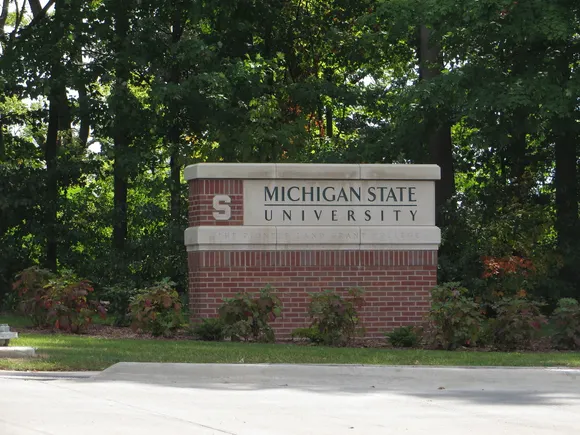
The Academic Congress of Michigan State University has delivered a staggering rebuke to the institution’s governing body, passing a formal resolution of no confidence in the Board of Trustees by an overwhelming margin of nearly ten to one. In a vote that signals a historic rift between the university’s educators and its highest level of oversight, 1,199 faculty members voted in favor of the resolution, while only 120 opposed it. The measure, though largely symbolic in terms of legal power, serves as a blunt indictment of the board’s performance during a decade defined by sexual abuse scandals, rapid presidential turnover, and allegations of internal misconduct. The resolution stated with stark simplicity: “Be it Resolved, That the Academic Congress of Michigan State University lacks confidence and trust in the Board of Trustees to effectively oversee Michigan State University.”
This latest escalation in tensions follows years of administrative instability that has seen six different presidents lead the university since 2018. The faculty’s move reflects a deep-seated frustration with what many perceive as a culture of dysfunction and meddling among the eight-member board, which is elected by Michigan voters in statewide contests. The vote was catalyzed by the recent and confusing saga involving the current president, Kevin Guskiewicz, whose brief flirtation with a departure for Clemson University—and subsequent return with a massive pay increase—highlighted the fragile relationship between the administration and the board.
A Decade of Institutional Trauma and the Nassar Legacy
To understand the depth of the faculty’s current frustration, one must look back at the shadow cast by the Larry Nassar scandal. In 2016, revelations that Nassar, a former MSU sports medicine physician, had sexually abused hundreds of athletes under the guise of medical treatment, shattered the university’s reputation. The fallout led to the resignation of long-time President Lou Anna K. Simon and sparked a series of investigations into institutional negligence. The university eventually reached settlements totaling more than $500 million with Nassar’s victims, but the cultural scars remained.
Since the Nassar era, MSU has struggled to find a steady hand to guide the institution. The turnover in the president’s office has been unprecedented for a Big Ten university. Following Simon, the university saw John Engler serve as interim president, followed by Satish Udpa, Samuel Stanley, Teresa Woodruff (interim), and now Kevin Guskiewicz. Each transition has been marked by varying degrees of public friction with the Board of Trustees, leading to a perception that the board is more interested in internal politics and micro-management than in institutional stability.
The Resignation of Samuel Stanley and Rising Tensions
The friction between the board and the administration reached a fever pitch in 2022 when President Samuel Stanley Jr. resigned, citing a loss of confidence in the Board of Trustees. Stanley, a former president of Stony Brook University, accused the board of interfering in administrative matters and undermining his authority. At the time, the Faculty Senate passed a similar no-confidence vote against the board, alleging that trustees had inappropriately inserted themselves into faculty decisions and violated governance protocols.
The departure of Stanley left the university in another period of "leadership limbo," a term frequently used by the Academic Congress to describe the gaps between permanent appointments. When Kevin Guskiewicz was hired from the University of North Carolina at Chapel Hill, there was a glimmer of hope that his tenure would bring a new era of collaboration. However, the internal dynamics of the board quickly resurfaced as a primary obstacle to progress.
The Guskiewicz Departure and the 55% Raise Controversy
The immediate catalyst for the July 2024 no-confidence vote was the erratic sequence of events involving President Guskiewicz. Earlier this year, reports surfaced that Guskiewicz was considering a move to Clemson University. The prospect of losing another president after a short tenure sent shockwaves through the campus. In May, the board held a special meeting intended to stabilize the situation. They approved a significant pay raise for Guskiewicz and amended the board’s own ethics code—a move intended to "end some of the public squabbling that had been notable in recent years," according to John Aerni-Flessner, an MSU history professor and faculty senate chair.
Despite these efforts, Guskiewicz initially announced his departure. In a farewell message that was highly critical of the board, he emphasized the need for "a shared commitment to collaboration, trust and a forward-looking vision." He pointedly noted that "too much energy has been spent revisiting past conflicts and internal disagreements rather than focusing collectively on the opportunities and aspirations ahead of us." Even more damning were his allegations that some board members used their access to confidential information to "misrepresent facts, manipulate situations and selectively use and leak that information to promote personal agendas."
The narrative took another turn when Guskiewicz reversed his decision to leave less than two months later. He returned to his post with a 55% pay raise, bringing his salary to levels that sparked further outcry among faculty members who questioned the board’s fiscal priorities. Aerni-Flessner, in a message introducing the no-confidence measures, asked pointedly: “Can we trust a Board of Trustees that would not only have this president back, but offered him a large raise despite his public acceptance of another job?”
Allegations of Misconduct and Board Censures
The faculty’s lack of trust is further exacerbated by the behavior of individual board members. In March 2024, the Board of Trustees took the rare step of censuring two of its own members, Rema Vassar and Dennis Denno, following an independent investigation into allegations of misconduct. Vassar, who previously served as the board chair, was accused of bullying, overstepping her authority, and interfering in university legal matters.
The internal investigation suggested that the two trustees had violated board policies by attempting to influence administrative decisions and leaking sensitive information. While the board voted to censure them, they remain in their positions as they are elected officials. This lack of accountability—beyond the ballot box—has become a central point of contention for the faculty. The Academic Congress noted that the board’s inability to police itself effectively has turned MSU into a "mismanaged institution" in the eyes of the public.
Official Responses and the Defense of the Board
In the wake of the lopsided no-confidence vote, Board Chair Brianna Scott issued a statement on Wednesday attempting to mitigate the damage. "I do not believe the hard work, dedication and reliable support of the majority of the Board is reflected in the results of the vote by the Academic Congress," Scott said. She emphasized that the board is committed to the university’s mission and suggested that the actions of a few should not define the entire body.
For his part, Guskiewicz has attempted to frame his return as a positive step for governance. He stated that his decision followed "much thought, countless conversations and careful consideration." He claimed to have had "productive conversations" with board leaders regarding the governance challenges he previously highlighted and expressed optimism that the board has "demonstrated a commitment to implementing a more robust governance structure."
However, these assurances have done little to appease the faculty. The "five-week period of silence" during the height of the leadership crisis, as described by the Academic Congress, left a vacuum of communication that many believe can no longer be filled by mere promises of reform.
Broader Implications for Governance and Institutional Health
The crisis at Michigan State University raises significant questions about the governance of large public universities where board members are elected through partisan political processes. Unlike many other states where trustees are appointed by the governor or a legislature—providing a layer of vetting and professional oversight—Michigan’s system ties university governance to the electoral cycle.
To remove a sitting trustee in Michigan outside of an election requires a recall petition signed by at least 25% of the number of people who voted in the last gubernatorial election. For MSU trustees, this would require approximately 1.1 million signatures, a logistical hurdle that makes removal nearly impossible. This structural insulation has led to what faculty describe as a lack of accountability.
The implications of this governance crisis are far-reaching. Continued instability threatens:
- Faculty and Staff Retention: Constant administrative turnover and a perceived toxic environment at the board level make it difficult to recruit and keep top-tier academic talent.
- Donor Confidence: Major philanthropists are often hesitant to commit large sums to institutions perceived as unstable or prone to public infighting.
- Accreditation and Rankings: While MSU remains a premier research institution, persistent governance issues can lead to increased scrutiny from accrediting bodies and negative impacts on national rankings.
- Student Recruitment: The "national news story about MSU’s misgovernance," as Aerni-Flessner put it, risks deterring prospective students who seek a stable environment for their education.
Conclusion: A Path Forward?
The no-confidence vote by the Academic Congress is more than just a protest; it is a demand for a fundamental shift in how Michigan State University is governed. While the board has attempted to show unity by raising the president’s salary and revising its ethics code, the faculty’s overwhelming rejection of their leadership suggests that these measures are seen as superficial fixes for a systemic problem.
As MSU moves forward under a reinstated President Guskiewicz, the eyes of the academic community remain fixed on the board. The question remains whether the trustees can truly pivot from a decade of "revisiting past conflicts" to a future defined by the "collaboration and trust" that Guskiewicz himself called for. For the 1,199 faculty members who voted "no confidence," the burden of proof now lies entirely with the Board of Trustees. Without significant, observable changes in board behavior, the cycle of turmoil that has plagued one of the nation’s leading land-grant universities shows no sign of abating.