Waymo Robotaxi Service Briefly Halted in San Francisco Amidst Widespread Power Outage, Sparking Renewed Calls for Robust Autonomous Vehicle Regulation

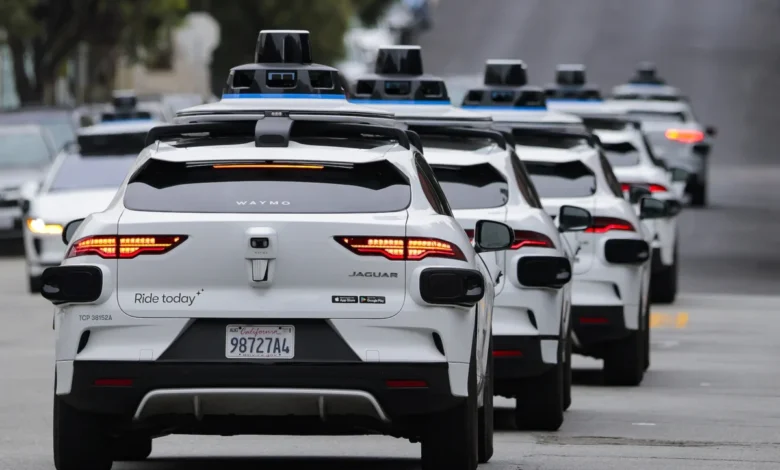
San Francisco, CA – Waymo, the autonomous vehicle subsidiary of Alphabet, temporarily suspended its robotaxi service in San Francisco on Friday, July 18, 2026, following a significant power outage that affected approximately 7,000 PG&E customers across the city. The disruption, which saw Waymo’s vehicles making "temporary adjustments" and pausing operations for roughly an hour, highlights the intricate dependencies of advanced autonomous systems on stable urban infrastructure and has reignited discussions surrounding the regulatory oversight of self-driving cars in critical situations. Service was confirmed to have resumed later the same day, but the incident underscores the vulnerabilities inherent in integrating nascent robotic technologies into complex metropolitan environments.
Chronology of a Disruption: The Outage and Waymo’s Response
The events unfolded on a Friday afternoon, a period of typically high activity in San Francisco. At approximately 12:30 PM PDT on July 18, 2026, a power outage began to spread across various districts of San Francisco. Initial reports from PG&E indicated that around 7,000 customers were without electricity, impacting homes, businesses, and potentially critical city infrastructure such as traffic signals.
Almost concurrently with the escalating outage, Waymo customers attempting to hail a robotaxi or already in transit began to receive notifications regarding service interruptions. A screenshot widely circulated on social media platforms depicted a message from Waymo informing San Francisco users that service was "temporarily paused" and, notably, that "freeway routes are unavailable." This immediate response from Waymo indicated a proactive measure to mitigate potential risks associated with operating autonomous vehicles in an environment compromised by power failures.
When pressed for details by TechCrunch, a spokesperson for the Alphabet-owned company initially provided a statement confirming the situation: "We are making temporary adjustments to our service while we monitor local conditions. We know riders depend on us, and we will return to normal operations as soon as possible." This early communication suggested an ongoing assessment and a cautious approach to resuming full service.
Following the initial publication of news regarding the pause, Waymo issued a more detailed update. A company spokesperson clarified that Waymo had "decided to pause service for approximately one hour to assess the scale of the power outage affecting a large portion of San Francisco and coordinate with local officials." This subsequent statement revealed the deliberate nature of the pause, emphasizing not just a reaction to the outage but also a period of crucial internal evaluation and external communication with city authorities. By late afternoon, Waymo confirmed that its robotaxi service had fully resumed, indicating that the company had determined conditions were stable enough for safe operations.
Background: Waymo’s Evolving Presence in San Francisco
Waymo has been a prominent player in the burgeoning autonomous vehicle industry in San Francisco, alongside competitors like Cruise (though Cruise’s operations have faced significant setbacks in the city). After years of testing and incremental expansion, Waymo received crucial permits from the California Public Utilities Commission (CPUC) to offer commercial driverless rides to the public in San Francisco. This expansion was not without controversy, as city officials, first responders, and advocacy groups raised concerns about the readiness of the technology and its potential impact on urban life and emergency services.
The company’s operations involve a fleet of fully autonomous vehicles navigating the city’s intricate street grid, hills, and diverse traffic conditions. San Francisco, with its dense population, complex infrastructure, and dynamic environment, serves as a critical testing ground and operational hub for Waymo, allowing it to refine its AI and sensor suites against real-world challenges. The success and safety of these operations are closely watched by regulators, industry analysts, and the public alike, as they represent a significant step towards widespread autonomous mobility.
However, the path to full integration has not been entirely smooth. The July 18th incident is not an isolated event but rather the latest in a series of challenges that have highlighted the vulnerabilities of autonomous systems to external factors. Previous incidents have drawn sharp criticism and prompted calls for more stringent regulations.
A Pattern of Disruption: Past Incidents and Growing Concerns
The recent power outage incident echoes previous challenges Waymo has faced in San Francisco, particularly when unexpected external conditions disrupt the operational environment. Two notable incidents from the recent past underscore these vulnerabilities:
- December Blackout (2025): Just months prior, in December 2025, a widespread blackout in San Francisco led to a number of Waymo vehicles stalling on city streets. This incident caused significant inconvenience and raised questions about the vehicles’ fail-safe mechanisms and their ability to autonomously navigate or safely pull over during a complete loss of power or communication. Human drivers can often rely on instinct, visual cues, and basic mechanical functions even during a power outage, but AVs, which rely heavily on digital maps, real-time sensor data, and often cloud connectivity for remote assistance, face a different set of challenges.
- Fourth of July Fireworks (2026): Earlier in the same month, during a Fourth of July fireworks show, a similar incident occurred where Waymo vehicles contributed to paralyzing traffic. While not directly a power outage, this event highlighted how unexpected crowd movements, road closures, and general urban chaos—elements that deviate significantly from programmed scenarios—can overwhelm autonomous systems, leading to stalled vehicles and increased congestion. Such events push the boundaries of an AV’s operational design domain (ODD) and its ability to adapt to highly dynamic, unpredictable situations.
These recurring disruptions have fueled a growing chorus of concern from city officials and emergency services. They argue that while AV technology promises significant benefits, its deployment must be accompanied by robust protocols and regulatory frameworks that ensure public safety and minimize disruption, especially during emergencies.
Regulatory Scrutiny and Official Reactions: Mayor Lurie’s Stance
The repeated challenges faced by autonomous vehicles during urban incidents have not gone unnoticed by local leadership. San Francisco Mayor Daniel Lurie has emerged as a vocal proponent for more rigorous oversight. Following the Fourth of July traffic fiasco and likely influenced by the earlier December blackout, Mayor Lurie publicly called for tougher state regulations. He emphasized the need to "adequately address how autonomous vehicles operate during major incidents, planned or not."

Mayor Lurie’s push for stricter rules reflects a broader sentiment among municipal leaders who feel that state-level regulatory bodies, such as the CPUC and the California Department of Motor Vehicles (DMV), have moved too quickly in granting permits for AV expansion without fully addressing local concerns. Local officials are primarily concerned with:
- Emergency Response Interference: Instances where AVs have blocked emergency vehicles or created hazardous situations for first responders.
- Traffic Congestion: The potential for stalled or confused AVs to exacerbate traffic problems, particularly during high-demand events or infrastructure failures.
- Accountability: Clarifying lines of responsibility when AVs cause accidents or disruptions, especially in novel scenarios not fully covered by existing traffic laws.
- Local Control: The desire for cities to have more say in how and where AVs operate within their jurisdictions, tailored to unique local conditions.
The CPUC, which holds the primary authority for regulating commercial AV services in California, faces the difficult task of balancing innovation with public safety. While supporting the advancement of AV technology, the commission is also under increasing pressure to respond to the legitimate concerns raised by cities like San Francisco. This could lead to the imposition of new rules, such as stricter reporting requirements for incidents, mandatory performance standards during specific types of outages or emergencies, or even limitations on operational areas during declared states of emergency.
The Broader Issue: AVs and Infrastructure Resilience
The San Francisco power outage incident lays bare a fundamental challenge for the widespread deployment of autonomous vehicles: their profound reliance on robust, uninterrupted urban infrastructure. Unlike human drivers, who can often adapt to failing traffic lights, navigate by sight when GPS is lost, or even find alternative routes without real-time digital mapping, AVs are designed to operate within a highly structured and digitally enabled environment.
Key infrastructure dependencies for AVs include:
- Electricity: Essential for charging stations, traffic signals, street lighting, and the broader communication network. A power outage directly impacts the ability to charge vehicles and can disable traffic control, creating chaotic intersections that are difficult for AVs to interpret safely.
- Connectivity (Cellular/GPS): While AVs possess robust onboard processing capabilities, they often rely on cellular networks for remote assistance, real-time map updates, and communication with fleet management systems. GPS signals are crucial for precise localization. Disruptions to these can degrade performance or necessitate a safe stop.
- Digital Mapping and Sensors: AVs rely on highly detailed maps and an array of sensors (Lidar, radar, cameras) to perceive their environment. While these systems are onboard, the interpretation of complex, unpredictable scenarios like a citywide power outage requires sophisticated algorithms and often, a fail-safe mechanism to pull over or cease operations.
- Traffic Management Systems: Modern cities are increasingly using intelligent traffic systems that communicate with vehicles. When these systems go offline due to power failure, AVs must revert to more basic, often less efficient, decision-making protocols.
The "temporary adjustments" and "one-hour pause" by Waymo indicate a sophisticated response mechanism designed to prioritize safety. It suggests that the vehicles, upon detecting degraded conditions (e.g., non-functioning traffic lights, loss of external communication, or general environmental chaos associated with a blackout), are programmed to either restrict their operational domain or cease operations entirely. This highlights a critical design philosophy in AV development: when in doubt, prioritize safety by stopping or seeking human intervention. However, this fail-safe also creates the very disruptions that concern city officials.
Technical Implications for Waymo and the AV Industry
For Waymo and the broader autonomous vehicle industry, incidents like the San Francisco power outage serve as invaluable, albeit challenging, learning opportunities. They push engineers to design more resilient systems and refine operational protocols for edge cases that are difficult to simulate entirely in a controlled environment.
- Enhanced Redundancy: The incident will likely accelerate efforts to build even greater redundancy into AV systems, particularly concerning power management, communication, and navigation. This could include longer-lasting onboard backup power for critical systems, multi-network communication capabilities, and more robust offline mapping and localization algorithms that can function effectively without constant cloud connectivity or GPS.
- Refined Operational Design Domain (ODD) Management: Waymo’s decision to pause service and restrict freeway routes demonstrates an active ODD management strategy. Future developments might include more granular control over ODDs, allowing AVs to operate in partially degraded environments (e.g., surface streets with manual traffic control) while avoiding highly complex or high-speed scenarios (like freeways) where human intervention might be less immediate.
- Improved Coordination with Emergency Services: The statement about coordinating with local officials during the pause is crucial. This points to the need for standardized communication protocols and direct lines of contact between AV operators and city emergency management. In a major incident, rapid information exchange can prevent AVs from inadvertently impeding emergency efforts.
- Simulation and Testing: While much testing occurs in simulation, real-world events like power outages provide unique data. This data will be fed back into simulation models to create more accurate and challenging scenarios for future vehicle development, ensuring that new generations of AVs are better equipped to handle such disruptions.
Economic and Social Impact
While a one-hour pause in service might seem minor, the cumulative effect of such incidents can have significant economic and social repercussions.
- Customer Trust and Adoption: Repeated disruptions, even for safety reasons, can erode public trust in autonomous vehicle technology. For Waymo to achieve widespread adoption, it must demonstrate not only safety but also reliability and seamless operation, especially in challenging circumstances.
- Operational Costs: Each pause in service represents lost revenue and operational inefficiencies for Waymo. Furthermore, managing vehicles during a disruption (e.g., sending remote operators to assist, deploying support teams) adds to operational costs.
- Impact on Urban Mobility: While Waymo’s fleet is still a fraction of overall San Francisco traffic, its growth means that any widespread disruption to its service can affect a growing segment of the population relying on it for mobility. This can lead to increased demand for traditional ride-hailing or public transit, potentially overwhelming those systems.
- Reputational Damage: Negative press surrounding incidents, even minor ones, can significantly impact a company’s reputation and potentially influence regulatory decisions, making it harder to expand into new markets or services.
Future Outlook and Industry Trends
The Waymo incident in San Francisco is a microcosm of the larger challenges facing the autonomous vehicle industry globally. As AV technology matures and seeks to move beyond controlled environments into the unpredictable chaos of real-world cities, the interplay between the technology and its operating environment will become increasingly critical.
The industry is moving towards more resilient systems, often incorporating hybrid models where remote human assistance plays a crucial role in navigating complex edge cases. Furthermore, cities and AV companies are likely to collaborate more closely on infrastructure development, exploring "smart city" initiatives that provide AVs with better real-time information about road conditions, traffic signal status, and emergency events.
Regulatory bodies will also continue to evolve their frameworks. We can anticipate a future where AV operating permits might include specific clauses addressing performance during power outages, natural disasters, or large-scale public events. The balance between fostering innovation and ensuring public safety will remain a central tension, requiring continuous dialogue and adaptive policy-making from all stakeholders.
In conclusion, the temporary suspension of Waymo’s robotaxi service during a San Francisco power outage, while swiftly resolved, serves as a potent reminder of the complex challenges inherent in integrating cutting-edge autonomous technology into dynamic urban landscapes. It underscores the critical dependence of AVs on robust infrastructure and highlights the urgent need for comprehensive regulatory frameworks and proactive operational strategies to ensure safety, reliability, and public trust as the future of mobility unfolds.