Controversy Deepens as Diabetes Association Accused of Premeditated Ambush and Censorship Over Critical Editorials


The American Diabetes Association (ADA) is embroiled in a deepening controversy following allegations that its leadership orchestrated a "premeditated ambush" against scientists distributing an editorial critical of government science policy, and subsequently refused to publish further opinion pieces from its own journal’s deputy editors. This new wave of accusations, detailed in a collection of articles posted to a preprint server after the ADA reportedly blocked their publication, reveals a persistent rift within the organization, despite a previous public apology from its CEO for the initial incident. The saga underscores critical questions about editorial independence, scientific advocacy, and the conduct of major medical societies.
The Unfolding Controversy: A Chronology of Events
The current tensions trace their roots back to events preceding the highly publicized incident at the ADA’s annual meeting in New Orleans in June 2026.
Early Tensions: The 2025 Session
In 2025, Deputy Editors Elizabeth Selvin and Cheryl A.M. Anderson of Diabetes Care, an ADA journal, organized a 90-minute session titled "How Do We Fix a Broken Health Care System?" for the annual meeting. Among the invited panelists was Washington state congresswoman Kim Schrier, a pediatrician with Type 1 diabetes. According to Selvin and Anderson, ADA leadership expressed objections months prior, deeming the session "unbalanced" and requesting the inclusion of "a congressperson from across the aisle" and other speakers offering "opposing views." Citing impracticality, the deputy editors proceeded with the original session, which the ADA approved but notably did not advertise. Selvin and Anderson maintained that Schrier’s comments were non-partisan, focusing on congressional testimonies, her personal experience with Type 1 diabetes, bipartisan efforts to reduce drug costs, her work with the Congressional Diabetes Caucus, and warnings about potential harm from proposed National Institutes of Health (NIH) funding cuts to diabetes research. This early disagreement hinted at underlying tensions regarding the extent of political discourse permissible within the organization’s scientific forums.
The April Editorial: A Critique of Science Policy
The immediate precursor to the June 2026 confrontation was an editorial published in Diabetes Care in April 2026, titled "Misguided Brushes of a Pen Continue to Dismantle." Co-authored by Steven Kahn, Editor-in-Chief of Diabetes Care and a professor of medicine at the University of Washington, along with other prominent scientists, the piece sharply criticized the Trump administration’s ongoing policies perceived as detrimental to scientific research. This editorial reflected growing anxieties within the broader scientific community concerning federal funding cuts, restrictions on scientific communication, and perceived political interference in scientific institutions. Many scientists felt compelled to speak out, viewing such policies as an existential threat to the integrity and progress of research, including vital work in diabetes.
The June 5th Incident: Ejection in New Orleans
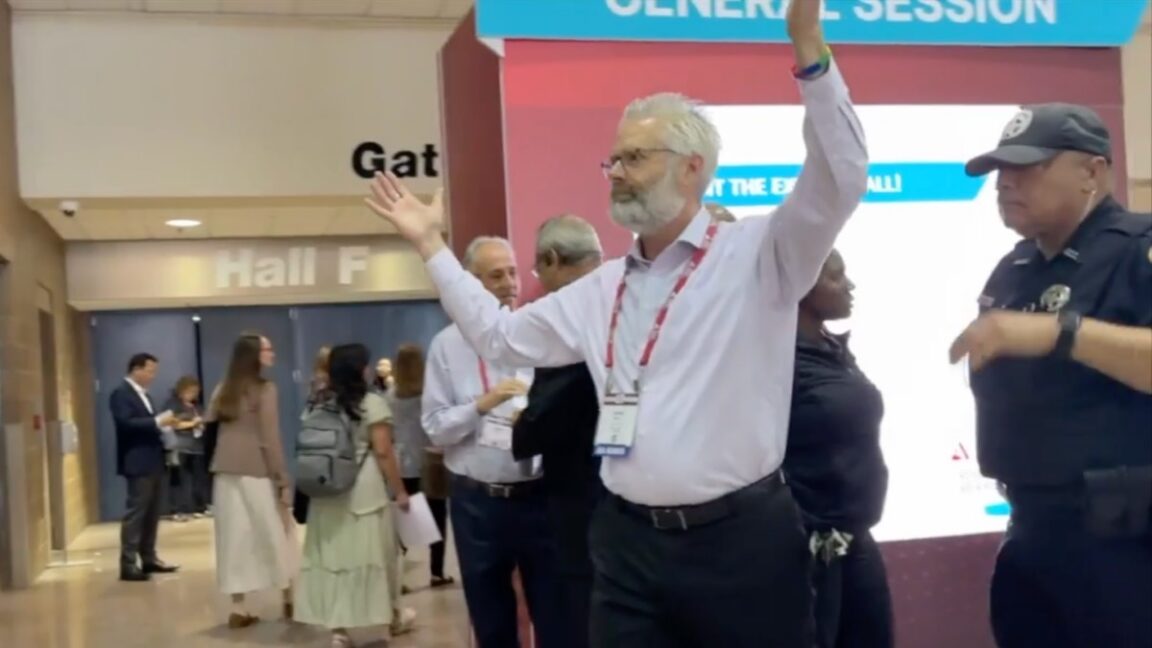
The controversy reached a boiling point on June 5, 2026, at the ADA’s annual meeting in New Orleans. Five leading scientists, including Dr. Steven Kahn, former ADA President Desmond Schatz of the University of Florida, Aaron Kelly, a pediatrics professor at the University of Minnesota, Justin Ryder of Northwestern University, and Irl Hirsch, also from the University of Washington, were forcibly removed from the conference. Maureen Gannon of Vanderbilt University Medical Center was also ejected shortly thereafter. Their offense: distributing copies of the aforementioned April editorial outside the conference’s opening speech. The keynote address was originally slated to be delivered by Jay Bhattacharya, head of the National Institutes of Health under the Trump administration, who canceled at the last minute, with senior NIH official Rick Woychik stepping in.
Eyewitness accounts and subsequent media reports, including those from The New York Times and MedPage Today, detailed a heavy-handed response. Within minutes of the distribution, police reportedly escorted the scientists out, with at least one individual being shoved. Their conference badges were confiscated, and they were threatened with arrest if they attempted to return. Louisiana State Police later confirmed they acted at the request of the ADA. The ADA subsequently barred all five scientists from attending the remainder of the conference. Dr. Kahn, who was scheduled to chair a symposium, had to be replaced by John Buse of the University of North Carolina School of Medicine. Buse used his platform to critically address the ADA’s actions, reportedly receiving "deafening" applause from attendees in support of Kahn and scientific freedom.
Immediate Backlash and Public Outcry
The incident triggered an immediate and widespread backlash across the scientific and medical communities. Social media platforms like Twitter/X and BlueSky saw a rapid proliferation of critical comments, with many condemning the ADA’s actions as censorship and an assault on academic freedom. The number of page views for the April editorial sharply increased, indicating significant public interest in the content that sparked the dispute. Several ADA leaders resigned in protest, and a strongly worded letter, initially signed by over 40 ADA officials, lambasted the decision as "outrageous," "unpersuasive," and "fatuous nonsense." This letter demanded an "immediate and unconditional public apology" and a comprehensive review of the incident, reflecting profound disillusionment within the ADA’s own ranks. An open letter titled "Shame on You" garnered over 7,500 signatures, further demonstrating the breadth of public condemnation.
ADA’s Shifting Justifications
In the immediate aftermath, the ADA offered various justifications for its actions, which were met with skepticism and further criticism. Initially, a media team informed MedPage Today that the scientists had violated the conference code of conduct. Subsequently, an email to ADA members attributed the removals to the lack of prior approval for distributing materials, explicitly stating it was "not because of the viewpoints expressed in those materials," as reported by Science.
On the Sunday following the incident, the organization, a 501(c)(3) non-profit, released a statement asserting that the removals were necessary to comply with federal regulations requiring "maintaining a strictly nonpartisan environment at all organizational events and functions." However, this justification was quickly challenged. Federal regulations for 501(c)(3) organizations, as clarified by the IRS, do not restrict leaders from sharing political views in a personal capacity or from speaking on important public policy issues, provided the organization itself does not engage in partisan political campaigning. Critics argued that the editorial, which focused on science policy rather than endorsing a specific political candidate or party, fell within permissible boundaries for advocacy by a scientific organization.
The CEO’s Apology and Promise of Review
Facing mounting pressure, negative media coverage, and internal dissent, ADA CEO Charles Henderson posted a video statement several days after the incident, offering an apology for the organization’s decision. Henderson stated, "What transpired is not reflective of who I am, the values I hold, or the way I was raised," and pledged to "work hard to bring our community back together." He also promised to commission a "thorough independent review of the events that occurred as well as the policies, procedures, and decision-making process that guided our actions." While this apology was a step towards de-escalation, it did not fully quell the disquiet among members.
New Allegations Surface: The Unpublished Articles
Despite Henderson’s apology, the situation remained unresolved. A month after the incident, the original "New Orleans Five" scientists reported that they had received no official apology beyond the video, no meeting with ADA leadership, and no exoneration. Crucially, there had been no corrective actions, no resignations of involved ADA staff, and no identification of the individual(s) responsible for the decision to forcibly remove the scientists.
The Deputy Editors’ Stance on Censorship
In a significant development, the deputy editors of Diabetes Care, Elizabeth Selvin and Cheryl A.M. Anderson, along with seven accompanying opinion articles, posted their editorial to a preprint server, Zenodo, in a single PDF file. They revealed that the ADA had refused to publish these articles, which were intended to further address the New Orleans incident and its implications. In their own editorial, the deputy editors stated, "The ADA’s response was to refuse to publish these articles. We are speaking out because it is unusual and unacceptable for a medical society to work at cross purposes with its members and its editors. The ADA has already tried to restrict editorial freedom once before related to our raising awareness of what is happening in Washington, DC, and, in particular, with the dismantling of the National Institutes of Health… A wrong occurred in New Orleans that the ADA has not addressed. There remain open questions surrounding the events of June 5th. It is because we wish to heal and come together following this difficult situation that we believe it is important that these articles be read and these voices heard." This statement directly accused the ADA of attempting to restrict editorial freedom and further censorship.
Accusations of a "Premeditated Ambush"
Perhaps the most serious new allegation comes from John Buse, who, in his preprint article, explicitly stated his belief that "the ADA actions were a premeditated attack on Steven Kahn and other attendees" and posed "an existential threat to the ADA." The New Orleans Five corroborated this, claiming that ADA leadership was aware in advance that people would be distributing the editorial. Desmond Schatz had even texted Chief Scientific and Medical Officer Rita Kalyani before the meeting, advising her to contact Kahn to clarify where he could and could not hand out copies, emphasizing that the activity "should not in any way be disruptive." Kalyani reportedly replied that she was on a plane and would ascertain the details upon landing, but never followed up.
The lack of follow-up led the scientists to proceed with their original plan. As Kahn, Kelly, Ryder, and Schatz were being removed, a police officer reportedly asked the head of conference security if "that was sufficient." The security officer then directed them to remove Gannon, stating he needed "one more badge." Gannon’s request to speak with ADA leadership to clarify any misunderstanding was met with the security head’s response that this was what "the client" (i.e., ADA) had instructed them to do. Buse concluded, "It was an ambush. ADA leadership knew exactly what was going to happen and when. They could have contacted Steven and tried to come to some accommodation. Instead they set in place armed law enforcement officers to disrupt the activity, apparently with a quota for the number of people to be hustled out of the meeting. The ADA actions are not dissimilar in nature to the efforts of our federal government to quell protests—force against people exercising constitutional rights as an act of both retribution and a display of power. We are lucky this event did not have even greater consequences."
Mark Atkinson’s Resignation and the Disputed Letter
Further complicating the narrative is the account of Mark Atkinson, chair of the Scientific Sessions Meeting Planning Committee, who penned an opinion piece detailing his reasons for resigning from his position. Atkinson was listed as a signatory on the June 6 ADA letter that defended the organization’s actions, but he claims he never agreed to the final text. He was involved in face-to-face discussions where he advocated for an apology, not just a defense. Atkinson left the meeting early, expecting to review any final version before its release. Instead, he found that "a substantially different letter was released, bearing my name and that of the ADA’s chief executive officer." He stated he would not have agreed to have his name associated with it and that remaining as chair would imply confidence in a process he no longer trusted. His resignation, he noted, was "among the most difficult professional decisions I have ever made," adding, "I do not regret resigning. I regret the circumstances that made my resignation necessary." This account further highlights a disconnect between the leadership and its committees, and raises questions about internal communication and integrity.
Context and Regulatory Framework
This controversy brings to light several critical aspects of scientific publishing, non-profit governance, and the role of scientific societies in public discourse.

Understanding 501(c)(3) Non-Profit Status
The ADA’s initial reliance on its 501(c)(3) non-profit status as justification for removing the scientists warrants closer examination. While 501(c)(3) organizations are indeed prohibited from intervening in political campaigns on behalf of or in opposition to any candidate for public office, this restriction generally does not extend to advocacy on public policy issues, even those that may be politically charged. Furthermore, individual leaders and members of such organizations are typically free to express their personal political views, as long as they are not doing so in their official capacity as representatives of the organization in a partisan political context. The editorial in question focused on scientific policy and the protection of research, which many argue falls squarely within the mission of a scientific society. The ADA’s interpretation appeared to be overly cautious or, as critics suggest, a pretext for suppressing dissent.
The Principle of Editorial Independence
A cornerstone of reputable scientific publishing is editorial independence, ensuring that editorial decisions regarding content are made based on scientific merit and relevance, free from undue influence by the journal’s owner or parent organization. The ADA’s alleged refusal to publish the follow-up articles from the deputy editors of Diabetes Care directly challenges this principle. Such interference, if proven, could undermine the credibility of Diabetes Care as an independent scientific voice and raise concerns about censorship within the broader ecosystem of medical journals affiliated with professional societies. The deputy editors’ decision to post their articles on a preprint server, circumventing the ADA’s block, highlights their commitment to this principle.
Broader Concerns within the Scientific Community
The backdrop of this controversy includes a period of significant concern within the scientific community regarding perceived threats to scientific integrity and funding. During the Trump administration, there were widespread anxieties about proposed budget cuts to federal research agencies like the NIH, restrictions on data sharing, and the marginalization of scientific expertise in policymaking. Editorials like the one distributed at the ADA conference were a common form of expressing these concerns, reflecting a broader movement among scientists to advocate for the importance of science in public life. The ADA’s actions, therefore, were seen by many as not only an internal organizational failure but also a broader betrayal of the scientific community’s collective efforts to defend research.
Impact and Future Implications
The ongoing dispute carries significant implications for the ADA, its members, and the broader landscape of scientific advocacy.
Damage to ADA’s Reputation and Membership Trust
The series of events has undeniably inflicted substantial damage on the ADA’s reputation. An organization dedicated to fighting diabetes, which relies heavily on the trust and engagement of scientists, clinicians, and patients, risks alienating its core constituency. The accusations of censorship, heavy-handed tactics, and a lack of transparency could erode confidence in the ADA’s leadership and its commitment to its stated mission. The numerous resignations and the open letter with thousands of signatures attest to a deep crisis of trust that will be difficult to mend. Restoring this trust will require more than just apologies; it will demand tangible actions towards accountability and reform.
The Call for Accountability and Governance Reform
The authors of the preprint articles, particularly the New Orleans Five, are demanding a thorough independent investigation, the establishment of a formal process to address professional membership concerns, and greater transparency in patient advocacy and research funding advocacy. They also insist that any disclaimers from the published editorials be removed, underscoring their belief in the editorial’s legitimacy as scientific advocacy. The calls for accountability extend to identifying the individuals responsible for the initial decision to remove the scientists and ensuring appropriate consequences. Furthermore, the emphasis on "reworking of governance and engagement to align strategy with mission" suggests that a fundamental restructuring of how the ADA operates may be necessary to prevent similar incidents in the future and to ensure that the organization genuinely represents the interests of its members and the scientific community.
Broader Implications for Medical Societies and Scientific Advocacy
This controversy serves as a cautionary tale for other medical and scientific societies. It highlights the delicate balance between maintaining institutional neutrality as a non-profit and allowing for robust scientific discourse and advocacy on policy issues that directly impact their fields. The incident could prompt other organizations to review their policies regarding member conduct, editorial independence, and engagement with politically sensitive topics. In an era where scientific findings often intersect with public policy, the ability of scientific societies to advocate effectively for research and public health without fear of internal suppression is paramount. The ADA’s struggle to navigate this complex terrain underscores the challenges faced by such organizations in upholding their mission while preserving internal harmony and external credibility.
Conclusion
The American Diabetes Association finds itself at a critical juncture. What began as a contentious incident at an annual meeting has escalated into a full-blown crisis of governance, transparency, and editorial freedom. The new allegations of a premeditated ambush and continued censorship, brought to light by the very editors and scientists who are central to the organization’s mission, demand a comprehensive and unbiased response. The path forward for the ADA will require genuine accountability, a reaffirmation of editorial independence, and a renewed commitment to fostering open scientific discourse. As John Buse eloquently put it, "With new focus, the ADA can emerge stronger. That will require a reworking of governance and engagement to align strategy with mission." The scientific and medical communities, both within and beyond the ADA, will be closely watching to see if the organization can heal its internal divisions and regain the trust essential for its vital work.