Europe’s Rosalind Franklin Mars Rover Mission Secures SpaceX Falcon Heavy Launch After Decades of Delays and Geopolitical Shifts

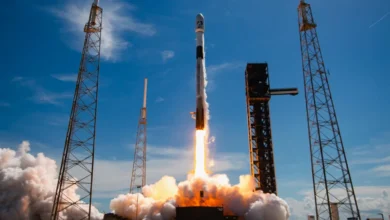
After a protracted and challenging journey spanning nearly a quarter-century, the European Space Agency’s (ESA) Rosalind Franklin Mars rover mission has finally secured its launch vehicle: a SpaceX Falcon Heavy rocket. NASA confirmed on Thursday that the heavy-lift booster would carry Europe’s flagship Mars expedition from Kennedy Space Center, Florida, potentially as soon as late 2028. This pivotal announcement marks a significant milestone for a mission that has navigated a labyrinth of political shifts, budgetary constraints, and technical hurdles, making the Falcon Heavy the fourth rocket designated for its launch. The decision for NASA to facilitate the launch of a key European mission underscores the complex interplay of international collaboration, scientific ambition, and geopolitical realities that have defined the rover’s tortuous path to the Red Planet.
The saga of the Rosalind Franklin rover is a testament to both the enduring scientific pursuit of extraterrestrial life and the precarious nature of large-scale international space projects. Its history can be traced back to the late 1990s, following the success of NASA’s Mars Pathfinder mission in 1997, which reignited global interest in Martian exploration. Inspired by this achievement, the ESA conceived its own ambitious plan to send a mobile robot to Mars as part of its Aurora program, initially targeting a 2009 launch. At that time, Russia’s venerable Soyuz rocket was slated to provide the necessary thrust, leveraging Russia’s well-established capabilities in space launch.
A Shifting Landscape: Early Ambitions and Collaborative Ventures
The initial vision for Europe’s Mars rover was rooted in a desire to establish an independent European presence on Mars, complementing ongoing and planned missions by NASA. The Aurora program aimed to investigate the possibility of life on Mars and prepare for future human exploration. However, as ESA officials later understated in a 2016 fact sheet, "Delays ensued and plans changed." These early shifts were merely a prelude to the mission’s incredibly complex future.
By 2009, the project, now rebranded as ExoMars, evolved into a centerpiece of a joint initiative between NASA and ESA. This transatlantic partnership, formalized through an agreement to pursue Mars exploration together, envisioned a robust collaborative effort. The European rover was slated to fly to Mars in tandem with a similarly sized U.S. rover in 2018. The ambitious plan included a cutting-edge landing system based on the Jet Propulsion Laboratory’s "sky crane" architecture – famously used for NASA’s Curiosity and Perseverance rovers – designed to deliver both robotic explorers to the Martian surface simultaneously. Furthermore, a European orbiter, engineered to detect trace gases like methane in the Martian atmosphere (a potential biosignature), was scheduled for an earlier launch in 2016. NASA committed to launching both the 2016 orbiter and the 2018 rover missions using its reliable United Launch Alliance Atlas V rockets, signifying a strong commitment to the partnership.
Budgetary Constraints and a Pivotal Withdrawal
This promising collaboration, however, proved short-lived. Less than three years later, in 2012, the Obama administration delivered a significant blow to the ExoMars program by withdrawing most of NASA’s participation. The primary reason cited was severe budgetary constraints, exacerbated by substantial cost overruns with the then-developing James Webb Space Telescope (JWST). The JWST, a flagship astronomical observatory, had seen its projected costs soar from an initial estimate of $1.6 billion to over $8 billion by that point, leading to difficult choices within NASA’s overall budget portfolio. The withdrawal left ESA in a precarious position; with its own funding limitations, the agency simply could not afford to unilaterally replace NASA’s crucial contributions, particularly the launch vehicles and the sophisticated landing system.
The Russian Partnership: A New Path and a Geopolitical Rupture
Facing the potential collapse of its ambitious Mars rover mission, ESA pivoted dramatically, turning to Russia’s Roscosmos space agency for assistance. This new partnership, formalized in the wake of NASA’s departure, saw Russia agreeing to launch both the ExoMars Trace Gas Orbiter and the rover on two Proton rockets. Critically, Russia also committed to providing the descent system necessary to deliver the rover safely to Mars. In exchange for these vital contributions, ESA agreed to integrate Russian science instruments onto both the orbiter and rover missions. This arrangement was a significant boon for Russian scientific institutions, which, without such an international partnership, had limited prospects of sending their own research payloads to the Red Planet. It represented a mutually beneficial collaboration, leveraging European scientific expertise with Russian heavy-lift and landing capabilities.
The first phase of this renewed partnership saw a notable success. In March 2016, Russia successfully launched the European-built ExoMars Trace Gas Orbiter (TGO) spacecraft on a Proton rocket. The TGO remains operational around Mars today, diligently collecting scientific data, particularly on atmospheric gases, and serving as an invaluable communications relay for NASA’s Curiosity and Perseverance rovers. However, a small European technology demonstration probe, named Schiaparelli, which was riding piggyback on the TGO, tragically crash-landed upon reaching the Red Planet. This incident, attributed to a software glitch that caused premature parachute deployment and thruster cutoff, highlighted ESA’s ongoing challenges with Mars landing technologies – a critical experience that would later inform the Rosalind Franklin mission’s engineering.
Further delays plagued the ExoMars rover. Originally planned for a 2018 launch, it was pushed to 2020. By then, the rover had been formally named Rosalind Franklin, honoring the pioneering British chemist whose work was crucial to understanding the structure of DNA. Despite being nearly ready for launch in 2020, a series of persistent parachute test failures – a recurring technical challenge for the mission – combined with the onset of the global COVID-19 pandemic, necessitated yet another postponement, pushing the launch window to late 2022.
Then, in February 2022, a seismic geopolitical event irrevocably altered the mission’s trajectory: Russia’s full-scale invasion of Ukraine. In response to the widespread condemnation and sanctions against Russia, ESA made the difficult but decisive decision to sever most of its ties with Roscosmos. This abrupt termination of the ExoMars partnership came at a critical juncture, as all elements of the mission, including the Russian Proton rocket and the Russian-developed Mars descent stage, were already built and nearing final assembly. The decision also led to the removal of two Russian science instruments from the mission’s payload. ESA Director General Josef Aschbacher stated at the time that the invasion had created a "fundamental change of circumstances," making cooperation impossible. This sudden rupture left the Rosalind Franklin rover, a fully assembled and highly anticipated scientific instrument, once again without a path to Mars, caught in the crosshairs of international conflict.
NASA’s Re-engagement and the Path to SpaceX
In the wake of the Russian withdrawal, the international space community faced a daunting question: what would become of the Rosalind Franklin rover? The prospect of grounding a mission representing decades of European scientific and engineering effort was unacceptable. Once again, the United States government stepped in, offering a lifeline to the beleaguered European mission. This re-engagement by NASA, formalized in 2024, underscored the agency’s commitment to international scientific collaboration and the broader goals of Mars exploration, even in the face of geopolitical complexities.

Under the new agreement, the U.S. side committed to providing several critical components and services. Foremost among these was a launch vehicle, now confirmed to be the SpaceX Falcon Heavy. Beyond the launch, NASA also pledged to supply the crucial braking engines needed for the lander to perform its final descent to the Martian surface. These engines, drawing on NASA’s extensive experience with successful Mars landings, were a vital component that ESA lacked. Additionally, NASA committed to providing small nuclear-powered heaters, known as Radioisotope Heater Units (RHUs), to keep the rover’s sensitive electronics warm and functional during the brutally cold Martian nights, ensuring its longevity and operational capability. Furthermore, NASA had long ago delivered a sophisticated mass spectrometer, an instrument essential for analyzing Martian soil samples to detect organic molecules, which had been integrated into the European rover’s scientific payload.
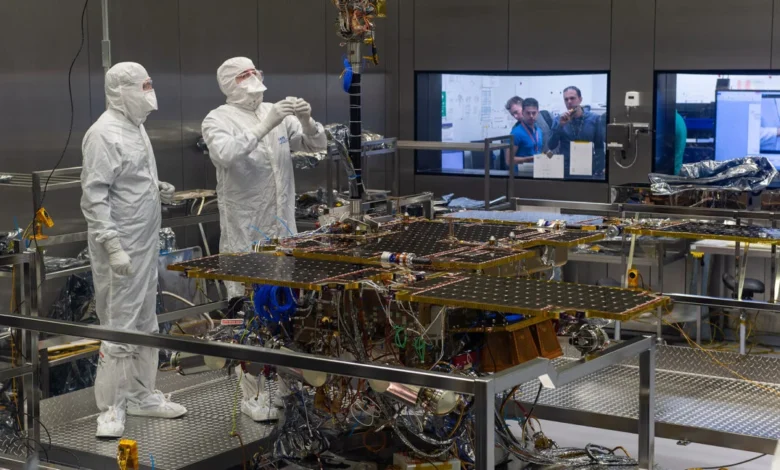
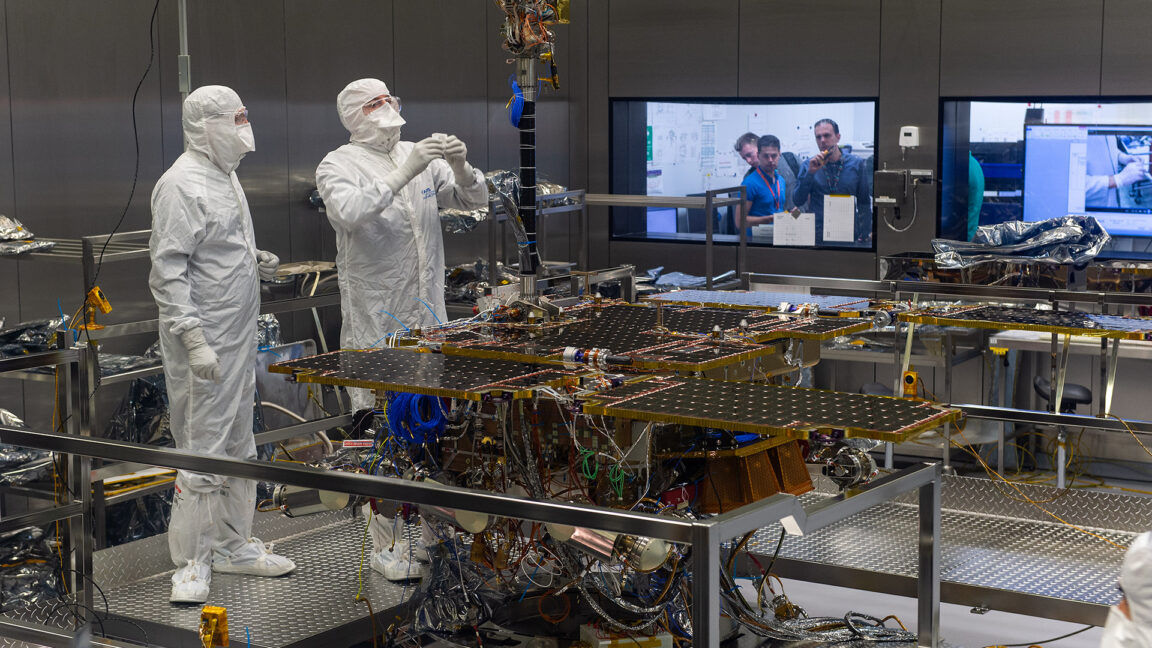
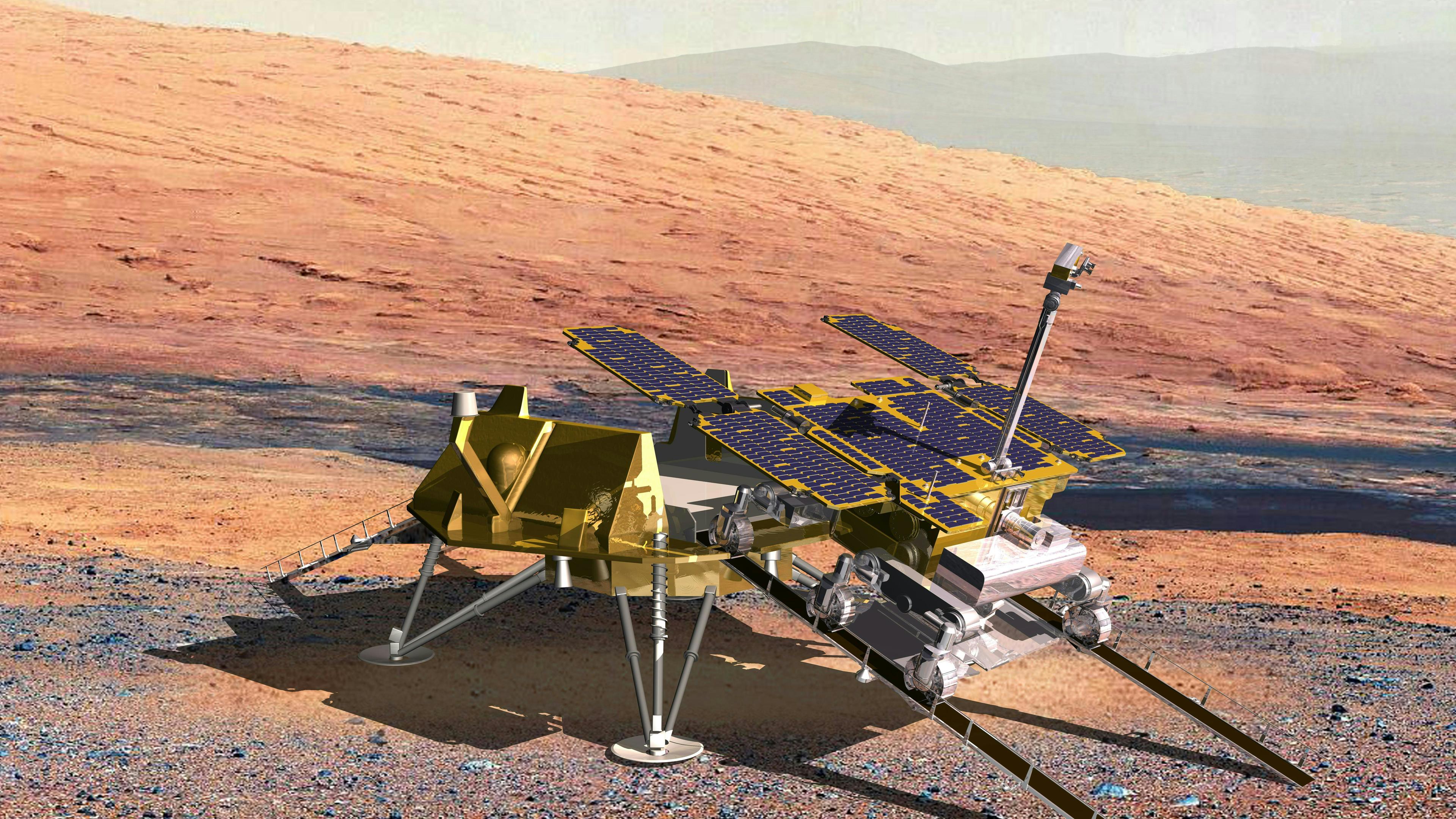
Meanwhile, ESA retained responsibility for key aspects of the mission. Europe is providing the advanced Rosalind Franklin rover itself, a testament to its engineering prowess, as well as the carrier spacecraft designed to ferry the rover from Earth to Mars. The intricate task of overall assembly for the landing platform, which will settle onto Mars and deploy ramps for the rover to disembark, falls to Europe. Airbus in the United Kingdom built the rover and is supplying the main structure for the lander. The German company OHB manufactured the carrier spacecraft, or cruise stage, responsible for guiding the mission through interplanetary space. Thales Alenia Space of Italy is the prime contractor, in charge of integrating all these complex pieces and preparing the entire mission for launch. This distributed effort highlights the pan-European industrial and scientific capabilities brought to bear on the mission.
Overcoming Final Hurdles and Looking to the Future
Even with NASA’s renewed commitment, the mission faced additional political hurdles on the U.S. side. Just a year after NASA pledged its support, the Trump administration, in its proposed fiscal year 2026 budget, attempted to cancel the U.S. contributions to Rosalind Franklin, alongside numerous other NASA science missions. This move, part of a broader effort to reduce federal spending on scientific research, was met with strong opposition. Fortunately for the mission, lawmakers in the U.S. Congress ultimately rejected these proposed budget cuts when they passed the fiscal year 2026 budget bill for NASA, demonstrating bipartisan support for the Rosalind Franklin mission and planetary science broadly.
With these political challenges overcome, NASA was able to officially approve the Rosalind Franklin Support and Augmentation (ROSA) project to begin implementation. The announcement on Thursday that SpaceX had been awarded the launch contract for Rosalind Franklin on its Falcon Heavy rocket was the culmination of this arduous process. For SpaceX, this will likely mark its first launch to Mars, adding another significant milestone to its burgeoning portfolio of ambitious space missions. The Falcon Heavy, known for its immense lift capability and partial reusability, offers a powerful and reliable launch platform, a stark contrast to the various rockets previously considered.

A successful landing on Mars has historically eluded ESA, with the Schiaparelli probe’s crash landing serving as a stark reminder of the immense technical difficulties involved. NASA’s contribution of flight-proven retrorockets for ESA’s landing platform is therefore critical, leveraging decades of U.S. expertise in precise Martian soft landings. Furthermore, experts at NASA’s Jet Propulsion Laboratory (JPL) have actively assisted European engineers in resolving the persistent problems with the lander’s parachute system. This collaborative effort ensures that the critical phase of atmospheric entry, descent, and landing – which slows the craft to subsonic speeds before braking rockets ignite for the final maneuver – is as robust as possible.
Assuming the mission launches in late 2028, the Rosalind Franklin rover is projected to reach Mars in 2030. This trajectory involves a longer-than-usual route to Mars, meticulously planned to avoid landing during the planet’s global dust storm season. Martian dust storms can severely impact missions by reducing solar power generation, obscuring visibility for navigation, and creating hazardous conditions for delicate equipment. By optimizing the arrival time, mission planners aim to maximize the rover’s initial operational period and scientific output.
Despite the exceptionally long wait and the multitude of challenges, ESA maintains that the Rosalind Franklin rover’s capabilities and scientific objectives "remain relevant" for Mars exploration. The rover’s unique ability to extract and analyze soil samples from as deep as 6 feet (2 meters) into the Martian crust is its primary distinguishing feature. At such depths, organic molecules, which could hold tantalizing hints to ancient Martian life, would have been significantly protected from billions of years of exposure to harsh surface radiation (including ultraviolet light and cosmic rays). This radiation can "irreversibly destroy ancient organic biomarkers," as NASA scientists highlighted in a 2022 paper, making deeper samples crucial for biosignature detection.
"No other mission is yet planned to take up this technological challenge," ESA proudly states in a fact sheet on the mission, underscoring the rover’s unique scientific niche. Beyond its drilling capabilities, the Rosalind Franklin rover also incorporates novel mobility features, including six-wheel steering and "wheel walking." These advanced locomotion techniques will enable the rover to traverse challenging and uneven Martian terrain with greater agility and stability, allowing it to reach scientifically compelling sites that might be inaccessible to less capable vehicles.
The journey of the Rosalind Franklin rover, from an ambitious concept to a confirmed launch, serves as a powerful illustration of the resilience and adaptability of international space exploration. It highlights the critical importance of global partnerships in tackling the most profound scientific questions, such as the search for life beyond Earth. Furthermore, the reliance on SpaceX’s Falcon Heavy signals a growing trend in which governmental space agencies increasingly leverage the capabilities of commercial space companies for complex and high-stakes missions. As Europe prepares for its first Mars rover, the successful culmination of this mission would not only solidify ESA’s standing as a major player in planetary science but also add a compelling chapter to humanity’s ongoing quest to understand our cosmic neighborhood. The scientific community now eagerly anticipates late 2028, hopeful that the Rosalind Franklin will finally begin its groundbreaking search for ancient life on Mars.