Waymo Robotaxi Service Briefly Halts in San Francisco Amidst Widespread Power Outage, Reigniting Debates on Autonomous Vehicle Resilience.

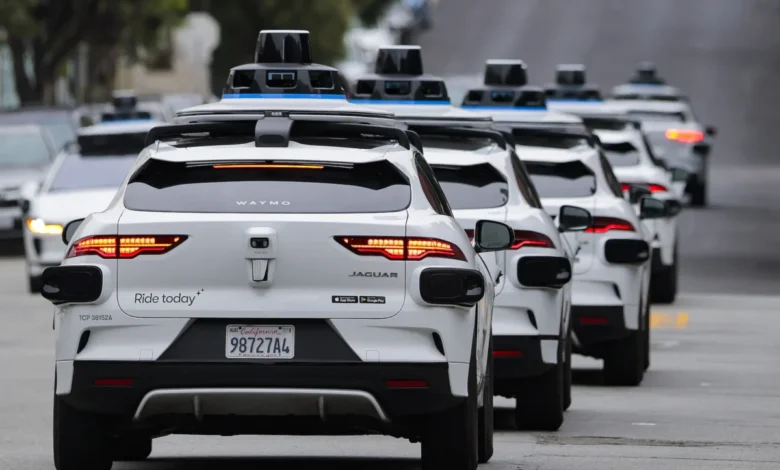
San Francisco’s burgeoning autonomous vehicle landscape experienced a significant, albeit temporary, disruption on July 18, 2026, when Waymo, a leader in self-driving technology and an Alphabet subsidiary, announced a brief suspension of its robotaxi services across parts of the city. The operational pause, which lasted approximately one hour, was a direct consequence of a widespread power outage that impacted an estimated 7,000 Pacific Gas and Electric Company (PG&E) customers, casting a momentary shadow over the reliability of advanced urban mobility solutions reliant on robust infrastructure. This incident swiftly brought to the forefront ongoing discussions regarding the resilience of autonomous vehicles in the face of unpredictable urban challenges and the imperative for comprehensive regulatory frameworks to manage such occurrences.
Chronology of the July 18th Incident
The sequence of events on Friday, July 18, 2026, unfolded rapidly, beginning with a power disruption in various San Francisco neighborhoods. At approximately 12:30 PM PDT, reports began surfacing of a significant outage affecting residential and commercial areas. Simultaneously, Waymo customers attempting to hail a robotaxi received notifications indicating a "temporarily paused" service, with specific mention that "freeway routes are unavailable." This immediate communication from Waymo underscored the direct impact of the outage on its operational capabilities.
Within minutes of the power disruption, the company initiated its internal protocols to assess the situation. TechCrunch, upon inquiry, received an initial statement from a Waymo spokesperson acknowledging the "temporary adjustments" to service while the company monitored "local conditions." This initial response highlighted a cautious approach, prioritizing safety and operational stability over uninterrupted service during an unfolding infrastructure crisis. As the situation evolved and PG&E crews began working to restore power, Waymo continued its internal evaluation. Roughly an hour after the initial pause, the company provided an update, confirming that service had resumed. A Waymo spokesperson further clarified that the decision to pause service for approximately one hour was made "to assess the scale of the power outage affecting a large portion of San Francisco and coordinate with local officials." This proactive measure, while causing inconvenience for some potential riders, aimed to prevent any potential safety hazards or operational inefficiencies that could arise from operating in an environment with compromised infrastructure, such as non-functioning traffic lights or disrupted communication networks. The quick resumption of service demonstrated Waymo’s ability to react and adapt, but also exposed the inherent vulnerabilities of even the most advanced autonomous systems to external factors beyond their immediate control.
Waymo’s Operational Protocols During Disruptions
Autonomous vehicle companies like Waymo operate under stringent safety protocols designed to handle a myriad of unexpected scenarios, from sensor malfunctions to adverse weather conditions. Power outages, however, present a unique challenge, as they can simultaneously affect traffic signals, street lighting, cellular networks, and GPS accuracy, all of which are critical for an autonomous vehicle’s ability to perceive its environment, navigate, and communicate.
Waymo’s decision to pause service during the San Francisco outage is indicative of these robust safety measures. When a major infrastructure disruption occurs, the autonomous driving system (ADS) may encounter an operating environment outside its defined operational design domain (ODD). For instance, if traffic lights are out, the vehicle’s perception system might struggle to interpret intersection rules, or its prediction algorithms might be unable to anticipate human driver behavior in an unregulated intersection with sufficient confidence. Furthermore, communication with Waymo’s remote operations center, which provides support and oversight for the fleet, could be hampered by network degradation, further complicating safe operation.
The "temporary adjustments" and "freeway routes unavailable" messages suggest a tiered response. Freeway operations often involve higher speeds and more complex multi-lane maneuvers, requiring an even greater degree of certainty in environmental perception and prediction. In a scenario where power outages might affect overhead signage, digital message boards, or even the power supply to critical traffic monitoring systems, the risk profile for freeway driving increases significantly. By limiting or pausing service, Waymo ensures that its vehicles are not placed in situations where their advanced capabilities might be compromised by external, unpredictable factors. This approach, while disruptive to riders, underscores a fundamental principle of autonomous vehicle deployment: safety first.
The Broader Context: San Francisco’s AV Landscape
San Francisco has emerged as a critical proving ground and a major operational hub for autonomous vehicle technology. With its complex urban topography, diverse weather patterns, and dense traffic, the city offers an unparalleled real-world laboratory for companies like Waymo and Cruise to refine their self-driving systems. Waymo, in particular, has steadily expanded its footprint, transitioning from initial testing phases to offering public robotaxi services across an increasingly wide operational domain within the city. The deployment of hundreds of autonomous vehicles on San Francisco’s streets represents a significant leap towards the commercialization of this technology, promising enhanced mobility, reduced traffic congestion, and improved road safety in the long term.
However, this rapid integration has not been without its challenges. The presence of autonomous vehicles has sparked intense public and regulatory debate, balancing the potential benefits against legitimate concerns about safety, public trust, and the impact on urban infrastructure and emergency services. The California Public Utilities Commission (CPUC) and the Department of Motor Vehicles (DMV) have been at the forefront of establishing regulatory frameworks, often finding themselves navigating uncharted territory as the technology evolves.
San Francisco’s distinct environment, characterized by its hills, narrow streets, and unique urban dynamics, demands a high degree of sophistication from AV systems. The city’s residents and local government have been vocal stakeholders, advocating for transparency, accountability, and stringent oversight to ensure that autonomous vehicles operate harmoniously within the existing urban fabric. This ongoing dialogue forms the backdrop against which every incident, minor or major, involving an autonomous vehicle is scrutinized, shaping public perception and influencing future regulatory decisions.
Past Incidents and Growing Concerns
The July 18th power outage incident is not an isolated event but rather the latest in a series of instances where Waymo vehicles have been affected by external disruptions, drawing increased scrutiny from city officials and the public. These prior incidents have collectively contributed to a growing call for more robust regulations specifically addressing how autonomous vehicles operate during critical events.
One notable incident occurred in December 2025, when a number of Waymo vehicles reportedly stalled on city streets during a widespread blackout. This event highlighted the potential for AVs to become immobilized and, in some cases, impede traffic flow when their operational parameters are exceeded due or their sensors or navigation systems are compromised by a lack of power or communication. Such stalling incidents, even if the vehicles come to a safe stop, raise concerns about their ability to autonomously clear roadways or communicate their status effectively in a gridlocked scenario.
Another significant disruption took place during the Fourth of July celebrations, a time of heightened public activity and planned events. During a fireworks show near the Golden Gate Bridge, a similar incident saw Waymo vehicles reportedly paralyze traffic. While the exact cause might have varied—whether it was overwhelming crowd density, specific light conditions from fireworks, or localized infrastructure issues—the outcome was a tangible impediment to urban mobility during a critical period. These events underscore the vulnerability of current AV systems to non-standard operating conditions and their potential to exacerbate rather than alleviate congestion during emergencies or large-scale public gatherings.
These recurring challenges have fueled skepticism among some segments of the public and have prompted city leaders to demand greater accountability and clearer protocols from AV operators. The cumulative effect of these incidents is a heightened awareness of the need for autonomous vehicles to not only operate safely in ideal conditions but also to demonstrate reliable and predictable behavior when faced with the unpredictable realities of urban life.
Regulatory Scrutiny and Calls for Tougher Oversight
In response to the mounting incidents, San Francisco Mayor Daniel Lurie has emerged as a prominent voice advocating for stricter state regulations governing autonomous vehicles. Following the Waymo traffic fiasco during the Fourth of July, Mayor Lurie publicly called for legislative action to "adequately address how autonomous vehicles operate during major incidents, planned or not." This statement reflects a broader sentiment among city officials that existing state-level regulations, primarily overseen by the California Department of Motor Vehicles (DMV) and the California Public Utilities Commission (CPUC), may not be sufficiently comprehensive to handle the complexities of integrating a large-scale autonomous fleet into a dynamic urban environment like San Francisco.
The core of Mayor Lurie’s argument, and that of many other city leaders, revolves around the principle of local control and the need for greater transparency and data sharing from AV companies. Municipalities often feel they lack sufficient authority to dictate operational specifics or enforce localized safety protocols that might be necessary for their unique urban landscapes. Issues such as the ability of AVs to safely navigate around emergency vehicles, their behavior during major public events, or their response to infrastructure failures like power outages are areas where city officials seek more definitive and enforceable guidelines.
The debate also extends to the reporting mechanisms for AV incidents. Critics argue that current reporting requirements might not capture the full scope of operational challenges or near-misses, making it difficult for regulators and the public to gain a complete picture of the technology’s safety record. Calls for tougher regulations often include demands for more granular incident data, real-time communication protocols with emergency services, and clear contingency plans for when AVs encounter situations beyond their current operational capabilities. This regulatory push is not aimed at halting innovation but rather at ensuring that the deployment of autonomous technology is conducted responsibly, with public safety and urban resilience at the forefront.

The Role of Urban Infrastructure and Utilities (PG&E)
The recent power outage in San Francisco, which directly impacted Waymo’s operations, highlights the critical interdependence between advanced autonomous vehicle technology and foundational urban infrastructure. PG&E, as the primary utility provider for the region, plays an indispensable role in maintaining the stable electrical grid that powers everything from traffic lights and cellular towers to the charging stations for electric vehicles, including many AVs.
Power outages in urban centers can stem from a variety of causes, including equipment failures, adverse weather conditions, construction accidents, or even localized surges. For an autonomous vehicle system, a power outage is not merely an inconvenience; it can fundamentally alter the operating environment. Traffic signals, which provide crucial visual cues for AVs and human drivers alike, become non-functional. Street lighting, essential for nighttime perception, goes dark. Communication networks, vital for teleoperations support and data transfer, can experience degradation or complete failure.
While Waymo vehicles are designed with onboard power systems and redundant sensors, their ability to navigate complex urban scenarios relies heavily on a predictable and fully functional external environment. A widespread outage introduces unpredictability at multiple levels. For example, if a vehicle encounters a "dark" intersection, its algorithms must rapidly adapt from interpreting traffic light states to inferring right-of-way rules based on human driver behavior, which is inherently more variable and challenging to predict.
The incident underscores the need for ongoing collaboration between AV companies, utility providers, and city planning departments. As autonomous fleets grow, their resilience to infrastructure failures will become an increasingly important factor in their overall safety and public acceptance. This could involve exploring technologies like vehicle-to-infrastructure (V2I) communication that can receive alerts about outages, or even developing advanced protocols for AVs to assist in managing traffic during blackouts, rather than merely halting operations. The robustness of the underlying urban infrastructure is, therefore, not just a matter of basic city services but a foundational element for the successful and safe integration of future mobility solutions.
Impact on Public Perception and Trust
Every incident involving an autonomous vehicle, particularly those that disrupt public services or traffic, has a tangible impact on public perception and trust. For a technology still in its nascent stages of widespread adoption, building and maintaining public confidence is paramount. The July 18th Waymo service pause, while a safety-conscious decision, contributes to the narrative that autonomous vehicles are not yet perfectly reliable in all real-world conditions.
Public trust in autonomous vehicles is a complex interplay of perceived safety, reliability, and utility. When robotaxis demonstrate seamless operation, they reinforce the positive vision of a future with safer, more efficient transportation. However, when they stall, cause traffic impediments, or temporarily cease service due to external factors, it can erode that trust. This erosion is particularly pronounced when incidents occur during emergencies or critical events, as it can fuel concerns about AVs’ ability to handle the unexpected, or worse, to become an obstacle to emergency responders.
The media coverage and social media discussions surrounding such incidents play a significant role in shaping public opinion. A screenshot of a "service temporarily paused" message, widely shared on platforms like X (formerly Twitter), can quickly become a talking point, regardless of the underlying safety rationale. For many, these incidents serve as tangible evidence that the technology still has limitations, leading to questions about the readiness for full-scale deployment without human oversight.
To counter this, AV companies must not only prioritize safety and operational resilience but also engage in transparent communication with the public and regulators. Explaining why a service pause was necessary, detailing the safety protocols involved, and outlining future mitigation strategies can help demystify the technology and rebuild confidence. Ultimately, the long-term success of autonomous vehicles hinges not just on technological prowess but on their ability to consistently earn and maintain the trust of the communities they serve.
Technological Resilience and Future Challenges
The challenges posed by urban infrastructure failures, as exemplified by the recent power outage, underscore the critical need for enhanced technological resilience in autonomous vehicle systems. While current AVs are equipped with extensive sensor suites (Lidar, radar, cameras, ultrasonics) and sophisticated AI algorithms, their dependency on external factors like GPS signals, high-definition maps, and robust communication networks remains a key vulnerability.
Future advancements in AV technology will likely focus on several areas to bolster resilience. One aspect is the development of more robust onboard localization systems that can maintain precise positioning even in GPS-denied environments, such as during network outages or in urban canyons. This might involve improved inertial measurement units (IMUs) or advanced visual odometry techniques that can rely more heavily on environmental features.
Another area of development is enhanced sensor fusion and predictive modeling that can better anticipate and adapt to rapidly changing or ambiguous conditions. For instance, an AV encountering a dark intersection during a power outage might leverage object detection, motion prediction of other road users, and learned behaviors to navigate the intersection more confidently, even without traffic light signals. This would require an even deeper integration of AI that can reason about context and uncertainty in real-time.
Furthermore, communication protocols with city infrastructure will need to evolve. The concept of "smart cities" envisions a seamless flow of data between vehicles and infrastructure. In the context of power outages, this could mean AVs receiving direct, real-time alerts from PG&E or city traffic management centers about affected areas, allowing them to reroute or adapt their operational strategies proactively rather than reactively. The development of vehicle-to-everything (V2X) communication, including V2I (vehicle-to-infrastructure), is crucial for this.
The future challenge lies in creating autonomous systems that are not only intelligent but also truly anti-fragile—systems that can not only withstand disruptions but potentially even improve their performance or adapt their strategies in response to them. This will involve moving beyond mere redundancy to incorporate true adaptive learning capabilities that can handle extreme edge cases and unforeseen circumstances with greater autonomy and safety.
Economic and Social Implications
The economic and social implications of autonomous vehicle service disruptions, even temporary ones, are multifaceted. From an economic standpoint, any pause in service represents lost revenue for Waymo and potential lost productivity for individuals who rely on the service for transportation. While an hour-long pause might seem minor, widespread and frequent disruptions could significantly impact the economic viability and scalability of robotaxi services. For businesses that might integrate AV fleets into their logistics or delivery operations, reliability is a non-negotiable factor.
Socially, the implications touch upon accessibility, equity, and the broader integration of AVs into daily life. For individuals who rely on Waymo for essential transportation, particularly those with mobility challenges or those working non-traditional hours, even a temporary service interruption can be highly disruptive. It raises questions about how autonomous mobility solutions will serve as a truly dependable alternative to traditional transportation, especially in areas with limited public transit options.
Moreover, the discourse surrounding AV reliability intersects with broader societal debates about technological dependence. As cities become "smarter" and more interconnected, the vulnerability of these systems to infrastructure failures becomes a critical concern. A power outage that affects AVs also likely impacts other smart city components, from public transit signaling to emergency communication systems. This highlights the need for a holistic approach to urban planning that considers the resilience of all interconnected systems.
Ultimately, the successful integration of autonomous vehicles into urban society will require not only technological excellence but also robust infrastructure, clear regulatory frameworks, and a proactive approach to managing and communicating about disruptions. The July 18th incident in San Francisco serves as a pertinent reminder that the journey towards fully autonomous mobility is a complex undertaking, requiring continuous adaptation, collaboration, and a deep understanding of the intricate relationship between advanced technology and the foundational elements of urban life.
Related posts: