Education Department Intensifies Crackdown on Teacher Misconduct While Facing Significant Backlash Over Special Education Reorganization

The United States Department of Education, under the leadership of Secretary Linda McMahon, has initiated a sweeping series of policy maneuvers aimed at reforming school safety protocols and administrative structures. Central to this effort is a renewed federal push to eliminate the practice known as "passing the trash," wherein educators accused of sexual misconduct are permitted to resign and seek employment in other districts without their disciplinary history being disclosed. However, as the agency moves to strengthen student protections, it simultaneously faces a mounting rebellion from a bipartisan group of former federal officials. These experts are formally opposing a controversial interagency agreement that would transfer the management of special education programs from the Department of Education to the Department of Health and Human Services (HHS).
The convergence of these two issues marks a pivotal moment for the administration as it nears the mid-point of 2026. While the crackdown on misconduct has garnered broad public support, the proposed structural overhaul of the Individuals with Disabilities Education Act (IDEA) infrastructure has ignited a firestorm regarding the federal government’s role in protecting the educational rights of students with disabilities.
Federal Mandates Against the Practice of Passing the Trash
On July 10, 2026, the Department of Education issued a comprehensive "Dear Colleague" letter to state educational agencies and local school districts. This document serves as a formal warning and a roadmap for compliance regarding the prevention of educator sexual misconduct. The practice of "passing the trash" has long been a systemic vulnerability in the American K-12 system. It typically occurs when a school district, seeking to avoid the litigation costs or negative publicity associated with firing a staff member accused of misconduct, enters into a confidential separation agreement. These agreements often include "neutral" letters of recommendation, allowing the predatory individual to secure employment in a different state or district, where the cycle of abuse may continue.
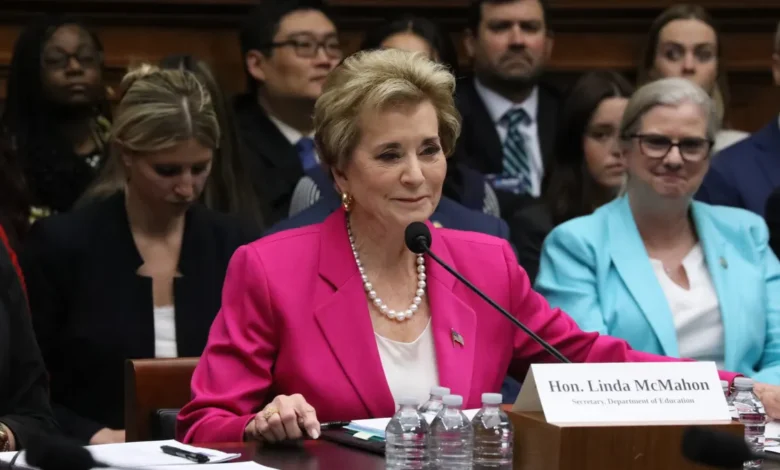
Secretary McMahon, appearing before the House Education and Workforce Committee in mid-May, emphasized that the agency would use all available regulatory levers to halt this pattern. The Department’s latest guidance reiterates that failing to report or actively concealing allegations of sexual misconduct may constitute a violation of Title IX, which prohibits sex-based discrimination in federally funded educational programs.
The July 10 letter outlines several specific expectations for districts:
- Mandatory Disclosure: Districts are encouraged to adopt policies that require the sharing of disciplinary records related to sexual misconduct with potential future employers.
- Prohibition of Non-Disclosure Agreements (NDAs): The Department is taking a hard line against "hush money" settlements that prevent the disclosure of substantiated abuse or ongoing investigations.
- Background Check Integration: The guidance calls for more robust integration between state licensing boards and local hiring offices to ensure that a "clean" background check in one state does not mask a history of misconduct in another.
Data from the last decade suggests that the lack of a centralized, mandatory reporting system has allowed thousands of educators with histories of boundary violations to remain in the classroom. By framing this as a civil rights issue under Title IX, the Department of Education is signaling that federal funding could be at risk for districts that continue to facilitate the movement of predatory staff.
The Special Education Management Controversy
While the Department’s efforts on student safety have been met with general approval, its administrative restructuring plans have hit a significant roadblock. A group of 13 former high-ranking federal special education officials has emerged as the primary opposition to a proposed interagency agreement. This agreement seeks to shift the management of special education—specifically the oversight of IDEA—to the Department of Health and Human Services.
The signatories of the opposition letter represent an unprecedented coalition of expertise, having served in every presidential administration from Richard Nixon through the first Trump administration and the Biden administration. Their absence from the current administration’s advisory circles underscores a deepening rift between career educational experts and the current political leadership.
In their July 13 letter, the officials argued that special education is fundamentally an educational function, not a medical or social service function. They contend that moving these responsibilities to HHS "dismantles, rather than relocates, the federal infrastructure built over five decades."

Historical Context of IDEA and OSEP
To understand the gravity of this dispute, one must look at the history of the Individuals with Disabilities Education Act. Originally passed in 1975 as the Education for All Handicapped Children Act, the law established that children with disabilities have a right to a "free appropriate public education" (FAPE) in the "least restrictive environment" (LRE). The Office of Special Education Programs (OSEP), housed within the Department of Education, was designed to ensure that these students are not merely "cared for" in a clinical sense but are provided with the instruction and curriculum necessary to achieve academic success.
The 13 former officials argue that HHS, which focuses on public health, insurance, and social welfare, lacks the pedagogical expertise to oversee the academic progress of the nearly 7.5 million students currently receiving special education services in the U.S. They fear that under HHS, special education would be "medicalized," focusing on diagnoses and therapy rather than graduation rates, literacy, and college readiness.
Reactions from the Educational Community
The tension at the federal level is reflecting downward into state and local leadership. During a recent conference of school principals in Florida, the dual themes of safety and administrative stability dominated the agenda. Principals expressed concern that while they support the "passing the trash" crackdown, they are overwhelmed by the administrative burden of new reporting requirements.
"We want our schools to be safe, but we also need a federal partner that understands the classroom," said one high school principal attending the Florida summit. "If special education moves to a different department, we are looking at a total upheaval of how we receive funding and how we report data. It creates a silo between ‘general ed’ and ‘special ed’ that we have spent thirty years trying to break down."
Advocacy groups for students with disabilities have also weighed in, with many echoing the concerns of the 13 former officials. They argue that the Department of Education’s primary mission is the academic empowerment of the student, whereas HHS operates on a different set of priorities. There is a palpable fear that the move is a precursor to converting special education funding into block grants, which could lead to reduced federal oversight and a decline in the quality of services provided to students with high needs.

Analysis of Implications and Future Outlook
The current trajectory of the Department of Education suggests a move toward "streamlining" that prioritizes executive efficiency over traditional departmental boundaries. Secretary McMahon’s supporters argue that the transfer to HHS would allow for better coordination of services, such as speech therapy and mental health support, which often bridge the gap between healthcare and education. They suggest that the current system is too bureaucratic and that a fresh start under HHS could lead to more innovative service delivery.
However, the political and legal hurdles remain significant. The 13 former officials have hinted that such a transfer may exceed the Department’s executive authority, potentially requiring an act of Congress to formally amend IDEA. If the administration proceeds with the interagency agreement without legislative backing, it is likely to face immediate challenges in federal court.
Furthermore, the "passing the trash" initiative will require a level of state-federal cooperation that has been difficult to achieve in the past. While the July 10 letter sets a clear tone, the actual enforcement will depend on the Department’s willingness to conduct audits and withhold Title IX funding—a move that is often politically unpopular.
As the 2026-2027 school year approaches, school districts find themselves at a crossroads. They must navigate increasingly stringent requirements for educator vetting while preparing for a potential seismic shift in how they support their most vulnerable students. The outcome of the special education dispute will likely determine the federal government’s role in disability rights for the next generation, while the success of the misconduct crackdown will be measured in the safety and trust of the nation’s families.
The Department of Education stands at a point of high-stakes transformation. Whether these changes will lead to a safer, more efficient educational landscape or a fragmented system that leaves millions of students behind remains the central question for policymakers, educators, and parents alike. The coming months will be critical as the administration responds to the formal opposition and begins the implementation of its new safety directives.