The Unraveling of the Campus Experience: How Financial Crisis at Small Colleges Is Leaving Students Behind

When Nalia Mutz began her freshman year at the University of Lynchburg in 2022, the path toward a medical career seemed clear. As a biomedicine major, she meticulously mapped out her four-year trajectory, confident in the institution’s ability to provide the necessary coursework and mentorship. However, by 2024, that vision had collapsed. Facing severe fiscal strain, the university eliminated a dozen academic majors and initiated widespread faculty layoffs. For Mutz, this meant the sudden disappearance of required science courses, threatening to extend her time to degree by two years. "It was just a lot of cuts all around, and then they just didn’t have enough staff," the 21-year-old said, echoing a sentiment shared by an increasing number of students nationwide as higher education faces its most volatile period in decades.
The situation at Lynchburg is not an isolated incident but a microcosm of a systemic crisis in American higher education. As hundreds of private, nonprofit institutions grapple with the "enrollment cliff"—a combination of unfavorable demographic trends and waning public confidence in the return on investment of a college degree—many are finding their business models unsustainable. The financial pressures are compounded by broader macroeconomic factors, including federal policy shifts regarding international student visas, restricted research funding, and stringent new scrutiny on student loan programs.
A Chronology of Decline and Retrenchment
The erosion of institutional stability often occurs in stages, hidden behind layers of opaque financial reporting. At the University of Lynchburg, the decline followed a pattern seen at institutions across the country. In 2018, the university rebranded from "Lynchburg College" to "University of Lynchburg," a $1.7 million investment designed to elevate its prestige and attract international students, who historically pay full tuition.

However, by 2020, despite a peak enrollment of nearly 3,600, the financial foundation was beginning to fracture. By 2024, enrollment had plummeted to approximately 3,200, and the institution had reported deficits in four of the last five fiscal years. A mid-2025 financial audit revealed a $2.1 million loss, prompting an intervention by regional accreditors who placed the school on warning for failing to meet standards for financial responsibility.
The administrative response to these deficits has been drastic. The university cut 12 undergraduate majors, 25 minors, and five graduate programs. Simultaneously, it announced the reduction of 40 staff and 40 faculty positions. This downsizing has had a direct, negative impact on the student body. The advising office, once staffed by seven professionals, has been reduced to just three, leaving students like psychology major Willow Martin to navigate a chaotic academic landscape. Martin, who expected to graduate in May, was informed she lacked 11 essential credits, with little clarity on who would teach the upper-level courses required to complete her degree.
Data-Driven Instability: The National Landscape
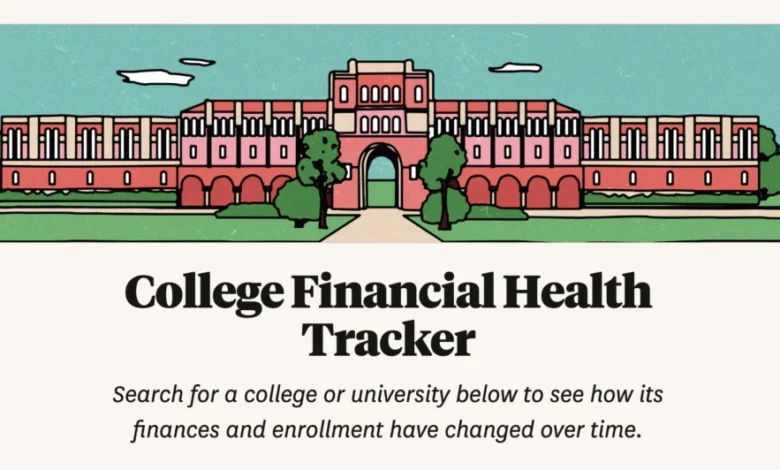
The Hechinger Report’s College Financial Health Tracker underscores that Lynchburg’s plight is representative of a larger, national trend. Analysis of a decade of federal data indicates that hundreds of four-year institutions are exhibiting warning signs: persistent enrollment drops, revenue decline, and depleted endowments.
In 2019, approximately 53% of colleges experienced enrollment drops in three of the previous five years. By 2024, that figure had climbed to 58%. Public institutions, traditionally viewed as stable, have seen a sharp increase in distress; the number of public universities experiencing a 10% decline in enrollment over a five-year period has surged by nearly 50% since 2019.

This contraction forces administrators to make binary choices: close the institution entirely or "right-size" through aggressive austerity. When colleges choose the latter, they often prioritize debt service and operational survival over student services. This leads to the erosion of the "academic core," where the faculty-to-student ratio widens, and essential support services—such as mental health counseling, tutoring, and career advising—are outsourced or eliminated.
The Impact of Faculty Layoffs on Academic Integrity
The reduction of instructional staff is particularly damaging to the student experience. According to higher education experts, there is a direct correlation between faculty-to-student ratios and degree completion rates. When colleges rely on buyouts or layoffs to balance the budget, they often lose their most experienced, tenured faculty, replacing them with temporary or adjunct instructors who lack the same institutional memory or job security.
Tim Gibson, president of the Virginia conference of the American Association of University Professors, argues that such cuts stifle academic freedom. "Faculty in those positions tend to be very afraid of speaking out on matters of curriculum or governance issues, or pushing back," Gibson noted. The silencing of faculty voices prevents necessary oversight of administrative decisions, often leaving students to discover the truth about their university’s health through student newspapers rather than official administrative channels.
Official Responses and the Search for Viability
University President Alison Morrison-Shetlar has defended the institution’s restructuring, emphasizing that the university is pivoting toward programs that lead to "high-paying jobs." The university has launched a Ph.D. program, a cannabis career certificate, and accelerated three-year bachelor’s degrees in a bid to modernize its offerings and stabilize revenue.

Regarding the accreditation warning, the administration has expressed confidence that full compliance will be achieved by December 2026. However, critics point to a lack of transparency as a persistent issue. Former trustee Michael Gillette, who resigned in 2023, alleged that key financial decisions were made without proper documentation provided to the board, a claim the university has denied, stating it adheres to standard governance procedures.
Despite these assurances, the students are increasingly skeptical. The transfer rate at the University of Lynchburg rose from 18% a decade ago to 30% in 2024. For many, the risk of remaining at an institution in flux outweighs the cost of uprooting their lives to attend elsewhere.
Implications for the Future of Higher Education
The trend of "college downsizing" carries profound implications for the social contract of higher education. If private, nonprofit institutions continue to face this level of financial volatility, the result will be a bifurcated system. Elite institutions with massive endowments will remain secure, while small, regional, and religiously affiliated colleges will face a fight for survival that inevitably degrades the quality of education provided to their students.
The human cost is evident in the stories of students like Nalia Mutz, who eventually transferred to Radford University. Despite the administrative, financial, and logistical hurdles of moving—including the loss of credits—she viewed the transfer as a necessary escape from an environment she felt was failing to deliver on its promise. "All my friends that I know that went there transferred," she said. "I don’t know anyone that graduated from there."

As demographic shifts ensure that the pool of college-aged students will continue to shrink over the coming years, the competition for enrollment will intensify. Colleges that have not built a robust financial cushion or a unique, high-demand value proposition will likely continue to cut services, raise tuition, and reduce faculty. For students, this means the process of choosing a college must now involve rigorous due diligence into an institution’s financial health. The days of assuming a four-year degree path is a guarantee of stability are over; in the current economic climate, the institution itself may prove to be the most significant variable in a student’s success.
The challenge for policymakers and university leaders moving forward is to determine whether these institutions can be saved through strategic innovation, or if a wave of closures is an inevitable correction for a sector that expanded too quickly during more prosperous decades. Until then, students remain the primary stakeholders in a system that is rapidly becoming less certain.