ORLANDO, Fla. — While school board votes and administrative announcements regarding school closures or mergers often occur with swift finality, the actual process of transitioning the human beings involved is a marathon, not a sprint. This was the central message delivered by Vicki Wilson, a veteran school leadership consultant and former principal, at the National Association of Elementary School Principals’ (NAESP) National School Leaders Conference. Speaking to a room of educators and administrators, Wilson emphasized that the mechanical aspects of a merger—moving furniture, reassigning bus routes, and updating logos—are secondary to the psychological journey that staff, students, and parents must undertake.
According to Wilson, the most significant hurdle in organizational change is not the implementation of a new system, but the emotional conclusion of the old one. "The hardest part about organizational change isn’t what’s beginning. It’s what’s ending," Wilson stated. "That’s where that human piece is coming in, because there are endings that are happening."
Wilson was joined by Nicole Garza, the principal of Grosse Ile Elementary School in Michigan, who provided a real-world case study of these theories in action. Garza navigated the complex merger of two distinct school buildings into a single unified campus, a process that required a deliberate focus on staff morale and cultural integration. Their presentation highlighted a growing necessity in the American education landscape: the need for "soft-skills" leadership during periods of "hard" structural contraction.
The National Landscape of School Consolidation
The challenges faced by Grosse Ile are becoming increasingly common across the United States. According to data from the National Center for Education Statistics (NCES), public school enrollment has seen a significant shift over the last decade. Following the COVID-19 pandemic, many districts reported a sharp decline in student numbers due to a combination of lower birth rates, "demographic cliffs," and a shift toward homeschooling or private education.
In some metropolitan areas, enrollment has dropped by as much as 10% to 15% since 2020. Consequently, school boards are frequently forced to consider consolidation to maintain fiscal responsibility and resource equity. However, as Wilson and Garza noted in Orlando, the fiscal logic of a merger often clashes with the emotional reality of the community. A school is rarely just a building; it is a repository of local history, a workplace for dedicated professionals, and a second home for children. When a school closes, the community experiences a form of collective grief that, if left unaddressed, can lead to staff burnout, parent exodus, and a toxic school culture.
The William Bridges Transition Model in Education
To manage the complexities of the Grosse Ile merger, Wilson and Garza utilized the transition model developed by William Bridges, as detailed in his seminal work, Managing Transitions. Bridges’ model distinguishes between "change"—the external event or situational shift—and "transition"—the internal psychological process people go through to come to terms with the new situation.
The model identifies three distinct phases:
- The Ending: This phase involves letting go of the old identity and the old way of doing things. It is marked by grief, denial, and resistance.
- The Neutral Zone: This is the "no-man’s-land" between the old and the new. It is often characterized by confusion, uncertainty, and low morale, but it is also the space where innovation can occur.
- The New Beginning: This phase is marked by a sense of purpose, a new identity, and renewed energy.
Wilson explained that many leaders make the mistake of jumping straight to the "New Beginning" without allowing their staff to navigate the "Ending" or the "Neutral Zone." By ignoring the grief of the ending, leaders inadvertently create a "transition debt" that eventually manifests as resistance and friction.
Case Study: The Grosse Ile Elementary Merger
The Grosse Ile Township Schools district in Michigan faced a common structural dilemma: it operated separate K-2 and 3-5 buildings. The decision was made to merge these into a single K-5 building. The transition was further complicated when one of the two building principals stepped down, leaving Nicole Garza to lead both buildings simultaneously for a full year prior to the official physical merger.
Garza described the initial atmosphere as fraught with tension. Staff members from the two buildings were hesitant to collaborate, and there was a palpable "us vs. them" mentality. Garza noted that without a deliberate intervention, the merger could have turned into "a disaster."
Honoring the Grieving Process
Recognizing the "Ending" phase of Bridges’ model, Garza dedicated an entire professional development day in August 2024 specifically to allow staff to grieve. In a move of strategic vulnerability, school administrators removed themselves from the room. This allowed teachers and support staff to speak freely about their fears, the history they were leaving behind, and their frustrations with the change.
"They could truly explain how they were feeling without us even being present," Garza said. Wilson added that this cathartic exercise was essential; by acknowledging the loss out loud, the staff felt validated and were more willing to move toward the "Neutral Zone."
Navigating the Neutral Zone: The "Leaving Your Mark Olympics"
The "Neutral Zone" is often the most difficult period for a school district, as it can last for months or even years. In Grosse Ile’s case, the 2024-25 school year served as this bridge. To combat the feeling of being lost between the old and the new, Garza and Wilson developed a year-long bonding initiative titled the "Leaving Your Mark Olympics."
The initiative was designed to break down silos through several key activities:
- Collective Resumes: Before any competition began, staff members were divided into six cross-building, cross-grade-level teams. Each team created a "collective resume," tallying their combined years of experience, advanced degrees, and specialized certifications. This exercise reframed the merger not as a loss of identity, but as a massive accumulation of professional talent.
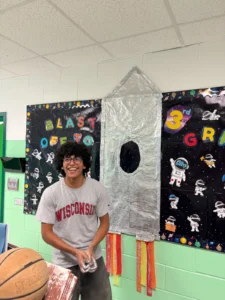
- The Olympic Games: To foster genuine human connection, the school held "Olympic" events including "trashketball," balance beam walks, and a high-jump competition using sticky notes. These activities encouraged laughter and play—elements often missing during high-stress organizational changes.
- The Point System: To maintain momentum, a gamified system was implemented throughout the school year. Teams earned points for "culture-building" activities, such as sending encouraging notes to colleagues in the other building or sharing lesson resources.
Analysis of Outcomes and Broader Implications
The results of this structured transition were evident by the time the physical merger was completed. Garza reported that while the district still faced external challenges—specifically ongoing construction delays—the internal "people" issue had been largely resolved. The friction between the two staffs had dissipated, replaced by a sense of shared mission.
"The issue was the construction still going on, not the staff," Garza remarked. "This seems so simple and silly, but it really did wonders for bringing two staff together."
From a leadership perspective, the success of the Grosse Ile merger offers several critical takeaways for the broader education sector:
- Communication Clarity: Successful transitions require a high volume of transparent communication. In the absence of information, staff will often fill the void with rumors and worst-case scenarios.
- Empowerment through Agency: By allowing staff to voice their grief and participate in culture-building games, Garza gave them a sense of agency in a situation where they otherwise felt powerless.
- The Importance of Time: A "multi-year transition period" is often viewed by boards as an inefficiency, but in terms of human psychology, it is a necessity. Rapid-fire changes often lead to high turnover among veteran teachers, who are the hardest to replace.
Conclusion: Defining Success in School Mergers
As school districts nationwide continue to grapple with the realities of declining enrollment and the need for consolidation, the Grosse Ile model serves as a blueprint for "humane" leadership. The ultimate metric of a successful merger is not just the balance sheet or the test scores of the following year, but the shift in collective language.
Wilson concluded that the transition is truly complete only when the staff stops referring to "my old school" or "their building" and begins to say, with genuine conviction, "This is our school." By prioritizing the human element of the transition, leaders can ensure that the "New Beginning" is built on a foundation of trust rather than a legacy of resentment.