McLaren Set to Debut Radical Upside-Down Rear Wing and Major Upgrade Package at Hungarian Grand Prix

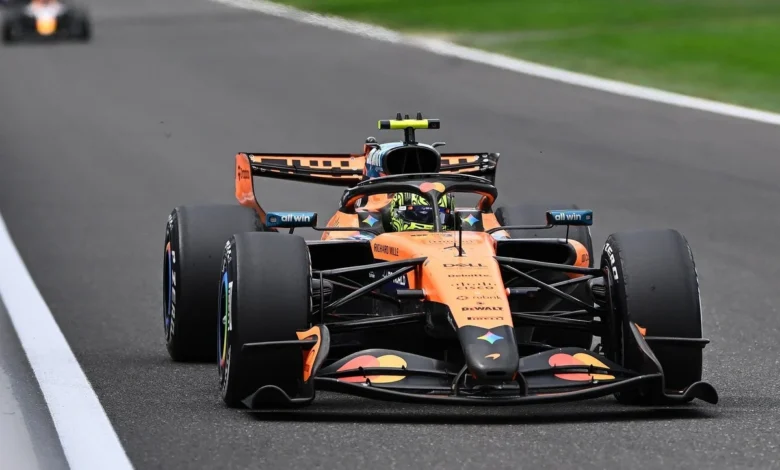
The McLaren Formula 1 team is poised to introduce a significant upgrade package, highlighted by the highly anticipated trial of its innovative upside-down rear wing, at this weekend’s Hungarian Grand Prix. This strategic deployment in Budapest marks a crucial juncture for the MCL40 as the Woking-based outfit strives to close a perceived aerodynamic development gap that has placed them several months behind key rivals in the highly competitive 2026 season.
McLaren has consistently identified the Hungarian Grand Prix as the prime opportunity to inject substantial performance into its car. Following an initial comprehensive overhaul implemented across the Miami and Montreal weekends, and subsequent smaller enhancements, the Budapest circuit will witness the arrival of McLaren’s latest aerodynamic advancements. This includes a redesigned floor, complemented by a suite of "further other aerodynamic parts," all aimed at enhancing the MCL40’s overall competitiveness.

Randy Singh, McLaren’s Senior Director of Racing, emphasized the importance of continuous development in such a closely contested championship. "We have an upgrade package arriving this weekend, and in such a competitive season, every development is important, so it will be great to gather further understanding on how those parts perform throughout free practice," Singh stated. He further elaborated on the team’s objectives, saying, "Our aim is to maximise everything we have available, carry positive momentum into the shutdown, and put ourselves in the strongest possible position for the second half of the championship." This sentiment underscores McLaren’s strategic focus on building momentum towards the latter half of the season, with the aim of converting development gains into tangible race results.
Closing the Aerodynamic Deficit: A Strategic Imperative
The journey to this significant upgrade has been a calculated response to McLaren’s early-season performance trajectory. Team Principal Andrea Stella has been transparent about the team’s efforts to overcome an aerodynamic development lag. "The development on the ground has been quite strong for a few months now," Stella commented recently. "This has led to the upgrades we had in Miami, and now there will be another round of upgrades which will come in Hungary and then after the shutdown." This indicates a sustained and focused effort by McLaren’s design and engineering teams to recalibrate and enhance the car’s aerodynamic efficiency and downforce generation.
The 2026 Formula 1 season has been characterized by fierce competition, with established front-runners like Red Bull, Ferrari, and Mercedes continually pushing the boundaries of development. McLaren, having started the season with a solid foundation, found itself struggling to match the pace of its rivals. Ferrari, in particular, has impressed with a series of significant upgrades that have propelled Charles Leclerc and Lewis Hamilton into contention for race wins. Similarly, Red Bull has demonstrated a consistent ability to extract maximum performance from its RB22. This escalating development race has made McLaren’s next significant performance boost a critical necessity.

"It’s difficult to lean on the range of performance that Ferrari and Mercedes are operating in at the moment, but hopefully, as of Hungary, we will start to see a bit of an acceleration in our competitiveness," Stella added, acknowledging the current performance disparity. He further highlighted the long-term nature of some of these development cycles: "We have now a clear direction in terms of development, but in some areas of the car, it took a couple of months to get it to be realised. So, we should see in Hungary the first results of this approach and then hopefully more and more upgrades for the rest of the season." This statement suggests that the upcoming upgrades are the culmination of a shift in aerodynamic philosophy and design, with a clear roadmap for further enhancements planned for the remainder of the season.
The "Macarena" Wing: A Bold Technological Gamble
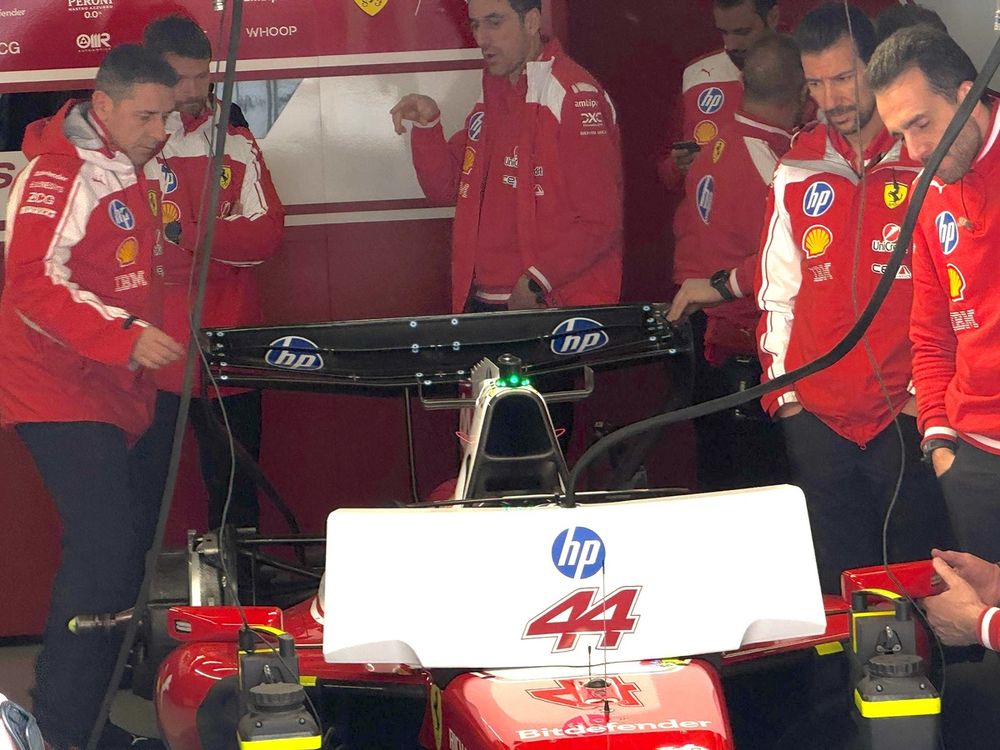
Perhaps the most intriguing aspect of McLaren’s Hungarian upgrade package is the impending debut of its unique upside-down rear wing, a concept that has garnered significant attention across the paddock. This innovative design, unofficially dubbed the "Macarena" wing, takes inspiration from a similar concept first seen on the Ferrari SF-26 during winter testing. The core principle of this design involves the mainplane of the rear wing rotating 180 degrees, effectively flipping itself over. This radical reconfiguration is intended to optimize aerodynamic performance across different track conditions and speeds.
McLaren’s initial plan was to test this revolutionary wing during Free Practice 1 (FP1) at the Austrian Grand Prix. However, unforeseen technical challenges encountered in the garage prompted the team to withdraw the wing and return it to the factory for further refinement and troubleshooting. This decision, while delaying the debut, underscores McLaren’s commitment to ensuring the reliability and functionality of such a complex and novel piece of aerodynamic hardware before unleashing it in a competitive session. Following extensive work and development, the experimental rear wing is now slated for its maiden run during FP1 in Hungary. It is understood that the wing will be removed for the remainder of the weekend’s sessions, a typical approach for testing such a radical component to gather data without compromising the race weekend.
The team has explicitly stated that this upside-down rear wing is "not scheduled to be introduced fully at this or the following race in the Netherlands." This cautious rollout strategy allows for thorough data collection and analysis. Should the trials in Hungary prove successful, and the wing demonstrates the expected performance gains and reliability, it could find a permanent place on the MCL40 for subsequent races, particularly at circuits where aerodynamic efficiency and drag reduction are paramount, such as Monza or Baku.
Navigating the Challenges of Novel Aerodynamics
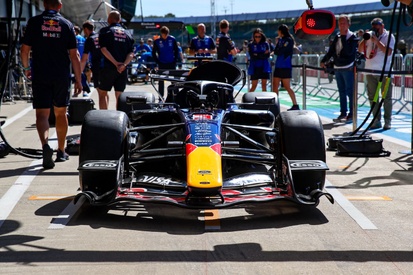
The introduction of such a complex aerodynamic device is not without its inherent risks and challenges. The experiences of rival teams, particularly Red Bull with its own version of the "Macarena" wing, have highlighted potential reliability and safety concerns. Red Bull’s implementation of a similar concept saw Max Verstappen suffer two alarming spins during the Austrian and British Grands Prix. These incidents underscored the critical importance of the wing’s closure mechanism and the seamless reattachment of airflow when the wing reverts to its standard configuration. The Milton Keynes squad ultimately removed their innovative wing for the Belgian Grand Prix, but is reportedly working on an improved iteration, with plans to test it as early as Hungary, suggesting a continued belief in the concept’s potential.
The complexity of the upside-down wing lies in its dynamic nature. When engaged in "Straight Mode," the wing’s mainplane flips, drastically altering the aerodynamic profile. The critical phase is the transition back to its conventional orientation. If this transition is not perfectly executed, or if the airflow does not reattach smoothly, it can lead to sudden and unpredictable aerodynamic stalls, causing a significant loss of downforce and potentially leading to car instability, as evidenced by Verstappen’s spins. McLaren’s decision to meticulously refine its design and conduct a phased introduction reflects an understanding of these potential pitfalls.

The Hungarian Grand Prix, known for its tight, twisty nature and high ambient temperatures, presents a demanding testbed for new aerodynamic components. The Hungaroring circuit requires a high level of downforce for optimal cornering performance, making it an ideal venue to evaluate the effectiveness of the new rear wing in generating downforce. However, the track also features a relatively long straight, which will allow engineers to gather crucial data on the wing’s performance in low-drag configurations. The team’s cautious approach, utilizing FP1 for initial testing, will provide valuable insights into how the wing performs under race-like conditions without jeopardizing the team’s overall race strategy.
A Season of Resurgence and Strategic Development
McLaren’s current position in the 2026 constructors’ championship reflects a season of ongoing development and a determined pursuit of performance. While not yet challenging for the championship lead, the team has shown flashes of strong pace and strategic acumen. The upcoming upgrades in Hungary are not just about improving lap times; they represent a critical step in McLaren’s long-term strategy to regain its footing at the sharp end of Formula 1. The team’s ability to effectively integrate these new components and extract their full potential will be a key determinant of its success in the latter half of the season and beyond.
The introduction of a radical design like the upside-down rear wing is indicative of McLaren’s willingness to take calculated risks in its pursuit of competitive advantage. The team’s engineers have clearly identified a potential performance gain that outweighs the perceived risks, provided the technical challenges can be successfully mitigated. The success or failure of this ambitious project will undoubtedly be a major storyline to watch throughout the Hungarian Grand Prix weekend and into the subsequent races.
The broader implications of McLaren’s upgrade package extend beyond its immediate performance gains. It signals a significant shift in the team’s development direction and its confidence in its technical capabilities. As the sport continues to evolve, with regulations often favoring aerodynamic innovation, teams that can successfully implement groundbreaking designs are likely to reap the greatest rewards. McLaren’s efforts with the "Macarena" wing, if successful, could set a new trend in aerodynamic design and further intensify the development war among the F1 constructors. The focus will now be on how effectively the team can translate these innovative concepts into consistent, competitive performances on track.