The Evolution of the Xteink Hardware Lineage
The trajectory of Xteink as a brand reflects a broader trend in Chinese hardware manufacturing: the utilization of low-power, cost-effective microcontrollers to create highly specialized consumer electronics. The Xteink series is built upon the ESP32 processor, a series of low-cost, low-power system-on-a-chip (SoC) microcontrollers with integrated Wi-Fi and dual-mode Bluetooth. This choice of hardware is significant because it allows for extreme battery efficiency and a small physical footprint, though it places strict limitations on the complexity of the operating system.
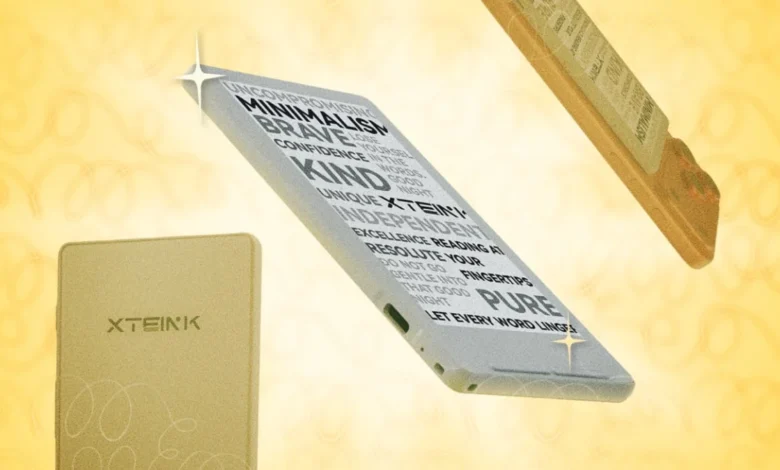
The X3 served as the company’s entry-level proof of concept, featuring a basic E-ink display and limited storage. The subsequent X4 improved upon the screen refresh rate and build quality, while the X4 Pro represents the current pinnacle of the lineup, offering higher pixel density (PPI) and improved tactile response. Despite these hardware iterations, the native software has remained a point of contention for users. The stock firmware often struggles with standard EPUB formatting, failing to render italics, bold text, or complex CSS layouts correctly. This technological gap has necessitated the development of a robust community-driven ecosystem dedicated to "hacking" and optimizing the devices for a global audience.
Overcoming Formatting Limitations with the XTC Proprietary Format
One of the primary challenges identified by users of Xteink devices is the inconsistent rendering of EPUB files. In a standard e-reader, an EPUB is treated as a reflowable text document, allowing the user to change font sizes and margins dynamically. However, the ESP32’s limited processing power often results in awkward paragraph spacing and the loss of typographic nuances. To mitigate this, the community has adopted the XTC format.
An XTC file functions differently than a standard e-book; it is essentially a container for a series of high-resolution bitmap images of the book’s pages. By pre-rendering the text into images on a more powerful computer before transferring the file to the device, the Xteink e-reader is relieved of the processing burden required to layout text in real-time. This ensures that every header, image, and font choice remains exactly as the publisher intended.
Data suggests that while this method preserves visual fidelity, it comes at a cost of storage efficiency. A standard EPUB file typically occupies between 1MB and 5MB of space. In contrast, an XTC version of the same title can exceed 50MB. For devices with limited internal storage, this requires users to be more selective with their portable libraries. To facilitate this conversion, web-based tools such as the X4Converter have been developed, allowing users to customize page orientation and text alignment before generating the final bitmap-based file.
The CrossPoint Firmware and the Open-Source Community Response
The most significant development in the Xteink ecosystem has been the release of CrossPoint Reader, an open-source firmware alternative. Because Xteink devices are not "locked down" with the same level of encryption as Kindle or Nook devices, they are remarkably accessible to hobbyist developers. In the year following the release of the X4, a dedicated community of "tinkerers" on platforms like Reddit and GitHub successfully reverse-engineered the device’s software environment.
CrossPoint Reader replaces the rudimentary stock interface with a more sophisticated UI, offering expanded font support, granular margin control, and improved Wi-Fi stability. The installation process has been streamlined through the development of web-based "flash tools." Using the Web Serial API, users can connect their Xteink device to a computer via USB and overwrite the factory firmware with a single click in a browser.
This move toward open-source customization has significant implications for the longevity of the hardware. While traditional consumer electronics often suffer from planned obsolescence once the manufacturer stops providing software updates, the Xteink series has been granted an indefinite lifecycle by its user base. Various "forks" of the CrossPoint firmware have appeared, each tailored to specific use cases, such as localized language support or specialized PDF rendering.

Advanced Library Management via Calibre Integration
For power users, the manual transfer of files via USB is often viewed as an inefficient workflow. Consequently, the developer community has created specialized plugins for Calibre, the industry-standard open-source e-book management software. Calibre allows users to maintain a centralized digital library on a PC or Mac, and the new Xteink-specific plugins automate the optimization process.
The "EPUB Workflow" plugin for Calibre is particularly noteworthy. It performs a series of automated "sanitization" tasks on e-book files, including:
- Image Downscaling: Reducing the resolution of embedded images to match the Xteink’s specific screen dimensions, thereby saving storage space.
- CSS Cleaning: Removing extraneous code that might confuse the ESP32 processor.
- Error Repair: Fixing structural issues within the EPUB container that could cause the device to crash.
Furthermore, the integration of wireless file transfer protocols allows users to send books from their Calibre library directly to their Xteink device over a local Wi-Fi network, bypassing the need for physical cables entirely. This level of integration brings the Xteink experience closer to the "seamless" synchronization offered by major tech giants, but without the associated data tracking or ecosystem lock-in.
Global Progress Syncing and the KOReader Ecosystem
A recurring criticism of niche, secondary e-readers is the difficulty of maintaining reading progress across multiple devices. Users who utilize an Xteink X4 for their daily commute may prefer a larger 10-inch tablet for reading at home. To solve this, the community has leveraged KOsync, a synchronization protocol used by KOReader.
KOReader is an advanced, open-source document viewer for E-ink devices. While the Xteink hardware is too limited to run the full KOReader application, CrossPoint firmware includes a KOsync plugin that allows it to communicate with KOReader servers. By creating a KOsync account, users can synchronize their current page position across an Xteink device, an Android-based e-ink tablet (such as those manufactured by Onyx Boox), and even iPhones via third-party apps like Readest. This cross-platform compatibility is a rarity in the e-reader market, where Amazon and Kobo typically restrict progress syncing to their own proprietary hardware and apps.
Sourcing High-Quality Public Domain Content
The Xteink’s reliance on DRM-free (Digital Rights Management) content highlights a broader industry shift toward open standards. Because Xteink devices cannot natively open encrypted files purchased from the Kindle Store or Apple Books, users must source their reading material from DRM-free retailers or public domain archives.
However, the quality of public domain e-books varies wildly. While Project Gutenberg offers over 70,000 free titles, many of these files are generated via automated OCR (Optical Character Recognition) and lack professional formatting. This has led to the rise of "Standard Ebooks," a volunteer-driven project that takes public domain texts and applies modern typographic standards, high-quality cover art, and clean code. For Xteink users, sourcing files from Standard Ebooks or the "Readme Club" ensures that the titles will render correctly even on limited hardware, providing a reading experience that rivals premium paid editions.
Broader Implications for the E-Ink Industry
The success and enthusiast support for Xteink devices signal a growing demand for "minimalist tech." In an era of "pro" smartphones with massive screens and constant notifications, a subset of consumers is intentionally seeking out devices that do less. The Xteink X4 series represents a "Zen" approach to technology—hardware that is intentionally limited to facilitate deep focus.
From a market analysis perspective, the Xteink phenomenon demonstrates that there is a viable path for small hardware manufacturers to compete with tech giants by fostering an open-source community. By allowing their devices to be hackable and customizable, Xteink has effectively outsourced its software development to its most passionate customers. This model provides a blueprint for other niche electronics firms: build solid, affordable hardware, and provide the community with the tools to make the software excellent. As E-ink technology continues to evolve—with color displays and faster refresh rates on the horizon—the lessons learned from the Xteink optimization community will likely influence the next generation of portable digital reading devices.