Venice Biennale President Denounces European Commission’s Funding Withdrawal Over Russia’s Art Biennale Participation

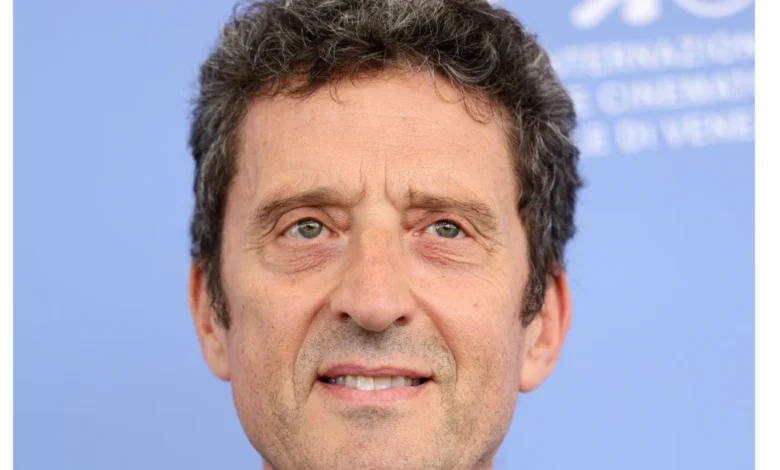
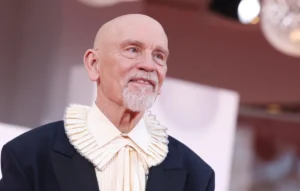
Pietrangelo Buttafuoco, the President of the Venice Biennale Foundation, has sharply criticized the European Commission’s decision to revoke funding in response to Russia’s inclusion in the Art Biennale earlier this year. Buttafuoco voiced his strong opposition during the press conference unveiling the lineup for the 83rd edition of the Venice Film Festival, characterizing the Commission’s action as an "abandonment" of the Biennale’s multifaceted cultural endeavors.
"They are abandoning us today because of a political decision, certainly not a legal decision, and certainly not a cultural decision. They are abandoning us in our journey, but La Biennale cannot accept that," Buttafuoco declared, underscoring his belief that the decision was politically motivated rather than based on established legal or cultural principles.
This strong condemnation comes in the wake of an announcement earlier in the week by the European Commission’s Education and Culture Executive Agency (EACEA). The EACEA confirmed its intention to withdraw a €2 million ($2.3 million) grant, a move that had been previously threatened. The funding cut is a direct consequence of the Biennale’s decision to invite Russia to participate in its prestigious Art Biennale.
The Venice Biennale Foundation, in its response, has stated its intention to lodge an appeal. Crucially, the foundation highlighted that the withdrawn funds were not allocated to the Art Biennale itself, but rather to the activities of its Cinema Department. Specifically, the funding supported vital initiatives such as the Biennale College and the Venice Production Bridge, programs dedicated to nurturing emerging talent and facilitating film production within the international cinematic landscape. This distinction suggests a potential disconnect between the European Commission’s stated rationale for the funding withdrawal and the actual allocation of the funds.
The controversy surrounding Russia’s participation ignited with the opening of the Art Biennale in April. The event was immediately met with protests from various quarters, with many condemning Russia’s presence in light of its ongoing invasion of Ukraine. The protests escalated to the point where the international jury for the Art Biennale resigned in solidarity with the demonstrators.
The EU’s stance on the matter was clearly articulated by Kaja Kallas, the EU’s High Representative for Foreign Affairs and Security Policy. At the time of the Art Biennale’s opening, Kallas stated that the invitation extended to Russia contravened EU sanctions that had been imposed on the nation following its full-scale invasion of Ukraine in February 2022. These sanctions are part of a broader international effort to exert pressure on Russia to cease its military actions.
Continuing his robust defense of the Biennale’s principles at the film festival press conference, Buttafuoco argued that capitulating to the European Commission’s demands would represent a betrayal of the institution’s core values. "We would renounce our principles of freedom of expression, of research, fantasy, imagination, values that for 131 years have been characterized this institution," he asserted. This statement emphasizes the Biennale’s long-standing commitment to fostering artistic freedom and open inquiry, regardless of political contexts.
Buttafuoco further elaborated on his critique by referencing the classic fable of "The Wolf and the Lamb." He described a series of three letters exchanged between the European Commission and the Biennale, drawing a parallel between the EU and the wolf, and the Biennale’s Cinema Department with the lamb. "In the third letter, the wolf simply eats the lamb," he concluded, conveying his perception that the European Commission’s actions were predatory and aimed at dismantling the Biennale’s autonomy and its vital cultural work.
Historical Context of the Venice Biennale
The Venice Biennale, founded in 1895, is one of the world’s oldest and most prestigious cultural institutions. It encompasses a wide range of disciplines, including art, architecture, cinema, dance, music, and theater. The Art Biennale, held in odd-numbered years, and the Venice Film Festival, held annually, are two of its most prominent events. The Biennale has historically served as a platform for artistic innovation, cultural exchange, and international dialogue. Its mission has always been to promote and foster the arts, providing a space for artists to showcase their work and for the public to engage with contemporary cultural trends. The foundation is a complex organizational structure that relies on a mix of public and private funding, as well as significant European Union grants for various projects, particularly those focused on education, research, and industry development.
The European Union’s Cultural Funding and Sanctions Policy
The European Union actively supports cultural initiatives across its member states through various funding programs, often administered by agencies like the EACEA. These grants are designed to foster cultural diversity, promote European heritage, and encourage cross-border collaboration. However, the EU also has robust foreign policy mechanisms, including economic sanctions, aimed at responding to international crises and upholding its values. The decision to link funding for cultural institutions to adherence to these sanctions reflects a growing trend of integrating foreign policy considerations into cultural policy, particularly in response to geopolitical events like the war in Ukraine. The EU’s sanctions against Russia are comprehensive, targeting individuals, entities, and sectors of the Russian economy, with the stated aim of isolating Russia and undermining its capacity to finance the conflict.
The Art Biennale and the Russia Controversy
The decision to invite Russia to the 2022 Art Biennale, especially given the ongoing conflict in Ukraine, sparked significant international debate. Many national pavilions boycotted the event or issued statements condemning Russia’s participation. The Biennale’s leadership, under the then-curator Cecilia Alemani, initially stated a desire to keep the exhibition apolitical and provide a platform for artists from all nations. However, the pressure from governments, cultural organizations, and artists mounted. The subsequent resignation of the international jury and the protests highlighted the deep divisions and the complex ethical considerations at play. Russia’s official pavilion was ultimately withdrawn before the Biennale opened.
Financial Stakes and the Cinema Department’s Initiatives
The €2 million grant withdrawn by the EACEA represents a significant financial blow, particularly for the specific programs it supported. The Venice Production Bridge, for instance, plays a crucial role in connecting filmmakers with potential investors and distributors, acting as a vital hub for the international film industry. The Biennale College, on the other hand, focuses on training and developing emerging talent in various fields, including screenwriting and directing. The fact that the funding was earmarked for these cinema-focused initiatives, rather than the Art Biennale itself, underscores the Biennale’s argument that the European Commission’s punitive action disproportionately affects other, arguably apolitical, aspects of its operations. This distinction is central to the Biennale’s appeal.
Broader Implications for Cultural Diplomacy and Artistic Freedom
The dispute between the Venice Biennale and the European Commission raises broader questions about the relationship between politics, culture, and funding. It highlights the delicate balance that cultural institutions must strike when navigating geopolitical tensions. On one hand, there is a pressure to uphold principles of artistic freedom and inclusivity, providing a platform for all voices. On the other hand, there is an expectation to align with national and international policy objectives, particularly concerning human rights and international law.
The European Commission’s stance, while framed within the context of sanctions, could be interpreted by some as an attempt to exert political influence over cultural institutions. This could set a precedent for future funding decisions, potentially leading to a more politicized landscape for the arts. Conversely, the Biennale’s strong defense of its autonomy and principles of artistic freedom resonates with those who believe that cultural exchange should remain a space for dialogue and understanding, even in times of conflict. The outcome of the Biennale’s appeal and any future statements from the European Commission will be closely watched by the international cultural community, as they will have significant implications for how cultural diplomacy is conducted in an increasingly complex geopolitical era. The case serves as a stark reminder of the challenges inherent in maintaining artistic independence while adhering to the demands of political and economic realities.
Related posts: